
ted fellows media library

Watch the TED Fellows in action

Watch, listen and connect with the Fellows changing the world through science, art, invention and imagination. 

TED Talks

From unbelievable science to awe-inspiring art, watch powerful talks from our global community of 500+ TED Fellows.

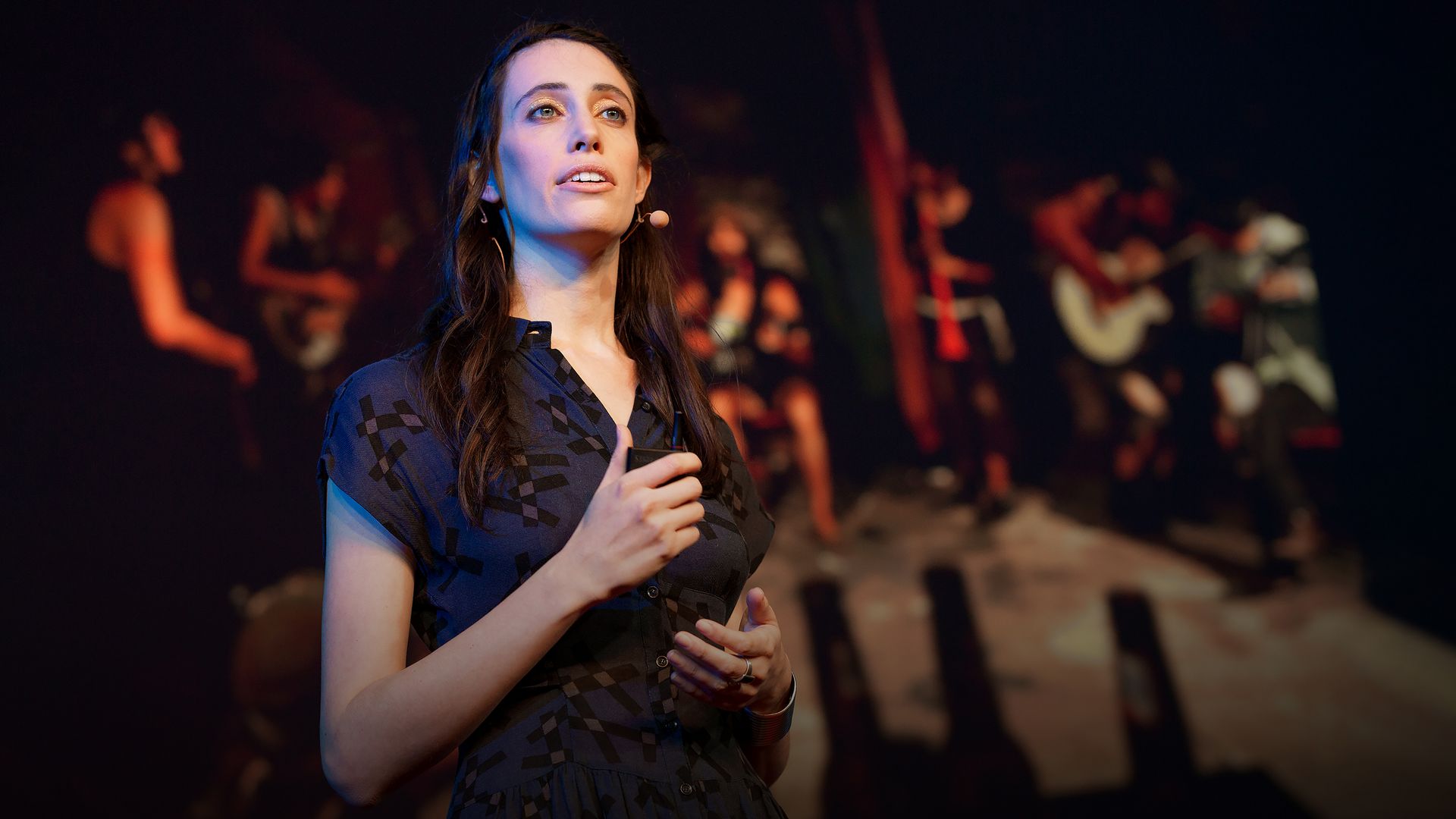
Carissa Véliz

Beware the power of prediction

Podcasts

Hear TED Fellows tell their stories in intimate interviews and learn more about what lies behind their big ideas.

Trinity Tran

Who controls your city's money? | Trinity Tran

What if your city could borrow money from its own bank instead of private lenders? TED Fellow Trinity Tran is leading the push for public banks — which are owned by the people through their local governments — and shows how this model could ensure your local tax dollars stay in your community. 

Ryosuke Takashima

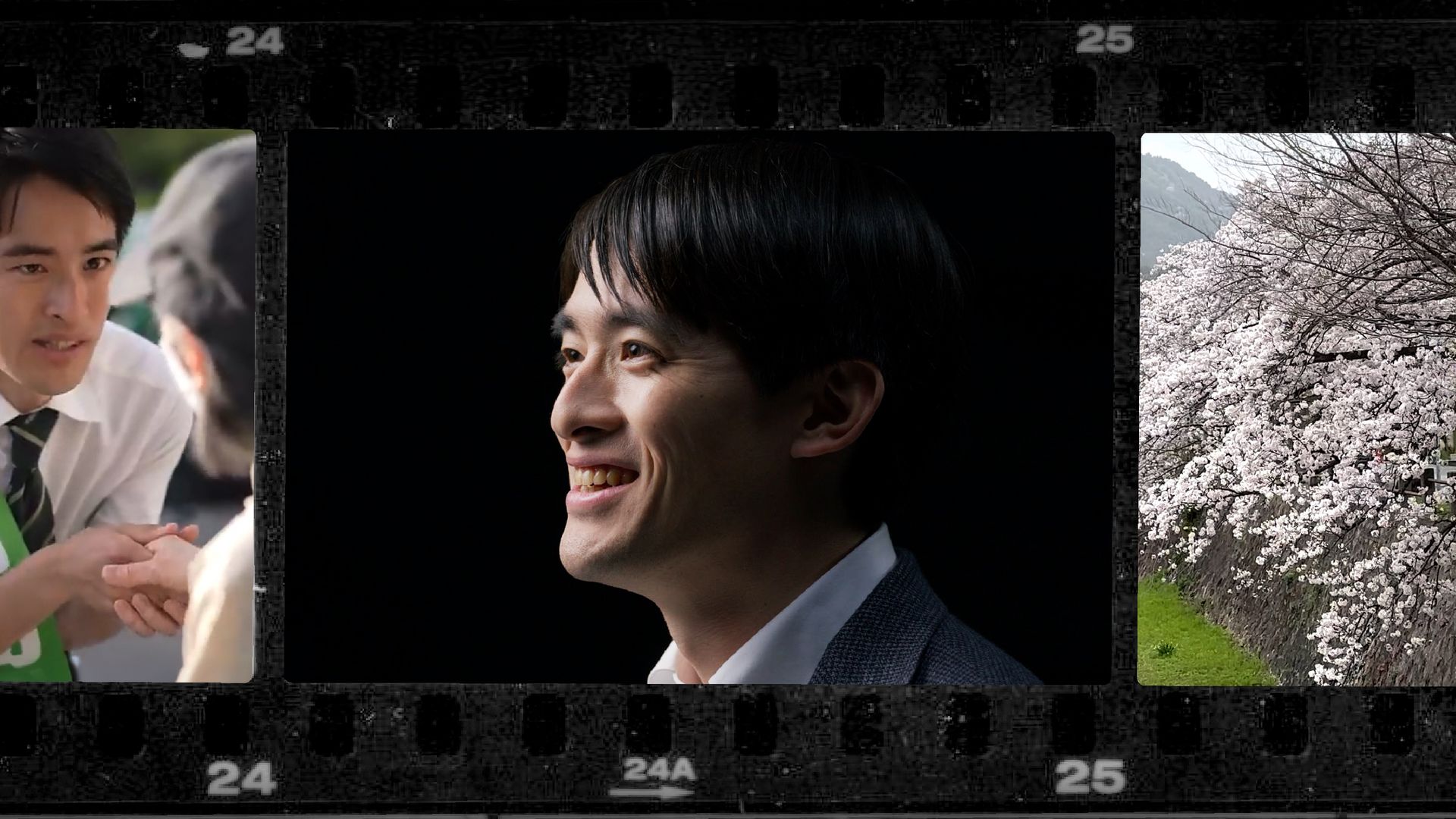
Meet the youngest-ever mayor in Japan's history | Ryosuke Takashima

TED Fellow Ryosuke Takashima is the youngest-ever mayor in Japan's history — but he doesn't consider himself a politician. His approach to leadership is simple: listen to as many voices as possible (from students to elders) in order to figure out what needs fixing. Hear why he thinks inviting citizens to participate in reforming their own communities is the best way to get things done.

Schendy Kernizan

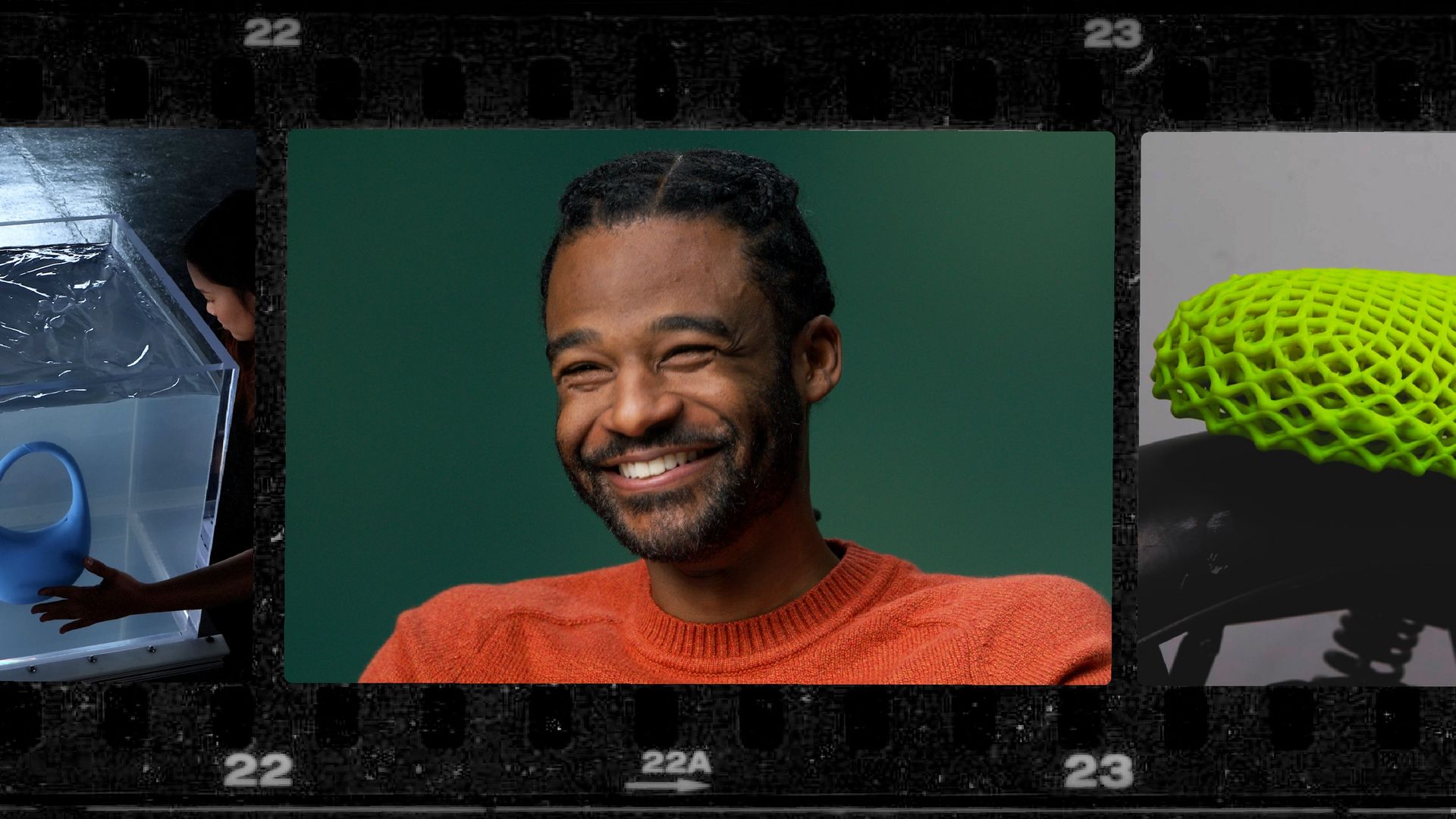
The gravity-defying future of manufacturing | Schendy Kernizan

3D printing promised to reinvent how we make things, but it's mostly stuck producing prototypes with a high level of waste. Designer and TED Fellow Schendy Kernizan found a different way — by printing objects directly into a tub of gel. He explains how this technique eliminates the constraints of gravity, pushing the limits of how we can manufacture objects across medicine, fashion, space travel and more.
Listen to all
Podcast episodes

TED Fellows Films

TED Talks meet documentaries in these short films that explore TED Fellows’ ideas. Dive into all three seasons to explore their mind-blowing innovations. 

05:39

FELLOWS FILM

Meet the youngest-ever mayor in Japan's history

TED Fellow Ryosuke Takashima is the youngest-ever mayor in Japan's history — but he doesn't consider himself a politician. His approach to leadership is simple: listen to as many voices as possible (from students to elders) in order to figure out what needs fixing. Hear why he thinks inviting citizens to participate in reforming their own communities is the best way to get things done.

2026

TED Fellows Film

Ryosuke Takashima
04:47

FELLOWS FILM

The gravity-defying future of manufacturing

3D printing promised to reinvent how we make things, but it's mostly stuck producing prototypes with a high level of waste. Designer and TED Fellow Schendy Kernizan found a different way — by printing objects directly into a tub of gel. He explains how this technique eliminates the constraints of gravity, pushing the limits of how we can manufacture objects across medicine, fashion, space travel and more.

2026

TED Fellows Film

Schendy Kernizan

Fellows Media Library
With 500+ TED Fellows and counting, we’ve got an entire world of media for you to explore. Dive into these talks, short films and podcasts showcasing Fellows turning ideas into action.

Clear
Sort
Thank you! Your submission has been received!
Oops! Something went wrong while submitting the form.

04:50

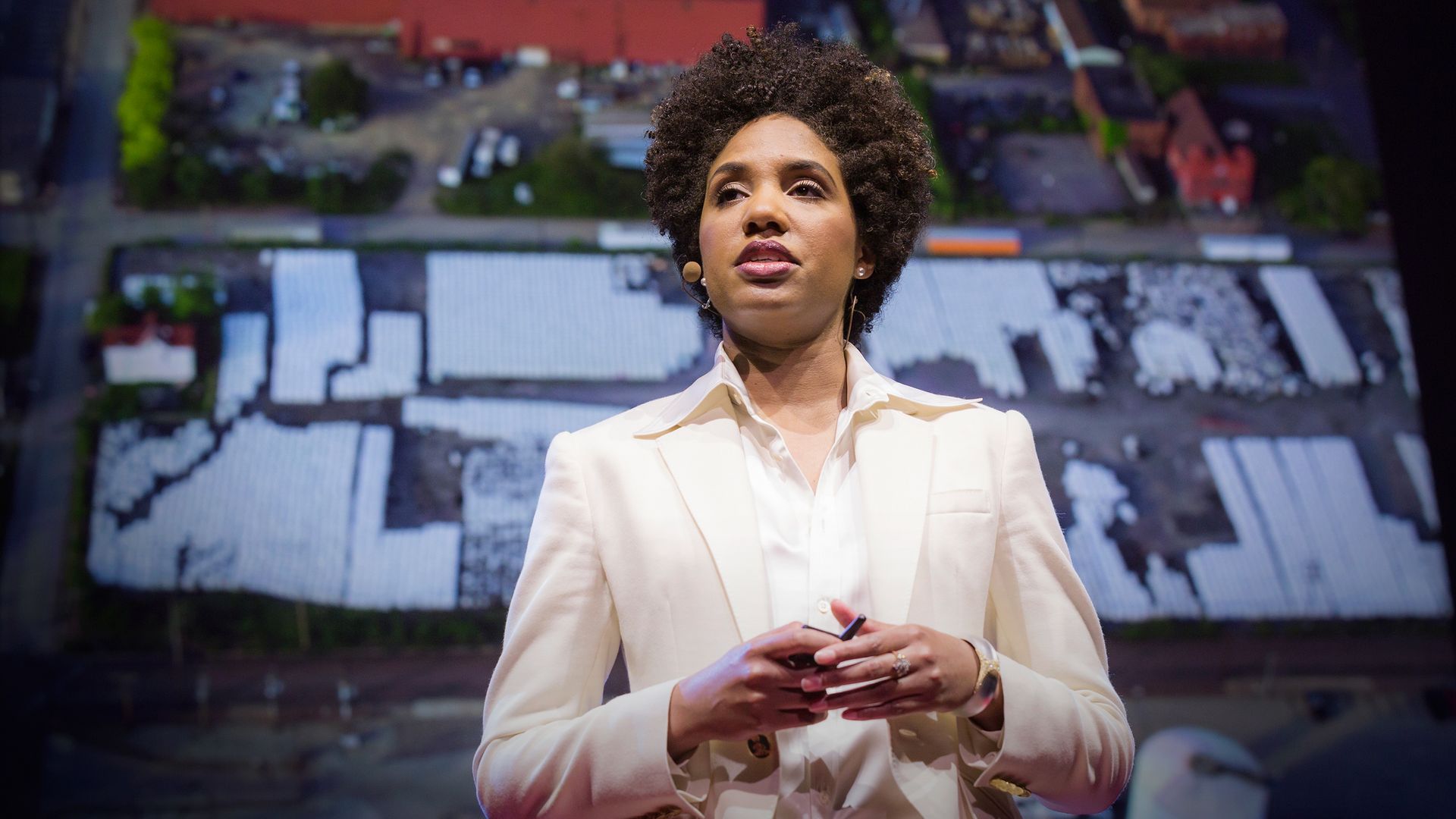
A visual history of inequality in industrial America

For the last 12 years, artist and TED Fellow LaToya Ruby Frazier has photographed friends, neighbors and family in Braddock, Pennsylvania. But though the steel town has lately been hailed as a posterchild of "rustbelt revitalization," Frazier's pictures tell a different story, of the real impact of inequality and environmental toxicity. In this short, powerful talk, the TED Fellow shares a deeply personal glimpse of an often-unseen world.

2015

TED Talk

United States
Visual artist + photographer // I am an artist primarily working with photography to explore issues around environmental justice, family and communal history, and private/public space, often blurring the lines between self-portraiture and documentary. My work has a deep concern for the mother/ daughter relationship. Relentlessly documenting encounters with Grandma Ruby (b.1925-2009), Mom (b.1959) and myself (b.1982) enables me to break unspoken intergenerational cycles. We are wrestling with internalized life experiences, perceptions of our-selves and familial personas developed by sociopolitical baggage. All of my photographs are created in Braddock, Pennsylvania, a historical steel mill town from America’s Industrial period. It is home of Andrew Carnegie’s first Steel Mill, The Edgar Thomson Works, (which still functions today). Grandma Ruby, Mom and myself grew up in significantly different social and economic climates in Braddock. Grandma Ruby witnessed Braddock’s prosperous days of Department stores, theaters and restaurants. Mom witnessed the steel mills close and white flight to suburban developments. I witnessed the War on Drugs decimate my family and community. Between our three generations we not only witnessed, we experienced and internalized the end of industrialization and rise of gentrification. Lately I have created photographs and videos that address class inequity, access to health care, and environmental racism. Grandma Ruby died from pancreatic cancer and diabetes, Mom currently suffers from an unknown neurological disorder and cancer and I was diagnosed with lupus fourteen years ago. The underpinning element in my photographs is the collaborative process between my mother and myself. Mom is co-author, artist and subject. She turns the camera on me to document us. I am also the subject and content of the work. This work is not solely social documentary. These are psychological portraits of the identity of the body and how surrounding outside space shapes and forms it physically. I view Grandma Ruby, Mom and myself as one entity. There is an intergenerational transference of our identities existing in the history of Braddock Pennsylvania. // LaToya Ruby Frazier’s artistic practice spans a range of media, including photography, video, performance, installation art and books, and centers on the nexus of social justice, cultural change, and commentary on the American experience. In various interconnected bodies of work, Frazier uses collaborative storytelling with the people who appear in her artwork to address topics of industrialism, rust belt revitalization, environmental justice, access to healthcare, access to clean water, workers’ rights, human rights, family, and communal history. This builds on her commitment to the legacy of 1930s social documentary work and 1960s and ’70s conceptual photography that address urgent social and political issues of everyday life. Frazier’s work has been the subject of many solo exhibitions at institutions in the US and Europe and her work is held in numerous public collections. LaToya Ruby Frazier is a 2015 MacArthur Foundation Fellowship recipient. In 2024 The Museum of Modern Art will exhibit the largest survey on her artwork and practice May 12, 2024 - September 07, 2024. // Artist and TED Fellow LaToya Ruby Frazier spent five months living in Flint, Michigan, documenting the lives of those affected by the city's water crisis for her photo essay "Flint is Family." As the crisis dragged on, she realized it was going to take more than a series of photos to bring relief. In this inspiring, surprising talk, she shares the creative lengths she went to in order to bring free, clean water to the people of Flint. // For the last 12 years, artist and TED Fellow LaToya Ruby Frazier has photographed friends, neighbors and family in Braddock, Pennsylvania. But though the steel town has lately been hailed as a posterchild of "rustbelt revitalization," Frazier's pictures tell a different story, of the real impact of inequality and environmental toxicity. In this short, powerful talk, the TED Fellow shares a deeply personal glimpse of an often-unseen world. // LaToya Ruby Frazier’s artistic practice spans a range of media, including photography, video, performance, installation art and books, and centers on the nexus of social justice, cultural change, and commentary on the American experience. In various interconnected bodies of work, Frazier uses collaborative storytelling with the people who appear in her artwork to address topics of industrialism, rust belt revitalization, environmental justice, access to healthcare, access to clean water, workers’ rights, human rights, family, and communal history. This builds on her commitment to the legacy of 1930s social documentary work and 1960s and ’70s conceptual photography that address urgent social and political issues of everyday life. Frazier’s work has been the subject of many solo exhibitions at institutions in the US and Europe and her work is held in numerous public collections. LaToya Ruby Frazier is a 2015 MacArthur Foundation Fellowship recipient. In 2024 The Museum of Modern Art will exhibit the largest survey on her artwork and practice May 12, 2024 - September 07, 2024. // Visual artist + photographer // water crisis, water, flight, storytelling, environmental racism, art, inequity, photogaphy, human rights, rights, environmental justice, justice, toxic substances, war, racism, documentary, social justice, steel, clean water, industrial, inequality // Alexandria|Virginia|United States|USA
Alexandria|Virginia|United States|USA

LaToya Ruby Frazier

No items found.
2015

68:25

Adam Kucharski on what should (and shouldn't) worry us about the coronavirus

Infectious disease expert Adam Kucharski uses mathematical models to help the world understand how diseases like Ebola and Zika spread -- and how they can be controlled. As the threat of COVID-19 continues to rise, he gives us a necessary perspective on its transmission, how governments have responded and what needs to change in order to end the pandemic. (Recorded March 11, 2020. Audio only)

2020

TED Talk

United Kingdom
Adam Kucharski is a Professor of Infectious Disease Epidemiology at the London School of Hygiene & Tropical Medicine. His work focuses on utilizing data and analytics for epidemic preparedness and response, including studying social behavior and immunity. He has authored a book titled "The Rules of Contagion: Why Things Spread - and Why They Stop," which delves into the principles driving contagion in various contexts. Additionally, Kucharski's research group explores how human behavior and immunity influence infectious disease outbreaks, aiming to enhance surveillance and control measures. He has also written articles for reputable publications and frequently gives popular science talks, covering topics such as disease transmission, outbreaks, and the science of luck. // The London School of Hygiene & Tropical Medicine, specifically the work of Prof Adam Kucharski, focuses on utilizing data and analytics to understand infectious disease dynamics for epidemic preparedness and response. Prof Kucharski's research involves developing mathematical and statistical approaches to study infectious disease outbreaks, combining various data sources to uncover transmission dynamics and intervention impacts. His work covers a range of infections including COVID-19, influenza, Ebola, dengue, and Zika. Additionally, he engages in public outreach activities and projects linking citizen science with data collection. // My academic research focuses on making better use of data and analytics for epidemic preparedness and response, from understanding immunity to predicting human behaviour. More broadly, I’m interested in finding new ways to generate and communicate scientific insights by engaging the public with research. // Adam Kucharski is a Professor of Infectious Disease Epidemiology at the London School of Hygiene & Tropical Medicine, specializing in utilizing data and analytics for epidemic preparedness and response. His research delves into the dynamics of infectious disease outbreaks, with a focus on social behavior, immunity, and transmission dynamics. Kucharski is the author of "The Rules of Contagion: Why Things Spread - and Why They Stop," a book exploring the principles of contagion in various contexts. He has contributed to studies on diseases like COVID-19, influenza, Ebola, dengue, and Zika, aiming to enhance surveillance and control measures. Beyond academia, Kucharski actively engages in public outreach activities to communicate scientific insights and promote citizen science initiatives. // Mathematician and epidemiologist // I'm an epidemiologist, mathematician, author, and a TED Senior Fellow. I’m co-director of the Centre for Epidemic Preparedness and Response at the London School of Hygiene & Tropical Medicine, where I use data-driven analysis to understand outbreaks, from immunity to human behaviour. I have advised multiple governments on major disease epidemics, as well as infodemics and social contagion. I regularly write about science, and my articles have appeared in places like Wired, Financial Times, and The Atlantic. I am author of 'The Rules of Contagion: Why Things Spread – and Why They Stop', which was named a Science Book of the Year by the Times, Guardian and Financial Times, as well as ‘The Perfect Bet’, about the relationship between science and games of chance. My new book ‘Proof: The Search for Certainty in an Uncertain World’ is out in spring 2025. I am also co-founder of wishidknown.co, a new platform for harnessing collective wisdom - we’ve already been growing a community for parents and will soon be launching one for founders. // As the threat of COVID-19 continues, infectious disease expert and TED Fellow Adam Kucharski answers five key questions about the novel coronavirus, providing necessary perspective on its transmission, how governments have responded and what might need to change about our social behavior to end the pandemic. (This video is excerpted from a 70-minute interview between Kucharski and head of TED Chris Anderson. Listen to the full interview at http://go.ted.com/adamkucharski. Recorded March 11, 2020) // Adam Kucharski is a Professor of Infectious Disease Epidemiology at the London School of Hygiene & Tropical Medicine, specializing in utilizing data and analytics for epidemic preparedness and response. His research delves into the dynamics of infectious disease outbreaks, with a focus on social behavior, immunity, and transmission dynamics. Kucharski is the author of "The Rules of Contagion: Why Things Spread - and Why They Stop," a book exploring the principles of contagion in various contexts. He has contributed to studies on diseases like COVID-19, influenza, Ebola, dengue, and Zika, aiming to enhance surveillance and control measures. Beyond academia, Kucharski actively engages in public outreach activities to communicate scientific insights and promote citizen science initiatives. // Mathematician and epidemiologist // data collection, writing, public health, data, health, infectious disease, finance, epidemics, research, outbreak analysis, citizen scientist, data and analytics, covid, human behaviour, data-driven, mathematics, epidemiology, open science, science communication, science, coronaviruses, communication, pandemic, disease // United Kingdom|England|London
United Kingdom|England|London

Adam Kucharski

No items found.
2020

04:43

A glimpse of life on the road

As a young girl, photojournalist and TED Fellow Kitra Cahana dreamed about running away from home to live freely on the road. Now as an adult and self-proclaimed vagabond, she follows modern nomads into their homes -- boxcars, bus stops, parking lots, rest stop bathrooms -- giving a glimpse into a culture on the margins.

2014

TED Talk

United States
Kitra Cahana is an acclaimed documentary photographer, filmmaker, and TED speaker. Her work delves into important social, anthropological, and spiritual themes, capturing deeply human stories with sensitivity and depth. Through her photography and films, Kitra Cahana explores the lives of modern nomads, marginalized cultures, and individuals facing challenging circumstances. She has received numerous awards and recognitions for her impactful storytelling, including a Peabody Award and a TED Senior Fellowship. // I am only just discovering and refining my voice and my purpose in this world. But I know the contours of this purpose and that is to make the world more empathetic. I wish that through my work people see the other with a measure more of kindness and generosity. So much of the violence and pain that humans exert on other humans is due to them not seeing each other in their fullness. We are quick to judge, to misunderstand and to see the worst in others. My work hopes to change just a small part of that. // Kitra Cahana is an accomplished documentary photographer, filmmaker, and TED speaker whose work focuses on exploring social, anthropological, and spiritual themes. Through her sensitive and profound storytelling, Cahana sheds light on the lives of modern nomads, marginalized cultures, and individuals facing adversity. Her impactful photography and films aim to foster empathy and understanding among viewers, encouraging them to see the world through a lens of kindness and generosity. With accolades such as a Peabody Award and a TED Senior Fellowship, Kitra Cahana's work stands as a testament to her commitment to capturing the human experience with depth and compassion. // Vagabond photojournalist + conceptual artist // Canadian photographer who has spent the past three years researching and documenting nomadic youth identities in the United States. // KITRA'S TED TALK: http://www.ted.com/talks/kitra_cahana_my_father_locked_in_his_body_but_soaring_free Kitra Cahana is a documentary, fine art photographer and filmmaker whose work explores important social, anthropological, and spiritual themes. She has photographed multiple stories for National Geographic Magazine. She is currently directing and producing a series of short Doc films for the CBC. As a documentary photographer, Kitra embeds herself in communities, often for months at a time. She has chronicled the daily lives of teens at a Texas high school, told the story of a Venezuelan cult, followed a group of nomadic youth across the United States. As a fine art photographer and video artist Kitra focuses on the less explicable, often pushing the possibilities of the photographic medium. Her work in this genre deals with themes of the body and spirituality, a topic she took on following her father's spiritual experience following a brain stem stroke. // In 2011 Ronnie Cahana suffered a severe stroke that left him with locked-in syndrome: completely paralyzed except for his eyes. While this might shatter a normal person’s mental state, Cahana found peace in “dimming down the external chatter,” and “fell in love with life and body anew.” In a somber, emotional talk, his daughter Kitra shares how she documented her father's spiritual experience, as he helped guide others even in a state of seeming helplessness. // As a young girl, photojournalist and TED Fellow Kitra Cahana dreamed about running away from home to live freely on the road. Now as an adult and self-proclaimed vagabond, she follows modern nomads into their homes -- boxcars, bus stops, parking lots, rest stop bathrooms -- giving a glimpse into a culture on the margins. // Kitra Cahana is an accomplished documentary photographer, filmmaker, and TED speaker whose work focuses on exploring social, anthropological, and spiritual themes. Through her sensitive and profound storytelling, Cahana sheds light on the lives of modern nomads, marginalized cultures, and individuals facing adversity. Her impactful photography and films aim to foster empathy and understanding among viewers, encouraging them to see the world through a lens of kindness and generosity. With accolades such as a Peabody Award and a TED Senior Fellowship, Kitra Cahana's work stands as a testament to her commitment to capturing the human experience with depth and compassion. // Vagabond photojournalist + conceptual artist // public transit, violence, marginalized, photography, filmmaking, youth, buses, photojournalism, documentary, teen, art, stem // USA|Tucson|Arizona|Montreal|United States|Canada
USA|Tucson|Arizona|Montreal|United States|Canada

Kitra Cahana

No items found.
2014

Playful, wondrous public spaces built for community and possibility | Matthew Mazzotta

Introducing a new type of public space, custom-fit for communities in need of a shot of hope and wonder. Artist and TED Fellow Matthew Mazzotta takes us across the US, sharing delightful projects that refresh space and place, spark collective conversation and reignite a sense of possibility and purpose in their surroundings.

2021

Podcasts

United States
Artist + activist // Using clouds, giant flamingos, houses and dog waste to design unique public spaces with communities to solve unaddressed issues. Matthew Mazzotta works at the intersection of art, activism, and urbanism, focusing on the power of the built environment to shape our relationships and experiences. His community-specific public projects integrate new forms of civic participation and social engagement into the built environment and reveal how the spaces we travel through and spend our time living within have the potential to become distinct sites for intimate, radical, and meaningful exchanges. Through his process, each project starts by creating temporary public spaces for listening – ‘Outdoor Living Room’ - as a way to capture voices from local people that might not attend more formal meetings. Stemming from this approach are experiences that involve people from a range of backgrounds working together to create new models of living that contribute to local culture beyond the economic realm. Mazzotta received a BFA from the School of the Art Institute of Chicago, a Masters of Science from the Massachusetts Institute of Technology’s Program in Art, Culture and Technology, a Loeb Fellowship from Harvard University, and is a Guggenheim Fellow. // Introducing a new type of public space, custom-fit for communities in need of a shot of hope and wonder. Artist and TED Fellow Matthew Mazzotta takes us across the US, sharing delightful projects that refresh space and place, spark collective conversation and reignite a sense of possibility and purpose in their surroundings. // Using clouds, giant flamingos, houses and dog waste to design unique public spaces with communities to solve unaddressed issues. Matthew Mazzotta works at the intersection of art, activism, and urbanism, focusing on the power of the built environment to shape our relationships and experiences. His community-specific public projects integrate new forms of civic participation and social engagement into the built environment and reveal how the spaces we travel through and spend our time living within have the potential to become distinct sites for intimate, radical, and meaningful exchanges. Through his process, each project starts by creating temporary public spaces for listening – ‘Outdoor Living Room’ - as a way to capture voices from local people that might not attend more formal meetings. Stemming from this approach are experiences that involve people from a range of backgrounds working together to create new models of living that contribute to local culture beyond the economic realm. Mazzotta received a BFA from the School of the Art Institute of Chicago, a Masters of Science from the Massachusetts Institute of Technology’s Program in Art, Culture and Technology, a Loeb Fellowship from Harvard University, and is a Guggenheim Fellow. // Artist + activist // technology, urbanism, activism, built environment, design, citizen engagement, science, architecture, buildings, art, public spaces // New York|Canton|United States|USA
New York|Canton|United States|USA

Matthew Mazzotta

No items found.
2021

02:36

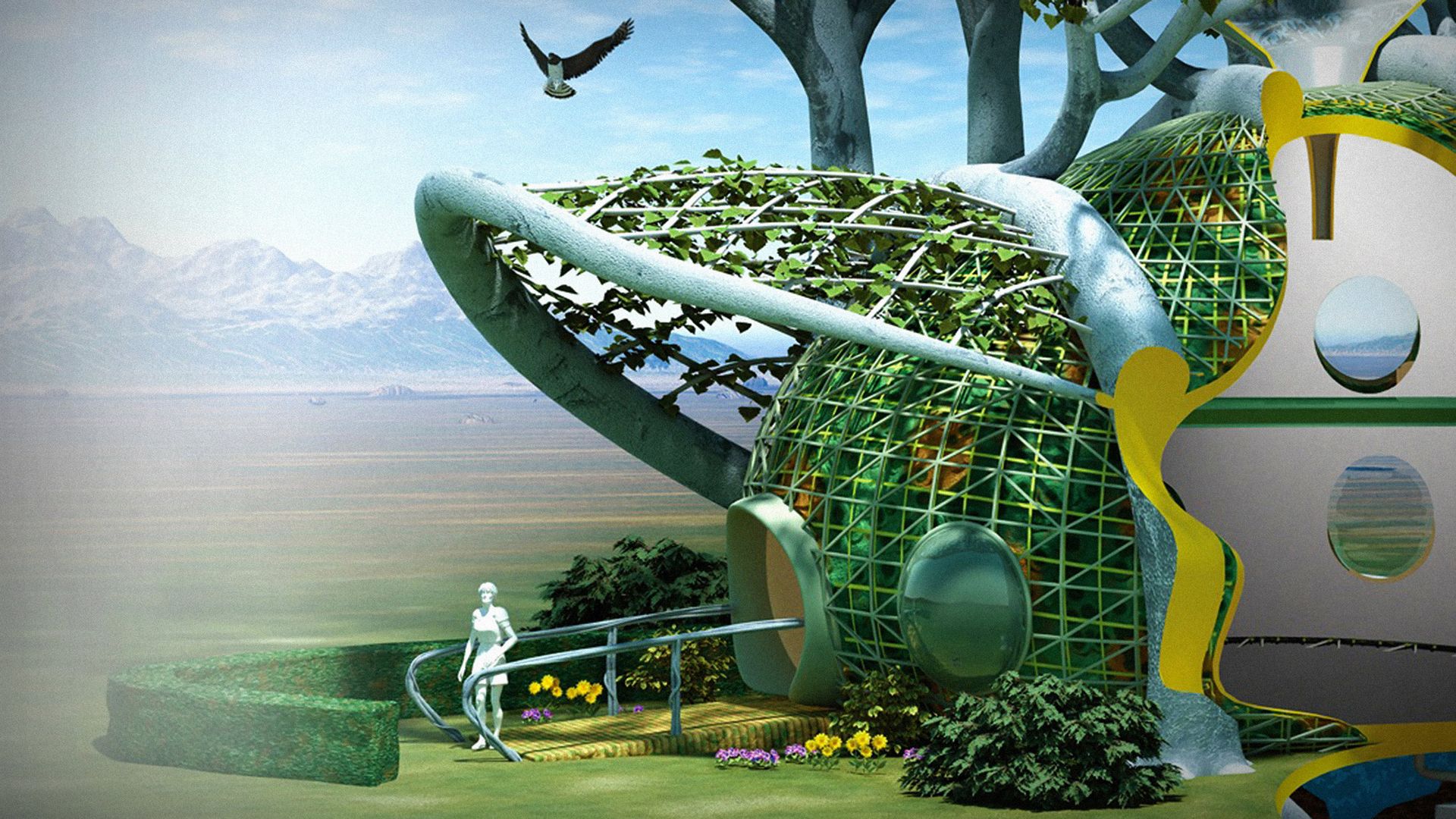
Don't build your home, grow it!

TED Fellow and urban designer Mitchell Joachim presents his vision for sustainable, organic architecture: eco-friendly abodes grown from plants and -- wait for it -- meat.

2010

TED Talk

United States
Parsons School of Design; Pratt Institute; Hess Architects; Norman Foster Foundation; Syracuse University; Terreform ONE; Cornell University; New York University; EverCurb; University of Toronto; Columbia University; Pei Cobb Freed & Partners; Moshe Safdie and Associates; Harvard University Graduate School of Design; School of the Museum of Fine Arts; The European Graduate School; Gehry Partners, LLP; Columbia University in the City of New York; Rensselaer Polytechnic Institute; The European Graduate School ; Washington University; Massachusetts Institute of Technology; MIT Media Lab; University at Buffalo
Terreform ONE is a nonprofit art, architecture, and urban design research group founded in 2006. They focus on combating the extinction of planetary species through innovative design acts and exploring environmental possibilities in habitats, cities, and landscapes. The organization operates as an interdisciplinary lab advancing socio-ecological design, with a strong emphasis on building resilience in various sectors like transportation, infrastructure, and energy. Their work includes projects in public art, biotech architecture, and urban systems, aiming to communicate complex environmental and societal messages. Terreform ONE offers educational programs, fellowships, and engages in creating sustainable, biodiverse cities through innovative concepts and materials. // Mitchell Joachim is an architect and urban designer known for his innovative projects that utilize living biological matter for fabrication and design purposes. He is the Co-Founder of Terreform ONE and an Associate Professor of Practice at NYU. Joachim has an extensive educational background, including a Ph.D. from MIT and a Master of Architecture from Harvard GSD. Throughout his career, he has received numerous awards and recognitions for his work, such as the Fulbright Scholarship, LafargeHolcim Foundation Award, and Time Magazine Best Invention of the Year 2007. Joachim's projects have been exhibited at prestigious institutions like MoMA and have been widely published. He has been recognized by various publications and organizations for his contributions to architecture and sustainability. // Director of Research and Development, Former Executive Director. // // GLOBAL Design New York University (London) was part two of a five-city exhibition/speaker series is entitled Elsewhere Envisioned that brings together leading architects, designers, urbanists, historians, and scientists to address global climate concerns. // // Parsons School of Design; Pratt Institute; Hess Architects; Norman Foster Foundation; Syracuse University; Terreform ONE; Cornell University; New York University; EverCurb; University of Toronto; Columbia University; Pei Cobb Freed & Partners; Moshe Safdie and Associates; Harvard University Graduate School of Design; School of the Museum of Fine Arts; The European Graduate School; Gehry Partners, LLP; Columbia University in the City of New York; Rensselaer Polytechnic Institute; The European Graduate School ; Washington University; Massachusetts Institute of Technology; MIT Media Lab; University at Buffalo // Mitchell Joachim is a Director of Research and Development with a background as a Former Executive Director. With experience at GLOBAL Design New York University (London), Mitchell has been involved in a diverse range of projects, including exhibitions and speaker series focusing on global climate concerns. His work involves collaborating with architects, designers, urbanists, historians, and scientists to address pressing environmental issues. Mitchell's expertise lies in envisioning innovative solutions and pushing the boundaries of design to create a more sustainable future. // Mitchell Joachim is an architect, urban designer, and Co-Founder of Terreform ONE, a nonprofit organization dedicated to innovative design solutions that combat the extinction of planetary species. With a Ph.D. from MIT and a Master of Architecture from Harvard GSD, Joachim is known for his pioneering work in utilizing living biological matter for fabrication and design purposes. He serves as an Associate Professor of Practice at NYU and has received prestigious awards like the Fulbright Scholarship and the LafargeHolcim Foundation Award. Joachim's projects, exhibited at institutions like MoMA, focus on creating sustainable, biodiverse cities through interdisciplinary collaborations and pushing the boundaries of design to address pressing environmental challenges. // Architect + futurist // Dr. Joachim is a leader in ecological design and urbanism and co-founder at Terreform ONE and ONE Lab. Mitchell is an Associate Professor at NYU and EGS in Switzerland. Previously he was the Frank Gehry Chair at University of Toronto and faculty at Pratt, Columbia, Syracuse, Washington, and Parsons. He was formerly an architect at Gehry Partners, and Pei Cobb Freed. He is a TED Senior Fellow and has been awarded fellowships with Moshe Safdie and Martin Society for Sustainability, MIT. He won the Zumtobel Group Award for Sustainability and Humanity, History Channel and Infiniti Award for City of the Future, and Time Magazine Best Invention with MIT Smart Cities. His project, Fab Tree Hab, has been exhibited at MoMA and widely published. He was chosen by Wired magazine for "The 2008 Smart List: 15 People the Next President Should Listen To." Rolling Stone magazine honored Mitchell in "The 100 People Who Are Changing America." Popular Science magazine has featured his work as a visionary for "The Future of the Environment". Dwell magazine selected him for "The Now 99" in 2012. // Dr. Joachim is the Co-Founder of Terreform ONE and an Associate Professor of Practice at NYU. Formerly, he was an architect at the offices of Frank Gehry and I.M. Pei. He has been awarded a Fulbright Scholarship and fellowships with TED, Moshe Safdie, and Martin Society for Sustainability, MIT. He was chosen by Wired magazine for "The Smart List” and selected by Rolling Stone for “The 100 People Who Are Changing America”. Mitchell won many honors including; ARCHITECT R+D Award, AIA New York Urban Design Merit Award, 1st Place International Architecture Award, Victor Papanek Social Design Award, Zumtobel Group Award for Sustainability, History Channel Infiniti Award for the City of the Future, and Time magazine’s Best Invention with MIT Smart Cities Car. He's featured as “The NOW 99” in Dwell magazine and “50 Under 50 Innovators of the 21st Century" by Images Publishers. He co-authored three books, "XXL-XS: New Directions in Ecological Design," "Super Cells: Building with Biology," and "Global Design: Elsewhere Envisioned". His design work has been exhibited at MoMA and the Venice Biennale. He earned: Ph.D. at Massachusetts Institute of Technology, MAUD Harvard University, MArch Columbia University. // TED Fellow and urban designer Mitchell Joachim presents his vision for sustainable, organic architecture: eco-friendly abodes grown from plants and -- wait for it -- meat. // Mitchell Joachim is an architect, urban designer, and Co-Founder of Terreform ONE, a nonprofit organization dedicated to innovative design solutions that combat the extinction of planetary species. With a Ph.D. from MIT and a Master of Architecture from Harvard GSD, Joachim is known for his pioneering work in utilizing living biological matter for fabrication and design purposes. He serves as an Associate Professor of Practice at NYU and has received prestigious awards like the Fulbright Scholarship and the LafargeHolcim Foundation Award. Joachim's projects, exhibited at institutions like MoMA, focus on creating sustainable, biodiverse cities through interdisciplinary collaborations and pushing the boundaries of design to address pressing environmental challenges. // Architect + futurist // technology, infrastructure, architecture, green building, ecological design, buildings, cities, extinction, building resilience, eco-friendly, urban, research, meat, resilience, mobility, climate, design, urban planning, species, urban design, urbanism, biotech, transportation and infrastructure, plants, urban mobility, living materials , sustainable design, trees, cars, future cities, science, food, transportation, ecology, ecological // New York|United States|Brooklyn|USA
New York|United States|Brooklyn|USA

Mitchell Joachim

No items found.
2010

How dirt bikes and STEM ignite ingenuity in Baltimore | Brittany Young

Dirt biking is more than just a pastime -- it's an opportunity to disrupt the cycle of poverty and provide enriching STEM education, says TED Fellow Brittany Young. In this perspective-shifting talk, she shares how her team is working with students and street riders to create safe spaces, transferable skills and community. Hosted on Acast. See acast.com/privacy for more information.

2023

Podcasts

Iran
STEM educator // Dirt biking is more than just a pastime -- it's an opportunity to disrupt the cycle of poverty and provide enriching STEM education, says TED Fellow Brittany Young. In this perspective-shifting talk, she shares how her team is working with students and street riders to create safe spaces, transferable skills and community. // STEM educator // bicycle, mobility, education, poverty, stem

Brittany Young

No items found.
2023

04:47

The gravity-defying future of manufacturing

3D printing promised to reinvent how we make things, but it's mostly stuck producing prototypes with a high level of waste. Designer and TED Fellow Schendy Kernizan found a different way — by printing objects directly into a tub of gel. He explains how this technique eliminates the constraints of gravity, pushing the limits of how we can manufacture objects across medicine, fashion, space travel and more.

2026

TED Fellows Film

United States

Schendy Kernizan

No items found.
2026

07:07

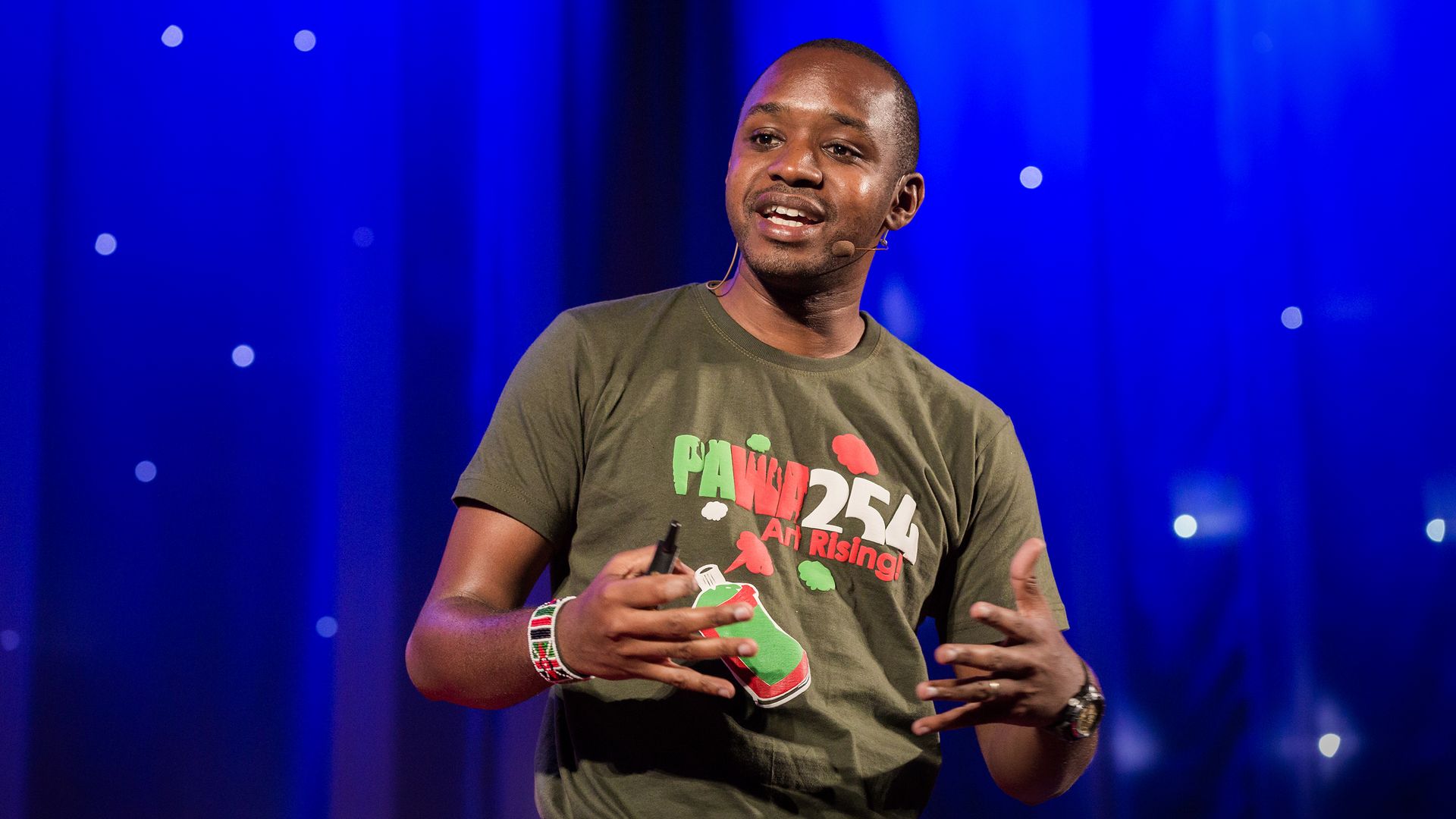
The day I stood up alone

Photographer Boniface Mwangi wanted to protest against corruption in his home country of Kenya. So he made a plan: He and some friends would stand up and heckle during a public mass meeting. But when the moment came ... he stood alone. What happened next, he says, showed him who he truly was. As he says, "There are two most powerful days in your life. The day you are born, and the day you discover why." Graphic images.

2015

TED Talk

Kenya
Photo-activist // Boniface Mwangi is an award-winning Kenyan photographer. For four years he held a staff photography position at The Standard, the second largest Kenyan newspaper, taking on various assignments of increasing responsibility in a number of countries. Boniface became the eye of Kenyans during the 2007 post-election violence and showed courage and compassion to capture thousands of images, some so gory that they could not be published. Following the political resolution to the election crisis, Boniface started to see himself as a visual artist, using photography as the vehicle for social change in Kenya. His focus was the fight against the impunity of politicians in the face of over 1000 dead and half a million people displaced as a result of the violence they caused. "Boniface’s images are crucial for the healing of our nation; his ability to stay focused and inject a sense of artistry into his work is a testimony to the spirit of professional journalism," wrote Jackson Biko after Boniface was voted Kenya Photojournalist of the Year in 2008 by readers of Adam, a prolific men’s magazine in the country. Since then, Boniface has continued to work as a freelance photographer for Bloomberg, the AFP, Reuters, the Boston Globe, and other media outlets while building a movement for social change in Kenya through “Picha Mtaani” (Swahili for street exhibition). The photo exhibit aims to heal the scars of Kenyans and draw their attention to the dynamics of the violence to prevent a repeat during the upcoming elections of 2013. Boniface founded Pawa254 as a collaborative hub where journalists, artists and activists could meet to find innovative ways of achieving social change. The hub has already had many functions, but two campaigns stand out. “Heal the Nation” is a very successful initiative to show a half-hour documentary about post-election violence to as many Kenyans as possible and facilitate discussions around the film. The campaign is accompanied by a more shadowy graffiti campaign that has evoked strong reactions and fired up the youth of Kenya and the world, as images of the clever graffiti grace the pages of the world’s newspapers. In 2009 United States Secretary of State Hillary Clinton wrote a letter commending Boniface for his work during the post-election violence. She stated, "Your photography is absolutely stunning and tells an important and powerful story for the world to hear." Boniface's work has appeared in virtually all the important newspapers in the world, from The New York Times to The Guardian, Chicago Tribune, Los Angeles Times, The International Herald Tribune, The Sunday Times, The Telegraph, The Boston Globe and the BBC Focus on Africa magazine, among other international publications. He has been recognized as a Magnum Photography Fellow, TED Global Fellow, Acumen Fund East Africa Fellow, and twice as the CNN Multichoice Africa Photojournalist of the Year, among other awards. Boniface lives in Nairobi with his wife and three children, all given tribal names from tribes other than his own. // Boniface Mwangi is one of the most vocal and courageous Kenyans of his generation. Recognized globally for his passion and excellence in photography, this photographer-cum-activist could not resist the call to activism after witnessing first-hand the brutality that disadvantaged Kenyans experienced in the wake of the Post- Election Violence in 2008. He then established Picha Mtaani a traveling photography exhibition telling of the violence. The travelling photo exhibition toured across Kenya and drew more than 2 million people.- The tour of the exhibition offered a platform for individual reflection, honest dialogue, interpersonal healing and community reconciliation. In 2012 Boniface founded PAWA254, a hub for creatives in Kenya where journalists, artists and activists find innovative ways of achieving social change. At 38, he has been a guest of the state on many occasions for championing justice and calling out powerful leaders for their wanton corruption and blatant violation of human rights. This has earned him friends and foes alike. His commitment to promote social change has also come at a heavy price. As a husband and father, his wife and children have endured hostilities from different quarters. The escalation of these hostilities has seen him being threatened with harm and/or death by powerful forces in government. Like many Kenyans with a challenging upbringing where basic needs were not always met, Boniface Mwangi is all too familiar with the struggles of the ordinary Kenyan. He has worked as a bus-park sweeper, house-boy and hawker. He even served time in Approved School. Despite monumental odds, he has risen, discovering photography at a young age and applying his entrepreneurial brilliance to break free from the clutches of poverty. Those who have worked with Boniface Mwangi can attest to his diligence, compassion and self-drive. He has twice won the CNN Multichoice Africa Photojournalist of the Year Award and is the youngest Prince Claus Laureate. New African Magazine named him one of the 100 Most Influential Africans of 2014, 2016 and 2020 and he is also a senior TED Fellow. Time magazine recognized him as a Next Generation Leader in 2015 and was selected as Kenya’s Top 40 under 40 men 2016. He was named as top 100 Kenyans 2019 and 2020. He was the recipient of Luxembourg Peace Prize 2020/21 awarded Schengen Peace Foundation and Luxembourg Peace Prize. He is currently a Tutu Fellow. Boniface Mwangi continues to wage a spirited campaign against oppressive establishments. Although at one point he stood alone, today his movement has gained traction with many – inspired by his vision and consistency – adding their voices to champion for a better Kenya. Boniface and his wife Njeri Mwangi are the loving parents of 3 adorable children. He is the author of Unbounded – a poignant and riveting memoir that captures his incredible journey. // Photographer Boniface Mwangi wanted to protest against corruption in his home country of Kenya. So he made a plan: He and some friends would stand up and heckle during a public mass meeting. But when the moment came ... he stood alone. What happened next, he says, showed him who he truly was. As he says, "There are two most powerful days in your life. The day you are born, and the day you discover why." Graphic images. // Boniface Mwangi is one of the most vocal and courageous Kenyans of his generation. Recognized globally for his passion and excellence in photography, this photographer-cum-activist could not resist the call to activism after witnessing first-hand the brutality that disadvantaged Kenyans experienced in the wake of the Post- Election Violence in 2008. He then established Picha Mtaani a traveling photography exhibition telling of the violence. The travelling photo exhibition toured across Kenya and drew more than 2 million people.- The tour of the exhibition offered a platform for individual reflection, honest dialogue, interpersonal healing and community reconciliation. In 2012 Boniface founded PAWA254, a hub for creatives in Kenya where journalists, artists and activists find innovative ways of achieving social change. At 38, he has been a guest of the state on many occasions for championing justice and calling out powerful leaders for their wanton corruption and blatant violation of human rights. This has earned him friends and foes alike. His commitment to promote social change has also come at a heavy price. As a husband and father, his wife and children have endured hostilities from different quarters. The escalation of these hostilities has seen him being threatened with harm and/or death by powerful forces in government. Like many Kenyans with a challenging upbringing where basic needs were not always met, Boniface Mwangi is all too familiar with the struggles of the ordinary Kenyan. He has worked as a bus-park sweeper, house-boy and hawker. He even served time in Approved School. Despite monumental odds, he has risen, discovering photography at a young age and applying his entrepreneurial brilliance to break free from the clutches of poverty. Those who have worked with Boniface Mwangi can attest to his diligence, compassion and self-drive. He has twice won the CNN Multichoice Africa Photojournalist of the Year Award and is the youngest Prince Claus Laureate. New African Magazine named him one of the 100 Most Influential Africans of 2014, 2016 and 2020 and he is also a senior TED Fellow. Time magazine recognized him as a Next Generation Leader in 2015 and was selected as Kenya’s Top 40 under 40 men 2016. He was named as top 100 Kenyans 2019 and 2020. He was the recipient of Luxembourg Peace Prize 2020/21 awarded Schengen Peace Foundation and Luxembourg Peace Prize. He is currently a Tutu Fellow. Boniface Mwangi continues to wage a spirited campaign against oppressive establishments. Although at one point he stood alone, today his movement has gained traction with many – inspired by his vision and consistency – adding their voices to champion for a better Kenya. Boniface and his wife Njeri Mwangi are the loving parents of 3 adorable children. He is the author of Unbounded – a poignant and riveting memoir that captures his incredible journey. // Photo-activist // children, violence, activism, photo-journalism, human rights, rights, youth, poverty, documentary, government, justice, campaigns, basic needs // Nairobi County|Kenya|Nairobi
Nairobi County|Kenya|Nairobi

Boniface Mwangi

No items found.
2015

A disability-inclusive future of work | Ryan Gersava

One billion people worldwide are living with a disability, and too many of them are left unemployed or feeling like they need to hide their conditions due to discriminatory hiring practices, says social innovator and TED Fellow Ryan Gersava. With a focus on healing and disclosure, he created an online school to provide people like him with the technical skills and employment aid they need to thrive. Now he's calling for every company to initiate efforts to welcome and support those with disabilities, creating a future of work that leaves no one behind. Hosted on Acast. See acast.com/privacy for more information.

2023

Podcasts

Philippines
HepaHealth; Globe Telecom; Kabataang Pilipino Inc.; Hope Radio Philippines; Adventist Medical Center- Iligan; World Economic Forum; Activating Rural Changemakers (ARC); Virtualahan; Adventist Medical Center and Colleges; British Council; Japan International Cooperation Agency (JICA), National Youth Commission of the Philippines; The DO School; Philippine Red Cross Youth Iligan City Chapter; Watson Institute Philippines; The Global Good Fund; U.S. Department of State; Ashoka Philippines; ChangemakerXchange; TED Fellows Program; Forbes
Ryan Gersava, through his organization Virtualahan, focuses on providing equal opportunities for socially excluded populations in the new digital economy. He designs a social technology that integrates well-being sessions and digital job skills training tailored for individuals facing social stigma. By offering virtual training and coaching, Virtualahan empowers individuals to access high-value work from home, fostering economic independence and community support. Ryan advocates for redefining disability and promoting inclusive employment practices, aiming to shift mindsets and create opportunities for marginalized populations. Through partnerships and innovative strategies, Virtualahan is making a significant impact in empowering individuals to overcome social and economic exclusion. // Virtualahan is a tech social enterprise founded by Ryan Gersava that focuses on equipping people with disabilities and other disadvantaged groups with the skills and mindset to become successful employees and entrepreneurs. Through a combination of life-coaching, community building, and digital skills training, Virtualahan aims to break down employment barriers and create a future of work where no one is left behind. The organization has over 400 graduates from various cities and provinces in the Philippines and has received recognition for its impactful work, including being awarded as one of the Ten Accomplished Youth Organizations and winning the Google Business Stories Award. Additionally, Virtualahan has been commended for its inclusive employment practices and was honored as a Global Champion at the World Summit Awards, becoming the first Filipino company to receive this recognition. // Social entrepreneur, educator, and diversity and inclusion champion. Ryan is the Founder and Chairman of Virtualahan, an online vocational school providing inclusive training to people with disabilities, recovering addicts, and others who struggle to find employment, while simultaneously empowering companies to become inclusive employers. He is also an Ashoka Fellow, an honoree for Forbes 30 under 30 Asia for Social Impact and a 2022 TED Fellow. Specialties: Diversity, Equity, Inclusion and Accessibility, Social Entrepreneurship, Design Thinking, Systems Change, Innovative Education, Impact Sourcing // A lifetime fellow at Ashoka, the oldest and largest network of social entrepreneurs in the world. It was founded in 1980 by Bill Drayton based on the idea that the most powerful force for good in the world is a social entrepreneur: a person driven by an innovative idea that can help correct an entrenched global problem. The world’s leading social entrepreneurs pursue system-changing solutions that permanently alter existing patterns of activity. // A global and well-being facilitator in-charge of holding the space and orchestrating the magic of every ChangemakerXchange summit. I am also a social media community manager that brings together the alumni of the program and engaging them in the community's Facebook group.----The ChangemakerXchange is a global collaborative community and series of retreats for young social innovators, co-created by Ashoka and the Robert Bosch Stiftung. It provides social innovators from around the world with the chance to come together in person, learn from each other, refine existing ideas and start collaborations. The community has now become >250 people following summits around the world. Together these Changemakers have developed over 50 cross-border collaborations reaching many thousands of people. // Active Citizens is a social leadership training programme that promotes intercultural dialogue and community-led social development.Through the programme, we bring together people with different beliefs and perspectives to learn from and share with each other. Working with our partners around the globe, we train participants in the skills and knowledge needed to affect social change in their communities.Active Citizens connects thousands of like-minded people around the world who collectively want to make a fairer and more inclusive society. https://www.britishcouncil.org/active-citizens // One of the chosen 12 Fellows (out of 2,400+ candidates) of The Global Good Fund’s 2017 Leadership Development Fellowship Program for Social Entrepreneurs. I'm the only one representing South-east Asia for this cohort and also the youngest.The Global Good Fund is a leadership development enterprise built by and for social entrepreneurs. We identify high-potential leaders and accelerate their success through proven and proprietary development methods. We believe growing leaders is the best strategy for solving complex social problems and achieving global good.http://www.globalgoodfund.org/ // Watson Institute - Philippines is an 8-week long incubator in Manila, Philippines for student innovators, leaders, and entrepreneurs. It includes mentorship and short courses from some of the world's foremost practitioners including the country director of Ashoka Philippines and world-renowned entrepreneurs; award winning training inspired by the Transformative Action Institute in the skills of empathy, creativity, resilience, fundraising, team-building, human-centered design, and social aikido; and the Watson Lab in which scholars receive personalized coaching and connections to world-class mentors, partners and funders to pilot, prototype, and scale their ideas to shape the future. // Hope Channel Philippines is a religious network of the Seventh-day Adventist Church & Gateway UHF Broadcasting in the Philippines. Founded and launched on September 26, 2011 in Southern Mindanao (its main service broadcast provider), and on January 2012 in Luzon and Visayas. It was first seen on UHF Channel 25 in Davao in Mindanao Region.It had also its first radio station named Hope Radio Philippines which will be heard on 101.9 Hope radio Iligan, DXCR on MVC and DXHR-AM in Butuan City. In Luzon, this station is broadcast from 7pm-7am while its sharing network station form U.S. 3ABN International which aired from 7am-7pm on UHF Channel 45, Manila. The network programming is similar to Hope Channel International programming but in Filipino language. // The Red Cross Youth (RCY) is the youth volunteering program of the Philippine Red Cross. Its mission is to educate and empower children and youth in the spirit of the Red Cross through constructive trainings and effective leadership and provide opportunities for directing and harnessing their energies and idealism into worthwhile humanitarian activities.The Philippine Red Cross Youth seeks to:Inculcate humanitarian valuesInstill the practice of healthy lifestyleEnhance youth leadership through serviceAdvocate National/International friendshipLink: https://www.facebook.com/Iligan.RCY?fref=ts // The JENESYS Programme is organized by The Government of Japan through the Japan Information and Culture Center (JICC) of the Embassy of Japan as well as the Japan International Cooperation Center (JICE), in close cooperation with the National Youth Commission (NYC) of the Republic of the Philippines. By fostering strong networks among the youths of Japan and the Philippines, the JENESYS Programme endeavors to promote cultural appreciation and mutual understanding between our two countries. The Philippine-Tohoku Goodwill Ambassadors are expected to gain a deeper understanding of Japanese culture, as well as visit Kesennuma City in Tohoku region and learn from Japan's recovery efforts, disaster risk management and the concept of a “greener environment”. The said programme was agreed upon in a joint statement by both the Government of Japan and the Government of the Republic of the Philippines on September 27, 2011, with Prime Minister Yoshihiko Noda stating that Japan will invite 400 Filipino college students to Japan this year as “Philippine-Tohoku Goodwill Ambassadors.” // Virtualahan is a social enterprise that eliminates employment barriers for People with Disabilities, former sex workers and drug addicts, persons in jail, indigenous people, and other disadvantaged communities who are socially excluded in the workplace. We do this through online training, remote work, life-coaching, and community building using cost-effective and transferrable social technology. // Part of the 2022 cohort of TED Fellows, whose work spans five continents and represents 14 countries Learn more here-- https://blog.ted.com/meet-the-2022-class-of-ted-fellows/ // Virtualahan is a social enterprise that eliminates employment barriers for People with Disabilities, former sex workers and drug addicts, persons in jail, indigenous people, and other disadvantaged communities who are socially excluded in the workplace. We do this through online training, remote work, life-coaching, and community building using cost-effective and transferrable social technology. // Ryan Gersava founded Virtualahan to break down employment barriers for stigmatized people, including those with disabilities and recovering drug addicts, by providing digital-focused job-skills training for roles that can be done remotely. // HepaHealth works on eradicating viral Hepatitis in The Philippines by connecting communities to care. www.hepahealth.org // An active Global Shaper from Davao Hub of the Global Shapers Community of the World Economic Forum. The Global Shapers Community is a network of young people driving dialogue, action and change. We believe in a world where young people are central to solution building, policy-making and lasting change. // Developed a framework that ignites the change making potential of indigenes Filipino youth using design thinking and systems change principles. // I'm working with MAINSTAY and SAILS at Seattle Central College focusing on developing new strategies, integration of technology in their programs, and harvesting 30 years of knowledge and experience in supporting Persons with Disabilities become successful in their careers. // Winner of the 2017 Asia-Pacific Future Makers Program, a social innovation program of the Singtel Group of Companies for Asia Pacific. It aims to influence and build an ecosystem of social innovators who can help create a positive impact on society with the help of technology. // The DO School offers excellent educational programs that empower talented leaders to learn how to turn ideas into action. All participants learn how to create social innovation hands- on, learn from passionate peers, engage with current experts and create impact for leading organizations. The DO School offers different high impact programs, online courses as well as innovation workshops for leading companies.Learn more: http://www.thedoschool.org // I worked as a Medical Laboratory Science Intern performing different laboratory tests, patient care, and quality control. I was specially trained in Histopathology, Blood Banking and laboratory machine operations. // KPI's flagship program aims to provide an opportunity to financially challenged Filipino youth to finish their primary and/or secondary education through financial assistance, sponsor networking, or scholarship information and assistance.KPI envisions itself to be a catalyst of Philippine development through education and become a model organization for other individuals or organizations in conveying the message that the Filipino youth is worth helping. // HepaHealth; Globe Telecom; Kabataang Pilipino Inc.; Hope Radio Philippines; Adventist Medical Center- Iligan; World Economic Forum; Activating Rural Changemakers (ARC); Virtualahan; Adventist Medical Center and Colleges; British Council; Japan International Cooperation Agency (JICA), National Youth Commission of the Philippines; The DO School; Philippine Red Cross Youth Iligan City Chapter; Watson Institute Philippines; The Global Good Fund; U.S. Department of State; Ashoka Philippines; ChangemakerXchange; TED Fellows Program; Forbes // Ryan Gersava is a social entrepreneur, educator, and diversity and inclusion champion known for founding Virtualahan, an online vocational school that provides inclusive training to marginalized communities, including people with disabilities and recovering addicts. His expertise lies in areas such as Diversity, Equity, Inclusion, and Accessibility, Social Entrepreneurship, Design Thinking, Systems Change, and Innovative Education. Ryan's impactful work has been recognized through accolades like being an Ashoka Fellow, a Forbes 30 under 30 Asia honoree for Social Impact, and a 2022 TED Fellow. With a strong commitment to empowering individuals facing barriers to employment, Ryan's initiatives focus on leveraging technology and community building to create opportunities for those often excluded from the workforce. // My mission is to break down the barriers that prevent Persons with Disabilities (PWDs) from accessing quality education and meaningful employment. By driving the adoption of inclusive practices across all sectors, ensuring equitable resource allocation, and enforcing strong legal protections, I aim to create a world where PWDs can thrive. My goal is to significantly reduce the global unemployment rate for PWDs and increase school attendance for children with disabilities. Through systems change and leveraging accurate data for informed policy-making, I envision a future where the PWD community is equipped to reach their full potential and contribute actively to a more diverse, equitable, accessible, and inclusive society. The core of my work is to enable PWDs to become leaders in our society and to build the future of work where no one is left behind // Ryan Gersava is a social entrepreneur and advocate for diversity and inclusion, best known for founding Virtualahan, a tech social enterprise that provides inclusive training to marginalized communities, including people with disabilities and recovering addicts. Through Virtualahan, Ryan focuses on equipping individuals with the skills and mindset needed to thrive in the digital economy, offering virtual training, coaching, and community support to empower economic independence. His expertise spans areas such as Diversity, Equity, Inclusion, and Accessibility, Social Entrepreneurship, Design Thinking, and Systems Change. Recognized for his impactful work, Ryan has received accolades such as being an Ashoka Fellow, a Forbes 30 under 30 Asia honoree for Social Impact, and a 2022 TED Fellow. Through innovative strategies and a commitment to creating opportunities for marginalized populations, Ryan is dedicated to reshaping mindsets and promoting inclusive employment practices to empower individuals facing social and economic exclusion. // Social innovator + educator // Social entrepreneur, educator, and diversity and inclusion champion. He is the Founder and President of Virtualahan, an impact driven company that breaks down employment barriers for Persons with Disabilities and other excluded communities using the equalizing power of technology. He is also an Ashoka Fellow and a Forbes 30 under 30 honoree. // One billion people worldwide are living with a disability, and too many of them are left unemployed or feeling like they need to hide their conditions due to discriminatory hiring practices, says social innovator and TED Fellow Ryan Gersava. With a focus on healing and disclosure, he created an online school to provide people like him with the technical skills and employment aid they need to thrive. Now he's calling for every company to initiate efforts to welcome and support those with disabilities, creating a future of work that leaves no one behind. // Ryan Gersava is a social entrepreneur and advocate for diversity and inclusion, best known for founding Virtualahan, a tech social enterprise that provides inclusive training to marginalized communities, including people with disabilities and recovering addicts. Through Virtualahan, Ryan focuses on equipping individuals with the skills and mindset needed to thrive in the digital economy, offering virtual training, coaching, and community support to empower economic independence. His expertise spans areas such as Diversity, Equity, Inclusion, and Accessibility, Social Entrepreneurship, Design Thinking, and Systems Change. Recognized for his impactful work, Ryan has received accolades such as being an Ashoka Fellow, a Forbes 30 under 30 Asia honoree for Social Impact, and a 2022 TED Fellow. Through innovative strategies and a commitment to creating opportunities for marginalized populations, Ryan is dedicated to reshaping mindsets and promoting inclusive employment practices to empower individuals facing social and economic exclusion. // Social innovator + educator // technology, tech for good, disability inclusion, entrepreneurship, education, diversity, risk management, cities, youth leadership, data, jobs, equity, job skills training, urban, finance, social entrepreneurship, research, inclusion, resilience, disability, design, volunteerism, digital economy, humanitarian, disclosures, outsourcing, marginalized, accessibility, systems change, youth, diversity and inclusion, community development, community organizing, consulting, workers, indigenous people, social impact, children, impact sourcing, science, experience design, disaster risk management, urban poor, economic independence, indigenous, law, tech visionary, communication, government // Davao Region|Philippines|Davao City
Davao Region|Philippines|Davao City

Ryan Gersava

No items found.
2023

How AI is making it easier to diagnose disease | Pratik Shah

Today's AI algorithms require tens of thousands of expensive medical images to detect a patient's disease. What if we could drastically reduce the amount of data needed to train an AI, making diagnoses low-cost and more effective? TED Fellow Pratik Shah is working on a clever system to do just that. Using an unorthodox AI approach, Shah has developed a technology that requires as few as 50 images to develop a working algorithm -- and can even use photos taken on doctors' cell phones to provide a diagnosis. Learn more about how this new way to analyze medical information could lead to earlier detection of life-threatening illnesses and bring AI-assisted diagnosis to more health care settings worldwide.

2018

Podcasts

United States
Medical technology scientist // Scientist developing new artificial intelligence technologies for antibiotic discovery, faster clinical trials and tools to help doctors better diagnose patients. // Tenure Line Faculty Member, University of California. Dr. Pratik Shah is a faculty member at the University of California and directs a computational medicine research group for hypothesis-driven deep learning, engineering, and biomedical research to discover novel biological and clinical knowledge for inventing translational medical technologies to diagnose and treat cancer, infectious, and neurological diseases. He also has significant expertise and motivation for real-world clinical evaluations of research findings. Research in his lab builds a unified scaffolding of novel deep learning, biological, and statistical reasoning methods to resolve distinct hypothesis driven research problems including, for example, how to diagnose and treat cancer disease, how to leverage causal structures in observational data for unbiased patient centered medicine, and how infectious microbes and host cells adapt during disease –under a single theoretical and methodological framework. His research group aims to establish a new theory and practice for computational medicine research by moving the field from a static snapshot to a fully dynamic and living-systems wide perspective of molecular and clinical processes. Dr. Shah and his team are motivated to invent and deploy pragmatic and equitable medical technology for improving health and managing diseases. Key goals are: 1) Research and invention of deep learning, medical imaging and biomedical engineering technologies to generate fundamental insights in biology and clinical medicine; 2) application and translation of these emerging technologies into novel diagnostics and therapeutics; and 3) empowering patients, physicians, researchers, and regulators for making informed and equitable healthcare decisions. Recent work from his lab has been published in Cell Reports Methods, Nature Digital Medicine, Cell press, Journal of American Medical Association, IEEE conferences, and Proceedings of National Academies of Science Engineering and Medicine workshops. Pratik serves on the grant reviewer board of US government agencies and foundations supporting patient-centric research. Past acknowledgments include the American Society for Microbiology’s Raymond W. Sarber National Award, a Harvard Medical School and Massachusetts General Hospitals ECOR Fund for Medical Discovery postdoctoral fellowship, AAAS-Lemelson Foundation Invention Ambassador award, coverage by leading national and international news media outlets. Pratik has been an invited discussion leader at Gordon Research Seminars; a speaker at American Association for the Advancement of Sciences, Cold Spring Harbor Laboratories, Gordon Research Conferences, The National Academies of Sciences, Engineering and Medicine, TED and IEEE bioengineering conferences; and a peer reviewer for leading scientific publications. Pratik has BS, MS, and PhD degrees in biological sciences and completed fellowship training at Massachusetts General Hospital, the Broad Institute of MIT and Harvard, and Harvard Medical School. More information about Pratik's research lab at: https://www.pratiks.info/research/university-of-california/ Connect at: https://www.linkedin.com/in/pratikshahuci/ Follow: @PratikShahPhD // Today's AI algorithms require tens of thousands of expensive medical images to detect a patient's disease. What if we could drastically reduce the amount of data needed to train an AI, making diagnoses low-cost and more effective? TED Fellow Pratik Shah is working on a clever system to do just that. Using an unorthodox AI approach, Shah has developed a technology that requires as few as 50 images to develop a working algorithm -- and can even use photos taken on doctors' cell phones to provide a diagnosis. Learn more about how this new way to analyze medical information could lead to earlier detection of life-threatening illnesses and bring AI-assisted diagnosis to more health care settings worldwide. // Tenure Line Faculty Member, University of California. Dr. Pratik Shah is a faculty member at the University of California and directs a computational medicine research group for hypothesis-driven deep learning, engineering, and biomedical research to discover novel biological and clinical knowledge for inventing translational medical technologies to diagnose and treat cancer, infectious, and neurological diseases. He also has significant expertise and motivation for real-world clinical evaluations of research findings. Research in his lab builds a unified scaffolding of novel deep learning, biological, and statistical reasoning methods to resolve distinct hypothesis driven research problems including, for example, how to diagnose and treat cancer disease, how to leverage causal structures in observational data for unbiased patient centered medicine, and how infectious microbes and host cells adapt during disease –under a single theoretical and methodological framework. His research group aims to establish a new theory and practice for computational medicine research by moving the field from a static snapshot to a fully dynamic and living-systems wide perspective of molecular and clinical processes. Dr. Shah and his team are motivated to invent and deploy pragmatic and equitable medical technology for improving health and managing diseases. Key goals are: 1) Research and invention of deep learning, medical imaging and biomedical engineering technologies to generate fundamental insights in biology and clinical medicine; 2) application and translation of these emerging technologies into novel diagnostics and therapeutics; and 3) empowering patients, physicians, researchers, and regulators for making informed and equitable healthcare decisions. Recent work from his lab has been published in Cell Reports Methods, Nature Digital Medicine, Cell press, Journal of American Medical Association, IEEE conferences, and Proceedings of National Academies of Science Engineering and Medicine workshops. Pratik serves on the grant reviewer board of US government agencies and foundations supporting patient-centric research. Past acknowledgments include the American Society for Microbiology’s Raymond W. Sarber National Award, a Harvard Medical School and Massachusetts General Hospitals ECOR Fund for Medical Discovery postdoctoral fellowship, AAAS-Lemelson Foundation Invention Ambassador award, coverage by leading national and international news media outlets. Pratik has been an invited discussion leader at Gordon Research Seminars; a speaker at American Association for the Advancement of Sciences, Cold Spring Harbor Laboratories, Gordon Research Conferences, The National Academies of Sciences, Engineering and Medicine, TED and IEEE bioengineering conferences; and a peer reviewer for leading scientific publications. Pratik has BS, MS, and PhD degrees in biological sciences and completed fellowship training at Massachusetts General Hospital, the Broad Institute of MIT and Harvard, and Harvard Medical School. More information about Pratik's research lab at: https://www.pratiks.info/research/university-of-california/ Connect at: https://www.linkedin.com/in/pratikshahuci/ Follow: @PratikShahPhD // Medical technology scientist // technology, regulatory science, clinical development, infectious diseases, data, bioengineering, machine learning, equity, job skills training, infectious disease, faculty, research, microbes, leadership, cancer, open source, mobile phones, open source technologies, clinical trials, medical imaging, mentoring, vaccines, consulting, advising, digital pathology, point-of-care medical technologies, nature, artificial intelligence, biomarker discovery, science, fda, deep learning, low-cost, government, microbiology, disease // United States
United States

Pratik Shah

No items found.
2018

03:60

The ferocious predatory dinosaurs of Cretaceous Sahara

In Cretaceous times (around 100 million years ago), North Africa was home to a huge river system and a bizarre menagerie of giant prehistoric predators — including the Spinosaurus, a dinosaur even more fearsome than the Tyrannosaurus rex. Nizar Ibrahim uses paleontological and geological data to reconstruct this “River of Giants” in surprising detail. [Directed by Silvia Prietov, narrated by Addison Anderson, music by Manuel Borda].

2025

Other

Paleontologist // Paleontologist working on several large-scale international research projects on the African continent, including the discovery of the first semi-aquatic dinosaur, the Spinosaurus. // http://www.nationalgeographic.com/explorers/bios/nizar-ibrahim/ // A 50-foot-long carnivore who hunted its prey in rivers 97 million years ago, the Spinosaurus is a "dragon from deep time." Paleontologist Nizar Ibrahim and his crew found new fossils, hidden in cliffs of the Moroccan Sahara desert, that are helping us learn more about the first swimming dinosaur -- who might also be the largest carnivorous dinosaur of all. // http://www.nationalgeographic.com/explorers/bios/nizar-ibrahim/ // Paleontologist // research, rivers and lakes, paleontology, comparative anatomy, public understanding of science, zoology, geology - paleobiology, desert, science, evolutionary biology, geology, expedition leadership

Nizar Ibrahim

No items found.
2025

The gravity-defying future of manufacturing | Schendy Kernizan

3D printing promised to reinvent how we make things, but it's mostly stuck producing prototypes with a high level of waste. Designer and TED Fellow Schendy Kernizan found a different way — by printing objects directly into a tub of gel. He explains how this technique eliminates the constraints of gravity, pushing the limits of how we can manufacture objects across medicine, fashion, space travel and more.

2026

Podcasts

United States

Schendy Kernizan

No items found.
Extended interview Lily James Olds Season 3 Fellows Films
2026

What it was like to grow up under China's one-child policy | Nanfu Wang

China's one-child policy ended in 2015, but we're just beginning to understand what it was like to live under the program, says TED Fellow and documentary filmmaker Nanfu Wang. With footage from her film "One Child Nation," she shares untold stories that reveal the policy's complex consequences and expose the creeping power of propaganda. Hosted on Acast. See acast.com/privacy for more information.

2023

Podcasts

United States
Documentary filmmaker // Documentary filmmaker uncovering stories of human rights and untold histories in China through a characteristic immersive approach. // Nanfu Wang is a Chinese filmmaker based in New York City. She directed, produced, filmed, and edited feature documentaries Hooligan Sparrow (Sundance 2016, shortlisted for the 2017 Academy Award for Best documentary feature), I Am Another You (SXSW 2017, Special Jury Prize winner), and One Child Nation (Sundance 2019, Grand Jury Prize Winner). Wang has won over twenty awards, including a Peabody Award, a Cinema Eye Honor, a George Polk Award, an IDA award, and an Independent Spirit Award. Wang teaches editing at the School of Visual Arts as well as cinematography at New York University. // China's one-child policy ended in 2015, but we're just beginning to understand what it was like to live under the program, says TED Fellow and documentary filmmaker Nanfu Wang. With footage from her film "One Child Nation," she shares untold stories that reveal the policy's complex consequences and expose the creeping power of propaganda. // Nanfu Wang is a Chinese filmmaker based in New York City. She directed, produced, filmed, and edited feature documentaries Hooligan Sparrow (Sundance 2016, shortlisted for the 2017 Academy Award for Best documentary feature), I Am Another You (SXSW 2017, Special Jury Prize winner), and One Child Nation (Sundance 2019, Grand Jury Prize Winner). Wang has won over twenty awards, including a Peabody Award, a Cinema Eye Honor, a George Polk Award, an IDA award, and an Independent Spirit Award. Wang teaches editing at the School of Visual Arts as well as cinematography at New York University. // Documentary filmmaker // children, human rights, rights, expose, policy, documentary

Nanfu Wang

No items found.
2023

A smart bra for better heart health | Alicia Chong Rodriguez

Could an everyday clothing item help protect your health? In this quick talk, TED Fellow Alicia Chong Rodriguez introduces us to a smart bra designed to gather real-time data on biomarkers like heartbeat, breath and temperature. Learn how this life-saving gadget could help close the gender gap in cardiovascular research -- and, finally, usher women’s health care into the 21st century. Hosted on Acast. See acast.com/privacy for more information.

2023

Podcasts

United States
Health care technology entrepreneur // Alicia Chong Rodriguez Health care technology entrepreneur | Costa Rica + Peru Engineer and founder of Bloomer Tech, a company transforming everyday bras into smart medical devices that gather often overlooked data on heart disease in women, a frequently misdiagnosed and under-researched killer. Alicia is the CEO at Bloomer Tech, a company ushering in a new age of personalized healthcare. She graduated from the MIT Electrical Engineering & Computer Science program and MIT IDM, where her research focused on sex-specific, computationally-generated, cardiac biomarkers at the MIT Computational Cardiovascular Research Group. She received the MIT Legatum Fellowship and the MIT Graduate Women of Excellence Award. She has also been recognized as a 2021 TED Fellow, 2018 Medtech Boston 40 under 40 Healthcare Innovator, and in the top 100 Female Founders across the U.S. by Inc Magazine. Prior to MIT she worked in the semiconductor industry at companies such as HP and Teradyne and co-founded MenTe en Acción (Mujeres en Tecnología) where she currently serves on the board as a technical advisor // Could an everyday clothing item help protect your health? In this quick talk, TED Fellow Alicia Chong Rodriguez introduces us to a smart bra designed to gather real-time data on biomarkers like heartbeat, breath and temperature. Learn how this life-saving gadget could help close the gender gap in cardiovascular research -- and, finally, usher women's health care into the 21st century. // Alicia Chong Rodriguez Health care technology entrepreneur | Costa Rica + Peru Engineer and founder of Bloomer Tech, a company transforming everyday bras into smart medical devices that gather often overlooked data on heart disease in women, a frequently misdiagnosed and under-researched killer. Alicia is the CEO at Bloomer Tech, a company ushering in a new age of personalized healthcare. She graduated from the MIT Electrical Engineering & Computer Science program and MIT IDM, where her research focused on sex-specific, computationally-generated, cardiac biomarkers at the MIT Computational Cardiovascular Research Group. She received the MIT Legatum Fellowship and the MIT Graduate Women of Excellence Award. She has also been recognized as a 2021 TED Fellow, 2018 Medtech Boston 40 under 40 Healthcare Innovator, and in the top 100 Female Founders across the U.S. by Inc Magazine. Prior to MIT she worked in the semiconductor industry at companies such as HP and Teradyne and co-founded MenTe en Acción (Mujeres en Tecnología) where she currently serves on the board as a technical advisor // Health care technology entrepreneur // technology, femtech, electrical engineering, medical devices, data, research, semiconductor industry, engineering, digital health, women, gender, women's health, disease, ai, science, artificial intelligence, digital biomarkers, semiconductor // Boston|Massachusetts|United States|USA
Boston|Massachusetts|United States|USA

Alicia Chong Rodriguez

No items found.
2023

05:13

Courage is contagious

When artist Damon Davis went to join the protests in Ferguson, Missouri, after police killed Michael Brown in 2014, he found not only anger but also a sense of love for self and community. His documentary "Whose Streets?" tells the story of the protests from the perspective of the activists who showed up to challenge those who use power to spread fear and hate.

2017

TED Talk

United States
Interdisciplinary artist // Damon Davis is an award-winning interdisciplinary artist who works and resides in St. Louis, Missouri. His scope includes illustration, painting, printmaking, music, film, and public art. His most identifiable work, All Hands on Deck, helped shape public perception of the Ferguson Uprising as part of the broader international human rights movement. Davis has work in the permanent collection at the Smithsonian Museum of African American History, and has exhibited at the MoCADA and San Diego Contemporary Museum of Art. Davis is founder of independent music and art imprint, Far Fetched. He is a recipient of The Riverfront Times Master Mind Award (2013), and Best Hip Hop Producer SLUMfest Award (2014). The documentary short A Story To Tell (2013), which profiled Davis, his work and creative process, won an Emmy Award Mid America for Best Short Form Program. Whose Streets? is his first foray into feature-length documentary; Filmmaker Magazine selected him and Director Sabaah Jordan for their 2016 “25 New Faces of Independent Film.” Davis is a 2015 Firelight Media Producers Lab Fellow and a 2016 Sundance Institute Music and Sound Design Lab Fellow at Skywalker Sound. // When artist Damon Davis went to join the protests in Ferguson, Missouri, after police killed Michael Brown in 2014, he found not only anger but also a sense of love for self and community. His documentary "Whose Streets?" tells the story of the protests from the perspective of the activists who showed up to challenge those who use power to spread fear and hate. // Damon Davis is an award-winning interdisciplinary artist who works and resides in St. Louis, Missouri. His scope includes illustration, painting, printmaking, music, film, and public art. His most identifiable work, All Hands on Deck, helped shape public perception of the Ferguson Uprising as part of the broader international human rights movement. Davis has work in the permanent collection at the Smithsonian Museum of African American History, and has exhibited at the MoCADA and San Diego Contemporary Museum of Art. Davis is founder of independent music and art imprint, Far Fetched. He is a recipient of The Riverfront Times Master Mind Award (2013), and Best Hip Hop Producer SLUMfest Award (2014). The documentary short A Story To Tell (2013), which profiled Davis, his work and creative process, won an Emmy Award Mid America for Best Short Form Program. Whose Streets? is his first foray into feature-length documentary; Filmmaker Magazine selected him and Director Sabaah Jordan for their 2016 “25 New Faces of Independent Film.” Davis is a 2015 Firelight Media Producers Lab Fellow and a 2016 Sundance Institute Music and Sound Design Lab Fellow at Skywalker Sound. // Interdisciplinary artist // activism, human rights, design, rights, documentary // St. Louis|Missouri|United States|USA
St. Louis|Missouri|United States|USA

Damon Davis

No items found.
2017