
ted fellows media library

Watch the TED Fellows in action

Watch, listen and connect with the Fellows changing the world through science, art, invention and imagination. 

TED Talks

From unbelievable science to awe-inspiring art, watch powerful talks from our global community of 500+ TED Fellows.

Carissa Véliz

Beware the power of prediction

Podcasts

Hear TED Fellows tell their stories in intimate interviews and learn more about what lies behind their big ideas.

Trinity Tran

Who controls your city's money? | Trinity Tran

What if your city could borrow money from its own bank instead of private lenders? TED Fellow Trinity Tran is leading the push for public banks — which are owned by the people through their local governments — and shows how this model could ensure your local tax dollars stay in your community. 

Ryosuke Takashima

Meet the youngest-ever mayor in Japan's history | Ryosuke Takashima

TED Fellow Ryosuke Takashima is the youngest-ever mayor in Japan's history — but he doesn't consider himself a politician. His approach to leadership is simple: listen to as many voices as possible (from students to elders) in order to figure out what needs fixing. Hear why he thinks inviting citizens to participate in reforming their own communities is the best way to get things done.

Schendy Kernizan

The gravity-defying future of manufacturing | Schendy Kernizan

3D printing promised to reinvent how we make things, but it's mostly stuck producing prototypes with a high level of waste. Designer and TED Fellow Schendy Kernizan found a different way — by printing objects directly into a tub of gel. He explains how this technique eliminates the constraints of gravity, pushing the limits of how we can manufacture objects across medicine, fashion, space travel and more.
Listen to all
Podcast episodes

TED Fellows Films

TED Talks meet documentaries in these short films that explore TED Fellows’ ideas. Dive into all three seasons to explore their mind-blowing innovations. 

05:39

FELLOWS FILM

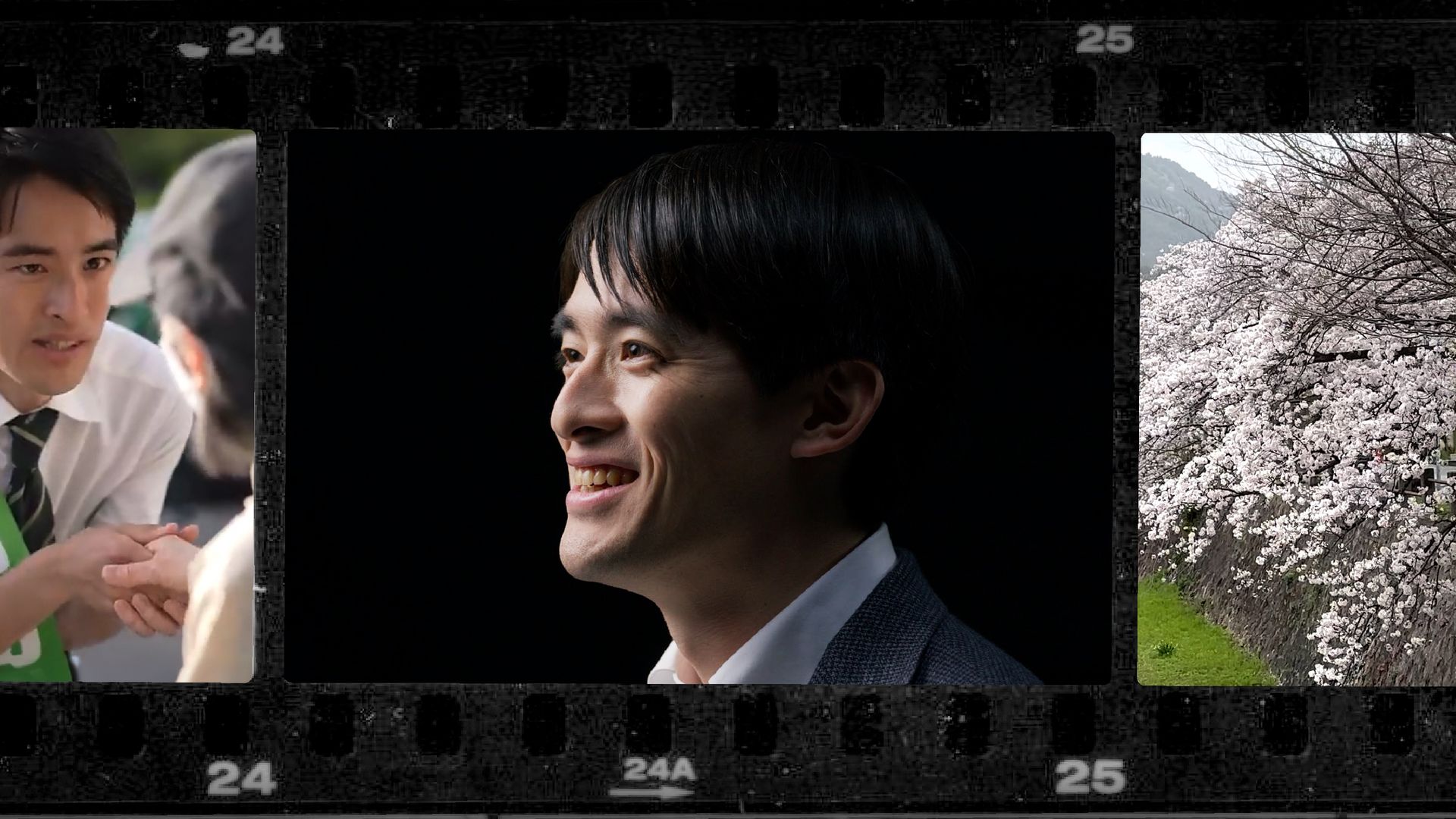
Meet the youngest-ever mayor in Japan's history

TED Fellow Ryosuke Takashima is the youngest-ever mayor in Japan's history — but he doesn't consider himself a politician. His approach to leadership is simple: listen to as many voices as possible (from students to elders) in order to figure out what needs fixing. Hear why he thinks inviting citizens to participate in reforming their own communities is the best way to get things done.

2026

TED Fellows Film

Ryosuke Takashima
04:47

FELLOWS FILM

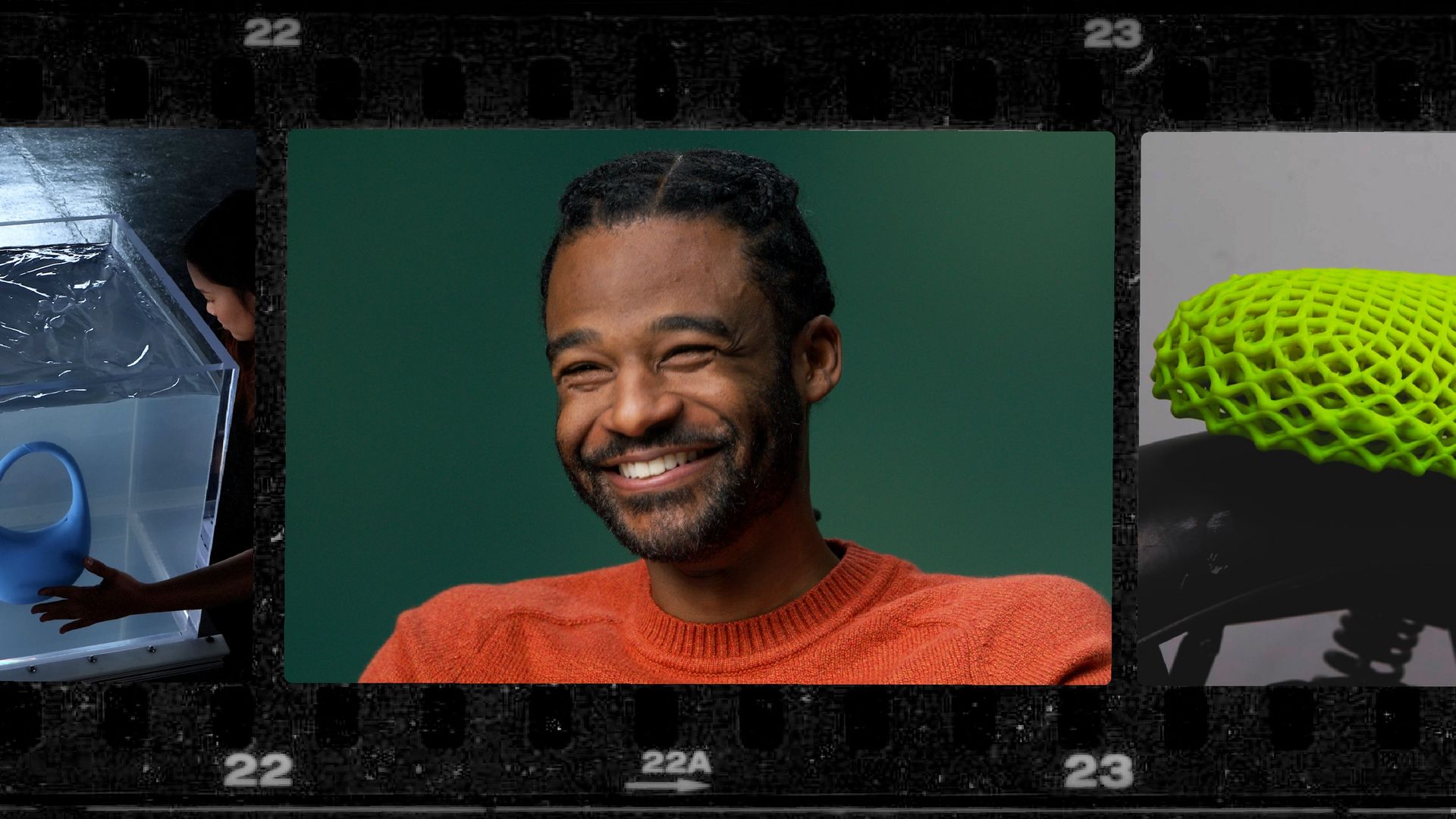
The gravity-defying future of manufacturing

3D printing promised to reinvent how we make things, but it's mostly stuck producing prototypes with a high level of waste. Designer and TED Fellow Schendy Kernizan found a different way — by printing objects directly into a tub of gel. He explains how this technique eliminates the constraints of gravity, pushing the limits of how we can manufacture objects across medicine, fashion, space travel and more.

2026

TED Fellows Film

Schendy Kernizan

Fellows Media Library

With 500+ TED Fellows and counting, we’ve got an entire world of media for you to explore. Dive into these talks, short films and podcasts showcasing Fellows turning ideas into action.

Clear
Sort
Thank you! Your submission has been received!
Oops! Something went wrong while submitting the form.

What soccer can teach us about freedom | Marc Bamuthi Joseph

"Soccer is the only thing on this planet that we can all agree to do together," says theater maker and TED Fellow Marc Bamuthi Joseph. Through his performances and an engagement initiative called "Moving and Passing," Joseph combines music, dance and soccer to reveal accessible, joyful connections between the arts and sports. Learn more about how he's using the beautiful game to foster community and highlight issues facing immigrants.

2018

Podcasts

United States
Performer + Curator // Marc Bamuthi Joseph is a 2017 TED Global Fellow, an inaugural recipient of the Guggenheim Social Practice initiative, and an honoree of the United States Artists Rockefeller Fellowship. He is also the winner of the 2011 Herb Alpert Award in Theatre, and an inaugural recipient of the Doris Duke Performing Artist Award. In pursuit of affirmations of black life in the public realm, he co-founded the Life is Living Festival for Youth Speaks, and created the installation “Black Joy in the Hour of Chaos” for Creative Time. Joseph’s opera libretto, We Shall Not Be Moved, was named one of 2017’s “Best Classical Music Performances” by The New York Times. His evening length work, /peh-LO-tah/, successfully toured across North America for three years, including at BAM’s Harvey Theater as a part of the 2017 Next Wave Festival. His latest piece, “The Just and the Blind” investigates the crisis of over-sentencing in the prison industrial complex, and will premiere at Carnegie Hall in March 2019. Formerly the Chief of Program and Pedagogy at YBCA in San Francisco, Bamuthi currently serves as the Vice President and Artistic Director of Social Impact at The Kennedy Center. // In a breathtaking, jazz-inflected spoken-word performance, TED Fellow Marc Bamuthi Joseph shares a Black father's tender and wrenching internal reflection on the pride and terror of seeing his son enter adulthood. // "Soccer is the only thing on this planet that we can all agree to do together," says theater maker and TED Fellow Marc Bamuthi Joseph. Through his performances and an engagement initiative called "Moving and Passing," Joseph combines music, dance and soccer to reveal accessible, joyful connections between the arts and sports. Learn more about how he's using the beautiful game to foster community and highlight issues facing immigrants. // Marc Bamuthi Joseph is a 2017 TED Global Fellow, an inaugural recipient of the Guggenheim Social Practice initiative, and an honoree of the United States Artists Rockefeller Fellowship. He is also the winner of the 2011 Herb Alpert Award in Theatre, and an inaugural recipient of the Doris Duke Performing Artist Award. In pursuit of affirmations of black life in the public realm, he co-founded the Life is Living Festival for Youth Speaks, and created the installation “Black Joy in the Hour of Chaos” for Creative Time. Joseph’s opera libretto, We Shall Not Be Moved, was named one of 2017’s “Best Classical Music Performances” by The New York Times. His evening length work, /peh-LO-tah/, successfully toured across North America for three years, including at BAM’s Harvey Theater as a part of the 2017 Next Wave Festival. His latest piece, “The Just and the Blind” investigates the crisis of over-sentencing in the prison industrial complex, and will premiere at Carnegie Hall in March 2019. Formerly the Chief of Program and Pedagogy at YBCA in San Francisco, Bamuthi currently serves as the Vice President and Artistic Director of Social Impact at The Kennedy Center. // Performer + Curator // youth, immigration, industrial // California|Oakland|United States|USA
California|Oakland|United States|USA

Marc Bamuthi Joseph

No items found.
2018

Did the global response to 9/11 make us safer? | Benedetta Berti

If we want sustainable, long-term security to be the norm in the world, it's time to radically rethink how we can achieve it, says TED Fellow and conflict researcher Benedetta Berti. In an eye-opening talk, Berti explains how building a safer world has a lot less to do with crushing enemies on the battlefield and a lot more to do with protecting civilians -- no matter where they're from or where they live. Hosted on Acast. See acast.com/privacy for more information.

2018

Podcasts

Belgium
College of Europe; The Fletcher School at Tufts University; Institute for European Studies, VUB; Foreign Policy Research Institute; Institute for National Security Studies; CAPISE, Center of Political Analysis and Social and Economic Research (Chiapas, Mexico); Eisenhower Fellowships; Foreign Policy Research Institute AND Institute for National Security Studies; Harvard Law School; The Jebsen Center for Counterterrorism Studies (The Fletcher School); Office of Congressman A.B Schiff; Tufts University - The Fletcher School of Law and Diplomacy; Università di Bologna; Alma Mater Studiorum – Università di Bologna; International Security and Humanitariant Consultant; TED Conferences; Tel Aviv University
I am a foreign policy and security researcher, analyst, consultant, author and lecturer. I focus on human security and internal wars, looking at ways to better understand the global shifts in the patterns and dynamics of political violence and assessing new, innovative ways to tackle conflict. Key research areas: human security, civil wars, non-state armed groups, protection of civilians, international security. // Conduct security, human security, humanitarian and foreign policy consulting projects for political risk consulting firms, NGOS, international organizations and governments. Work includes: Analytical reporting and policy recommendations; Capacity Building/Training; Curriculum/Program Design; Briefing (Oral and Written); Baseline studies; Content Strategy; Data Collection; Grant Writing; Monitoring & Evaluation; Political Risk Analysis; Policy Analysis and Strategy; Report Writing/Editing; Research; Research Design; Risk and Threat Assessments; Situational/Threat Analysis; Writing/Editing Focus: SSR, DDR, counter-terrorism & CVE, violence prevention and reduction, small arms control.Conflict Management, Complex Emergencies-assessment/planning, Human Security, PeacebuildingPost-conflict stabilization, CVE.Sample of past research focus: Egypt, Guatemala, Israel, Lebanon, Mexico, Palestine, Tunisia, UK, US. // -Research focus: political violence and internal conflict, post-conflict stabilization, democratization, human rights. -Regional focus: the Middle East (especially Palestinian, Syrian, Lebanese politics and the Israeli-Palestinian conflict).-Monitor and analyze key trends at the security, political, social and economic level related to human security in the Middle East and North Africa (MENA) region.-Develop policy assessments, risk evaluations, policy recommendations related to MENA human security, and specifically related to Lebanon, Syria, the Israeli-Palestinian conflict, Israel's foreign policy.-Conduct original policy and scholarly research on these topics. Plan and manage all phases of research (research-design, supervision of interns and staff, field-research, writing and publishing).-Consult and brief government agencies, foreign embassies, NGOs, international organizations on trends in the region’s human security, with a focus on the Israeli-Palestinian conflict. Brief senior level policy-makers at the domestic and international level.-Regularly publish policy briefs, memos, and policy assessments.-Regularly write and publish newspapers articles, scholarly articles, book chapters, and books.- Organize conferences and workshops.- Design outreach campaigns to communicate policy recommendations derived from the research.- Regularly appear on local and international media, both print and broadcast.- Supervise interns and mentor young researchers assisting them in carrying out their research agenda.- Research and obtain funds to develop research (fundraising).- Responsible for devising and implementing a 'human security research program. // -Co-Managed and coordinated team of ten graduate students for research project funded by US Department of Defense. Worked as content analyst and senior investigator.-Conducted research on national security, and counter terrorism.-Co-organized April 2007 conference “Islam in Democratic Societies.” // -Researched and analyzed legal issues related to public international law.-Coordinated research investigations related to militarization, conflict analysis, and human rights abuses, wrote and edited investigative reports, articles and publications.-Participated and coordinated educational projects on conflict resolution and field investigations in indigenous communities.-Monitored and reported on inter-communal conflicts within local indigenous communities // https://www.ted.com/participate/ted-fellows-program/meet-the-ted-fellows // -Research focus: political violence and internal conflict, post-conflict stabilization, democratization, human rights. -Regional focus: the Middle East (especially Palestinian, Syrian, Lebanese politics and the Israeli-Palestinian conflict).-Monitor and analyze key trends at the security, political, social and economic level related to human security in the Middle East and North Africa (MENA) region.-Develop policy assessments, risk evaluations, policy recommendations related to MENA human security, and specifically related to Lebanon, Syria, the Israeli-Palestinian conflict, Israel's foreign policy.-Conduct original policy and scholarly research on these topics. Plan and manage all phases of research (research-design, supervision of interns and staff, field-research, writing and publishing).-Consult and brief government agencies, foreign embassies, NGOs, international organizations on trends in the region’s human security, with a focus on the Israeli-Palestinian conflict. Brief senior level policy-makers at the domestic and international level.-Regularly publish policy briefs, memos, and policy assessments.-Regularly write and publish newspapers articles, scholarly articles, book chapters, and books.- Organize conferences and workshops.- Design outreach campaigns to communicate policy recommendations derived from the research.- Regularly appear on local and international media, both print and broadcast.- Supervise interns and mentor young researchers assisting them in carrying out their research agenda.- Research and obtain funds to develop research (fundraising).- Responsible for devising and implementing a 'human security research program. // Lecturer, BA and MA students (terrorism/political violence, strategic non-violence, civil society, Middle Eastern politics). // -Researcher for “Detention Policy Research Project” focusing on Combatant Status Review Tribunals // https://www.ted.com/participate/ted-fellows-program/meet-the-ted-fellows // -Worked on US policy in the Middle East, national security and conflict resolution // College of Europe; The Fletcher School at Tufts University; Institute for European Studies, VUB; Foreign Policy Research Institute; Institute for National Security Studies; CAPISE, Center of Political Analysis and Social and Economic Research (Chiapas, Mexico); Eisenhower Fellowships; Foreign Policy Research Institute AND Institute for National Security Studies; Harvard Law School; The Jebsen Center for Counterterrorism Studies (The Fletcher School); Office of Congressman A.B Schiff; Tufts University - The Fletcher School of Law and Diplomacy; Università di Bologna; Alma Mater Studiorum – Università di Bologna; International Security and Humanitariant Consultant; TED Conferences; Tel Aviv University // Benedetta Berti is a seasoned foreign policy and security researcher, analyst, consultant, author, and lecturer with a strong focus on human security and internal wars. Her expertise lies in understanding global shifts in political violence dynamics and devising innovative strategies to address conflicts. With a background in conducting consulting projects for political risk firms, NGOs, international organizations, and governments, Benedetta excels in analytical reporting, policy recommendations, and capacity building. She has a diverse skill set encompassing research design, risk assessments, and policy analysis, with a particular emphasis on areas like SSR, DDR, counter-terrorism, and violence prevention. Benedetta's research spans regions like the Middle East, with a keen interest in the Israeli-Palestinian conflict, post-conflict stabilization, and democratization. As a lecturer, she imparts knowledge on topics such as terrorism, political violence, civil society, and Middle Eastern politics to undergraduate and graduate students. // Benedetta Berti is a highly experienced foreign policy and security expert known for her extensive work in analyzing human security and internal conflicts. With a background in consulting for various organizations and governments, she excels in providing insightful analytical reports, policy recommendations, and capacity-building strategies. Her research focuses on global political violence dynamics, with a particular emphasis on areas like SSR, DDR, counter-terrorism, and violence prevention. Benedetta's expertise extends to regions such as the Middle East, where she delves into complex issues like the Israeli-Palestinian conflict, post-conflict stabilization, and democratization. As a lecturer, she shares her knowledge on terrorism, political violence, civil society, and Middle Eastern politics with both undergraduate and graduate students, contributing significantly to the field of security studies. // International policy analyst // A native of Italy, Benedetta Berti is currently a Kreitman post-doctoral fellow at Ben Gurion University and a fellow at the Institute for National Security Studies (INSS). She has lectured at Ben Gurion and Tel Aviv University. In the past, Dr. Berti worked in NGOs and research institutes in Latin America, the Middle East, and the US, focusing on human rights, internal conflict, and political violence. Her areas of expertise include human security, internal conflict, integration of armed groups, post-conflict stabilization and peace-building, as well as democratization and strategic nonviolence. Her current research is related to political violence and conflict in the Middle East, non-state armed groups, as well as well as Palestinian, Lebanese, and Syrian politics. Her work has appeared, among others, on Al-Arabiya, the Daily Beast, the Christian Science Monitor, Foreign Affairs, Foreign Policy, the National Interest, and Open Democracy as well as in academic journals like Studies in Conflict and Terrorism, the Middle East Journal, ORBIS and Mediterranean Politics. Recently, Dr. Berti also authored the book Armed Political Organizations. From Conflict to Integration (Johns Hopkins University Press, 2013). She is a frequent news commentator on international security, Middle Eastern politics, and the Arab-Israeli conflict. Her comments and interviews have been featured in a number of prominent news outlets, including The New York Times, Time Magazine, the Wall Street Journal, the Christian Science Monitor, Bloomberg, Reuters and al-Jazeera. She is also a frequent guest lecturer and public speaker. In addition, Benedetta works as a human security and foreign policy consultant for both political risk consulting firms, NGOS, international organizations as well as governments. She is a Member of the UN Alliance of Civilizations "Global Experts" program, the Young Atlanticist group of the Atlantic Council, the Körber Foundation’s Munich Young Leader group, and the ME 2.0 Israeli-Palestinian Young Business Leaders Forum. twitter: benedettabertiW // Dr Benedetta Berti is Head of Policy Planning in the Office of the Secretary General at NATO. She is also Associate Researcher at the Institute for European Studies at Vrije Universiteit Brussels and a Senior Fellow at the Foreign Policy Research Institute. An Eisenhower Global Fellow and a TED Senior Fellow, in the past decade Benedetta has held research and teaching positions at West Point, The Institute for National Security Studies and Tel Aviv University, among others. Throughout her career, her work has focused on human security and civil wars as well as on post-conflict stabilization and peace-building. She studies armed groups and internal conflicts, analyzing the impact of insecurity on civilians and working to build more peaceful communities. Dr. Berti is the author of four books, including "Armed Political Organizations. From Conflict to Integration" (Johns Hopkins University Press, 2013) and her work and research have appeared, among others in Conflict and Terrorism, Parameters, the Middle East Journal, ORBIS, Democratization, Civil Wars, Government & Opposition and Mediterranean Politics. Twitter handle: @benedettabertiw // About 60 million people around the globe have been forced to leave their homes to escape war, violence and persecution. The majority have become Internally Displaced Persons, meaning they fled their homes but are still in their own countries. Others, referred to as refugees, sought shelter outside their own country. But what does that term really mean? Benedetta Berti and Evelien Borgman explain. [Directed by Biljana Labovic, narrated by Susan Zimmerman, music by David Obuchowski and Peter Linder]. // If we want sustainable, long-term security to be the norm in the world, it's time to radically rethink how we can achieve it, says TED Fellow and conflict researcher Benedetta Berti. In an eye-opening talk, Berti explains how building a safer world has a lot less to do with crushing enemies on the battlefield and a lot more to do with protecting civilians -- no matter where they're from or where they live. // ISIS, Hezbollah, Hamas. These three very different groups are known for violence — but that’s only a portion of what they do, says policy analyst Benedetta Berti. They also attempt to win over populations with social work: setting up schools and hospitals, offering safety and security, and filling the gaps left by weak governments. Understanding the broader work of these groups suggests new strategies for ending the violence. // Benedetta Berti is a highly experienced foreign policy and security expert known for her extensive work in analyzing human security and internal conflicts. With a background in consulting for various organizations and governments, she excels in providing insightful analytical reports, policy recommendations, and capacity-building strategies. Her research focuses on global political violence dynamics, with a particular emphasis on areas like SSR, DDR, counter-terrorism, and violence prevention. Benedetta's expertise extends to regions such as the Middle East, where she delves into complex issues like the Israeli-Palestinian conflict, post-conflict stabilization, and democratization. As a lecturer, she shares her knowledge on terrorism, political violence, civil society, and Middle Eastern politics with both undergraduate and graduate students, contributing significantly to the field of security studies. // International policy analyst // violence, education, data collection, data, middle east, research, human rights, design, rights, policy, refugees, security, defense, monitoring, war, humanitarian, migration, public policy, politics, risk assessment, conflict resolution, campaigns, insecurity, policy research, science, national security, law, indigenous, communication, government, peacebuilding, foreign policy, capacity building // Brussels|Belgium
Brussels|Belgium

Benedetta Berti

No items found.
2018

03:58

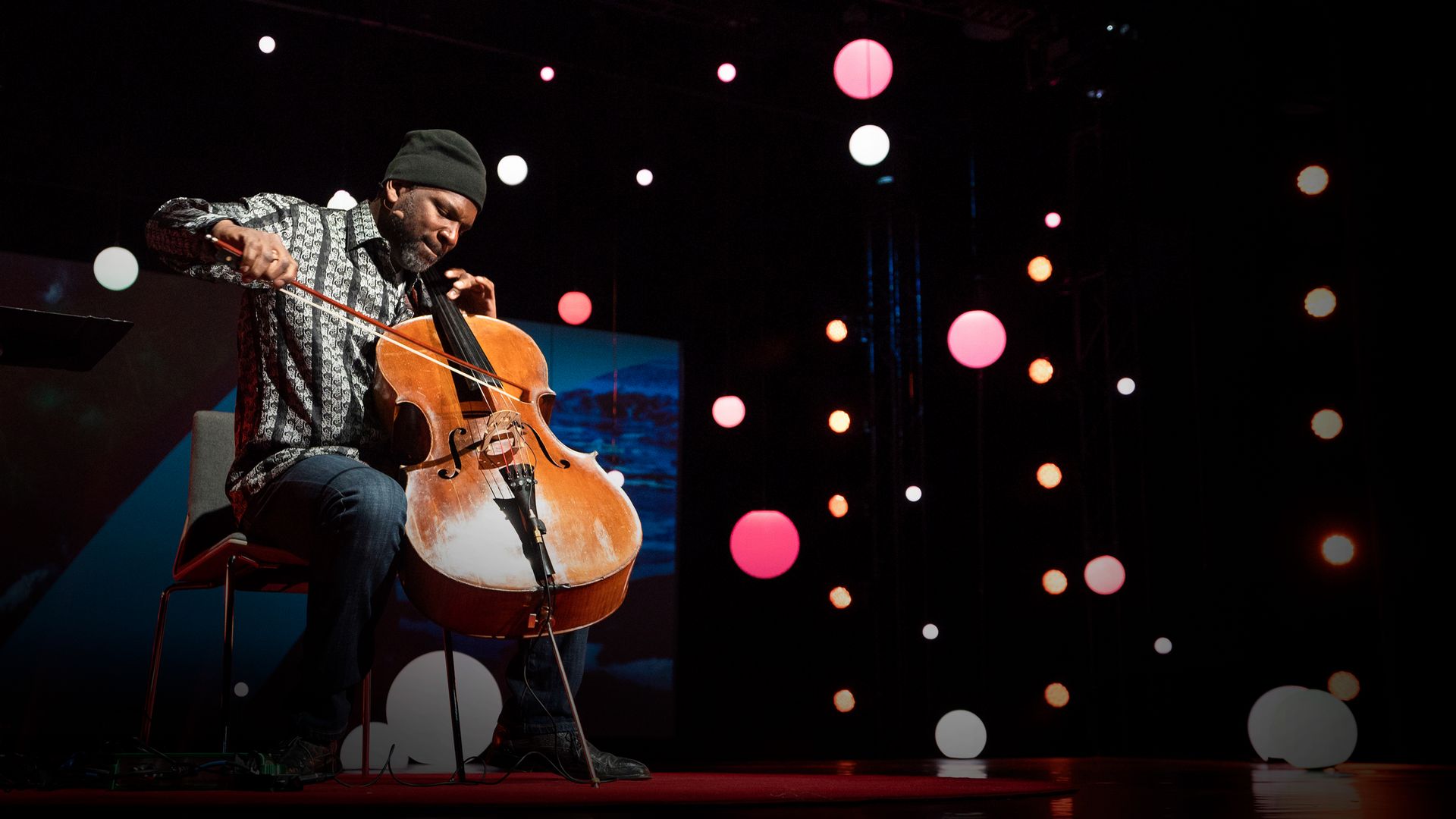
How my mom inspired my approach to the cello

Multidisciplinary artist and TED Fellow Paul Rucker has developed his own style of cello; he puts chopsticks between his strings, uses the instrument as a drum and experiments with electronics like loop pedals. Moving between reflective storytelling and performance, Rucker shares his inspiration -- and definitely doesn't play the same old Bach.

2018

TED Talk

United States
Paul Rucker is a multimedia visual artist, composer, and musician known for integrating live performance, original musical compositions, and visual art installations. His work focuses on illuminating the legacy of enslavement in America and its connection to current socio-political issues. Rucker has received numerous grants, awards, and residencies for his work in visual art and music. He is recognized for his innovative approach to art making, which involves exploring community impacts, human rights issues, historical research, and human emotions. Additionally, Rucker holds various fellowships and teaching positions, including being an Assistant Professor at Virginia Commonwealth University. // Paul Rucker is a visual artist, composer, and musician known for his work that combines various media to explore community impacts, human rights issues, historical research, and human emotions. His current focus is on the prison-industrial complex and the connection between incarceration and slavery. Rucker has exhibited his work nationally, including in educational institutions and prisons, and has collaborated with organizations to address mass incarceration. He holds prestigious fellowships and is currently an Assistant Professor and Curator for Creative Collaboration at VCUarts, Virginia Commonwealth University. // Bring attention to false narratives in history and people left out of the story. Address coordinated exclusion. // Paul Rucker is a multimedia visual artist, composer, and musician whose work delves into the intersections of art, history, and social justice. He is recognized for his innovative approach in integrating live performance, original musical compositions, and visual art installations to shed light on the legacy of enslavement in America and its contemporary socio-political implications. Rucker's artistry extends to exploring community impacts, human rights issues, historical research, and human emotions, with a particular focus on the prison-industrial complex and the ties between incarceration and slavery. Through his exhibitions, collaborations with organizations, and teaching positions at Virginia Commonwealth University, Rucker actively engages in challenging false historical narratives and advocating for marginalized voices in society. // Visual artist + cellist // Paul Rucker is a multimedia visual artist, composer, and musician. His practice often integrates live performance, original musical compositions, and visual art installation. For nearly two decades, Rucker has used his own brand of art making as a social practice, which illuminates the legacy of enslavement in America and its relationship to the current socio-political moment. His work is the product of a rich interactive process, through which he investigates community impacts, human rights issues, historical research, and basic human emotions. Rucker has received numerous grants, awards and residencies for visual art and music. He is a 2012 Creative Capital Grantee in visual art as well as a 2014, 2018, 2019 MAP (Multi-Arts Production) Fund Grantee for performance. In 2015 he received a prestigious Joan Mitchell Painters & Sculptors Grant as well as the Mary Sawyer Baker Award. In 2016 Paul received the Rauschenberg Artist as Activist fellowship and the Smithsonian Artist Research Fellowship, for which he is the first artist in residence at the new National Museum of African American Culture. Residencies include MacDowell Colony, Blue Mountain Center, Ucross Foundation, Art OMI, Banff Centre, Pilchuck Glass School, Rauschenberg Residency, Joan Mitchell Residency, Loghave, Montalvo, Hermitage, Hemera Artist Retreat, Air Serembe, Creative Alliance and the Rockefeller Foundation Study Center in Bellagio, Italy. He will be a Master Teacher at the Atlantic Center for the Arts in 2021. In 2013-2015, he was the Robert W. Deutsch Foundation Artist in Residence and Research Fellow at the Maryland Institute College of Art. He was awarded a 2017 John Simon Guggenheim Fellowship, a 2018 TED Fellowship, a 2020 TED Senior Fellowship and the 2018 Arts Innovator Award from the Dale and Leslie Chihuly Foundation and Artist Trust. His most recent award is a 2020 Art for Justice Fund Fellowship. Rucker is an iCubed Arts Research Fellow and Assistant Professor at Virginia Commonwealth University in Richmond, Virginia and Curator for Creative Collaboration for VCUarts. // Visual artist, cellist and TED Fellow Paul Rucker performs a disarming rendition of "Criminalization of Survival," a piece he created to explore the fragile journey of life in light of the brutality of the immigration crisis. // Multidisciplinary artist and TED Fellow Paul Rucker has developed his own style of cello; he puts chopsticks between his strings, uses the instrument as a drum and experiments with electronics like loop pedals. Moving between reflective storytelling and performance, Rucker shares his inspiration -- and definitely doesn't play the same old Bach. // Multidisciplinary artist and TED Fellow Paul Rucker is unstitching the legacy of systemic racism in the United States. A collector of artifacts connected to the history of slavery -- from branding irons and shackles to postcards depicting lynchings -- Rucker couldn't find an undamaged Ku Klux Klan robe for his collection, so he began making his own. The result: striking garments in non-traditional fabrics like kente cloth, camouflage and silk that confront the normalization of systemic racism in the US. "If we as a people collectively look at these objects and realize that they are part of our history, we can find a way to where they have no more power over us," Rucker says. (This talk contains graphic images.) // Paul Rucker is a multimedia visual artist, composer, and musician whose work delves into the intersections of art, history, and social justice. He is recognized for his innovative approach in integrating live performance, original musical compositions, and visual art installations to shed light on the legacy of enslavement in America and its contemporary socio-political implications. Rucker's artistry extends to exploring community impacts, human rights issues, historical research, and human emotions, with a particular focus on the prison-industrial complex and the ties between incarceration and slavery. Through his exhibitions, collaborations with organizations, and teaching positions at Virginia Commonwealth University, Rucker actively engages in challenging false historical narratives and advocating for marginalized voices in society. // Visual artist + cellist // research, glass, racism, activism, history, human rights, rights, education, immigration, address false narratives, teachers, justice, coordinated exclusion // Maryland|United Kingdom|USA|Richmond|England|Baltimore|Virginia
Maryland|United Kingdom|USA|Richmond|England|Baltimore|Virginia

Paul Rucker

No items found.
2018

06:20

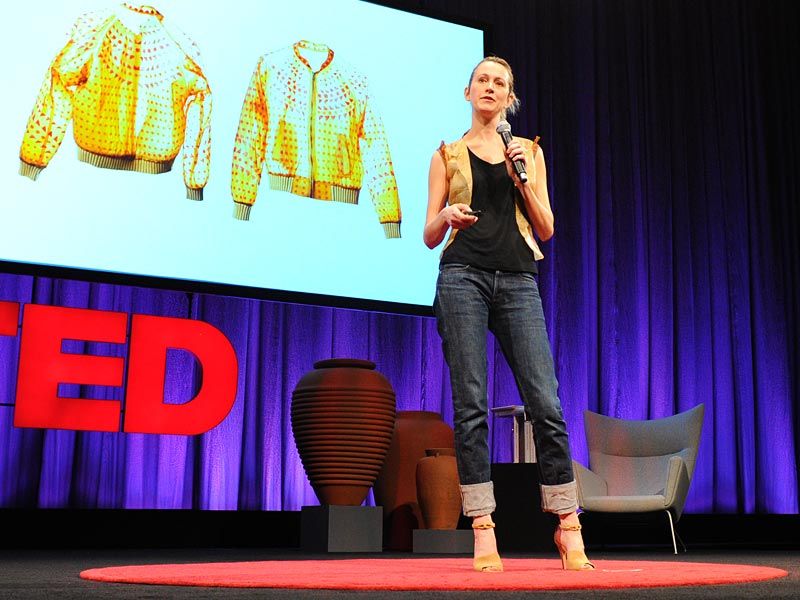
Grow your own clothes

Designer Suzanne Lee shares her experiments in growing a kombucha-based material that can be used like fabric or vegetable leather to make clothing. The process is fascinating, the results are beautiful (though there's still one minor drawback ...) and the potential is simply stunning.

2011

TED Talk

United States
Designer // Suzanne is the Founder of Biocouture the world’s first ‘living materials’ consultancy. Biocouture's unique focus is to bring emergent biomaterials, biodesign and biofabrication to consumer products, working exclusively with material innovators and brands to take materials from the lab to the market. Biocouture is the convener of BIOFABRICATE, the first ever summit dedicated to biofabrication for future consumer products. Biofabrication comprises highly disruptive new technologies enabling design to intersect with the building blocks of life. Suzanne is the author of ‘Fashioning The Future: tomorrow’s wardrobe’, the first book to capture the future of fashion through science and technology. It remains a key text for designers, scientists and engineers wanting to glimpse the future of wearable technology. // Suzanne is a designer turned biofabrication pioneer for consumer products. She started growing microbial materials in 2003 coining the term ‘Biocouture’. She advises material startups and global consumer brands on the amazing new world of grown materials. A graduate of the celebrated design school Central Saint Martins in London, her work has been featured widely in the media and exhibited globally. Suzanne's ground-breaking book ‘Fashioning the Future: tomorrow’s wardrobe’, was the first to articulate the future of fashion through science and technology. She is a TED Senior Fellow, and a Launch Material Innovator - an initiative of NASA, Nike, USAID and the US State Department. For the last 5 years Suzanne has been the Chief Creative Officer of Modern Meadow, a biofabrication startup in New York. In 2014 Suzanne founded ‘BIOFABRICATE’, an international summit fostering design, biology and technology. Today BIOFABRICATE offers three pillars: Design, Consult, Learn. // What if we could "grow" clothes from microbes, furniture from living organisms and buildings with exteriors like tree bark? TED Fellow Suzanne Lee shares exciting developments from the field of biofabrication and shows how it could help us replace major sources of waste, like plastic and cement, with sustainable and eco-friendly alternatives. // Designer Suzanne Lee shares her experiments in growing a kombucha-based material that can be used like fabric or vegetable leather to make clothing. The process is fascinating, the results are beautiful (though there's still one minor drawback ...) and the potential is simply stunning. // Suzanne is a designer turned biofabrication pioneer for consumer products. She started growing microbial materials in 2003 coining the term ‘Biocouture’. She advises material startups and global consumer brands on the amazing new world of grown materials. A graduate of the celebrated design school Central Saint Martins in London, her work has been featured widely in the media and exhibited globally. Suzanne's ground-breaking book ‘Fashioning the Future: tomorrow’s wardrobe’, was the first to articulate the future of fashion through science and technology. She is a TED Senior Fellow, and a Launch Material Innovator - an initiative of NASA, Nike, USAID and the US State Department. For the last 5 years Suzanne has been the Chief Creative Officer of Modern Meadow, a biofabrication startup in New York. In 2014 Suzanne founded ‘BIOFABRICATE’, an international summit fostering design, biology and technology. Today BIOFABRICATE offers three pillars: Design, Consult, Learn. // Designer // technology, buildings, eco-friendly, cement, design, microbes, wearable technology, design and science collaboration, apparel, living materials, visioneering new technology for fashion, wearables, clothes, design r&d, plastic, trees, biomaterials, science, biofabrication // New York|United States|Brooklyn|USA
New York|United States|Brooklyn|USA

Suzanne Lee

No items found.
2011

06:41

Evolution's gift of play, from bonobo apes to humans

With never-before-seen video, primatologist Isabel Behncke Izquierdo (a TED Fellow) shows how bonobo ape society learns from constantly playing -- solo, with friends, even as a prelude to sex. Indeed, play appears to be the bonobos' key to problem-solving and avoiding conflict. If it works for our close cousins, why not for us?

2011

TED Talk

United States
Primatologist // A Chilean primatologist who studies play behavior among bonobos in the Democratic Republic of the Congo // Scientist, MPhil Cambridge, PhD Oxford. Ethology of human apes & other social animals. I explore & integrate, bonobos laugh. Gruter & TED Fellow. Chile’s Presidential advisor on strategy for science, innovation, technology and knowledge. Love nature & culture, wildness & arts. Based in NYC & Chile. Instagram: isabel_behncke —— Long bio: What makes us human? What does it really mean to be a social animal? And how can these Q’s help humans live win-win with the rest of nature? Knowing our past help us situate our present - & co-create our future. Looking at other animals help us understand ourselves - & our place in the web of life. I am an explorer ethologist by training and essence. I like going to the field, & attempting to look at life at the eye - with my own eyes. To be a story-watcher, to let the complexity of life unfold. I ask questions, travel, observe, think, integrate, & then tell people what I found. I go there, and back. Voy, y vuelvo. I am from Chile, where I learnt to love mountains, exploration & wild things. I was educated in the UK (Oxford, Cambridge & University College London) in behaviour, evolution & ecology. In deep time, complexity, living systems. And a hearty side of British influences, from the Lunar Society to Monty Python & Eddie Izzard. I started working in rainforest conservation in Northern Patagonia. Frustration with our failure to look after nature made me want to understand human nature better - & go back to origins. I then trained as a field primatologist working on the evolutionary roots of social behavior in humans & other animals. Field research led me to walk 3,000+ km in the steamy jungles of Congo observing the social behavior of wild bonobo apes - our closest living relatives. For my PhD I did the first comprehensive study of adult play of bonobos in the wild. The research site was Japanese-directed Wamba, DRC, longest running bonobo site in the world. Chronic bloodshed in Congo meant that at the time I was the first western person to do research there in more than 20 years. Paradox happens to me a lot. Like going into the Heart of Darkness to study play. Or studying matriarchal & most peaceful of great apes -they don't tend to die at the hands of their conspecifics- in a country torn by sexual violence & war. Soon after Congo went to Burning Man & realised it was also adult play of apes in the wild. Instead of jungle, it was desert. Instead of knuckle-walking hairy apes, there were biped naked apes. I continue going every year; collective phenomena make great primatology field-sites. I cannot undo seeing us as social animals. We are embedded in societies & in nature. In my research I saw that play behaviour is like our 'Adaptive Joker' - an ancient wildcard which changes value according to context. It might hold the key to our capacity to adapt to a changing world. The biology of fun is serious business. I apply an evolutionary & complex systems lens to try derive insights onto human behaviour & the modern challenges we face. I ask questions such as why we go to festivals, how can we design rituals for modern life, why trust requires risk-taking, & crucially why is it that the more digital we get, the more understanding of nature (& human nature) we need. Basically I use the Origin of Species to think about the Future of Species. I am currently working on my first book, which is science (human evolution, ethology & primatology) told through adventure travel (field diaries written while in Congo jungle) & sprinkled with classic rock references. Would love to hit notes in an ancient fireside non-fiction storytelling, but with the Rolling Stones, Latin poetic-realism & Darwin as part of the hearth. I enjoy public engagement in different forms (e.g. TED, WIRED, UN, G20, BBC, Nat Geo), concerning questions of how humans & other animals create, connect, play & adapt. Sometimes I curate & co-host 'intellectual safaris' (expeditions of intellectual & geographic exploration) academic conferences & ideas festivals. I like collaborating with thinkers, doers, artists, scientists, explorers. I lived 15 years in the UK (including 3 years of fieldwork in Congo). Now I'm based in NYC & Chile. Night owl, animal person, occasional flaneuse. No allergies. I love reality and the complexity of the world, and think we would be better off embracing it rather than trying to reduce it. I think context, interactions, & trade-offs. Exploration-then-integration is my favored methodology. I am an Associate Professor at the Research Centre for Social Complexity (CICS) in UDD, Santiago Chile, & Fellow of the Bay area based Gruter Institute for research on human behavior & institutions. I’m advising government in my home country. I’m Presidential advisor for Chile’s long term strategy in science, technology, innovation & knowledge. BSc Zoology (UCL), MSc Wildlife Conservation (UCL), MPhil Human Evolution (Cambridge), DPhil Evolutionary Anthropology (Oxford). Gruter & TED Fellow. // With never-before-seen video, primatologist Isabel Behncke Izquierdo (a TED Fellow) shows how bonobo ape society learns from constantly playing -- solo, with friends, even as a prelude to sex. Indeed, play appears to be the bonobos' key to problem-solving and avoiding conflict. If it works for our close cousins, why not for us? // Scientist, MPhil Cambridge, PhD Oxford. Ethology of human apes & other social animals. I explore & integrate, bonobos laugh. Gruter & TED Fellow. Chile’s Presidential advisor on strategy for science, innovation, technology and knowledge. Love nature & culture, wildness & arts. Based in NYC & Chile. Instagram: isabel_behncke —— Long bio: What makes us human? What does it really mean to be a social animal? And how can these Q’s help humans live win-win with the rest of nature? Knowing our past help us situate our present - & co-create our future. Looking at other animals help us understand ourselves - & our place in the web of life. I am an explorer ethologist by training and essence. I like going to the field, & attempting to look at life at the eye - with my own eyes. To be a story-watcher, to let the complexity of life unfold. I ask questions, travel, observe, think, integrate, & then tell people what I found. I go there, and back. Voy, y vuelvo. I am from Chile, where I learnt to love mountains, exploration & wild things. I was educated in the UK (Oxford, Cambridge & University College London) in behaviour, evolution & ecology. In deep time, complexity, living systems. And a hearty side of British influences, from the Lunar Society to Monty Python & Eddie Izzard. I started working in rainforest conservation in Northern Patagonia. Frustration with our failure to look after nature made me want to understand human nature better - & go back to origins. I then trained as a field primatologist working on the evolutionary roots of social behavior in humans & other animals. Field research led me to walk 3,000+ km in the steamy jungles of Congo observing the social behavior of wild bonobo apes - our closest living relatives. For my PhD I did the first comprehensive study of adult play of bonobos in the wild. The research site was Japanese-directed Wamba, DRC, longest running bonobo site in the world. Chronic bloodshed in Congo meant that at the time I was the first western person to do research there in more than 20 years. Paradox happens to me a lot. Like going into the Heart of Darkness to study play. Or studying matriarchal & most peaceful of great apes -they don't tend to die at the hands of their conspecifics- in a country torn by sexual violence & war. Soon after Congo went to Burning Man & realised it was also adult play of apes in the wild. Instead of jungle, it was desert. Instead of knuckle-walking hairy apes, there were biped naked apes. I continue going every year; collective phenomena make great primatology field-sites. I cannot undo seeing us as social animals. We are embedded in societies & in nature. In my research I saw that play behaviour is like our 'Adaptive Joker' - an ancient wildcard which changes value according to context. It might hold the key to our capacity to adapt to a changing world. The biology of fun is serious business. I apply an evolutionary & complex systems lens to try derive insights onto human behaviour & the modern challenges we face. I ask questions such as why we go to festivals, how can we design rituals for modern life, why trust requires risk-taking, & crucially why is it that the more digital we get, the more understanding of nature (& human nature) we need. Basically I use the Origin of Species to think about the Future of Species. I am currently working on my first book, which is science (human evolution, ethology & primatology) told through adventure travel (field diaries written while in Congo jungle) & sprinkled with classic rock references. Would love to hit notes in an ancient fireside non-fiction storytelling, but with the Rolling Stones, Latin poetic-realism & Darwin as part of the hearth. I enjoy public engagement in different forms (e.g. TED, WIRED, UN, G20, BBC, Nat Geo), concerning questions of how humans & other animals create, connect, play & adapt. Sometimes I curate & co-host 'intellectual safaris' (expeditions of intellectual & geographic exploration) academic conferences & ideas festivals. I like collaborating with thinkers, doers, artists, scientists, explorers. I lived 15 years in the UK (including 3 years of fieldwork in Congo). Now I'm based in NYC & Chile. Night owl, animal person, occasional flaneuse. No allergies. I love reality and the complexity of the world, and think we would be better off embracing it rather than trying to reduce it. I think context, interactions, & trade-offs. Exploration-then-integration is my favored methodology. I am an Associate Professor at the Research Centre for Social Complexity (CICS) in UDD, Santiago Chile, & Fellow of the Bay area based Gruter Institute for research on human behavior & institutions. I’m advising government in my home country. I’m Presidential advisor for Chile’s long term strategy in science, technology, innovation & knowledge. BSc Zoology (UCL), MSc Wildlife Conservation (UCL), MPhil Human Evolution (Cambridge), DPhil Evolutionary Anthropology (Oxford). Gruter & TED Fellow. // Primatologist // technology, violence, desert, led, play, social bonding, job skills training, research, design, species, wildlife protection, war, great apes, wildlife, social animals, human evolution, exploration as learning, rainforest protection, adaptive capacity, bonobos, nature, science, rainforest, creativity, government, primatology, ecology, mountains // New York|United States|New York City|Santiago|Chile
New York|United States|New York City|Santiago|Chile

Isabel Behncke

No items found.
2011

05:51

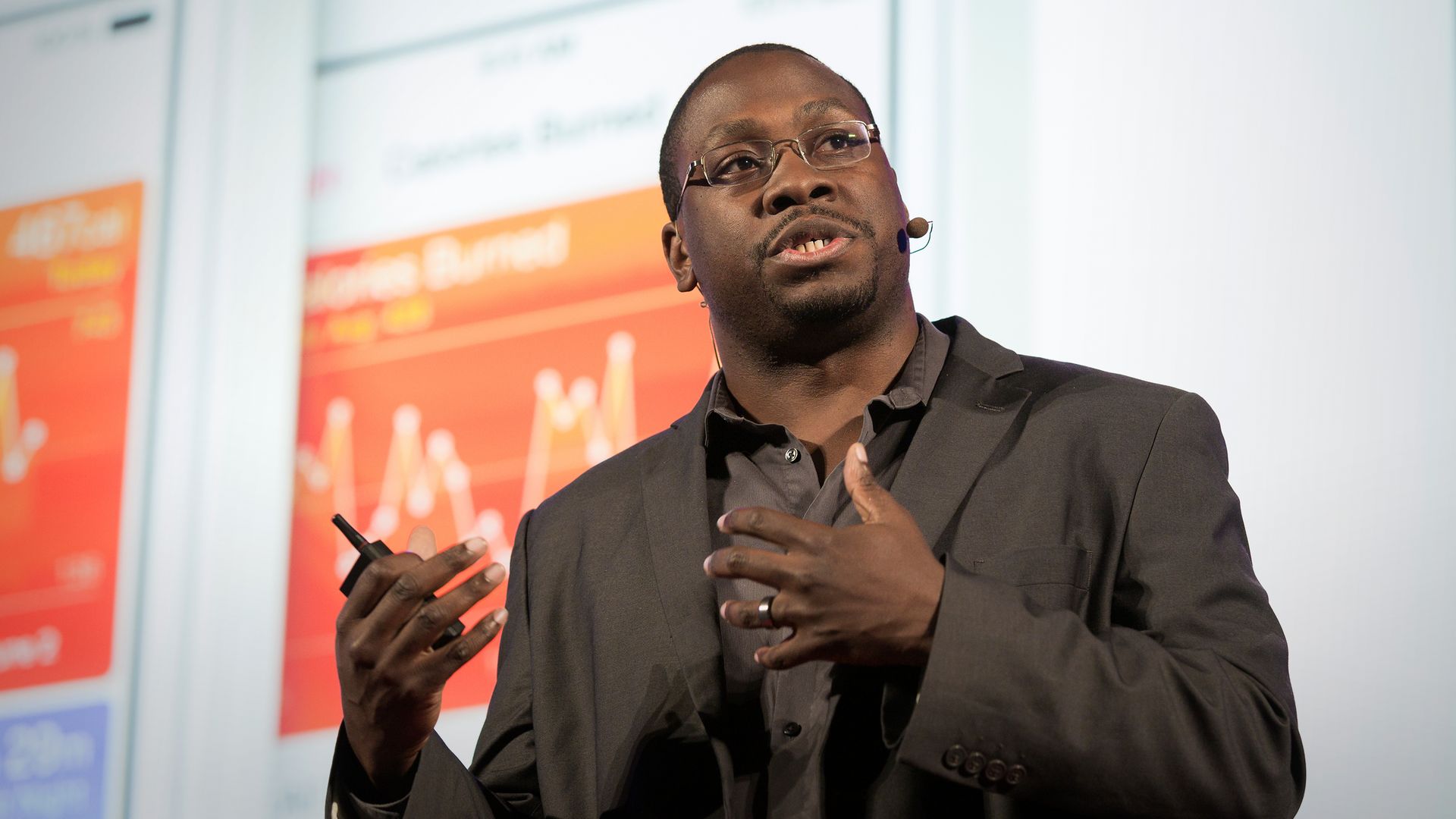
The problem with "trickle-down techonomics"

Hooray for technology! It makes everything better for everyone!! Right? Well, no. When a new technology, like ebooks or health trackers, is only available to some people, it has unintended consequences for all of us. Jon Gosier, a TED Fellow and tech investor, calls out the idea of "trickle-down techonomics," and shares powerful examples of how new tech can make things actually worse if it's not equally distributed. As he says, "the real innovation is in finding ways to include everyone."

2015

TED Talk

United States
African tech entrepreneur // <p><img src="http://farm6.staticflickr.com/5227/5872833385_56c47a1e42.jpg" title="jon gosier ted"></p> <p>Jon Gosier is an investor, serial entrepreneur, and data scientist working primarily in areas of big data.</p> <p><img src="http://farm9.staticflickr.com/8020/7005966982_d4ceb596e5.jpg" title="drag and drop data science"></p> <p>Jon is partner at two investment funds, The Appfrica Fund and Third Cohort Capital. He has been listed among the ‘Most Influential Blacks in Technology’ by Business Insider 2013 and again in 2014. He’s also been listed among the ‘20 Angel Investors Worth Knowing’ and among the ‘Innovators of the Year 2013’ by Black Enterprise Magazine.</p> <p>He is a graduate of Goldman Sachs’ 10,000 Small Businesses program as well as the THNK the School of Creative Leadership in Amsterdam. He is a two-time winner of the News Challenge run by the Knight Foundation.</p> <p><img src="http://farm8.staticflickr.com/7039/6937631152_febfdbf316.jpg" title="apps4africa ted"></p> <p>As an entrepreneur, he is the founder of Appfrica which has helped multinational corporates do business and invest across Africa since 2008. He has held executive roles in a number of successful companies including: Market Atlas which has been compared to ‘the Bloomberg terminal’ of Africa, and Ushahidi which makes crowdsourcing tools for global emergency response.</p> <p>You can read more about his work on <a href="https://wikipedia.org/wiki/jon_gosier">Wikipedia</a>.</p> // Jon Gosier is an executive who has spent 10 years building tech companies with a particular focus on data and analytics. He recently Founded Audigent, a company that offers a 'new business model for the music industry' via a platform that provides artists like Bruno Mars, Ed Sheeran, Shakira, Rihanna, Jay-Z, and other entertainers new ways of monetizing data. Among the partners in that company include Warner Music who invested $4 million and a partnership with Nielsen. Prior to that he was digital activist who was a leader at companies like Abayima and Ushahidi which responded to humanitarian crises around the world. He later supported the intelligence community's efforts to preventing radicalization of youth online. Jon is currently producing a film entitled COLLATERAL DATA that is loosely inspired by his years as part of these communities, working in North and East Africa. The original screenplay is a dramatic thriller that explores the relationship between activism and emerging technology. Jon is an alum of Savannah College of Art and Design and the THNK School of Creative Leadership and Innovation. Through the years he has been invited as a guest lecturer and presenter at Yale, Harvard, Princeton, MIT, Lund University, NYU, Rollins College, Wharton, Temple, Drexel and U Penn. // Hooray for technology! It makes everything better for everyone!! Right? Well, no. When a new technology, like ebooks or health trackers, is only available to some people, it has unintended consequences for all of us. Jon Gosier, a TED Fellow and tech investor, calls out the idea of "trickle-down techonomics," and shares powerful examples of how new tech can make things actually worse if it's not equally distributed. As he says, "the real innovation is in finding ways to include everyone." // Jon Gosier is an executive who has spent 10 years building tech companies with a particular focus on data and analytics. He recently Founded Audigent, a company that offers a 'new business model for the music industry' via a platform that provides artists like Bruno Mars, Ed Sheeran, Shakira, Rihanna, Jay-Z, and other entertainers new ways of monetizing data. Among the partners in that company include Warner Music who invested $4 million and a partnership with Nielsen. Prior to that he was digital activist who was a leader at companies like Abayima and Ushahidi which responded to humanitarian crises around the world. He later supported the intelligence community's efforts to preventing radicalization of youth online. Jon is currently producing a film entitled COLLATERAL DATA that is loosely inspired by his years as part of these communities, working in North and East Africa. The original screenplay is a dramatic thriller that explores the relationship between activism and emerging technology. Jon is an alum of Savannah College of Art and Design and the THNK School of Creative Leadership and Innovation. Through the years he has been invited as a guest lecturer and presenter at Yale, Harvard, Princeton, MIT, Lund University, NYU, Rollins College, Wharton, Temple, Drexel and U Penn. // African tech entrepreneur // technology, film, big data, activism, design, data and analytics, science, emergency response, data science, youth, venture capital, data, business development, emerging technology, humanitarian, unintended consequences, africa // Pennsylvania|Philadelphia|United States|USA
Pennsylvania|Philadelphia|United States|USA

Jon Gosier

No items found.
2015

15:04

The enchanting music of sign language

Artist and TED Fellow Christine Sun Kim was born deaf, and she was taught to believe that sound wasn't a part of her life, that it was a hearing person's thing. Through her art, she discovered similarities between American Sign Language and music, and she realized that sound doesn't have to be known solely through the ears -- it can be felt, seen and experienced as an idea. In this endearing talk, she invites us to open our eyes and ears and participate in the rich treasure of visual language.

2015

TED Talk

Germany
Sound artist + composer // Christine Sun Kim is an artist based in New York and Berlin. She uses the medium of sound through technology, performance, and drawing to investigate and rationalize her relationship with sound and spoken languages. // Christine Sun Kim is an artist based in New York and Berlin. She uses the medium of sound through technology, performance, and drawing to investigate and rationalize her relationship with sound and spoken languages. // Artist and TED Fellow Christine Sun Kim was born deaf, and she was taught to believe that sound wasn't a part of her life, that it was a hearing person's thing. Through her art, she discovered similarities between American Sign Language and music, and she realized that sound doesn't have to be known solely through the ears -- it can be felt, seen and experienced as an idea. In this endearing talk, she invites us to open our eyes and ears and participate in the rich treasure of visual language. // Christine Sun Kim is an artist based in New York and Berlin. She uses the medium of sound through technology, performance, and drawing to investigate and rationalize her relationship with sound and spoken languages. // Sound artist + composer // technology // Berlin|Germany
Berlin|Germany

Christine Sun Kim

No items found.
2015

06:46

Hunting for Peru's lost civilizations -- with satellites

Around the world, hundreds of thousands of lost ancient sites lie buried and hidden from view. Satellite archaeologist Sarah Parcak is determined to find them before looters do. With the 2016 TED Prize, Parcak is building an online citizen-science tool called GlobalXplorer that will train an army of volunteer explorers to find and protect the world's hidden heritage. In this talk, she offers a preview of the first place they'll look: Peru -- the home of Machu Picchu, the Nazca lines and other archaeological wonders waiting to be discovered.

2016

TED Talk

United States
I am trying to empower diverse stakeholders to help protect and preserve our shared cultural heritage // Sarah Parcak is an archaeologist and space archaeologist known for her pioneering work in using satellite imagery to uncover and protect archaeological sites around the world. Through her research, she has revolutionized the field by developing innovative methods to identify hidden sites and track looting activities. Parcak's expertise lies in leveraging technology to study ancient civilizations and address contemporary challenges facing cultural heritage preservation. She is dedicated to empowering diverse stakeholders to contribute to the safeguarding of our global cultural legacy. // Space archeologist // Sarah Parcak is from Bangor, Maine. She holds degrees from Yale (BA) and Cambridge University (M.Phil and PhD), is a Fellow of the Society of Antiquaries (an elected position), and a 2012 TED fellow. Sarah serves as the founding director of the Laboratory for Global Observation at the University of Alabama at Birmingham, where she is an Associate Professor in the Department of Anthropology. She is also the CEO of SpectralGlobe technologies (www.spectralglobe.com), a company which specializes in using remote sensing technologies to provide innovative landscape solutions. Sarah and her longtime sweetheart, Egyptologist Greg Mumford, work together on the Surveys and Excavation Projects in Egypt (www.deltasinai.com), which includes archaeological projects in the Delta, Sinai, and pyramid fields regions of Egypt. Sarah has written the first textbook on the field of satellite archaeology, called Satellite Remote Sensing for Archaeology, and has published numerous peer reviewed scientific papers. She is regularly invited to give papers at national and international conferences and symposia. She is also interviewed regularly for national print media (Science, Nature, National Geographic, CNN, BBC). Her research has been features in a major international BBC-Discovery Chanel Documentary, Egypt: What Lies Beneath,”, and she is currently working with BBC-Discovery on another program using satellite imagery to map the Roman Empire. Sarah has worked with NASA, the U.S. State Dept., and has collaborators across the globe. She has given 150 talks to a range of audiences across the globe. Sarah is an avid fan of “football,” as she played varsity football (aka “soccer”) for Yale and Cambridge, winning her varsity blue and leading Cambridge to a 4-0 defeat of Oxford in the Varsity Match in 2005 with 2 goals and 2 assists. She enjoys gardening, cooking, traveling, and learning bluegrass guitar. // Sarah Parcak uses satellites orbiting hundreds of miles above Earth to uncover hidden ancient treasures buried beneath our feet. There's a lot to discover; in the Egyptian Delta alone, Parcak estimates we've excavated less than a thousandth of one percent of what's out there. Now, with the 2016 TED Prize and an infectious enthusiasm for archaeology, she's developed an online platform called GlobalXplorer that enables anyone with an internet connection to discover unknown sites and protect what remains of our shared human inheritance. // Around the world, hundreds of thousands of lost ancient sites lie buried and hidden from view. Satellite archaeologist Sarah Parcak is determined to find them before looters do. With the 2016 TED Prize, Parcak is building an online citizen-science tool called GlobalXplorer that will train an army of volunteer explorers to find and protect the world's hidden heritage. In this talk, she offers a preview of the first place they'll look: Peru -- the home of Machu Picchu, the Nazca lines and other archaeological wonders waiting to be discovered. // In this short talk, TED Fellow Sarah Parcak introduces the field of "space archaeology" -- using satellite images to search for clues to the lost sites of past civilizations. // Sarah Parcak is an archaeologist and space archaeologist known for her pioneering work in using satellite imagery to uncover and protect archaeological sites around the world. Through her research, she has revolutionized the field by developing innovative methods to identify hidden sites and track looting activities. Parcak's expertise lies in leveraging technology to study ancient civilizations and address contemporary challenges facing cultural heritage preservation. She is dedicated to empowering diverse stakeholders to contribute to the safeguarding of our global cultural legacy. // Space archeologist // technology, geospatial information, remote sensing and geospatial information, egyptology, geospatial analysis, research, volunteerism, satellite, archaeology, cultural heritage, remote sensing, documentary, nature, cooking, explorer, ancient history, remote-sensing, science, anthropology // Alabama|USA|Birmingham|United States|Egypt|Cairo
Alabama|USA|Birmingham|United States|Egypt|Cairo

Sarah Parcak

No items found.
2016

12:07

Why "biofabrication" is the next industrial revolution

What if we could "grow" clothes from microbes, furniture from living organisms and buildings with exteriors like tree bark? TED Fellow Suzanne Lee shares exciting developments from the field of biofabrication and shows how it could help us replace major sources of waste, like plastic and cement, with sustainable and eco-friendly alternatives.

2020

TED Talk

United States
Designer // Suzanne is the Founder of Biocouture the world’s first ‘living materials’ consultancy. Biocouture's unique focus is to bring emergent biomaterials, biodesign and biofabrication to consumer products, working exclusively with material innovators and brands to take materials from the lab to the market. Biocouture is the convener of BIOFABRICATE, the first ever summit dedicated to biofabrication for future consumer products. Biofabrication comprises highly disruptive new technologies enabling design to intersect with the building blocks of life. Suzanne is the author of ‘Fashioning The Future: tomorrow’s wardrobe’, the first book to capture the future of fashion through science and technology. It remains a key text for designers, scientists and engineers wanting to glimpse the future of wearable technology. // Suzanne is a designer turned biofabrication pioneer for consumer products. She started growing microbial materials in 2003 coining the term ‘Biocouture’. She advises material startups and global consumer brands on the amazing new world of grown materials. A graduate of the celebrated design school Central Saint Martins in London, her work has been featured widely in the media and exhibited globally. Suzanne's ground-breaking book ‘Fashioning the Future: tomorrow’s wardrobe’, was the first to articulate the future of fashion through science and technology. She is a TED Senior Fellow, and a Launch Material Innovator - an initiative of NASA, Nike, USAID and the US State Department. For the last 5 years Suzanne has been the Chief Creative Officer of Modern Meadow, a biofabrication startup in New York. In 2014 Suzanne founded ‘BIOFABRICATE’, an international summit fostering design, biology and technology. Today BIOFABRICATE offers three pillars: Design, Consult, Learn. // What if we could "grow" clothes from microbes, furniture from living organisms and buildings with exteriors like tree bark? TED Fellow Suzanne Lee shares exciting developments from the field of biofabrication and shows how it could help us replace major sources of waste, like plastic and cement, with sustainable and eco-friendly alternatives. // Designer Suzanne Lee shares her experiments in growing a kombucha-based material that can be used like fabric or vegetable leather to make clothing. The process is fascinating, the results are beautiful (though there's still one minor drawback ...) and the potential is simply stunning. // Suzanne is a designer turned biofabrication pioneer for consumer products. She started growing microbial materials in 2003 coining the term ‘Biocouture’. She advises material startups and global consumer brands on the amazing new world of grown materials. A graduate of the celebrated design school Central Saint Martins in London, her work has been featured widely in the media and exhibited globally. Suzanne's ground-breaking book ‘Fashioning the Future: tomorrow’s wardrobe’, was the first to articulate the future of fashion through science and technology. She is a TED Senior Fellow, and a Launch Material Innovator - an initiative of NASA, Nike, USAID and the US State Department. For the last 5 years Suzanne has been the Chief Creative Officer of Modern Meadow, a biofabrication startup in New York. In 2014 Suzanne founded ‘BIOFABRICATE’, an international summit fostering design, biology and technology. Today BIOFABRICATE offers three pillars: Design, Consult, Learn. // Designer // technology, buildings, eco-friendly, cement, design, microbes, wearable technology, design and science collaboration, apparel, living materials, visioneering new technology for fashion, wearables, clothes, design r&d, plastic, trees, biomaterials, science, biofabrication // New York|United States|Brooklyn|USA
New York|United States|Brooklyn|USA

Suzanne Lee

No items found.
2020

05:37

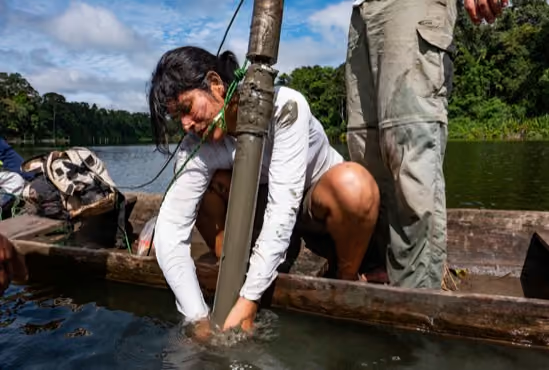
Lasting conservation, led by Indigenous heritage

Conservation champion and TED Fellow Adjany Costa is on a mission to empower Indigenous communities. Instead of imposing pre-designed policy and plans on local people, she says, conservation efforts should center those who know the land best, enabling them to tailor solutions to their unique environmental, social and economic realities. She presents a roadmap for Indigenous communities to take back ownership of their heritage and reclaim stewardship of their land. "Real community-based conservation ... fosters fierce independence," Costa says.

2022

TED Talk

Angola
Indigenous conservation champion // Conservation champion and TED Fellow Adjany Costa is on a mission to empower Indigenous communities. Instead of imposing pre-designed policy and plans on local people, she says, conservation efforts should center those who know the land best, enabling them to tailor solutions to their unique environmental, social and economic realities. She presents a roadmap for Indigenous communities to take back ownership of their heritage and reclaim stewardship of their land. "Real community-based conservation ... fosters fierce independence," Costa says. // Indigenous conservation champion // community-based conservation, stewardship and restoration, environmental conservation, indigenous, policy, conservation, restoration, land // Luanda|Angola|Luanda Province
Luanda|Angola|Luanda Province

Adjany Costa

No items found.
2022

07:55

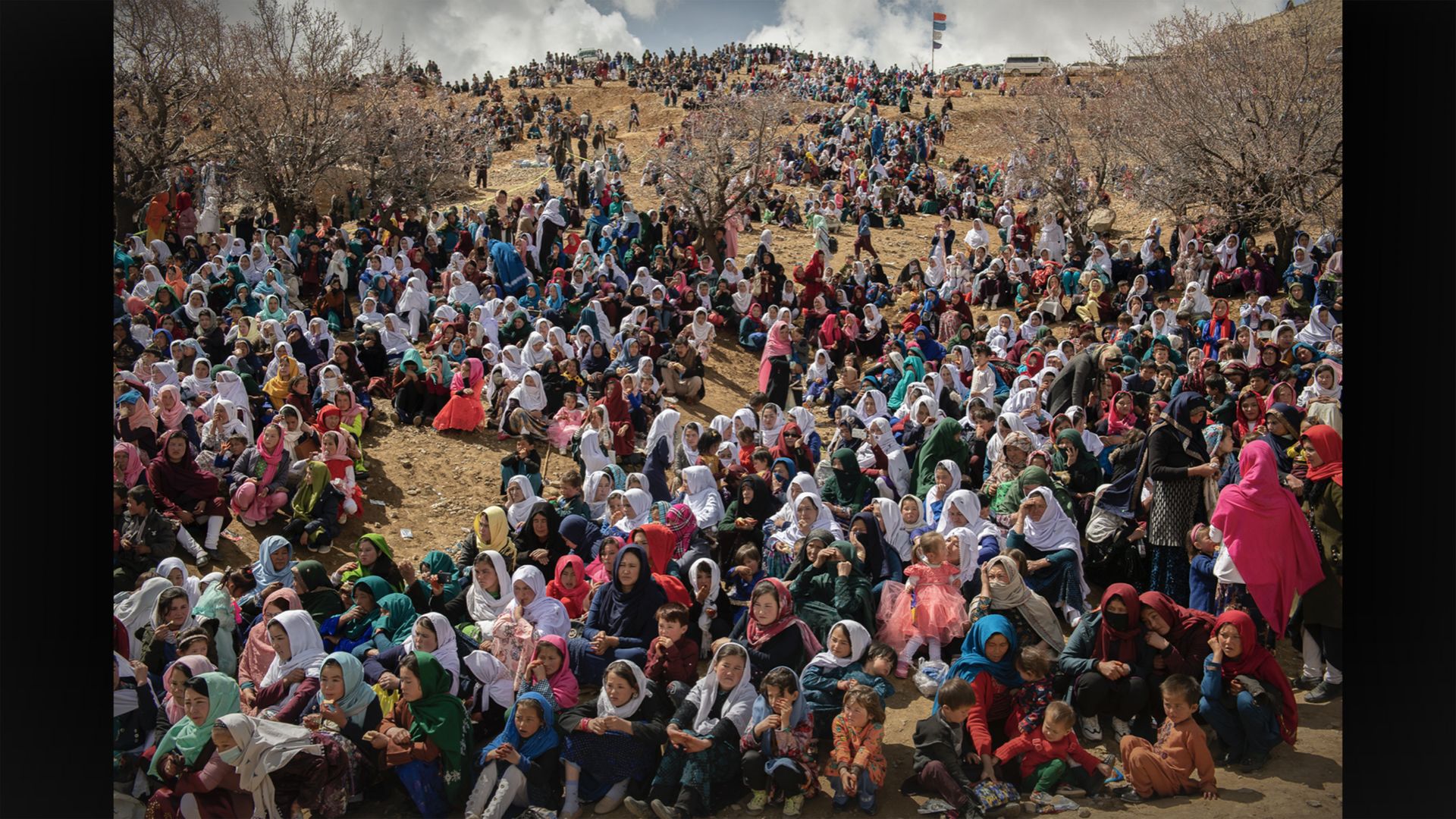
A photographic journey through the Taliban's takeover of Afghanistan

Exposing what life looks like in Afghanistan after a 20-year US occupation and the Taliban's stunning and rapid takeover, TED Fellow and documentary photographer Kiana Hayeri captures harrowing glimpses and multifaceted realities of a war-torn country. Through the lens of her camera, she documents devastation and deferred dreams -- but also resilient hope and spirit.

2022

TED Talk

Bosnia and Herzegovina
Visual Storyteller // Documentary photographer exploring complex topics such as migration, adolescence and sexuality in marginalized communities. // Kiana is a Senior TED fellow, a National Geographic Explorer grantee and a regular contributor to The New York Times and National Geographic. She lived in Afghanistan from 2014 to 2022, not only covering the frontline and the dramatic events of war but also capturing a different and alternative narrative of America’s longest war by focusing on everyday life. In 2020, Kiana received Tim Hetherington Visionary award and later that year, she was named as the 6th recipient of James Foley Award for Conflict Reporting. In 2021, Kiana received the Robert Capa Gold Medal for her photographic series “Where Prison is Kind of a Freedom,” documenting the lives of Afghan women in Herat Prison. In 2022, Kiana was part of The New York Times reporting team that won The Hal Boyle Award for “The Collapse of Afghanistan” and was shortlisted under International Reporting for the Pulitzer Prize 2022. In the same year, Kiana was named as the winner of the Leica Oskar Barnack. // Exposing what life looks like in Afghanistan after a 20-year US occupation and the Taliban's stunning and rapid takeover, TED Fellow and documentary photographer Kiana Hayeri captures harrowing glimpses and multifaceted realities of a war-torn country. Through the lens of her camera, she documents devastation and deferred dreams -- but also resilient hope and spirit. // Kiana is a Senior TED fellow, a National Geographic Explorer grantee and a regular contributor to The New York Times and National Geographic. She lived in Afghanistan from 2014 to 2022, not only covering the frontline and the dramatic events of war but also capturing a different and alternative narrative of America’s longest war by focusing on everyday life. In 2020, Kiana received Tim Hetherington Visionary award and later that year, she was named as the 6th recipient of James Foley Award for Conflict Reporting. In 2021, Kiana received the Robert Capa Gold Medal for her photographic series “Where Prison is Kind of a Freedom,” documenting the lives of Afghan women in Herat Prison. In 2022, Kiana was part of The New York Times reporting team that won The Hal Boyle Award for “The Collapse of Afghanistan” and was shortlisted under International Reporting for the Pulitzer Prize 2022. In the same year, Kiana was named as the winner of the Leica Oskar Barnack. // Visual Storyteller // photojournalist, afghanistan, mental health, resilience, marginalized, videography, expose, conflict, iran, peace building, documentary, war, journalist, women, marginalized communities, migration, visual storyteller // Federation of Bosnia and Herzegovina|Sarajevo|Bosnia and Herzegovina
Federation of Bosnia and Herzegovina|Sarajevo|Bosnia and Herzegovina

Kiana Hayeri

No items found.
2022

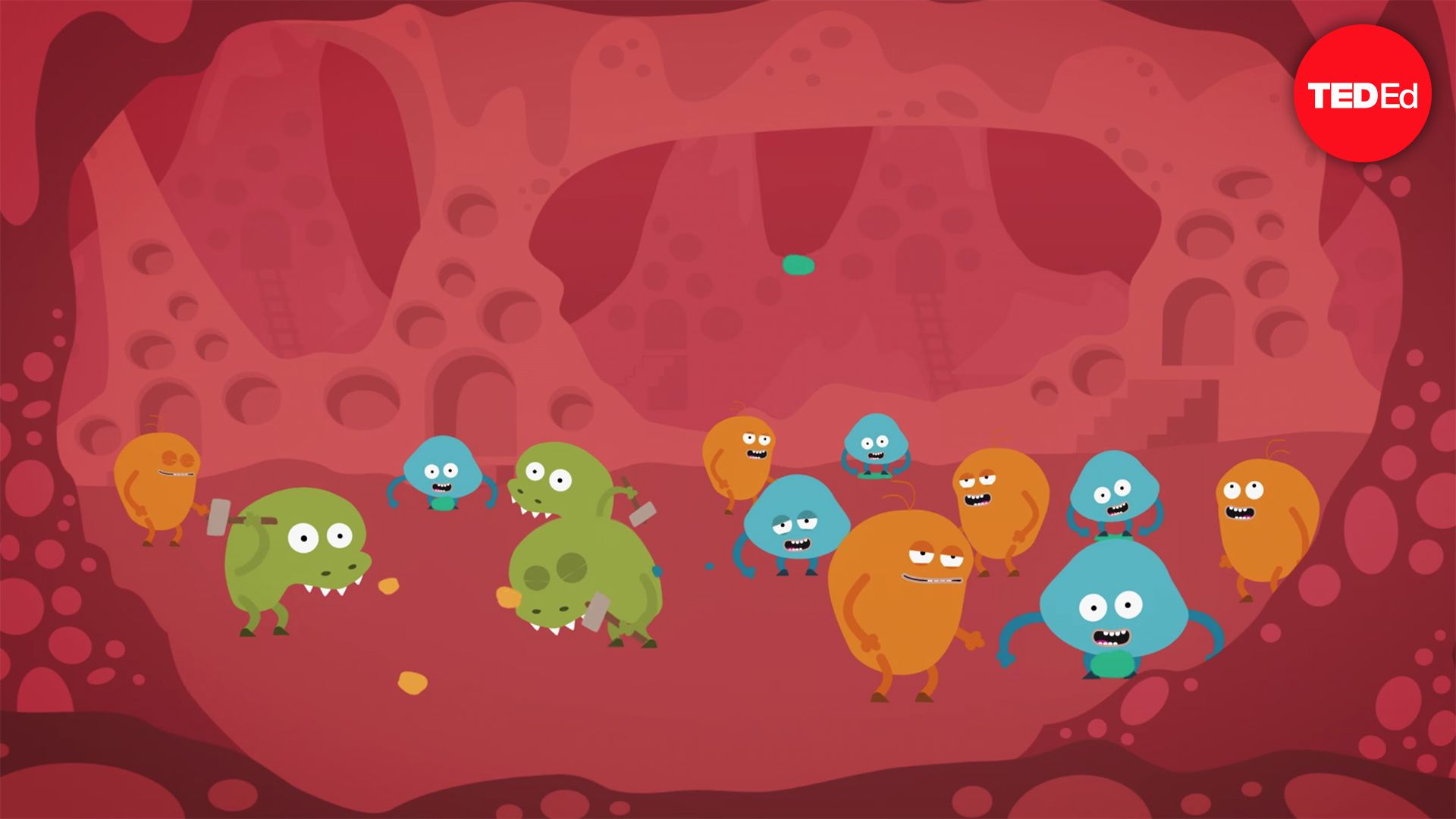
How to win at evolution and survive a mass extinction | Lauren Sallan

Congratulations! By being here, alive, you are one of history's winners -- the culmination of a success story four billion years in the making. The other 99 percent of species who have ever lived on earth are dead -- killed by fire, flood, asteroids, ice, heat and the cold math of natural selection. How did we get so lucky, and will we continue to win? In this short, funny talk, paleobiologist and TED Fellow Lauren Sallan shares insights on how your ancestors' survival through mass extinction made you who you are today.

2017

Podcasts

Japan
University of Chicago; University of Pennsylvania; Okinawa Institute of Science and Technology Graduate University (OIST)
Lauren Sallan is an American academic and paleobiologist known for her work in macroevolution. She is the head of the Macroevolution Unit at the Okinawa Institute of Science and Technology and previously held a position at the University of Pennsylvania. Sallan utilizes big data analytics to study macroevolution, focusing on palaeoichthyology. Her research has delved into the evolution of vertebrates, particularly during critical stages like the End-Devonian extinction and the Hangenberg event. Sallan has been recognized as a TED Senior Fellow and has delivered multiple TED talks on evolution and mass extinctions. She has compiled a comprehensive database of fish fossils spanning millions of years, shedding light on the early evolution of vertebrates and the factors influencing species formation rates. // The Macroevolution Unit at the Okinawa Institute of Science and Technology Graduate University investigates how environmental change, global events, ecological interactions, and key traits have shaped biodiversity over long timescales. They focus on determining the origins of major vertebrate groups, particularly fishes, and key ecosystems, such as marine and freshwater environments. The unit conducts computational analyses of biodiversity databases, spanning from local to global scales and from the present day to the last 600 million years. They also study morphological biodiversity at the species level using various scientific approaches. The research areas include understanding how crises and opportunities have influenced fish biodiversity, the origins of major animal groups, and the impacts of mass extinctions and global crises. The unit's work sheds light on the evolutionary history of vertebrates and the interactions between vertebrates and invertebrates, providing insights into the long-term consequences of environmental changes. // Lauren Sallan is an ichthyologist and paleontologist investigating how environmental change, global events, ecological interactions and key traits shaped biodiversity on timescales outside human observation (macroevolution). Her lab seeks to determine the origins of major vertebrate groups (particularly fishes) and key ecosystems (particularly marine and freshwater) as well as understand how species respond to big challenges – living or environmental, regional or global, gradual or sudden. Lauren is the head of the Macroevolution Unit at the Okinawa Institute of Science and Technology (OIST) an innovative research university that fully supports ideas-driven science. Lauren is building a international team of cross-disciplinary scientists to investigate the evolution of the oceans and the origins of fish biodiversity. Prior to joining OIST, Lauren was the Martin Meyerson Assistant Professor in Interdisciplinary Studies at the University of Pennsylvania. She was one of 10 people selected from a global applicant pool to became a TED Fellow in 2017, and she became a TED Senior Fellow in 2019. Her TED Talks on surviving mass extinction and the evolution of life have received almost 3 million views. Lauren's research has been published in high-profile venues such as Science, Nature, PNAS, and Current Biology. It has also been featured by The New York Times, The Chicago Tribune, the BBC, Forbes, the New Scientist, the Discovery Channel, and the recent popular science book 'The Ends of the World' by Peter Brannen (Harper Collins). // Head of the Macroevolution Unit // Head of the Marine Macroevolution Unit // Incoming Head, Marine Macroevolution Unit // Incoming Head, Marine Macroevolution Unit // University of Chicago; University of Pennsylvania; Okinawa Institute of Science and Technology Graduate University (OIST) // Lauren Sallan is an accomplished ichthyologist and paleontologist specializing in macroevolution, focusing on how environmental changes, global events, and ecological interactions have influenced biodiversity over extended timescales. As the head of the Macroevolution Unit at the Okinawa Institute of Science and Technology (OIST), she leads a diverse team of international scientists in exploring the origins of vertebrate groups, particularly fishes, and major ecosystems in marine and freshwater environments. Prior to her current role, Lauren held a prestigious position as the Martin Meyerson Assistant Professor at the University of Pennsylvania and has been recognized as a TED Fellow and TED Senior Fellow for her impactful research. Her work, featured in renowned scientific journals and mainstream media outlets, sheds light on the evolution of life in response to significant challenges, both environmental and biological. // I am trying to understand the origins and structure of modern marine biodiversity, why some fish species thrive and others fail in the face of environmental and ecological challenges, and how and why our own ancestors, the earliest vertebrates and fishes, first evolved into familiar forms. // Lauren Sallan is an esteemed paleobiologist and ichthyologist renowned for her expertise in macroevolution. Leading the Macroevolution Unit at the Okinawa Institute of Science and Technology, she delves into the evolution of vertebrates, with a particular focus on palaeoichthyology. Sallan's research employs big data analytics to unravel the impacts of environmental changes and global events on biodiversity, especially in fish species. Her work sheds light on the origins of major vertebrate groups, such as fishes, and key ecosystems in marine and freshwater environments. Through her comprehensive database of fish fossils, Sallan provides valuable insights into the early evolution of vertebrates and the factors influencing species formation rates. // Paleobiologist // Paleobiologist using the vast fossil record as a deep time database to explore how mass extinctions, environmental change and shifting ecologies impact biodiversity. // Lauren Sallan is a paleobiologist using cross-disciplinary data analytics and methods to gain insight into the underpinnings of ocean biodiversity and how ecology and evolution operate at scales unobservable by humans (macroevolution). Lauren uses the vast fossil record of fishes as a deep time database, mining to find out why some species persist and diversify while others die off. She has used these methods to discover the lost, largest, 'sixth' mass extinction of vertebrates, reveal how fish heads changed first during their rise to dominance, and show how invasive predators can shift prey evolution at global scales. In Summer 2022, Lauren will become the full-time head of the new Marine Macroevolution Unit at the Okinawa Institute of Science and Technology (OIST) an innovative research university that fully supports ideas-driven science. There she will build a international team of cross-disciplinary scientists to investigate the evolution of the oceans and the origins of fish biodiversity. Lauren is currently the Martin Meyerson Assistant Professor in Interdisciplinary Studies at the University of Pennsylvania, became a TED Fellow in 2017 and a TED Senior Fellow in 2019. Her research has been published in high-profile venues such as Science, Nature, PNAS, and Current Biology. It has also been featured by The New York Times, The Chicago Tribune, the BBC, Forbes, the New Scientist, the Discovery Channel, and the recent popular science book 'The Ends of the World' by Peter Brannen (Harper Collins). Her TED Talks on surviving mass extinction and the evolution of life have received almost 3 million views. // In this hilarious, whirlwind tour of the last four billion years of evolution, paleontologist and TED Fellow Lauren Sallan introduces us to some of the wildly diverse animals that roamed the prehistoric planet (from sharks with wings to galloping crocodiles and long-necked rhinos) and shows why paleontology is about way more than dinosaurs. // Congratulations! By being here, alive, you are one of history's winners -- the culmination of a success story four billion years in the making. The other 99 percent of species who have ever lived on earth are dead -- killed by fire, flood, asteroids, ice, heat and the cold math of natural selection. How did we get so lucky, and will we continue to win? In this short, funny talk, paleobiologist and TED Fellow Lauren Sallan shares insights on how your ancestors' survival through mass extinction made you who you are today. // Lauren Sallan is an esteemed paleobiologist and ichthyologist renowned for her expertise in macroevolution. Leading the Macroevolution Unit at the Okinawa Institute of Science and Technology, she delves into the evolution of vertebrates, with a particular focus on palaeoichthyology. Sallan's research employs big data analytics to unravel the impacts of environmental changes and global events on biodiversity, especially in fish species. Her work sheds light on the origins of major vertebrate groups, such as fishes, and key ecosystems in marine and freshwater environments. Through her comprehensive database of fish fossils, Sallan provides valuable insights into the early evolution of vertebrates and the factors influencing species formation rates. // Paleobiologist // technology, freshwater, ecology, paleontology, marine, education, fish, biodiversity, ocean, fire, scicomm, extinction, data, rhinos, evolution, research, data and analytics, marine biology, species, floods, interdisciplinary studies, mining, oceans, education and outreach, museums, universities, big data, nature, science, mass extinction, ecosystem, fossils, marine ecology // Okinawa|Japan|Onna
Okinawa|Japan|Onna

Lauren Sallan

No items found.
2017

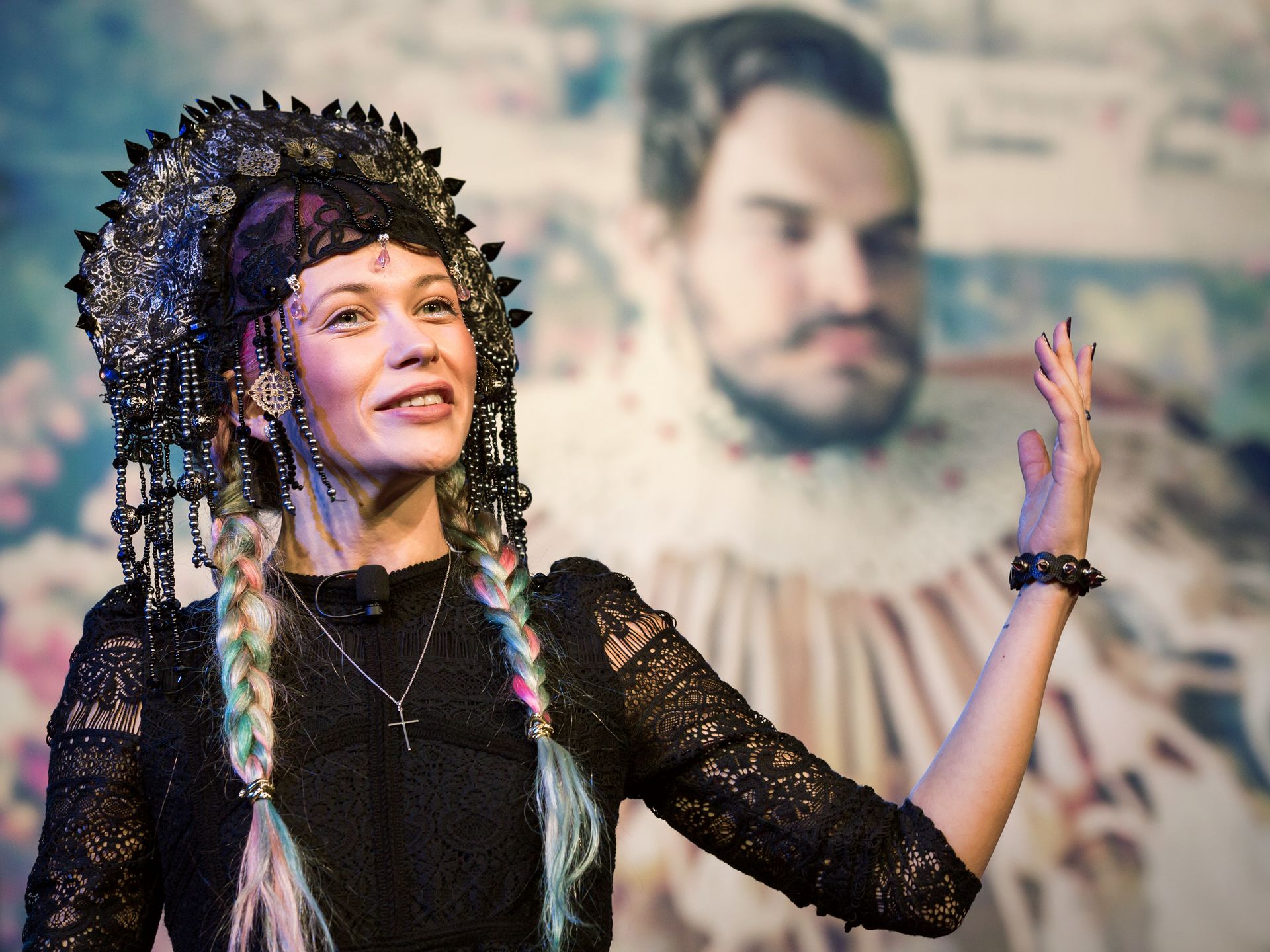
What the Russian Revolution would have looked like on social media | Mikhail Zygar

History is written by the victors, as the saying goes -- but what would it look like if it was written by everyone? Journalist and TED Fellow Mikhail Zygar is on a mission to show us with Project1917, a "social network for dead people" that posts the real diaries and letters of more than 3,000 people who lived during the Russian Revolution. By showing the daily thoughts of the likes of Lenin, Trotsky and many less celebrated figures, the project sheds new light on history as it once was -- and as it could have been. Learn more about this digital retelling of the past as well as Zygar's latest project about the transformative year of 1968.

2018

Podcasts

United Kingdom
Journalist + historian // Used to be war correspondent, covered Iraq, Lebanon, Darfur, Palestine, Uzbekistan, Kyrgyzstan, Georgia, Ukraine. In 2010 co-founded the only Russian independent news TV-channel Dozhd. The channel survived all the state-sponsored attacks and still exist. In 2015 wrote political best-seller, 'All the Kremlin's Men' // History is written by the victors, as the saying goes -- but what would it look like if it was written by everyone? Journalist and TED Fellow Mikhail Zygar is on a mission to show us with Project1917, a "social network for dead people" that posts the real diaries and letters of more than 3,000 people who lived during the Russian Revolution. By showing the daily thoughts of the likes of Lenin, Trotsky and many less celebrated figures, the project sheds new light on history as it once was -- and as it could have been. Learn more about this digital retelling of the past as well as Zygar's latest project about the transformative year of 1968. // Used to be war correspondent, covered Iraq, Lebanon, Darfur, Palestine, Uzbekistan, Kyrgyzstan, Georgia, Ukraine. In 2010 co-founded the only Russian independent news TV-channel Dozhd. The channel survived all the state-sponsored attacks and still exist. In 2015 wrote political best-seller, 'All the Kremlin's Men' // Journalist + historian // war

Mikhail Zygar

No items found.
2018

03:34

You are your microbes

From the microbes in our stomachs to the ones on our teeth we are homes to millions of unique and diverse communities which help our bodies function. Jessica Green and Karen Guillemin emphasize the importance of understanding the many organisms that make up each and every organism. [Directed by Celine Keller and Paula Spagnoletti, narrated by Jessica Green].

2019

Other

United States
UC Merced; University of California, Los Angeles; Jessica L. Green; Advanced Research Projects Agency for Health (ARPA-H); University of Oregon; University of California, Berkeley; Phylagen
I serve as a formal and informal advisor to biotech and data analytics companies, with a particular focus on business strategy, fundraising and storytelling. // Phylagen provides biotechnology services that measure the health and safety of air. Phylagen’s team of internationally recognized scientists combine microbial genomics and data analytics to solve complex problems like pandemic management and environmental health and safety. Phylagen has been recognized by the World Economic Forum as a Technology Pioneer. // Phylagen, Inc. is a data analytics company leveraging artificial intelligence (AI) to harness the vast, unseen world of microbiomes. The microbiome consists of trillions of interacting bacteria, fungi, and pollen collectively present in dust that inhabit every inch of the world. They not only influence our health and well-being, they also provide information about the origin of objects and raw materials. Phylagen is building a data platform by digitizing the DNA of microbiomes found in a place or on an object and creating a unique, identifiable fingerprint. This fingerprint is then applied to a variety of solutions in global supply chains for customers ranging from farmers to retail brands to governments. Phylagen’s mission is to turn dust into data thereby promoting a new level of global supply chain transparency using the environmental microbiome as a data platform. // The Biology and the Built Environment (BioBE) Center trained a new generation of innovators and practitioners at the architecture-biology interface. The vision of this national research center, funded by the Alfred P. Sloan Foundation, was to develop a hypothesis-driven, evidence-based approach to understand the built environment microbiome. // The mission of the University of California, Merced, is embodied in its proud claim of being the first American research university of the 21st century. // Phylagen, Inc. is a data analytics company leveraging artificial intelligence (AI) to harness the vast, unseen world of microbiomes. The microbiome consists of trillions of interacting bacteria, fungi, and pollen collectively present in dust that inhabit every inch of the world. They not only influence our health and well-being, they also provide information about the origin of objects and raw materials. Phylagen is building a data platform by digitizing the DNA of microbiomes found in a place or on an object and creating a unique, identifiable fingerprint. This fingerprint is then applied to a variety of solutions in global supply chains for customers ranging from farmers to retail brands to governments. Phylagen’s mission is to turn dust into data thereby promoting a new level of global supply chain transparency using the environmental microbiome as a data platform. // The Green lab applies theoretical, computational, and empirical approaches to study microbial systems in a wide range of environments. // UC Merced; University of California, Los Angeles; Jessica L. Green; Advanced Research Projects Agency for Health (ARPA-H); University of Oregon; University of California, Berkeley; Phylagen // Jessica Green is a seasoned advisor in the biotech and data analytics sectors, specializing in business strategy, fundraising, and storytelling. With a background in leading-edge biotechnology services, she has a strong focus on utilizing microbial genomics and data analytics to address complex challenges in areas such as pandemic management and environmental health and safety. Jessica has been involved in groundbreaking projects recognized by prestigious organizations like the World Economic Forum. Her expertise extends to leveraging artificial intelligence to explore the world of microbiomes, offering innovative solutions for global supply chains and diverse clientele. Additionally, she has contributed to training programs and research initiatives aimed at understanding the built environment microbiome and advancing scientific knowledge in this field. // I'm working to accelerate better health outcomes for everyone by supporting the development of high-impact solutions to society's most challenging health problems. // Jessica Green is a seasoned advisor with expertise in biotech and data analytics, focusing on business strategy, fundraising, and storytelling. Her background in cutting-edge biotechnology services enables her to leverage microbial genomics and data analytics to tackle complex issues in pandemic management and environmental health and safety. Jessica has been involved in pioneering projects recognized by esteemed organizations like the World Economic Forum. She also excels in utilizing artificial intelligence to explore microbiomes, providing innovative solutions for global supply chains and diverse clients. Furthermore, she contributes to training programs and research initiatives aimed at understanding the built environment microbiome, advancing scientific knowledge in this domain. // Engineer + biodiversity scientist // Jessica has extensive interdisciplinary training as both an engineer (civil, environmental, and nuclear) and a biologist. After cycling across Alaska with her dog and working as a ski lift operator, she got her PhD in nuclear engineering studying the fractal geometry of engineered and natural systems. For the past decade she has researched microbial systems in a variety of habitats including the arctic, the tropics, the ocean, the atmosphere, and the urban sphere. She was founding faculty at UC Merced, the tenth and newest campus of the University of California system. She is currently CTO and co-founder of Phylagen Inc., a data harvesting company that uses microbiome sequencing technology to optimize the health performance of buildings. She is also professor at both the University of Oregon and the Santa Fe Institute. Jessica enjoys collaborating with artists and designers to explore and convey key concepts about microorganisms to their human hosts. // Dr. Jessica Green is CEO and co-founder of Phylagen, Inc., a data analytics company digitizing the global microbiome. Jessica previously co-founded the Biology and Built Environment Center at the University of Oregon and serves on the Science Advisory Board at the Santa Fe Institute. She is an internationally recognized scientist whose work has been featured in both mainstream media -- TIME, ABC, NBC, NPR, Forbes, and The Economist - and respected scientific journals including Nature, Science, and the Proceedings of the National Academy of Sciences. She is the recipient of numerous awards including a Blaise Pascal International Research Chair, a John Simon Guggenheim Memorial Foundation Fellowship, and a TED Senior Fellowship. Jessica received a Ph.D. in Nuclear Engineering from the University of California, Berkeley. // Our bodies and homes are covered in microbes -- some good for us, some bad for us. As we learn more about the germs and microbes who share our living spaces, TED Fellow Jessica Green asks: Can we design buildings that encourage happy, healthy microbial environments? // Should we keep the outdoors out of hospitals? Ecologist and TED Fellow Jessica Green has found that mechanical ventilation does get rid of many types of microbes, but the wrong kinds: the ones left in the hospital are much more likely to be pathogens. // Jessica Green is a seasoned advisor with expertise in biotech and data analytics, focusing on business strategy, fundraising, and storytelling. Her background in cutting-edge biotechnology services enables her to leverage microbial genomics and data analytics to tackle complex issues in pandemic management and environmental health and safety. Jessica has been involved in pioneering projects recognized by esteemed organizations like the World Economic Forum. She also excels in utilizing artificial intelligence to explore microbiomes, providing innovative solutions for global supply chains and diverse clients. Furthermore, she contributes to training programs and research initiatives aimed at understanding the built environment microbiome, advancing scientific knowledge in this domain. // Engineer + biodiversity scientist // technology, radical supply chain transparency, entrepreneurship, buildings, public health, indoor air quality, data, job skills training, urban, research, biosecurity, mobility, microbiology, microbes, data and analytics, supply chain, arctic, design, farmers, nuclear, women, oceans, bicycle, environmental health, built environment, biotech, data-driven, climate-health nexus, healthy buildings, microbiome, women's health, transparency, air quality, nature, science, artificial intelligence, pandemic, ecology // Merced|San Francisco|USA|California|Berkeley|United States
Merced|San Francisco|USA|California|Berkeley|United States

Jessica Green

No items found.
2019

03:51

Wry photos that turn stereotypes upside down

Artist Uldus Bakhtiozina uses photographs to poke fun at societal norms in her native Russia. A glimpse into Russian youth culture and a short, fun reminder not to take ourselves too seriously.

2014

TED Talk

Russian Federation
Photographer + visual artist // Russian photographer who asks ordinary people she meets in her travels to model for elaborately staged, costumed, surreal portraits. Full of color, whimsy and drama, her images tell the story of their inner worlds. // Uldus Vildanovna Bakhtiozina is a Russian born artist and film director, known as the one who challenges stereotypes through her work. Uldus is a woman of the year at Top 100 Women of 2014 year according to BBC channel. She is the first Russian speaker in the history of TED with talks in 2014 and 2017. Bakhtiozina's works have world recognition by such magazines as Vogue Italy, Aesthetica, Creative Review, Worbz Magazine and medias as CNN and BBC. Uldus's works are exhibited worldwide (London, Saint-Petersburg, Milan, Brussels, Moscow, Hong-Kong, Berlin, Istanbul), located in private collections, museums (Faberge Museum in Saint-Petersburg, Russia), foundations ( RUYA, Ruya Foundation for Contemporary Culture in Iraq). Bakhtiozina's works are largely exhibited through the group exhibitions among such artists as Marina Abramovic, Jan Fabre, Damien Hirst and Yoko Ono. In 2016 Vogue Italy named Uldus the best young fashion photographer. In 2017 Uldus became the finalist of prestigious Laguna Art Prize. Since 2017 Uldus producing and directing films, both art and fashion. She works as an artist and costume designer with such organisations as Royal Opera House and Rambert. Living artistic life between art, fashion and film, in 2019 Uldus became an official ambassador of WomenInCulture and ambassador of Gucci Beauty, keep sharing her ideas and experience through lectures and visionary works. // With her gorgeous, haunting photographs, artist Uldus Bakhtiozina documents dreams, working with daily life as she imagines it could be. She creates everything in her work by hand -- from costumes to stages -- without digital manipulation, bringing us images from the land of escapism, where anyone can become something else. // Artist Uldus Bakhtiozina uses photographs to poke fun at societal norms in her native Russia. A glimpse into Russian youth culture and a short, fun reminder not to take ourselves too seriously. // Uldus Vildanovna Bakhtiozina is a Russian born artist and film director, known as the one who challenges stereotypes through her work. Uldus is a woman of the year at Top 100 Women of 2014 year according to BBC channel. She is the first Russian speaker in the history of TED with talks in 2014 and 2017. Bakhtiozina's works have world recognition by such magazines as Vogue Italy, Aesthetica, Creative Review, Worbz Magazine and medias as CNN and BBC. Uldus's works are exhibited worldwide (London, Saint-Petersburg, Milan, Brussels, Moscow, Hong-Kong, Berlin, Istanbul), located in private collections, museums (Faberge Museum in Saint-Petersburg, Russia), foundations ( RUYA, Ruya Foundation for Contemporary Culture in Iraq). Bakhtiozina's works are largely exhibited through the group exhibitions among such artists as Marina Abramovic, Jan Fabre, Damien Hirst and Yoko Ono. In 2016 Vogue Italy named Uldus the best young fashion photographer. In 2017 Uldus became the finalist of prestigious Laguna Art Prize. Since 2017 Uldus producing and directing films, both art and fashion. She works as an artist and costume designer with such organisations as Royal Opera House and Rambert. Living artistic life between art, fashion and film, in 2019 Uldus became an official ambassador of WomenInCulture and ambassador of Gucci Beauty, keep sharing her ideas and experience through lectures and visionary works. // Photographer + visual artist // photography, design, set design, youth, land, moving image, women, art direction // Russian Federation|Saint Petersburg|Russia
Russian Federation|Saint Petersburg|Russia

Uldus Bakhtiozina

No items found.
2014