

ted fellows media library

Watch the TED Fellows in action

Watch, listen and connect with the Fellows changing the world through science, art, invention and imagination. 

TED Talks

From unbelievable science to awe-inspiring art, watch powerful talks from our global community of 500+ TED Fellows.

Carissa Véliz

Beware the power of prediction

Podcasts

Hear TED Fellows tell their stories in intimate interviews and learn more about what lies behind their big ideas.

Trinity Tran

Who controls your city's money? | Trinity Tran

What if your city could borrow money from its own bank instead of private lenders? TED Fellow Trinity Tran is leading the push for public banks — which are owned by the people through their local governments — and shows how this model could ensure your local tax dollars stay in your community. 

Ryosuke Takashima

Meet the youngest-ever mayor in Japan's history | Ryosuke Takashima

TED Fellow Ryosuke Takashima is the youngest-ever mayor in Japan's history — but he doesn't consider himself a politician. His approach to leadership is simple: listen to as many voices as possible (from students to elders) in order to figure out what needs fixing. Hear why he thinks inviting citizens to participate in reforming their own communities is the best way to get things done.

Schendy Kernizan

The gravity-defying future of manufacturing | Schendy Kernizan

3D printing promised to reinvent how we make things, but it's mostly stuck producing prototypes with a high level of waste. Designer and TED Fellow Schendy Kernizan found a different way — by printing objects directly into a tub of gel. He explains how this technique eliminates the constraints of gravity, pushing the limits of how we can manufacture objects across medicine, fashion, space travel and more.
Listen to all
Podcast episodes

TED Fellows Films

TED Talks meet documentaries in these short films that explore TED Fellows’ ideas. Dive into all three seasons to explore their mind-blowing innovations. 

05:39

FELLOWS FILM

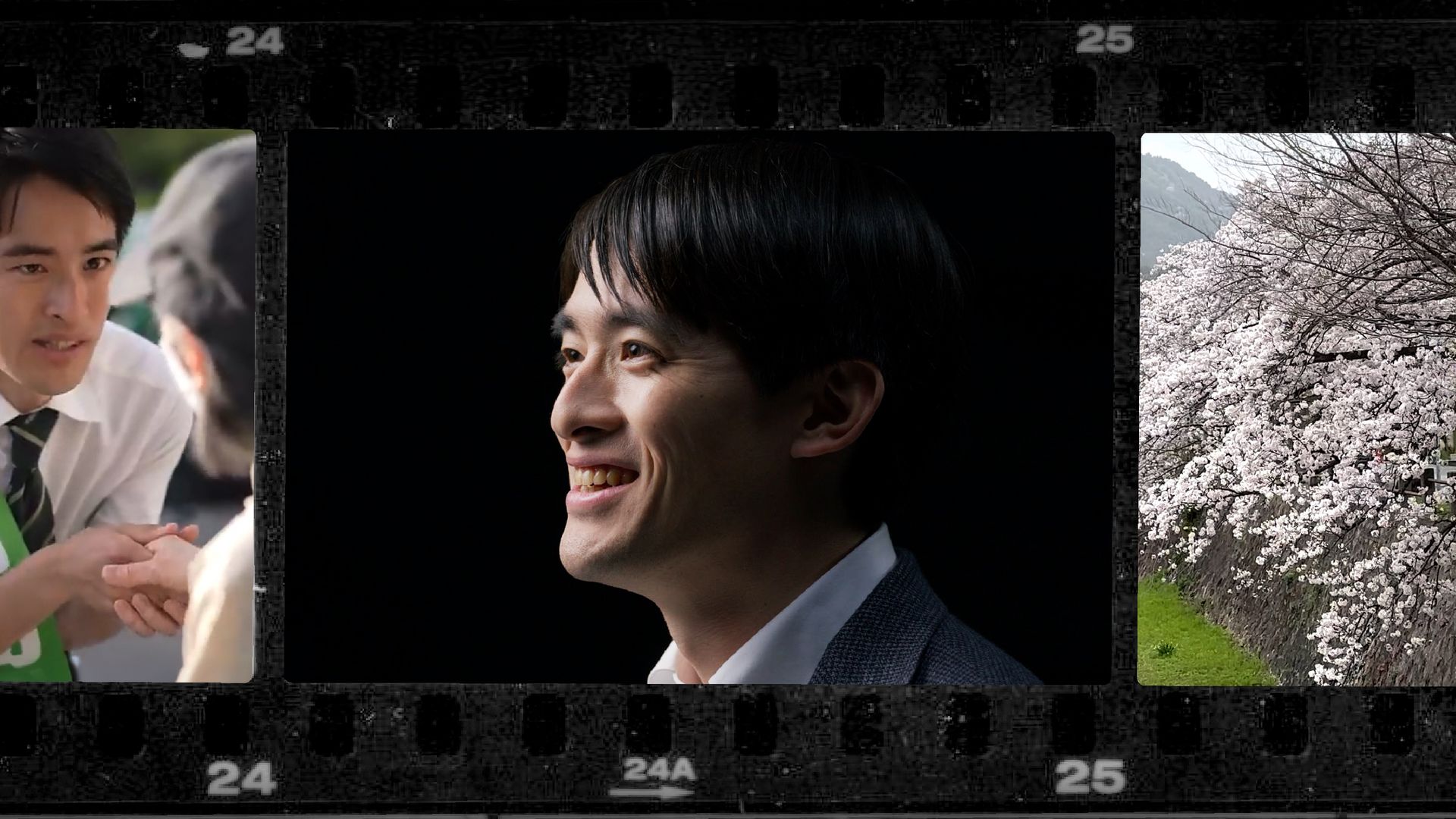
Meet the youngest-ever mayor in Japan's history

TED Fellow Ryosuke Takashima is the youngest-ever mayor in Japan's history — but he doesn't consider himself a politician. His approach to leadership is simple: listen to as many voices as possible (from students to elders) in order to figure out what needs fixing. Hear why he thinks inviting citizens to participate in reforming their own communities is the best way to get things done.

2026

TED Fellows Film

Ryosuke Takashima
04:47

FELLOWS FILM

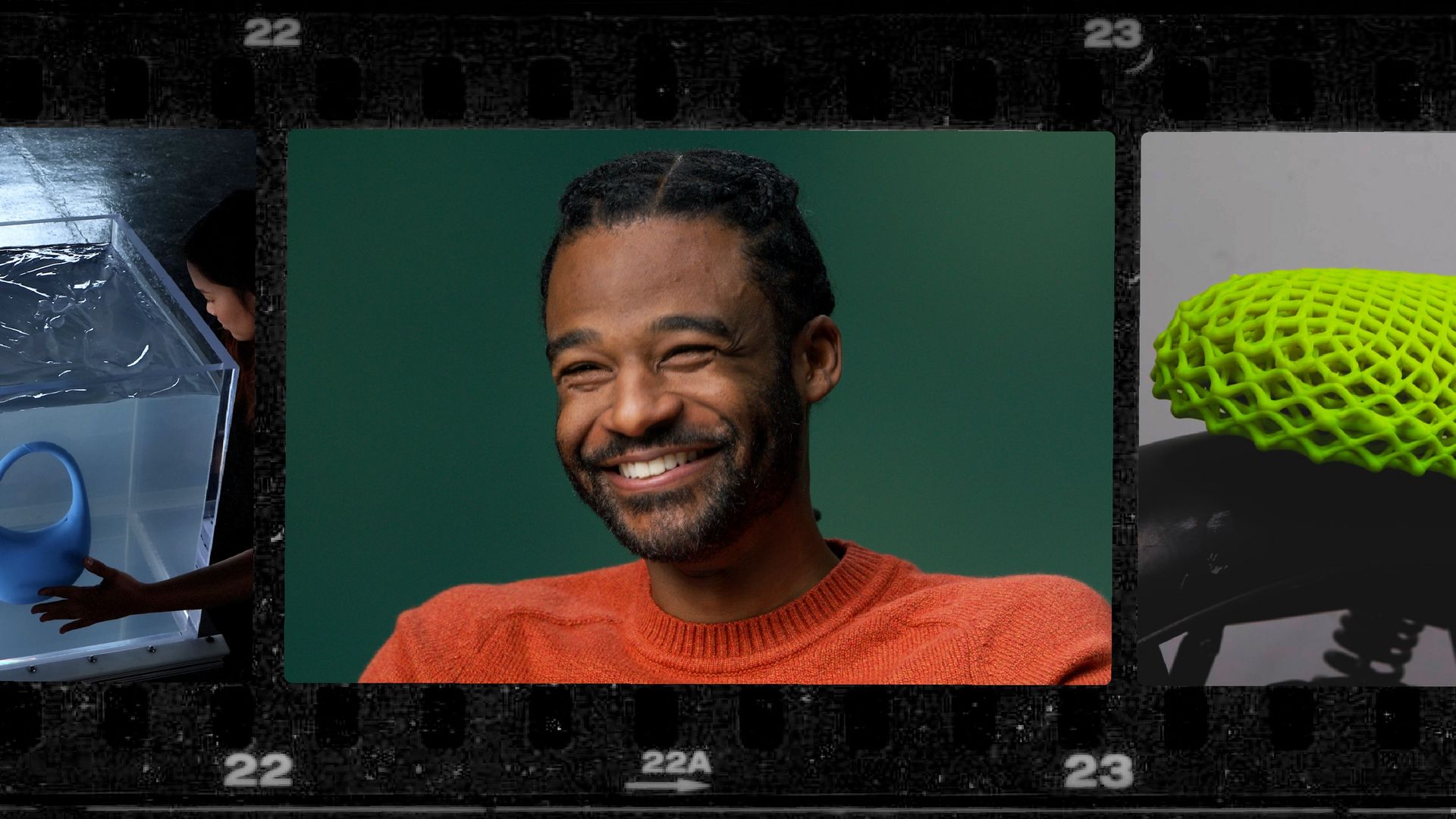
The gravity-defying future of manufacturing

3D printing promised to reinvent how we make things, but it's mostly stuck producing prototypes with a high level of waste. Designer and TED Fellow Schendy Kernizan found a different way — by printing objects directly into a tub of gel. He explains how this technique eliminates the constraints of gravity, pushing the limits of how we can manufacture objects across medicine, fashion, space travel and more.

2026

TED Fellows Film

Schendy Kernizan

Fellows Media Library

With 500+ TED Fellows and counting, we’ve got an entire world of media for you to explore. Dive into these talks, short films and podcasts showcasing Fellows turning ideas into action.

Clear
Sort
Thank you! Your submission has been received!
Oops! Something went wrong while submitting the form.

How bad data traps people in the US justice system | Clementine Jacoby

Right now, hundreds of thousands of people are "stuck" in the US criminal justice system. They've completed all of their requirements for release, but nobody knows it because the system is run on old databases that don't talk to each other. TED Fellow Clementine Jacoby describes how we can fix it -- bringing thousands of people home, reducing costs and improving public safety along the way. Hosted on Acast. See acast.com/privacy for more information.

2023

Podcasts

United States
Y Combinator; Stanford University; Recidiviz
Recidiviz is a data-driven organization that collaborates with criminal justice leaders to provide real-time insights and tools for decision-making. They focus on improving outcomes for justice-impacted individuals by stitching together data from fragmented systems to help decision-makers track the impact of policy and practice changes over time. Recidiviz works with various states to provide dashboards and data analytics, aiming to reduce incarceration rates and promote public safety. Their approach involves using data to enhance collaboration and information sharing between different departments and agencies within the criminal justice system. Through partnerships and initiatives like Justice Counts, Recidiviz aims to make criminal justice data more transparent, accessible, and impactful for policymakers, practitioners, and the public // Recidiviz - building the technical foundation for a self-aware, self-correcting criminal… // Building the technical foundation for a self-aware, self-correcting criminal justice system // Y Combinator; Stanford University; Recidiviz // Clementine Jacoby is a skilled professional dedicated to building the technical foundation for a self-aware, self-correcting criminal justice system. With a focus on leveraging technology to drive systemic improvements, Clementine has a proven track record of developing innovative solutions in this critical domain. Through her work at Recidiviz, she has demonstrated a deep understanding of the complexities of the criminal justice system and a commitment to driving positive change through data-driven approaches. Clementine's expertise lies in creating impactful solutions that address the challenges faced by the justice system, ultimately contributing to more effective and equitable outcomes. // Recidiviz is revolutionizing the landscape of criminal justice reform through data-driven systemic changes. By integrating fragmented criminal justice data into a unified platform, they enable informed decisions that reduce prison admissions and enhance re-entry success. Since 2019, their impact has reached 16 states, covering about 40% of the U.S. incarcerated population, facilitating the release of over 117,600 individuals. Their tools implement laws already on the books, improving accountability and transparency within agencies. Recidiviz's goal is to foster a smaller, fairer, and more rehabilitative justice system through continuous data-driven improvements, ultimately paving the way for a world where justice is equitable, rehabilitation is prioritized, and communities thrive. // Clementine Jacoby is a dedicated professional at Recidiviz, specializing in leveraging technology to drive systemic improvements in the criminal justice system. With a deep understanding of the complexities within the justice system, Clementine focuses on creating innovative solutions that address challenges and promote positive change through data-driven approaches. Her expertise lies in building the technical foundation for a self-aware and self-correcting criminal justice system, ultimately contributing to more effective and equitable outcomes. Through her work, Clementine plays a crucial role in revolutionizing criminal justice reform by integrating fragmented data, enabling informed decision-making, and facilitating the release of justice-impacted individuals. // Criminal justice technology entrepreneur // Clementine Jacoby is the CEO of Recidiviz — a nonprofit engineering team working to help criminal justice agencies reduce incarceration in ways that are safe and equitable. Previously, Clementine was a Product Manager at Google, where she worked on Google Maps and Android. She has been named in Forbes 30 Under 30, Fast Company’s Most Creative People, and TIME’s Next 100 Most Influential People, and is OYW’s Entrepreneur of the Year. She holds a B.S. in Symbolic Systems from Stanford University. Most importantly, though (!), Clem is a 2022 TED Fellow. // Right now, hundreds of thousands of people are "stuck" in the US criminal justice system. They've completed all of their requirements for release, but nobody knows it because the system is run on old databases that don't talk to each other. TED Fellow Clementine Jacoby describes how we can fix it -- bringing thousands of people home, reducing costs and improving public safety along the way. // Clementine Jacoby is a dedicated professional at Recidiviz, specializing in leveraging technology to drive systemic improvements in the criminal justice system. With a deep understanding of the complexities within the justice system, Clementine focuses on creating innovative solutions that address challenges and promote positive change through data-driven approaches. Her expertise lies in building the technical foundation for a self-aware and self-correcting criminal justice system, ultimately contributing to more effective and equitable outcomes. Through her work, Clementine plays a crucial role in revolutionizing criminal justice reform by integrating fragmented data, enabling informed decision-making, and facilitating the release of justice-impacted individuals. // Criminal justice technology entrepreneur // technology, tech for good, policymakers, tech, data, equity, design, data and analytics, policy, criminal justice reform, data analysis, data-driven, data science, criminal justice, ai for good, transparency, science, software, accountability, artificial intelligence, justice // Utah|San Francisco|USA|Provo|New York|California|United States
Utah|San Francisco|USA|Provo|New York|California|United States

Clementine Jacoby

No items found.
2023

Why I risked my life to expose a government massacre | Anjan Sundaram

A war zone can pass for a mostly peaceful place when no one is watching, says investigative journalist and TED Fellow Anjan Sundaram. In this short, incisive talk, he takes us inside the conflict in the Central African Republic, where he saw the methodical preparation for ethnic cleansing, and shares a lesson about why it's important to bear witness to other people's suffering. "Ignored people in all our communities tell us something important about who we are," Sundaram says. "A witness can become precious, and their gaze most necessary, when violence passes silently, unseen and unheard."

2017

Podcasts

United States
Berggruen Institute; metaLAB (at) Harvard & FU Berlin; Ecole normale supérieure; VICE Media; The Rockefeller Foundation; Yale University; Centre on Armed Groups; Penguin Random House; King's College London; McKinsey & Company; Indian Institute of Technology, Madras; TED Conferences; Skoll Foundation; University of East Anglia
Anjan Sundaram is a war reporter and author with a background in mathematics and a Ph.D. in journalism from Yale. He has been involved in various projects such as TED talks, an Artificial Intelligence series, and TV shows focusing on different topics like India's taboos and Cambodia. Sundaram has also published books that have received praise from notable figures. His art pieces are inspired by his reporting on climate justice, showcasing the courage and trauma of environmental defense communities. The artworks incorporate elements from his journalism and personal experiences, creating a visual representation of conflict zones and environmental issues. // Anjan Sundaram is an Indian author, journalist, academic, and television presenter known for his immersive and courageous reporting. He has authored three memoirs of journalism, including "Stringer," "Bad News," and "Breakup," which have received critical acclaim and awards. Sundaram's work focuses on war reporting, particularly in the Democratic Republic of Congo and Rwanda, shedding light on the persecution of journalists and the effects of conflicts on families. He has also ventured into television with series exploring the impact of algorithms and nationalism. Sundaram's writing has been compared to renowned authors like Ryszard Kapuciski and V.S. Naipaul, and he has received prestigious awards for his impactful journalism. // Author. Present TV shows. Mathematician. www.anjansundaram.com // Berggruen Institute; metaLAB (at) Harvard & FU Berlin; Ecole normale supérieure; VICE Media; The Rockefeller Foundation; Yale University; Centre on Armed Groups; Penguin Random House; King's College London; McKinsey & Company; Indian Institute of Technology, Madras; TED Conferences; Skoll Foundation; University of East Anglia // Anjan Sundaram is a versatile professional with experience as an author, television show presenter, and mathematician. With a diverse skill set spanning across these fields, Anjan brings a unique perspective to his work. His expertise in mathematics likely informs his approach to problem-solving and analysis, which is evident in his various projects and endeavors. Anjan's ability to communicate complex ideas through his writing and television appearances showcases his talent for engaging with audiences on different platforms. For more information about Anjan and his work, visit www.anjansundaram.com. // Hold power accountable by shedding light on inspiring humans in some of the world’s bleakest places // Anjan Sundaram is a multi-talented individual known for his work as a war reporter, author, and television presenter. With a Ph.D. in journalism and a background in mathematics, Sundaram brings a unique perspective to his projects. His writing, including acclaimed memoirs like "Stringer" and "Bad News," sheds light on conflicts in regions like the Democratic Republic of Congo and Rwanda, highlighting the challenges faced by journalists and families in these areas. Sundaram's television series delve into topics such as Artificial Intelligence and nationalism, showcasing his versatility and ability to engage audiences across different mediums. Through his work, Sundaram aims to hold power accountable and bring attention to the stories of individuals in some of the world's most challenging environments. // Author + investigative journalist // Anjan Sundaram (b. 1983, Ranchi, India) is the author of three award-winning memoirs of journalism, Stringer, Bad News and Breakup, and has been called "one of the great reporters of our age" by the BBC foreign correspondent Fergal Keane. He was an Artist in Residence at the Bellagio Center, run by the Rockefeller Foundation, in 2019, and has served as a Fellow at TED, The Berggruen Institute, The Skoll Foundation, and King’s College. Anjan has received a Frontline Club Award, a Moore Prize, and a Reuters Prize, with award citations and critics repeatedly comparing him to the Polish reporter Ryszard Kapuscinski and the Nobel Laureates V.S. Naipaul and William Faulkner. Anjan’s work centers marginalized communities in the world’s greatest but most neglected conflicts. Anjan creates personal, subjective, and non-authoritative narratives to evoke wonder and a sense of inspiration, by immersing audiences in the reporter’s experience on human rights and environmental frontlines. Anjan’s books have been featured by Christiane Amanpour and Fareed Zakaria on CNN, on The Daily Show with Jon Stewart, and Democracy Now by Amy Goodman. He writes for Granta magazine, The New York Times, and the New York Review of Books. His TED talk received over a million views, and he will speak again at TED about his reporting in 2024. Anjan graduated from Yale University and holds a PhD in creative writing and journalism from the University of East Anglia. // A war zone can pass for a mostly peaceful place when no one is watching, says investigative journalist and TED Fellow Anjan Sundaram. In this short, incisive talk, he takes us inside the conflict in the Central African Republic, where he saw the methodical preparation for ethnic cleansing, and shares a lesson about why it's important to bear witness to other people's suffering. "Ignored people in all our communities tell us something important about who we are," Sundaram says. "A witness can become precious, and their gaze most necessary, when violence passes silently, unseen and unheard." // Anjan Sundaram is a multi-talented individual known for his work as a war reporter, author, and television presenter. With a Ph.D. in journalism and a background in mathematics, Sundaram brings a unique perspective to his projects. His writing, including acclaimed memoirs like "Stringer" and "Bad News," sheds light on conflicts in regions like the Democratic Republic of Congo and Rwanda, highlighting the challenges faced by journalists and families in these areas. Sundaram's television series delve into topics such as Artificial Intelligence and nationalism, showcasing his versatility and ability to engage audiences across different mediums. Through his work, Sundaram aims to hold power accountable and bring attention to the stories of individuals in some of the world's most challenging environments. // Author + investigative journalist // violence, climate justice, television, entrepreneurship, biodiversity, investigative journalism, marginalized communities, dictatorship, research, war correspondence, press freedom, climate, human rights, rights, environmental policy and advocacy, policy, free speech, war, literature, marginalized, journalism, advocacy, environment, environmental defenders, indigenous, accountability, communication, artificial intelligence, justice, ecology // Mexico|Mexico City|India
Mexico|Mexico City|India

Anjan Sundaram

No items found.
2017

Bonus: Adam Kucharski on what should -- and shouldn't -- worry us about the coronavirus

2023

Podcasts

United Kingdom
Adam Kucharski is a Professor of Infectious Disease Epidemiology at the London School of Hygiene & Tropical Medicine. His work focuses on utilizing data and analytics for epidemic preparedness and response, including studying social behavior and immunity. He has authored a book titled "The Rules of Contagion: Why Things Spread - and Why They Stop," which delves into the principles driving contagion in various contexts. Additionally, Kucharski's research group explores how human behavior and immunity influence infectious disease outbreaks, aiming to enhance surveillance and control measures. He has also written articles for reputable publications and frequently gives popular science talks, covering topics such as disease transmission, outbreaks, and the science of luck. // The London School of Hygiene & Tropical Medicine, specifically the work of Prof Adam Kucharski, focuses on utilizing data and analytics to understand infectious disease dynamics for epidemic preparedness and response. Prof Kucharski's research involves developing mathematical and statistical approaches to study infectious disease outbreaks, combining various data sources to uncover transmission dynamics and intervention impacts. His work covers a range of infections including COVID-19, influenza, Ebola, dengue, and Zika. Additionally, he engages in public outreach activities and projects linking citizen science with data collection. // My academic research focuses on making better use of data and analytics for epidemic preparedness and response, from understanding immunity to predicting human behaviour. More broadly, I’m interested in finding new ways to generate and communicate scientific insights by engaging the public with research. // Adam Kucharski is a Professor of Infectious Disease Epidemiology at the London School of Hygiene & Tropical Medicine, specializing in utilizing data and analytics for epidemic preparedness and response. His research delves into the dynamics of infectious disease outbreaks, with a focus on social behavior, immunity, and transmission dynamics. Kucharski is the author of "The Rules of Contagion: Why Things Spread - and Why They Stop," a book exploring the principles of contagion in various contexts. He has contributed to studies on diseases like COVID-19, influenza, Ebola, dengue, and Zika, aiming to enhance surveillance and control measures. Beyond academia, Kucharski actively engages in public outreach activities to communicate scientific insights and promote citizen science initiatives. // Mathematician and epidemiologist // I'm an epidemiologist, mathematician, author, and a TED Senior Fellow. I’m co-director of the Centre for Epidemic Preparedness and Response at the London School of Hygiene & Tropical Medicine, where I use data-driven analysis to understand outbreaks, from immunity to human behaviour. I have advised multiple governments on major disease epidemics, as well as infodemics and social contagion. I regularly write about science, and my articles have appeared in places like Wired, Financial Times, and The Atlantic. I am author of 'The Rules of Contagion: Why Things Spread – and Why They Stop', which was named a Science Book of the Year by the Times, Guardian and Financial Times, as well as ‘The Perfect Bet’, about the relationship between science and games of chance. My new book ‘Proof: The Search for Certainty in an Uncertain World’ is out in spring 2025. I am also co-founder of wishidknown.co, a new platform for harnessing collective wisdom - we’ve already been growing a community for parents and will soon be launching one for founders. // As the threat of COVID-19 continues, infectious disease expert and TED Fellow Adam Kucharski answers five key questions about the novel coronavirus, providing necessary perspective on its transmission, how governments have responded and what might need to change about our social behavior to end the pandemic. (This video is excerpted from a 70-minute interview between Kucharski and head of TED Chris Anderson. Listen to the full interview at http://go.ted.com/adamkucharski. Recorded March 11, 2020) // Adam Kucharski is a Professor of Infectious Disease Epidemiology at the London School of Hygiene & Tropical Medicine, specializing in utilizing data and analytics for epidemic preparedness and response. His research delves into the dynamics of infectious disease outbreaks, with a focus on social behavior, immunity, and transmission dynamics. Kucharski is the author of "The Rules of Contagion: Why Things Spread - and Why They Stop," a book exploring the principles of contagion in various contexts. He has contributed to studies on diseases like COVID-19, influenza, Ebola, dengue, and Zika, aiming to enhance surveillance and control measures. Beyond academia, Kucharski actively engages in public outreach activities to communicate scientific insights and promote citizen science initiatives. // Mathematician and epidemiologist // data collection, writing, public health, data, health, infectious disease, finance, epidemics, research, outbreak analysis, citizen scientist, data and analytics, covid, human behaviour, data-driven, mathematics, epidemiology, open science, science communication, science, coronaviruses, communication, pandemic, disease // United Kingdom|England|London
United Kingdom|England|London

Adam Kucharski

No items found.
2023

13:33

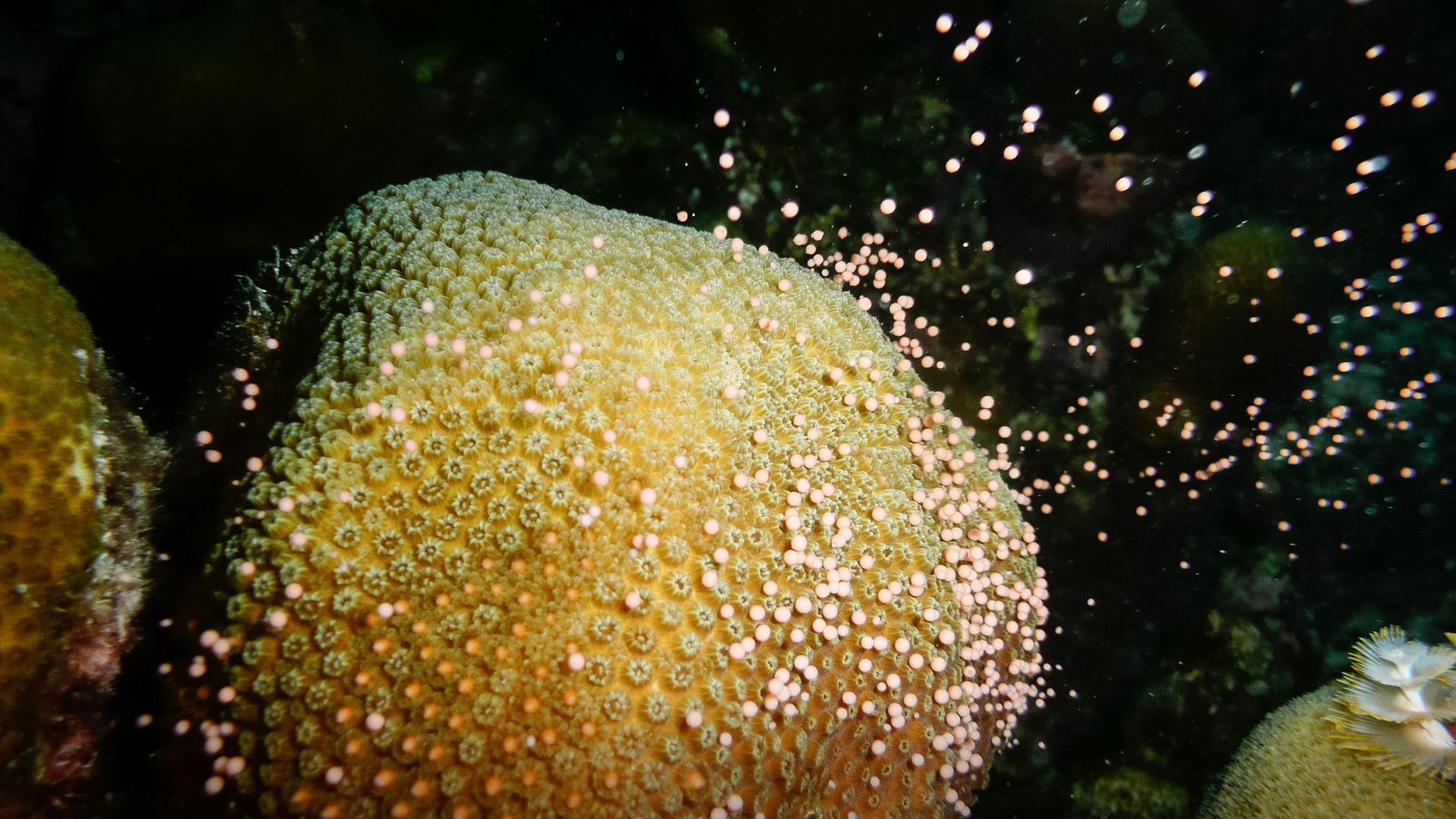
How we're growing baby corals to rebuild reefs

Kristen Marhaver studies corals, tiny creatures the size of a poppyseed that, over hundreds of slow years, create beautiful, life-sustaining ocean structures hundreds of miles long. As she admits, it's easy to get sad about the state of coral reefs; they're in the news lately because of how quickly they're bleaching, dying and turning to slime. But the good news is that we're learning more and more about these amazing marine invertebrates -- including how to help them (and help them help us). This biologist and TED Senior Fellow offers a glimpse into the wonderful and mysterious lives of these hard-working and fragile creatures.

2015

TED Talk

FDA; University of California San Diego; Scripps Institution of Oceanography, UCSD; The Marhaver Lab at CARMABI; Wichita Collegiate School; CARMABI (Caribbean Research and Management of Biodiversity); Birch Aquarium at Scripps; University of California, San Diego; NYU School of Medicine; UC San Diego; University of California, Merced; TED Conferences; Georgia Institute of Technology; University of California at Merced
The Marhaver Lab is a marine biology research lab focused on coral reef recovery. Led by Dr. Kristen Marhaver, the lab conducts research on coral breeding, reproduction, and restoration. They collaborate with various organizations globally to share solutions for growing corals faster. The lab hosts students and collaborators to study coral reef ecology and restoration. Their work includes establishing a global coral cryopreservation network and conducting field research on coral settlement materials. The lab also engages in science communication efforts to raise awareness about coral restoration and ocean conservation. // The organization TED Conferences, LLC facilitates translations through volunteer translators for their Open Translation Project. // Coral scientist known for pioneering coral breeding methods that are now used globally in science and restoration, first person to grow baby pillar coral (photo above) and pineapple coral, achieved the first assisted gene flow in corals using cryopreserved sperm // • Designing and leading research on coral reproduction, beneficial microbes, materials engineering for reef restoration, coral cryopreservation, ecology, and natural history• National Geographic Explorer, World Economic Forum Young Scientist, WINGS Fellow• Invited Talks: Reef Futures Plenary, WEF AMNC 2018, TED2017, Harvard MCZ, ISRS 2017, WEF AMNC 2016, Cozumel Scuba Fest, ASMS Plenary, ICRS 2016• >2M TED Talk views• Supervising student research interns (19 and counting)• Providing advice to governments, NGOs, and companies on innovation for marine conservation• Still absorbing too much UVB // • Designed and managed research on coral microbial ecology, larval behavior, reproductive ecology, and coral evolution• Taught and mentored students and guest scientists at CARMABI• NSF Postdoctoral Research Fellowship in Ocean Sciences (PRF-OCE)• Absorbed unreasonable amounts of UVA and UVB• Invited Talks: TED Mission Blue II, TED2015, World Economic Forum, Mendeley,​ Science Foo Camp, San Francisco Exploratorium, San Diego Zoo Institute for Conservation Research, Cancun Festival de los Oceanos• Guest Author, Wired UK• Press: NPR Morning Edition, BBC World News, Scientific American, The Atlantic, New Scientist, Popular Science, 52 Insights, Marine Life, Vancouver Sun, Dolfijn FM, RTL News, WWF-NL, Roots Magazine, TakePart, OnEarth, Climate Wire // • Designed and conducted research on coral-associated viral communities, Janzen-Connell effects in reef corals, coral-microbe interactions, marine larval behavior• NSF Graduate Research Fellowship, NSF IGERT Fellowship, NSF DDIG (IOS - Animal Behavior), SIO Stout Fellowship, WSN Best Student Paper, ASLO/AGU Outstanding Student Paper• Sci-Comm: Science Progress, The Oyster's Garter, WSN Sci-Comm workshop, Nerd Nite San Diego, "The Open Laboratory: The Best Science Writing on the Web"• UCSD Outstanding Teacher Rating (Biochemistry of Nutrition), Course Assistant for Marine Biodiversity and Conservation // Performed in vitro experiments on human ductal carcinoma cell lines to quantify effects of cancer drugs on protein translation rate (SURP program, lab of Robert Schneider) // • Oversaw field and lab research on coral-microbe interactions, larval behavior, gene expression, and coral out-planting• NSF Research Grant (IOS - Behavioral Systems)• TED Global Fellow• Invited Talks: TEDGlobal 2012, Google, ICES, FIDALMAR, TEDxHoogstraat, Curacao Sustainable Business Council // • This was my weekly volunteer gig with the wonderful aquarists at Birch• Skills gained: coral propagation, coral feeding, coral mind reading, coral zen, coral interior decorating, outsmarting algae, understanding plumbing, observing the very slow arguments corals have with their neighbors• 400 hours // Awards and Honors• School of Biology Williams-Walls Award• School of Biology John H. Ridley Award• Tri-Beta Biology Honors Society President '03-'04• College of Sciences President's Undergraduate Research Fellowship• HHMI Undergraduate Research Fellowships (2)Research• Research assistant for a three-year study of coral stress genes (assistant to Ph.D. student Sara Edge, lab of Terry Snell)• Research assistant for a population genetic study of Indonesian coral reef fish (assistant to postdoc Eric Hoffman, lab of Adam Jones)• Field assistant for coral reef ecology research in the Florida Keys (lab of Mark Hay) // Prepared high-volume stocks of laboratory media for use by FDA analysts testing the food supply for bacterial pathogens // • Oversaw field and lab research on coral-microbe interactions, larval behavior, gene expression, and coral out-planting• NSF Research Grant (IOS - Behavioral Systems)• TED Global Fellow• Invited Talks: TEDGlobal 2012, Google, ICES, FIDALMAR, TEDxHoogstraat, Curacao Sustainable Business Council // FDA; University of California San Diego; Scripps Institution of Oceanography, UCSD; The Marhaver Lab at CARMABI; Wichita Collegiate School; CARMABI (Caribbean Research and Management of Biodiversity); Birch Aquarium at Scripps; University of California, San Diego; NYU School of Medicine; UC San Diego; University of California, Merced; TED Conferences; Georgia Institute of Technology; University of California at Merced // Kristen Marhaver is a coral scientist recognized for her innovative work in coral breeding methods and restoration efforts. She has achieved significant milestones in coral research, including being the first to grow baby pillar coral and pineapple coral, as well as accomplishing the first assisted gene flow in corals using cryopreserved sperm. Kristen's expertise spans various areas such as coral reproduction, beneficial microbes, materials engineering for reef restoration, and coral cryopreservation. She has been a National Geographic Explorer, a World Economic Forum Young Scientist, and a WINGS Fellow, and has delivered invited talks at prestigious events and institutions worldwide. Kristen has also supervised numerous student research interns and provided valuable insights to governments, NGOs, and companies on marine conservation innovation. // We fight for baby corals because they have very short arms. The Marhaver Lab solves the trickiest puzzles in coral breeding and shares the solutions globally so that everyone can grow more corals, faster. We're a gene bank, IVF clinic, neonatal ICU, and daycare, except for baby endangered corals so of course it's super easy and nothing ever goes wrong. // Dr. Kristen Marhaver is a distinguished coral scientist renowned for her groundbreaking work in coral breeding techniques and restoration initiatives. Leading the Marhaver Lab, she spearheads research on coral reproduction, restoration, and the establishment of a global coral cryopreservation network. Kristen's expertise encompasses coral ecology, beneficial microorganisms, materials engineering for reef rehabilitation, and cryopreservation methods. She has achieved notable milestones in coral research, including pioneering the growth of baby pillar coral and pineapple coral, as well as conducting the first assisted gene flow in corals using cryopreserved sperm. Through collaborations with organizations worldwide, Kristen and her lab are at the forefront of efforts to accelerate coral reef recovery and raise awareness about marine conservation. // Coral reef biologist // I'm a Caribbean marine biologist developing 'assisted reproduction' methods for threatened coral species. My research is 50% basic (studying ecology, behavior, and reproduction) and 50% applied (inventing probiotics, settlement surfaces, outplanting strategies, and preservation methods for corals). By learning what keeps juvenile corals alive, we can bias reef ecosystems back toward corals and recover the wealth they produce for society. I'm also working to increase the power of science in society by challenging scientists and journalists to re-examine the inefficient publishing and communication traditions of the past. // We fight for baby corals because they have very short arms. The Marhaver Lab solves the trickiest puzzles in coral breeding and shares the solutions globally so that everyone can grow more corals, faster. We're a gene bank, IVF clinic, neonatal ICU, and daycare, except for baby endangered corals so of course it's super easy and nothing ever goes wrong. We were the first team to breed endangered Pillar Corals and the first to breed endangered Elkhorn Corals from cryopreserved sperm. (Both were considered impossible but turned out very cute.) We also run the world's largest gene bank of Caribbean coral. Our conservation antics have been featured by NPR, BBC, and other acronyms. Leading the skunkworks, Dr. Kristen Marhaver is a TED Senior Fellow, National Geographic Explorer, World Economic Forum Young Scientist, and Georgia Tech 40 Under 40 honoree. The Marhaver Lab is based at CARMABI on the island of Curaçao and you should definitely visit because it's the island of Curaçao. // Corals in the Pacific Ocean have been dying at an alarming rate, particularly from bleaching brought on by increased water temperatures. But it's not too late to act, says TED Fellow Kristen Marhaver. She points to the Caribbean -- given time, stable temperatures and strong protection, corals there have shown the ability to survive and recover from trauma. Marhaver reminds us why we need to keep working to protect the precious corals we have left. "Corals have always been playing the long game," she says, "and now so are we." // Kristen Marhaver studies corals, tiny creatures the size of a poppyseed that, over hundreds of slow years, create beautiful, life-sustaining ocean structures hundreds of miles long. As she admits, it's easy to get sad about the state of coral reefs; they're in the news lately because of how quickly they're bleaching, dying and turning to slime. But the good news is that we're learning more and more about these amazing marine invertebrates -- including how to help them (and help them help us). This biologist and TED Senior Fellow offers a glimpse into the wonderful and mysterious lives of these hard-working and fragile creatures. // Dr. Kristen Marhaver is a distinguished coral scientist renowned for her groundbreaking work in coral breeding techniques and restoration initiatives. Leading the Marhaver Lab, she spearheads research on coral reproduction, restoration, and the establishment of a global coral cryopreservation network. Kristen's expertise encompasses coral ecology, beneficial microorganisms, materials engineering for reef rehabilitation, and cryopreservation methods. She has achieved notable milestones in coral research, including pioneering the growth of baby pillar coral and pineapple coral, as well as conducting the first assisted gene flow in corals using cryopreserved sperm. Through collaborations with organizations worldwide, Kristen and her lab are at the forefront of efforts to accelerate coral reef recovery and raise awareness about marine conservation. // Coral reef biologist // technology, photomicroscopy, water, ocean conservation, education, nutrition, biodiversity, led, paper, fish, gene bank, cryopreservation, microscopy, marine life, food supply, coral reef conservation, research, reef conservation, fishing, coral reef, reef restoration, photography, ecosystem, climate, design, microbes, environmental policy and advocacy, volunteerism, coral reefs, policy, advocacy campaigns, species, coral, coral reproduction, coral species, coral reef restoration, oceans, environmental consciousness, underwater photography and photomicroscopy, advocacy, island, teachers, campaigns, conservation, photography in the dark, reef, underwater photography, coral breeding, science, food, restoration, oceanography, communication, microbiology, baby corals, ecology, coral restoration, algae, marine ecology // Willemstad|Curaçao|USA|Curacao|Netherlands Antilles|Minneapolis|Minnesota
Willemstad|Curaçao|USA|Curacao|Netherlands Antilles|Minneapolis|Minnesota

Kristen Marhaver

No items found.
2015

04:41

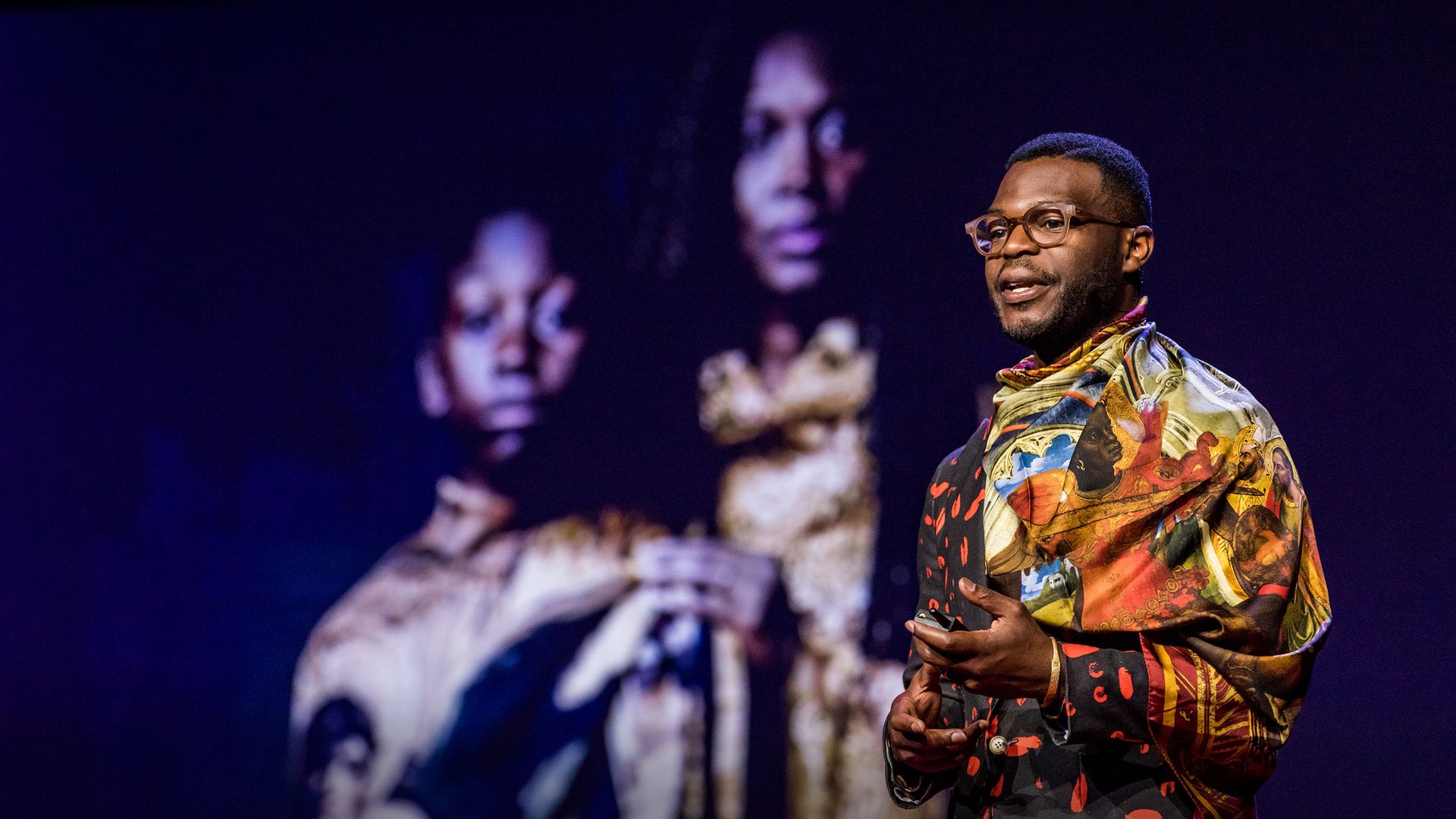
Fashion that celebrates African strength and spirit

"To be African is to be inspired by culture and to be filled with undying hope for the future," says designer and TED Fellow Walé Oyéjidé. With his label Ikiré Jones (you'll see their work in Marvel's "Black Panther"), he uses classic design to showcase the elegance and grace of often-marginalized groups, in beautifully cut clothing that tells a story.

2018

TED Talk

United States
Fashion designer + artist // Walé Oyéjidé is an American designer and lawyer of Nigerian descent. His work threads the needle between the cultural and the contemporary, and seeks to reflect the authentic experiences of persons that are commonly overlooked in commercial media. At the core of his work is the notion that elegance is not owned by any particular culture, or by any corner of the world. With his clothing label Ikiré Jones, he uses design as a vehicle for social commentary by marrying African-inspired prints with European tailoring and Renaissance era art. // "To be African is to be inspired by culture and to be filled with undying hope for the future," says designer and TED Fellow Walé Oyéjidé. With his label Ikiré Jones (you'll see their work in Marvel's "Black Panther"), he uses classic design to showcase the elegance and grace of often-marginalized groups, in beautifully cut clothing that tells a story. // Walé Oyéjidé is an American designer and lawyer of Nigerian descent. His work threads the needle between the cultural and the contemporary, and seeks to reflect the authentic experiences of persons that are commonly overlooked in commercial media. At the core of his work is the notion that elegance is not owned by any particular culture, or by any corner of the world. With his clothing label Ikiré Jones, he uses design as a vehicle for social commentary by marrying African-inspired prints with European tailoring and Renaissance era art. // Fashion designer + artist // design, legal, law // Pennsylvania|Philadelphia|United States|USA
Pennsylvania|Philadelphia|United States|USA

Walé Oyéjidé

No items found.
2018

06:07

How to revitalize a neighborhood -- without gentrification

The housing market can be vexing: while some neighborhoods get ridiculously expensive and price out longtime residents, others have historic homes sitting vacant without demand. Equitable housing developer and TED Fellow Bree Jones shares how she found a way to revitalize neighborhoods experiencing hyper-vacancy while preventing gentrification -- supporting home buyers and transforming communities along the way.

2022

TED Talk

United States
Equitable Housing Developer // The housing market can be vexing: while some neighborhoods get ridiculously expensive and price out longtime residents, others have historic homes sitting vacant without demand. Equitable housing developer and TED Fellow Bree Jones shares how she found a way to revitalize neighborhoods experiencing hyper-vacancy while preventing gentrification -- supporting home buyers and transforming communities along the way. // Equitable Housing Developer // equity, housing

Bree Jones

No items found.
2022

15:49

Technology and Health: How to improve Accessibility

A Braille smartphone for the blind. Not science fiction, this is a device that's the brainchild of Sumit Dagar. Watch him break down his approach to the fusion of technology and healthcare as well as what that means for accessibility.

2017

TED Talk

India
Designer + Filmmaker // Sumit Dagar is a designer and technologist who puts his skills to use for innovating accessibility solutions. He believes that a deprived sense should not dictate an inability to use technology, rather, technology should adapt to user’s needs and capabilities. He founded Kriyate with this vision in 2012. Before founding the company, he headed a number of startups in services and products related to the design field. His work has earned him international recognition such as Rolex Young Laureate, TED fellowship, and MIT India TR 35. // Sumit Dagar is a designer and technologist who puts his skills to use for innovating accessibility solutions. He believes that a deprived sense should not dictate an inability to use technology, rather, technology should adapt to user’s needs and capabilities. He founded Kriyate with this vision in 2012. Before founding the company, he headed a number of startups in services and products related to the design field. His work has earned him international recognition such as Rolex Young Laureate, TED fellowship, and MIT India TR 35. // Sumit Dagar is a designer and technologist who puts his skills to use for innovating accessibility solutions. He believes that a deprived sense should not dictate an inability to use technology, rather, technology should adapt to user’s needs and capabilities. He founded Kriyate with this vision in 2012. Before founding the company, he headed a number of startups in services and products related to the design field. His work has earned him international recognition such as Rolex Young Laureate, TED fellowship, and MIT India TR 35. // Designer + Filmmaker // technology, interaction design, movie making, accessibility, design, entrepreneurship, traveling, information visualisation, social entrepreneurship // Delhi|India
Delhi|India

Sumit Dagar

No items found.
2017

We need to track the world’s water like we track the weather | Sonaar Luthra

2024

Podcasts

United States
I'm building and strengthening mechanisms for accountability to ensure we minimize the hazards associated with a warming planet and a transforming hydrological cycle. I split my efforts evenly between climate justice and defense/national security issues. // Water testing innovator // Creator of Water Canary, a water-testing device that collects real-time water quality data from the field. // Sonaar Luthra is a world-renowned water and climate consultant who forecasts water and climate risks, drawing on a deep understanding of how essential models, institutions and markets are struggling to adapt to rapid transformations in our planet's water cycle. He is the CEO/Founder of Water Canary, a Senior TED Fellow, a RAND Pardee non-resident fellow, an Ecological Security Fellow at the Council on Strategic Risks, and a Security Fellow at the Truman National Security Project. Sonaar studied at Bowdoin College, Oxford and NYU. He teaches "Water in the 21st Century" for MA Sustainability candidates at Harvard Summer School. He was recognized as a speaker and specialist in water quality and climate change by the Obama State Department, he is an ambassador for the Fight Forever Chemicals campaign run by Participant Media and the film Dark Waters, and his work has been featured in TED, WIRED, Maven’s Notebook, NPR, the BBC, the CBC, Al-Jazeera, the Architectural Review, and the Obama White House Water Summit's Commitments to Action on Building a Sustainable Water Future. // We need a global weather service for water, says entrepreneur and TED Fellow Sonaar Luthra. In a talk about environmental accountability, Luthra shows how we could forecast water shortages and risks with a global data collection effort -- just like we monitor the movement of storms -- and better listen to what the earth is telling us. // After a crisis, how can we tell if water is safe to drink? Current tests are slow and complex, and the delay can be deadly, as in the cholera outbreak after Haiti's earthquake in 2010. TED Fellow Sonaar Luthra previews his design for a simple tool that quickly tests water for safety -- the Water Canary. // Sonaar Luthra is a world-renowned water and climate consultant who forecasts water and climate risks, drawing on a deep understanding of how essential models, institutions and markets are struggling to adapt to rapid transformations in our planet's water cycle. He is the CEO/Founder of Water Canary, a Senior TED Fellow, a RAND Pardee non-resident fellow, an Ecological Security Fellow at the Council on Strategic Risks, and a Security Fellow at the Truman National Security Project. Sonaar studied at Bowdoin College, Oxford and NYU. He teaches "Water in the 21st Century" for MA Sustainability candidates at Harvard Summer School. He was recognized as a speaker and specialist in water quality and climate change by the Obama State Department, he is an ambassador for the Fight Forever Chemicals campaign run by Participant Media and the film Dark Waters, and his work has been featured in TED, WIRED, Maven’s Notebook, NPR, the BBC, the CBC, Al-Jazeera, the Architectural Review, and the Obama White House Water Summit's Commitments to Action on Building a Sustainable Water Future. // Water testing innovator // technology, water, climate justice, water policy, compliance, data collection, environmental accountability, water quality, data, cleantech, opportunity zones, adaptation, i forecast water and climate risks. , agriculture, water management, climate, design, water risk, weather, climate adaptation, deep adaptation, policy, monitoring, storms, hurricanes and tornadoes, public policy, water risk management, remote sensing, climate change, environmental, data science, campaigns, optics, extreme weather, water markets, environmental data, science, remote-sensing, national security, clean tech, hurricanes, accountability, risk management, justice, ecology // DC|Los Angeles|Seattle|India|USA|California|Washington|United States|Palm Springs|New Delhi
DC|Los Angeles|Seattle|India|USA|California|Washington|United States|Palm Springs|New Delhi

Sonaar Luthra

No items found.
2024

06:12

The death of the universe -- and what it means for life

The universe started with a bang -- but how will it end? With astonishing visuals, cosmologist and TED Fellow Katie Mack takes us to the theoretical end of everything, some trillions of years in the future, in a profound meditation on existence, wonder and the legacy of humanity within the immensity of time and space.

2021

TED Talk

Canada
North Carolina State University; Perimeter Institute for Theoretical Physics; Kavli Institute for Cosmology, Institute of Astronomy, University of Cambridge; Caltech; Astrophysics Group, School of Physics, University of Melbourne; Princeton University
Dr. Katherine (Katie) Mack is a theoretical astrophysicist specializing in cosmology, focusing on topics such as dark matter, the early universe, and the ultimate fate of the cosmos. She holds the Hawking Chair in Cosmology and Science Communication at the Perimeter Institute for Theoretical Physics. Dr. Mack is known for her research on dark matter and the early universe, as well as her efforts to make physics more accessible to the public. She has authored the book "The End of Everything (Astrophysically Speaking)" and contributed to various publications like Scientific American, Slate, and BBC's Science Focus. Additionally, she engages in science outreach through public lectures, school visits, and media appearances, aiming to increase access to scientific knowledge. Dr. Mack's research interests include dark matter, vacuum decay, and cosmic dawn and reionization, exploring fundamental aspects of the universe's evolution. // Cosmology researcher investigating dark matter, galaxy formation and evolution, astroparticle physics, and the early universe. Also working with Perimeter's outreach and science communication teams to share physics with the world. // Postdoctoral research fellowship in theoretical astrophysics funded by an Australian Research Council (ARC) Discovery Early Career Researcher Award (DECRA). Based in the Astrophysics Group in the School of Physics. // Postdoctoral research fellowship in theoretical astrophysics funded by the Science and Technology Facilities Council. // Tenure-track Assistant Professor of Physics working in theoretical cosmology; including dark matter, the early universe, galaxy formation, and astro-particle theory. Member of NC State's new Leadership in Public Science Cluster, working to bring science and the public together in new and innovative ways. // North Carolina State University; Perimeter Institute for Theoretical Physics; Kavli Institute for Cosmology, Institute of Astronomy, University of Cambridge; Caltech; Astrophysics Group, School of Physics, University of Melbourne; Princeton University // Katie Mack is a cosmology researcher with a focus on dark matter, galaxy formation, astroparticle physics, and the early universe. With a background in theoretical astrophysics, she has held postdoctoral research fellowships funded by prestigious organizations like the Australian Research Council and the Science and Technology Facilities Council. Katie has also served as a tenure-track Assistant Professor of Physics, specializing in theoretical cosmology, including areas such as dark matter, the early universe, and galaxy formation. She is actively involved in science communication and outreach efforts, collaborating with Perimeter's teams to make physics accessible to a wider audience and is a member of NC State's Leadership in Public Science Cluster, aiming to bridge the gap between science and the public through innovative approaches. // In my academic work, my main drive is to better understand the fundamental physics that governs the functioning and evolution of the cosmos. I hope that my research contributes to this global, collaborative effort in cosmology. Outside of academia, my hope is that through my public engagement, science writing, and presence as a public scientist, I can help connect people to the cosmos and help them feel more empowered to explore deep fundamental scientific questions. // Dr. Katherine (Katie) Mack is a theoretical astrophysicist specializing in cosmology, with a particular focus on dark matter, the early universe, and the ultimate fate of the cosmos. Holding the Hawking Chair in Cosmology and Science Communication at the Perimeter Institute for Theoretical Physics, Dr. Mack is recognized for her research on dark matter, vacuum decay, and cosmic dawn and reionization. She has contributed significantly to the field through her work on galaxy formation, astroparticle physics, and theoretical cosmology. In addition to her academic pursuits, Dr. Mack is deeply committed to science communication and outreach, engaging in public lectures, media appearances, and science writing to make physics more accessible to a wider audience and bridge the gap between science and the public. // Cosmologist // Theoretical cosmologist studying the history, evolution, and long-term fate of the universe. Science writer and public speaker. Very online. Author of New York Times Notable Book about our ultimate cosmic fate, "The End of Everything (Astrophysically Speaking)". // In this fascinating conversation, cosmologist and TED Fellow Katie Mack delves into everything from the Big Bang theory to what we see at the edge of the observable universe to a few ways the cosmos might end. Stay tuned to hear Mack recite an original poem on the wonder and marvel of existence. (This conversation, hosted by deputy director of the TED Fellows program, Lily James Olds, was part of a TED Membership event. Visit ted.com/membership to become a TED Member.) // The universe started with a bang -- but how will it end? With astonishing visuals, cosmologist and TED Fellow Katie Mack takes us to the theoretical end of everything, some trillions of years in the future, in a profound meditation on existence, wonder and the legacy of humanity within the immensity of time and space. // Dr. Katherine (Katie) Mack is a theoretical astrophysicist specializing in cosmology, with a particular focus on dark matter, the early universe, and the ultimate fate of the cosmos. Holding the Hawking Chair in Cosmology and Science Communication at the Perimeter Institute for Theoretical Physics, Dr. Mack is recognized for her research on dark matter, vacuum decay, and cosmic dawn and reionization. She has contributed significantly to the field through her work on galaxy formation, astroparticle physics, and theoretical cosmology. In addition to her academic pursuits, Dr. Mack is deeply committed to science communication and outreach, engaging in public lectures, media appearances, and science writing to make physics more accessible to a wider audience and bridge the gap between science and the public. // Cosmologist // research, technology, particle physics, accessibility, science writing, science, astronomy, science communication, physics, communication, astrophysics, space, cosmology // USA|Raleigh|Waterloo|Ontario|North Carolina|Canada
USA|Raleigh|Waterloo|Ontario|North Carolina|Canada

Katie Mack

No items found.
2021

08:36

What happens when a city runs out of room for its dead

"If you want to go out and start your own cemetery" in the UK, says Alison Killing, "you kind of can." She thinks a lot about where we die and are buried -- and in this talk, the architect and TED Fellow offers an eye-opening economic and social perspective on an overlooked feature of our towns and cities: the cemetery. Speaking specifically to UK laws, she unpacks the fascinating, sometimes funny, often contradictory laws about where you can be buried.

2015

TED Talk

United Kingdom
Killing Architects; Financial Times
I am a Pulitzer Prize winning investigative journalist and licensed architect. I use open source techniques, geospatial analysis and 3d modelling to investigate and tell stories, then share these techniques with others through talks and workshops. In Migration Trail, this meant telling stories of migrants travelling to Europe in real time, using maps, data and social media; or finding playful, light ways to open up discussion about death and architecture with the Death in Venice exhibition. My current projects include current projects an investigation of the network of detention camps in Xinjiang, China, together with BuzzFeed News, which won the Pulitzer Prize for International Reporting; and a real world game about surveillance in public space, with game designers Free Ice Cream. Creative production: as well as setting out the creative vision, I do most of the strategic production for my projects - designing the project itself through a process of design thinking, recruiting creative teams, bringing together partners, fund raising and grant writing. I also consult for other creative teams, helping them design their projects to ensure they meet their goals. Workshops: I give workshops to share tools and approaches related to my work. Subjects include: personal data privacy and geolocation; social media and surveillance in cities; finding data and making maps with simple online tools; satellite image analysis. // A Pulitzer Prize winning project to locate and analyse a secret network of internment camps in Xinjiang, China. Together with BuzzFeed News // Killing Architects; Financial Times // Alison Killing is a versatile professional with a background in investigative journalism and architecture. She leverages open-source techniques, geospatial analysis, and 3D modeling to uncover and narrate compelling stories. Alison is known for her innovative approach to storytelling, as seen in projects like Migration Trail and Death in Venice exhibition. Her recent work includes a Pulitzer Prize-winning investigation into the network of detention camps in Xinjiang, China, in collaboration with BuzzFeed News. Alison is also actively involved in creative production, strategic project design, team recruitment, partnership building, and fundraising. Additionally, she conducts workshops on topics such as personal data privacy, social media surveillance, data mapping, and satellite image analysis to empower others in the field. // Alison Killing is a multidisciplinary professional blending investigative journalism and architecture to craft compelling narratives. With expertise in open-source techniques, geospatial analysis, and 3D modeling, she uncovers intricate stories with innovation. Noteworthy projects like Migration Trail and the Death in Venice exhibition showcase her unique storytelling approach. Alison's impactful work includes a Pulitzer Prize-winning investigation on detention camps in Xinjiang, China, conducted in partnership with BuzzFeed News. Beyond her investigative prowess, she excels in creative production, strategic project design, and team building. Alison also shares her knowledge through workshops on data privacy, social media surveillance, and satellite image analysis, empowering others in the field. // Architect // An architect and urban designer, Killing uses journalism, filmmaking and exhibitions to help people better understand the built environment. She explores the relationship between death and modern architecture, looking at how cities are rebuilt after disaster. // Alison is a Pulitzer Prize winning journalist and licensed architect. She works with maps and data on investigations and storytelling projects. Her most recent work is an investigation that used satellite imagery and architectural expertise, as well as interviews with two dozen former prisoners, to identify a vast new infrastructure built by the Chinese government for the mass detention of Muslims, together with Megha Rajagopalan and Christo Buschek. This project won the 2021 Pulitzer Prize for International Reporting. Previously she created and produced online documentary Migration Trail, a mapped data visualisation that tells the stories of two migrants travelling to Europe in real time, over ten days. She is now working on a series of projects with investigative journalism teams on satellite imagery, surveillance in cities and migration and to develop new reporting tools for investigations. I'm currently setting up a non-profit investigations team. You can find out more here: https://www.killingarchitects.com/support-our-new-investigations-org // Data-driven journalism can help pinpoint truths and expose corruption -- even without physical access to where it's happening. Sharing the remarkable discovery of massive alleged detention camps in Xinjiang, China, Pulitzer Prize-winning journalist and TED Fellow Alison Killing calls for more reliable open-source data, like satellite and social media imagery, to shine a light on the world's darkest places. // "If you want to go out and start your own cemetery" in the UK, says Alison Killing, "you kind of can." She thinks a lot about where we die and are buried -- and in this talk, the architect and TED Fellow offers an eye-opening economic and social perspective on an overlooked feature of our towns and cities: the cemetery. Speaking specifically to UK laws, she unpacks the fascinating, sometimes funny, often contradictory laws about where you can be buried. // In this short, provocative talk, architect Alison Killing looks at buildings where death and dying happen -- cemeteries, hospitals, homes. The way we die is changing, and the way we build for dying ... well, maybe that should too. It's a surprisingly fascinating look at a hidden aspect of our cities, and our lives. // Alison Killing is a multidisciplinary professional blending investigative journalism and architecture to craft compelling narratives. With expertise in open-source techniques, geospatial analysis, and 3D modeling, she uncovers intricate stories with innovation. Noteworthy projects like Migration Trail and the Death in Venice exhibition showcase her unique storytelling approach. Alison's impactful work includes a Pulitzer Prize-winning investigation on detention camps in Xinjiang, China, conducted in partnership with BuzzFeed News. Beyond her investigative prowess, she excels in creative production, strategic project design, and team building. Alison also shares her knowledge through workshops on data privacy, social media surveillance, and satellite image analysis, empowering others in the field. // Architect // infrastructure, architecture, buildings, cities, data, urban, geospatial analysis, design, visual investigations, satellite, migration, open source, urban design, built environment, urban design and planning, digital media, data-driven, journalism, documentary, osint, remote-sensing, expose, government, investigative journalism // Netherlands|United Kingdom|London|England|Rotterdam|UK
Netherlands|United Kingdom|London|England|Rotterdam|UK

Alison Killing

No items found.
2015

05:28

Your zip code shouldn’t determine your lifespan

What if ending food insecurity meant ditching charity models that haven’t been updated since the 1960s? Dion Dawson, TED Fellow and founder of Dion’s Chicago Dream, shares how he turned a spontaneous idea for giving back to his community into a thriving social enterprise, delivering top-quality produce to thousands of Chicago households every week and reaching a million dollars in revenue in just 18 months. He’s proving that it’s possible to replace the outdated food pantry model with a data-driven system that delivers high-quality food — so your zip code doesn’t decide how long you live.

2025

TED Fellows Film

United States

Dion Dawson

No items found.
2025

07:35

Did the global response to 9/11 make us safer?

If we want sustainable, long-term security to be the norm in the world, it's time to radically rethink how we can achieve it, says TED Fellow and conflict researcher Benedetta Berti. In an eye-opening talk, Berti explains how building a safer world has a lot less to do with crushing enemies on the battlefield and a lot more to do with protecting civilians -- no matter where they're from or where they live.

2018

TED Talk

Belgium
College of Europe; The Fletcher School at Tufts University; Institute for European Studies, VUB; Foreign Policy Research Institute; Institute for National Security Studies; CAPISE, Center of Political Analysis and Social and Economic Research (Chiapas, Mexico); Eisenhower Fellowships; Foreign Policy Research Institute AND Institute for National Security Studies; Harvard Law School; The Jebsen Center for Counterterrorism Studies (The Fletcher School); Office of Congressman A.B Schiff; Tufts University - The Fletcher School of Law and Diplomacy; Università di Bologna; Alma Mater Studiorum – Università di Bologna; International Security and Humanitariant Consultant; TED Conferences; Tel Aviv University
I am a foreign policy and security researcher, analyst, consultant, author and lecturer. I focus on human security and internal wars, looking at ways to better understand the global shifts in the patterns and dynamics of political violence and assessing new, innovative ways to tackle conflict. Key research areas: human security, civil wars, non-state armed groups, protection of civilians, international security. // Conduct security, human security, humanitarian and foreign policy consulting projects for political risk consulting firms, NGOS, international organizations and governments. Work includes: Analytical reporting and policy recommendations; Capacity Building/Training; Curriculum/Program Design; Briefing (Oral and Written); Baseline studies; Content Strategy; Data Collection; Grant Writing; Monitoring & Evaluation; Political Risk Analysis; Policy Analysis and Strategy; Report Writing/Editing; Research; Research Design; Risk and Threat Assessments; Situational/Threat Analysis; Writing/Editing Focus: SSR, DDR, counter-terrorism & CVE, violence prevention and reduction, small arms control.Conflict Management, Complex Emergencies-assessment/planning, Human Security, PeacebuildingPost-conflict stabilization, CVE.Sample of past research focus: Egypt, Guatemala, Israel, Lebanon, Mexico, Palestine, Tunisia, UK, US. // -Research focus: political violence and internal conflict, post-conflict stabilization, democratization, human rights. -Regional focus: the Middle East (especially Palestinian, Syrian, Lebanese politics and the Israeli-Palestinian conflict).-Monitor and analyze key trends at the security, political, social and economic level related to human security in the Middle East and North Africa (MENA) region.-Develop policy assessments, risk evaluations, policy recommendations related to MENA human security, and specifically related to Lebanon, Syria, the Israeli-Palestinian conflict, Israel's foreign policy.-Conduct original policy and scholarly research on these topics. Plan and manage all phases of research (research-design, supervision of interns and staff, field-research, writing and publishing).-Consult and brief government agencies, foreign embassies, NGOs, international organizations on trends in the region’s human security, with a focus on the Israeli-Palestinian conflict. Brief senior level policy-makers at the domestic and international level.-Regularly publish policy briefs, memos, and policy assessments.-Regularly write and publish newspapers articles, scholarly articles, book chapters, and books.- Organize conferences and workshops.- Design outreach campaigns to communicate policy recommendations derived from the research.- Regularly appear on local and international media, both print and broadcast.- Supervise interns and mentor young researchers assisting them in carrying out their research agenda.- Research and obtain funds to develop research (fundraising).- Responsible for devising and implementing a 'human security research program. // -Co-Managed and coordinated team of ten graduate students for research project funded by US Department of Defense. Worked as content analyst and senior investigator.-Conducted research on national security, and counter terrorism.-Co-organized April 2007 conference “Islam in Democratic Societies.” // -Researched and analyzed legal issues related to public international law.-Coordinated research investigations related to militarization, conflict analysis, and human rights abuses, wrote and edited investigative reports, articles and publications.-Participated and coordinated educational projects on conflict resolution and field investigations in indigenous communities.-Monitored and reported on inter-communal conflicts within local indigenous communities // https://www.ted.com/participate/ted-fellows-program/meet-the-ted-fellows // -Research focus: political violence and internal conflict, post-conflict stabilization, democratization, human rights. -Regional focus: the Middle East (especially Palestinian, Syrian, Lebanese politics and the Israeli-Palestinian conflict).-Monitor and analyze key trends at the security, political, social and economic level related to human security in the Middle East and North Africa (MENA) region.-Develop policy assessments, risk evaluations, policy recommendations related to MENA human security, and specifically related to Lebanon, Syria, the Israeli-Palestinian conflict, Israel's foreign policy.-Conduct original policy and scholarly research on these topics. Plan and manage all phases of research (research-design, supervision of interns and staff, field-research, writing and publishing).-Consult and brief government agencies, foreign embassies, NGOs, international organizations on trends in the region’s human security, with a focus on the Israeli-Palestinian conflict. Brief senior level policy-makers at the domestic and international level.-Regularly publish policy briefs, memos, and policy assessments.-Regularly write and publish newspapers articles, scholarly articles, book chapters, and books.- Organize conferences and workshops.- Design outreach campaigns to communicate policy recommendations derived from the research.- Regularly appear on local and international media, both print and broadcast.- Supervise interns and mentor young researchers assisting them in carrying out their research agenda.- Research and obtain funds to develop research (fundraising).- Responsible for devising and implementing a 'human security research program. // Lecturer, BA and MA students (terrorism/political violence, strategic non-violence, civil society, Middle Eastern politics). // -Researcher for “Detention Policy Research Project” focusing on Combatant Status Review Tribunals // https://www.ted.com/participate/ted-fellows-program/meet-the-ted-fellows // -Worked on US policy in the Middle East, national security and conflict resolution // College of Europe; The Fletcher School at Tufts University; Institute for European Studies, VUB; Foreign Policy Research Institute; Institute for National Security Studies; CAPISE, Center of Political Analysis and Social and Economic Research (Chiapas, Mexico); Eisenhower Fellowships; Foreign Policy Research Institute AND Institute for National Security Studies; Harvard Law School; The Jebsen Center for Counterterrorism Studies (The Fletcher School); Office of Congressman A.B Schiff; Tufts University - The Fletcher School of Law and Diplomacy; Università di Bologna; Alma Mater Studiorum – Università di Bologna; International Security and Humanitariant Consultant; TED Conferences; Tel Aviv University // Benedetta Berti is a seasoned foreign policy and security researcher, analyst, consultant, author, and lecturer with a strong focus on human security and internal wars. Her expertise lies in understanding global shifts in political violence dynamics and devising innovative strategies to address conflicts. With a background in conducting consulting projects for political risk firms, NGOs, international organizations, and governments, Benedetta excels in analytical reporting, policy recommendations, and capacity building. She has a diverse skill set encompassing research design, risk assessments, and policy analysis, with a particular emphasis on areas like SSR, DDR, counter-terrorism, and violence prevention. Benedetta's research spans regions like the Middle East, with a keen interest in the Israeli-Palestinian conflict, post-conflict stabilization, and democratization. As a lecturer, she imparts knowledge on topics such as terrorism, political violence, civil society, and Middle Eastern politics to undergraduate and graduate students. // Benedetta Berti is a highly experienced foreign policy and security expert known for her extensive work in analyzing human security and internal conflicts. With a background in consulting for various organizations and governments, she excels in providing insightful analytical reports, policy recommendations, and capacity-building strategies. Her research focuses on global political violence dynamics, with a particular emphasis on areas like SSR, DDR, counter-terrorism, and violence prevention. Benedetta's expertise extends to regions such as the Middle East, where she delves into complex issues like the Israeli-Palestinian conflict, post-conflict stabilization, and democratization. As a lecturer, she shares her knowledge on terrorism, political violence, civil society, and Middle Eastern politics with both undergraduate and graduate students, contributing significantly to the field of security studies. // International policy analyst // A native of Italy, Benedetta Berti is currently a Kreitman post-doctoral fellow at Ben Gurion University and a fellow at the Institute for National Security Studies (INSS). She has lectured at Ben Gurion and Tel Aviv University. In the past, Dr. Berti worked in NGOs and research institutes in Latin America, the Middle East, and the US, focusing on human rights, internal conflict, and political violence. Her areas of expertise include human security, internal conflict, integration of armed groups, post-conflict stabilization and peace-building, as well as democratization and strategic nonviolence. Her current research is related to political violence and conflict in the Middle East, non-state armed groups, as well as well as Palestinian, Lebanese, and Syrian politics. Her work has appeared, among others, on Al-Arabiya, the Daily Beast, the Christian Science Monitor, Foreign Affairs, Foreign Policy, the National Interest, and Open Democracy as well as in academic journals like Studies in Conflict and Terrorism, the Middle East Journal, ORBIS and Mediterranean Politics. Recently, Dr. Berti also authored the book Armed Political Organizations. From Conflict to Integration (Johns Hopkins University Press, 2013). She is a frequent news commentator on international security, Middle Eastern politics, and the Arab-Israeli conflict. Her comments and interviews have been featured in a number of prominent news outlets, including The New York Times, Time Magazine, the Wall Street Journal, the Christian Science Monitor, Bloomberg, Reuters and al-Jazeera. She is also a frequent guest lecturer and public speaker. In addition, Benedetta works as a human security and foreign policy consultant for both political risk consulting firms, NGOS, international organizations as well as governments. She is a Member of the UN Alliance of Civilizations "Global Experts" program, the Young Atlanticist group of the Atlantic Council, the Körber Foundation’s Munich Young Leader group, and the ME 2.0 Israeli-Palestinian Young Business Leaders Forum. twitter: benedettabertiW // Dr Benedetta Berti is Head of Policy Planning in the Office of the Secretary General at NATO. She is also Associate Researcher at the Institute for European Studies at Vrije Universiteit Brussels and a Senior Fellow at the Foreign Policy Research Institute. An Eisenhower Global Fellow and a TED Senior Fellow, in the past decade Benedetta has held research and teaching positions at West Point, The Institute for National Security Studies and Tel Aviv University, among others. Throughout her career, her work has focused on human security and civil wars as well as on post-conflict stabilization and peace-building. She studies armed groups and internal conflicts, analyzing the impact of insecurity on civilians and working to build more peaceful communities. Dr. Berti is the author of four books, including "Armed Political Organizations. From Conflict to Integration" (Johns Hopkins University Press, 2013) and her work and research have appeared, among others in Conflict and Terrorism, Parameters, the Middle East Journal, ORBIS, Democratization, Civil Wars, Government & Opposition and Mediterranean Politics. Twitter handle: @benedettabertiw // About 60 million people around the globe have been forced to leave their homes to escape war, violence and persecution. The majority have become Internally Displaced Persons, meaning they fled their homes but are still in their own countries. Others, referred to as refugees, sought shelter outside their own country. But what does that term really mean? Benedetta Berti and Evelien Borgman explain. [Directed by Biljana Labovic, narrated by Susan Zimmerman, music by David Obuchowski and Peter Linder]. // If we want sustainable, long-term security to be the norm in the world, it's time to radically rethink how we can achieve it, says TED Fellow and conflict researcher Benedetta Berti. In an eye-opening talk, Berti explains how building a safer world has a lot less to do with crushing enemies on the battlefield and a lot more to do with protecting civilians -- no matter where they're from or where they live. // ISIS, Hezbollah, Hamas. These three very different groups are known for violence — but that’s only a portion of what they do, says policy analyst Benedetta Berti. They also attempt to win over populations with social work: setting up schools and hospitals, offering safety and security, and filling the gaps left by weak governments. Understanding the broader work of these groups suggests new strategies for ending the violence. // Benedetta Berti is a highly experienced foreign policy and security expert known for her extensive work in analyzing human security and internal conflicts. With a background in consulting for various organizations and governments, she excels in providing insightful analytical reports, policy recommendations, and capacity-building strategies. Her research focuses on global political violence dynamics, with a particular emphasis on areas like SSR, DDR, counter-terrorism, and violence prevention. Benedetta's expertise extends to regions such as the Middle East, where she delves into complex issues like the Israeli-Palestinian conflict, post-conflict stabilization, and democratization. As a lecturer, she shares her knowledge on terrorism, political violence, civil society, and Middle Eastern politics with both undergraduate and graduate students, contributing significantly to the field of security studies. // International policy analyst // violence, education, data collection, data, middle east, research, human rights, design, rights, policy, refugees, security, defense, monitoring, war, humanitarian, migration, public policy, politics, risk assessment, conflict resolution, campaigns, insecurity, policy research, science, national security, law, indigenous, communication, government, peacebuilding, foreign policy, capacity building // Brussels|Belgium
Brussels|Belgium

Benedetta Berti

No items found.
2018

08:26

We're covered in germs. Let's design for that.

Our bodies and homes are covered in microbes -- some good for us, some bad for us. As we learn more about the germs and microbes who share our living spaces, TED Fellow Jessica Green asks: Can we design buildings that encourage happy, healthy microbial environments?

2013

TED Talk

United States
UC Merced; University of California, Los Angeles; Jessica L. Green; Advanced Research Projects Agency for Health (ARPA-H); University of Oregon; University of California, Berkeley; Phylagen
I serve as a formal and informal advisor to biotech and data analytics companies, with a particular focus on business strategy, fundraising and storytelling. // Phylagen provides biotechnology services that measure the health and safety of air. Phylagen’s team of internationally recognized scientists combine microbial genomics and data analytics to solve complex problems like pandemic management and environmental health and safety. Phylagen has been recognized by the World Economic Forum as a Technology Pioneer. // Phylagen, Inc. is a data analytics company leveraging artificial intelligence (AI) to harness the vast, unseen world of microbiomes. The microbiome consists of trillions of interacting bacteria, fungi, and pollen collectively present in dust that inhabit every inch of the world. They not only influence our health and well-being, they also provide information about the origin of objects and raw materials. Phylagen is building a data platform by digitizing the DNA of microbiomes found in a place or on an object and creating a unique, identifiable fingerprint. This fingerprint is then applied to a variety of solutions in global supply chains for customers ranging from farmers to retail brands to governments. Phylagen’s mission is to turn dust into data thereby promoting a new level of global supply chain transparency using the environmental microbiome as a data platform. // The Biology and the Built Environment (BioBE) Center trained a new generation of innovators and practitioners at the architecture-biology interface. The vision of this national research center, funded by the Alfred P. Sloan Foundation, was to develop a hypothesis-driven, evidence-based approach to understand the built environment microbiome. // The mission of the University of California, Merced, is embodied in its proud claim of being the first American research university of the 21st century. // Phylagen, Inc. is a data analytics company leveraging artificial intelligence (AI) to harness the vast, unseen world of microbiomes. The microbiome consists of trillions of interacting bacteria, fungi, and pollen collectively present in dust that inhabit every inch of the world. They not only influence our health and well-being, they also provide information about the origin of objects and raw materials. Phylagen is building a data platform by digitizing the DNA of microbiomes found in a place or on an object and creating a unique, identifiable fingerprint. This fingerprint is then applied to a variety of solutions in global supply chains for customers ranging from farmers to retail brands to governments. Phylagen’s mission is to turn dust into data thereby promoting a new level of global supply chain transparency using the environmental microbiome as a data platform. // The Green lab applies theoretical, computational, and empirical approaches to study microbial systems in a wide range of environments. // UC Merced; University of California, Los Angeles; Jessica L. Green; Advanced Research Projects Agency for Health (ARPA-H); University of Oregon; University of California, Berkeley; Phylagen // Jessica Green is a seasoned advisor in the biotech and data analytics sectors, specializing in business strategy, fundraising, and storytelling. With a background in leading-edge biotechnology services, she has a strong focus on utilizing microbial genomics and data analytics to address complex challenges in areas such as pandemic management and environmental health and safety. Jessica has been involved in groundbreaking projects recognized by prestigious organizations like the World Economic Forum. Her expertise extends to leveraging artificial intelligence to explore the world of microbiomes, offering innovative solutions for global supply chains and diverse clientele. Additionally, she has contributed to training programs and research initiatives aimed at understanding the built environment microbiome and advancing scientific knowledge in this field. // I'm working to accelerate better health outcomes for everyone by supporting the development of high-impact solutions to society's most challenging health problems. // Jessica Green is a seasoned advisor with expertise in biotech and data analytics, focusing on business strategy, fundraising, and storytelling. Her background in cutting-edge biotechnology services enables her to leverage microbial genomics and data analytics to tackle complex issues in pandemic management and environmental health and safety. Jessica has been involved in pioneering projects recognized by esteemed organizations like the World Economic Forum. She also excels in utilizing artificial intelligence to explore microbiomes, providing innovative solutions for global supply chains and diverse clients. Furthermore, she contributes to training programs and research initiatives aimed at understanding the built environment microbiome, advancing scientific knowledge in this domain. // Engineer + biodiversity scientist // Jessica has extensive interdisciplinary training as both an engineer (civil, environmental, and nuclear) and a biologist. After cycling across Alaska with her dog and working as a ski lift operator, she got her PhD in nuclear engineering studying the fractal geometry of engineered and natural systems. For the past decade she has researched microbial systems in a variety of habitats including the arctic, the tropics, the ocean, the atmosphere, and the urban sphere. She was founding faculty at UC Merced, the tenth and newest campus of the University of California system. She is currently CTO and co-founder of Phylagen Inc., a data harvesting company that uses microbiome sequencing technology to optimize the health performance of buildings. She is also professor at both the University of Oregon and the Santa Fe Institute. Jessica enjoys collaborating with artists and designers to explore and convey key concepts about microorganisms to their human hosts. // Dr. Jessica Green is CEO and co-founder of Phylagen, Inc., a data analytics company digitizing the global microbiome. Jessica previously co-founded the Biology and Built Environment Center at the University of Oregon and serves on the Science Advisory Board at the Santa Fe Institute. She is an internationally recognized scientist whose work has been featured in both mainstream media -- TIME, ABC, NBC, NPR, Forbes, and The Economist - and respected scientific journals including Nature, Science, and the Proceedings of the National Academy of Sciences. She is the recipient of numerous awards including a Blaise Pascal International Research Chair, a John Simon Guggenheim Memorial Foundation Fellowship, and a TED Senior Fellowship. Jessica received a Ph.D. in Nuclear Engineering from the University of California, Berkeley. // Our bodies and homes are covered in microbes -- some good for us, some bad for us. As we learn more about the germs and microbes who share our living spaces, TED Fellow Jessica Green asks: Can we design buildings that encourage happy, healthy microbial environments? // Should we keep the outdoors out of hospitals? Ecologist and TED Fellow Jessica Green has found that mechanical ventilation does get rid of many types of microbes, but the wrong kinds: the ones left in the hospital are much more likely to be pathogens. // Jessica Green is a seasoned advisor with expertise in biotech and data analytics, focusing on business strategy, fundraising, and storytelling. Her background in cutting-edge biotechnology services enables her to leverage microbial genomics and data analytics to tackle complex issues in pandemic management and environmental health and safety. Jessica has been involved in pioneering projects recognized by esteemed organizations like the World Economic Forum. She also excels in utilizing artificial intelligence to explore microbiomes, providing innovative solutions for global supply chains and diverse clients. Furthermore, she contributes to training programs and research initiatives aimed at understanding the built environment microbiome, advancing scientific knowledge in this domain. // Engineer + biodiversity scientist // technology, radical supply chain transparency, entrepreneurship, buildings, public health, indoor air quality, data, job skills training, urban, research, biosecurity, mobility, microbiology, microbes, data and analytics, supply chain, arctic, design, farmers, nuclear, women, oceans, bicycle, environmental health, built environment, biotech, data-driven, climate-health nexus, healthy buildings, microbiome, women's health, transparency, air quality, nature, science, artificial intelligence, pandemic, ecology // Merced|San Francisco|USA|California|Berkeley|United States
Merced|San Francisco|USA|California|Berkeley|United States

Jessica Green

No items found.
2013

04:45

Pop culture in the Arab world

Shereen El Feki shows how some Arab cultures are borrowing trademarks of Western pop culture -- music videos, comics, even Barbie -- and adding a culturally appropriate twist. The hybridized media shows how two civilizations, rather than dividing, can dovetail.

2009

TED Talk

Egypt
Journalist + professor // Shereen El Feki is based in Cairo, where she works on issues related to health and social welfare in the Arab region. Half-Egyptian, half-Welsh, Shereen was brought up in Canada. She started her professional life in medical science, with a PhD in molecular immunology from the University of Cambridge, and later worked as Healthcare Correspondent at The Economist magazine. In recent years, however, Shereen has re-oriented her career towards the Arab world. While she has worked in regional media, as a presenter with the Al Jazeera Network, and continues to write on social issues in the Arab world, her passion lies in the many projects in which she is involved which aim to better understand, and surmount, the social challenges facing Arabs, particularly young people. // Shereen El Feki is based in Cairo, where she works on issues related to health and social welfare in the Arab region. Half-Egyptian, half-Welsh, Shereen was brought up in Canada. She started her professional life in medical science, with a PhD in molecular immunology from the University of Cambridge. She later worked as Healthcare Correspondent at The Economist magazine, writing on biomedical research, the pharmaceutical and biotechnology industries, international public health with a special focus on reproductive health and HIV/AIDS, biomedical ethics, intellectual property rights and development. In recent years, however, Shereen has re-oriented her career towards the Arab world. Before joining the American University in Cairo, she was a presenter/reporter with Al Jazeera (English). Shereen is a senior fellow of the 21st Century Trust-Salzburg Global Seminar, the International Science and Technology Practice and Policy Center at the University of Minnesota and the Royal Society for Arts and Manufactures (RSA). She is an advisor to Meedan, a Web initiative to promote dialogue between Arabic and non-Arabic speaking communities around the world. She is also a contributor to the Index of Islamic Innovation, a project which aims to map science and technology across member states of the OIC. Shereen holds a B.Sc. from the University of Toronto, as well as an M.Phil in biochemistry and a Ph.D in molecular immunology from the University of Cambridge. // “If you really want to know a people, start by looking inside their bedrooms," says Shereen El Feki, who traveled through the Middle East for five years, talking to people about sex. While those conversations reflected rigid norms and deep repression, El Feki also discovered that sexual conservatism in the Arab world is a relatively new thing. She wonders: could a re-emergence of public dialogue lead to more satisfying, and safer, sex lives? // There is an epidemic of HIV, and with it an epidemic of bad laws -- laws that effectively criminalize being HIV positive. At the TEDxSummit in Doha, TED Fellow Shereen El Feki gives a forceful argument that these laws, based in stigma, are actually helping the disease spread. // Shereen El Feki shows how some Arab cultures are borrowing trademarks of Western pop culture -- music videos, comics, even Barbie -- and adding a culturally appropriate twist. The hybridized media shows how two civilizations, rather than dividing, can dovetail. // Shereen El Feki is based in Cairo, where she works on issues related to health and social welfare in the Arab region. Half-Egyptian, half-Welsh, Shereen was brought up in Canada. She started her professional life in medical science, with a PhD in molecular immunology from the University of Cambridge. She later worked as Healthcare Correspondent at The Economist magazine, writing on biomedical research, the pharmaceutical and biotechnology industries, international public health with a special focus on reproductive health and HIV/AIDS, biomedical ethics, intellectual property rights and development. In recent years, however, Shereen has re-oriented her career towards the Arab world. Before joining the American University in Cairo, she was a presenter/reporter with Al Jazeera (English). Shereen is a senior fellow of the 21st Century Trust-Salzburg Global Seminar, the International Science and Technology Practice and Policy Center at the University of Minnesota and the Royal Society for Arts and Manufactures (RSA). She is an advisor to Meedan, a Web initiative to promote dialogue between Arabic and non-Arabic speaking communities around the world. She is also a contributor to the Index of Islamic Innovation, a project which aims to map science and technology across member states of the OIC. Shereen holds a B.Sc. from the University of Toronto, as well as an M.Phil in biochemistry and a Ph.D in molecular immunology from the University of Cambridge. // Journalist + professor // research, technology, global health, women's and children's issues, ethics, women, science, biotech, rights, policy, public health, science-policy linkages, middle east & north africa, communication, property rights, disease, science communication // Egypt|Cairo|Cairo Governorate
Egypt|Cairo|Cairo Governorate

Shereen El Feki

No items found.
2009

18:10

Why are snakes important to the ecosystem

In this captivating talk, Gowri Shankar, a conservationist who dedicated to the study of snakes and rescuing them, reignites the interest of people in snakes and tells us why cobras are important to the ecosystem. This talk was given at a TEDx event using the TED conference format but independently organized by a local community. Learn more at https://ted.com/tedx

2018

TED Talk

India
King cobra conservationist // I am a king cobra conservationist studying king cobras for two decades. MY WORK: My Ph.D. study reconstructs the biogeographic history of king cobras in Southeast Asia demarcating them into more than one species. I regularly rescue king cobras from distress situations which helps both humans and the king cobra. I conduct specialized workshops called Scientific Training On Reptile Management(STORM) and the King Cobra Bionomics for varied audiences to create awareness and garner support for king cobra conservation. PUBLICATIONS: I have authored and co-authored 15 peer-reviewed scientific papers on king cobras where six were part of a special issue for the 'Hamadryad', a herpetological journal. WILDLIFE DOCUMENTARIES My work has been documented most recently in a wildlife documentary titled, 'Cobra King' on NatGeoWild and Smithsonian Channels respectively. I also feature in wildlife documentaries like the King Cobra and I, Secrets of the King Cobra, One million snake bites, Asia's deadliest snakes, Wildest India, Wild India and Mysteries of Wild India by channels like the BBC, Discovery, NatGeo Wild, Animal Planet, Smithsonian and the National Geographic Channel. ORGANIZATIONS I run two organizations-Kalinga Centre for Rainforest Ecology and Kalinga Foundation (named 'Kaalinga' i.e. king cobra in Kannada) which are an environmental education company and a non-profit organization respectively. Both organizations are based out of Agumbe, Karnataka, India. // A king cobra has enough venom to kill 10 people in a single bite. Recounting his near-death experience after being bitten by one of these majestic yet deadly snakes, conservationist and TED Fellow Gowri Shankar shares the epiphany he had when the antivenom failed: there's more than one unique species of king cobra. // I am a king cobra conservationist studying king cobras for two decades. MY WORK: My Ph.D. study reconstructs the biogeographic history of king cobras in Southeast Asia demarcating them into more than one species. I regularly rescue king cobras from distress situations which helps both humans and the king cobra. I conduct specialized workshops called Scientific Training On Reptile Management(STORM) and the King Cobra Bionomics for varied audiences to create awareness and garner support for king cobra conservation. PUBLICATIONS: I have authored and co-authored 15 peer-reviewed scientific papers on king cobras where six were part of a special issue for the 'Hamadryad', a herpetological journal. WILDLIFE DOCUMENTARIES My work has been documented most recently in a wildlife documentary titled, 'Cobra King' on NatGeoWild and Smithsonian Channels respectively. I also feature in wildlife documentaries like the King Cobra and I, Secrets of the King Cobra, One million snake bites, Asia's deadliest snakes, Wildest India, Wild India and Mysteries of Wild India by channels like the BBC, Discovery, NatGeo Wild, Animal Planet, Smithsonian and the National Geographic Channel. ORGANIZATIONS I run two organizations-Kalinga Centre for Rainforest Ecology and Kalinga Foundation (named 'Kaalinga' i.e. king cobra in Kannada) which are an environmental education company and a non-profit organization respectively. Both organizations are based out of Agumbe, Karnataka, India. // King cobra conservationist // herpetology, environmental education, education, rainforest, evolutionary biology, species, documentary, job skills training, ecology, wildlife // Bengaluru|India|Karnataka
Bengaluru|India|Karnataka

Gowri Shankar

No items found.
2018