
ted fellows media library

Watch the TED Fellows in action

Watch, listen and connect with the Fellows changing the world through science, art, invention and imagination. 

TED Talks

From unbelievable science to awe-inspiring art, watch powerful talks from our global community of 500+ TED Fellows.

Carissa Véliz

Beware the power of prediction

Podcasts

Hear TED Fellows tell their stories in intimate interviews and learn more about what lies behind their big ideas.

Trinity Tran

Who controls your city's money? | Trinity Tran

What if your city could borrow money from its own bank instead of private lenders? TED Fellow Trinity Tran is leading the push for public banks — which are owned by the people through their local governments — and shows how this model could ensure your local tax dollars stay in your community. 

Ryosuke Takashima

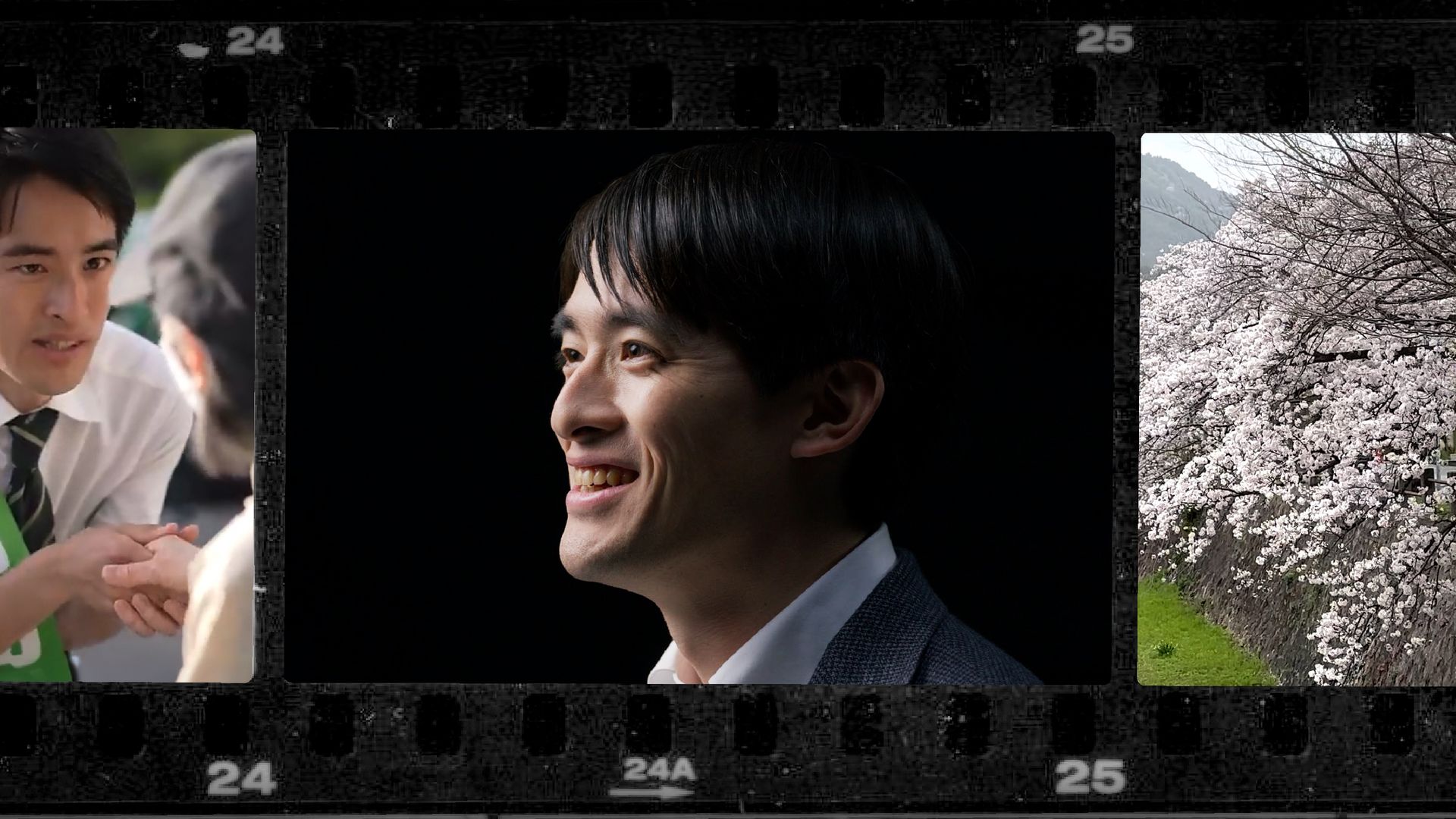
Meet the youngest-ever mayor in Japan's history | Ryosuke Takashima

TED Fellow Ryosuke Takashima is the youngest-ever mayor in Japan's history — but he doesn't consider himself a politician. His approach to leadership is simple: listen to as many voices as possible (from students to elders) in order to figure out what needs fixing. Hear why he thinks inviting citizens to participate in reforming their own communities is the best way to get things done.

Schendy Kernizan

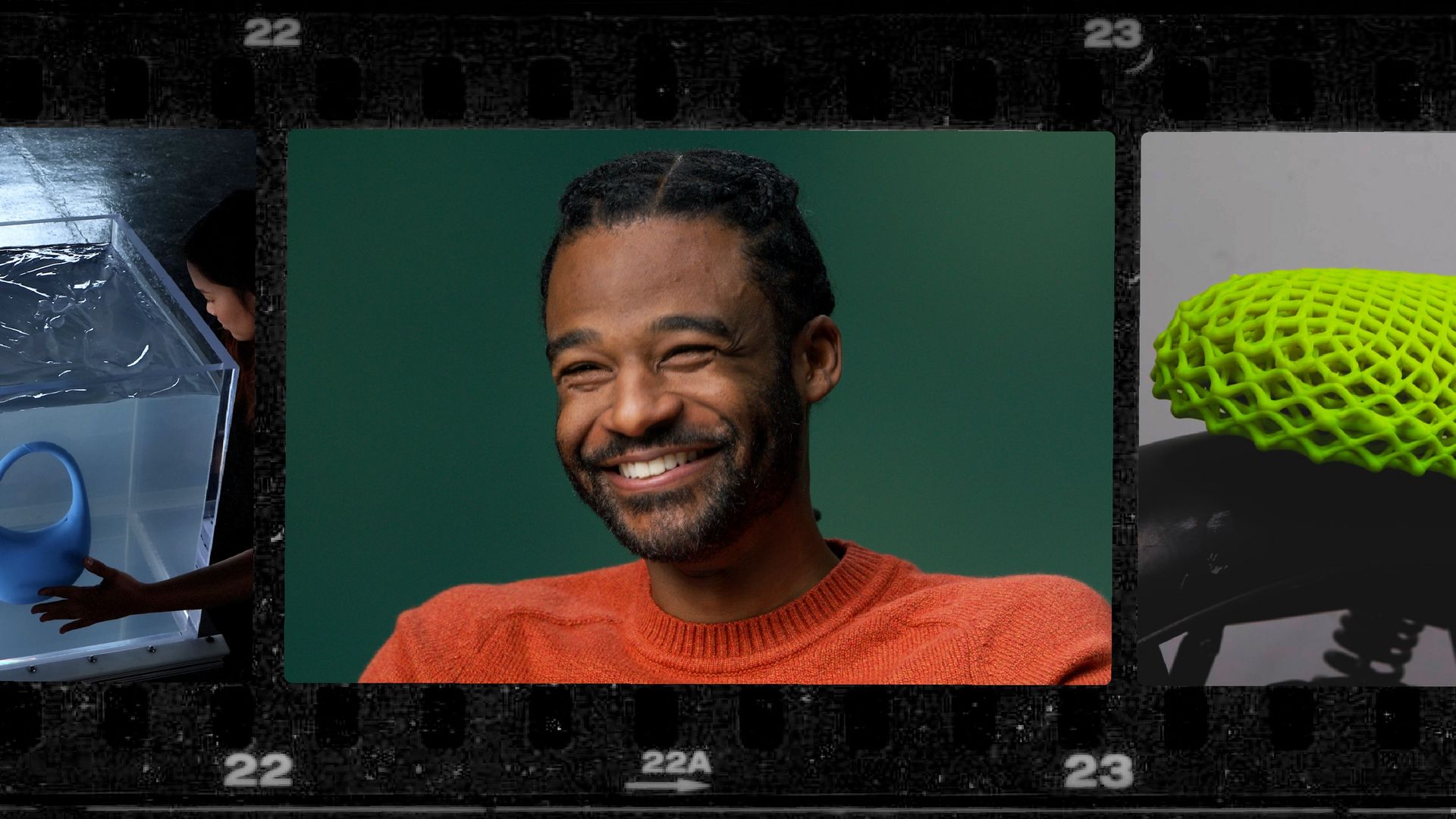
The gravity-defying future of manufacturing | Schendy Kernizan

3D printing promised to reinvent how we make things, but it's mostly stuck producing prototypes with a high level of waste. Designer and TED Fellow Schendy Kernizan found a different way — by printing objects directly into a tub of gel. He explains how this technique eliminates the constraints of gravity, pushing the limits of how we can manufacture objects across medicine, fashion, space travel and more.
Listen to all
Podcast episodes

TED Fellows Films

TED Talks meet documentaries in these short films that explore TED Fellows’ ideas. Dive into all three seasons to explore their mind-blowing innovations. 

05:39

FELLOWS FILM

Meet the youngest-ever mayor in Japan's history

TED Fellow Ryosuke Takashima is the youngest-ever mayor in Japan's history — but he doesn't consider himself a politician. His approach to leadership is simple: listen to as many voices as possible (from students to elders) in order to figure out what needs fixing. Hear why he thinks inviting citizens to participate in reforming their own communities is the best way to get things done.

2026

TED Fellows Film

Ryosuke Takashima
04:47

FELLOWS FILM

The gravity-defying future of manufacturing

3D printing promised to reinvent how we make things, but it's mostly stuck producing prototypes with a high level of waste. Designer and TED Fellow Schendy Kernizan found a different way — by printing objects directly into a tub of gel. He explains how this technique eliminates the constraints of gravity, pushing the limits of how we can manufacture objects across medicine, fashion, space travel and more.

2026

TED Fellows Film

Schendy Kernizan

Fellows Media Library
With 500+ TED Fellows and counting, we’ve got an entire world of media for you to explore. Dive into these talks, short films and podcasts showcasing Fellows turning ideas into action.

Clear
Sort
Thank you! Your submission has been received!
Oops! Something went wrong while submitting the form.

07:27

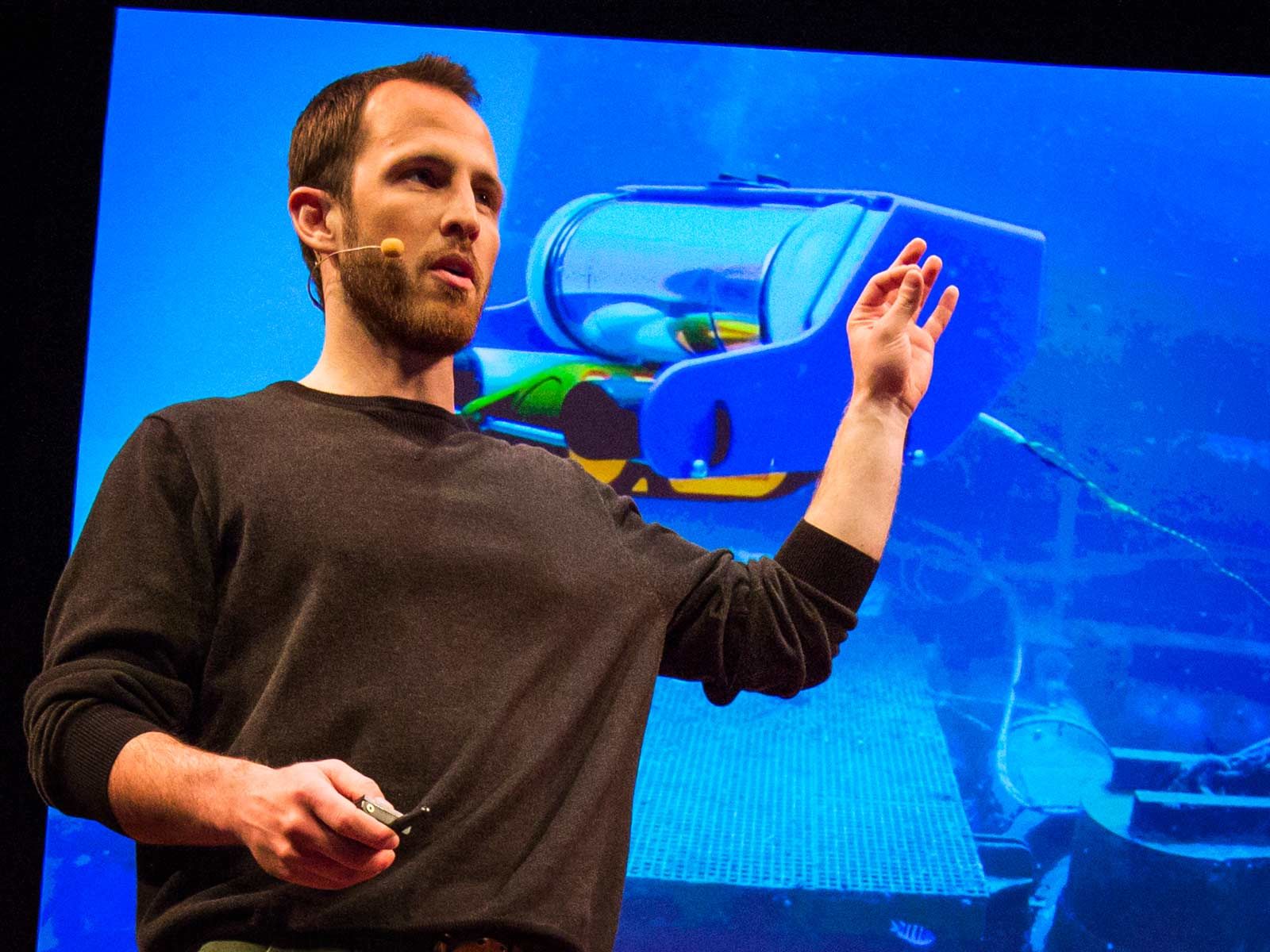
The future of machines that move like animals

Imagine a boat that propels by moving its "tail" from side to side, just like a fish. That's the kind of machine that TED Fellow Robert Katzschmann's lab builds: soft-bodied robots that imitate natural movements with artificial, silent muscles. He lays out his vision for machines that take on mesmerizing new forms, made of softer and more lifelike materials -- and capable of discovering unknown parts of the world.

2022

TED Talk

Switzerland
Amazon Robotics; ABB; Auris Health, Inc; ETH Zürich; Liselotte-Gymnasium, Mannheim, Germany; Soft Robotics Laboratory, ETH Zurich; studentec; Karlsruhe Institute of Technology (KIT); Massachusetts Institute of Technology; ETH AI Center; Stanford University; PCK Systemhaus; Dexai Robotics
The Soft Robotics Lab, founded by Prof. Robert Katzschmann, focuses on developing soft robots and biohybrid robots using compliant materials. Their research includes designing fluidic and electric drive concepts, modeling, controls, and machine learning algorithms for interactions with objects and living beings. They offer opportunities for PhD students, Postdoctoral researchers, and Master students to work on projects involving soft robotic arms, soft robotic fish, and soft robotic fingers. The lab explores advanced fabrication techniques, control methods, and learning techniques to enhance the capabilities of soft robots. Their work has been recognized in various media outlets and academic publications, showcasing their innovative contributions to the field of robotics. // Robert Katzschmann is an Assistant Professor of Robotics at ETH Zurich. His research focuses on developing soft robotic technologies, including the creation of SoFi, a soft robotic fish for exploring marine life, and innovative soft robotic manipulators for object grasping. He has also worked on dynamic control algorithms for soft robots, enabling them to perform various real-world tasks. Robert's work has been widely recognized, with numerous publications, citations, and invited talks at prestigious conferences. // Soft Robotics ResearchPhD in Mechanical Engineering, GPA: 4.9PhD Thesis Title: “Building and Controlling Fluidically Actuated Soft Robots: From Open Loop to Model-based Control”Thesis Committee: Daniela Rus, Russ Tedrake, John Leonard, Anette (Peko) HosoiMajor: Robotics and Controls; Minor: Machine Learning and Computer VisionSelected Classwork: Advanced System Dynamics & Control (2.151), Advances in Computer Vision (6.869), Analysis & Design of Feedback Control Systems (2.140), Dynamics (2.032), Elements of Mechanical Design (2.72), Fluid Mechanics (2.25), Identification, Estimation, & Learning (2.160), Machine Learning (6.867), Probabilistic Mobile Robotics (Duckietown - 2.166), Underactuated Robotics (6.832) // Master Thesis on “Online Trajectory Generation considering Manipulator Dynamics”Advisors: Dr. Torsten Kröger and Prof. Oussama Khatib Lab: Artificial Intelligence Lab @ Computer Science Department // Research project: Thermal study and optimization of robotic drive trainsLocation: ABB (China) Ltd. - Corporate Robotics Research // Chairman of the voluntary association, representation of the association, coordination of all sections // Research and development in the field of medical robotics // Research and Teaching in the field of Soft Robotics // Postdoctoral Associate, Research in Soft Robotics, Advisor: Prof. Daniela Rus // Owner, IT consulting and trade, network administration, web design // Online trajectory generation taking into account the robot dynamics, enhancement of the existing Reflexxes Motion Libraries (http://www.reflexxes.com/). // Amazon Robotics; ABB; Auris Health, Inc; ETH Zürich; Liselotte-Gymnasium, Mannheim, Germany; Soft Robotics Laboratory, ETH Zurich; studentec; Karlsruhe Institute of Technology (KIT); Massachusetts Institute of Technology; ETH AI Center; Stanford University; PCK Systemhaus; Dexai Robotics // Robert Katzschmann is a dedicated professional with a strong background in Soft Robotics Research. With a PhD in Mechanical Engineering focusing on fluidically actuated soft robots, Robert has a solid foundation in Robotics and Controls, complemented by expertise in Machine Learning and Computer Vision. His research projects have spanned from thermal optimization of robotic drive trains to medical robotics development. As a Postdoctoral Associate, Robert continues to contribute to the field of Soft Robotics under the guidance of Prof. Daniela Rus. Additionally, his experience in IT consulting and web design showcases his versatility and proficiency in various domains. // I am rethinking how we are building machines and robots, going away from an ancient mechanistic approach towards pure bioinspiration, and creating robots made of muscles, tendons, bones, ligaments, joints, etc. I am creating robots grown from millions of cells and investigating with my research how these systems can change how these robots can adapt and integrate into our world. While everyone is thinking about artificial intelligence in the form of natural language generators, I am looking into physical intelligence that requires smooth and versatile behaviors and motions of a physical embodiment. // Robert Katzschmann is an Assistant Professor of Robotics at ETH Zurich, known for his pioneering work in the field of soft robotics. His research at the Soft Robotics Lab focuses on developing innovative soft robots and biohybrid robots using compliant materials. Katzschmann's expertise lies in designing fluidic and electric drive concepts, control algorithms, and machine learning techniques for interactions with objects and living beings. His notable projects include the creation of SoFi, a soft robotic fish for marine exploration, and advanced soft robotic manipulators for object grasping. Through his contributions to academic publications and media outlets, Katzschmann showcases a unique approach to robotics, emphasizing bioinspiration and physical intelligence in the development of adaptable and versatile robotic systems. // Soft-bodied roboticist // Robert Katzschmann is Assistant Professor of Robotics and head of ETH's Soft Robotics Lab. His research group advances robots' abilities for real-life applications by being more compliant and adapt better to their environment when solving challenging tasks in locomotion and object manipulation. His group takes inspiration from living creatures and develops soft robots with deformable properties that achieve functions not possible with traditional robots. The Soft Robotics Lab advances the design, fabrication, modeling, control, and learning techniques tailored to the needs of soft robotic systems. Demonstrations of his robot's capabilities are real-world applications such as a robotic fish for underwater locomotion, soft robotic hands for pick-and-place tasks, and multi-segment arms for dynamic object manipulation. Robert's work has appeared in leading academic journals, including Science Robotics, and has been featured in major news outlets, including the New York Times. Robert is a member of the ETH AI Center, the Max Planck ETH Center for Learning Systems (CLS), and the ETH Competence Center for Materials and Processes (MaP). Robert is an Area Chair for Robotics Science and Systems (RSS), an associate editor for IROS, and a guest editor for the International Journal on Robotics Research (IJRR), and a reviewer for leading peer-reviewed journals, including Science and Nature // Imagine a boat that propels by moving its "tail" from side to side, just like a fish. That's the kind of machine that TED Fellow Robert Katzschmann's lab builds: soft-bodied robots that imitate natural movements with artificial, silent muscles. He lays out his vision for machines that take on mesmerizing new forms, made of softer and more lifelike materials -- and capable of discovering unknown parts of the world. // Robert Katzschmann is an Assistant Professor of Robotics at ETH Zurich, known for his pioneering work in the field of soft robotics. His research at the Soft Robotics Lab focuses on developing innovative soft robots and biohybrid robots using compliant materials. Katzschmann's expertise lies in designing fluidic and electric drive concepts, control algorithms, and machine learning techniques for interactions with objects and living beings. His notable projects include the creation of SoFi, a soft robotic fish for marine exploration, and advanced soft robotic manipulators for object grasping. Through his contributions to academic publications and media outlets, Katzschmann showcases a unique approach to robotics, emphasizing bioinspiration and physical intelligence in the development of adaptable and versatile robotic systems. // Soft-bodied roboticist // technology, fish, automation, soft robotics, machine learning, marine life, research, biohybrid robotics, electric, design, engineering, mechanical engineering, aerial drones, digital signal processing, electric drive, oceans, robotic manipulation, robotics, bio-inspiration, musculoskeletal robots, computer vision, nature, artificial muscles, science, software, artificial intelligence, controls // Switzerland|Singapore|China|Zurich|Zürich
Switzerland|Singapore|China|Zurich|Zürich

Robert Katzschmann

No items found.
2022

05:53

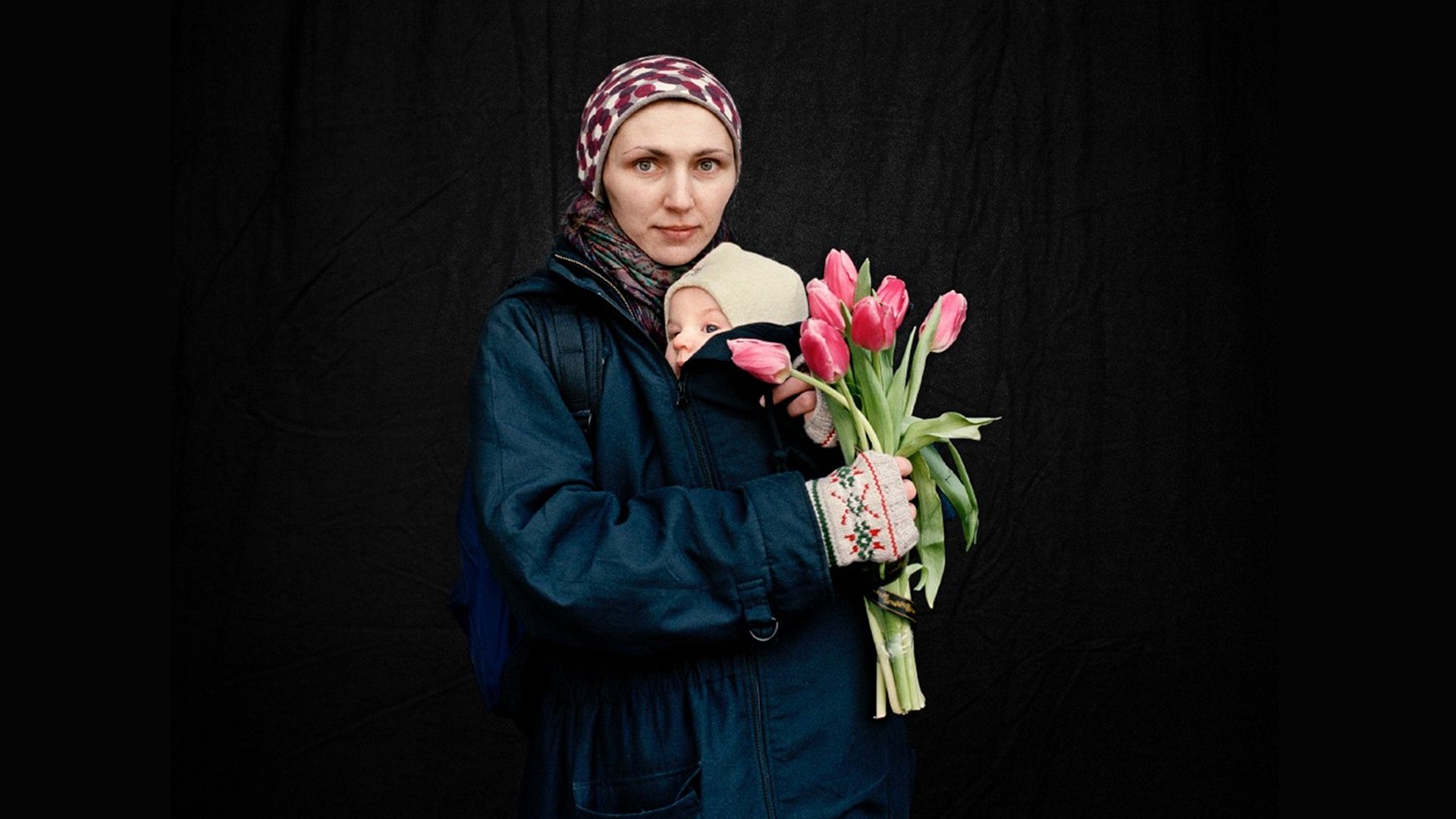
Fighters and mourners of the Ukrainian revolution

“Men fight wars, and women mourn them,” says documentary photographer Anastasia Taylor-Lind. With stark, arresting images from the Maidan protests in Ukraine, the TED Fellow shows us intimate faces from the revolution. A grim and beautiful talk.

2014

TED Talk

United States
Documentary photographer // A London-based photojournalist who works around the world on issues relating to women, birth rights, depopulation and post-conflict regions. // Journalist and documentary photographer, National Geographic Magazine contributor, Harvard Nieman Fellow 2016 and author of MAIDAN - Portraits from the Black Square. // “Men fight wars, and women mourn them,” says documentary photographer Anastasia Taylor-Lind. With stark, arresting images from the Maidan protests in Ukraine, the TED Fellow shows us intimate faces from the revolution. A grim and beautiful talk. // Journalist and documentary photographer, National Geographic Magazine contributor, Harvard Nieman Fellow 2016 and author of MAIDAN - Portraits from the Black Square. // Documentary photographer // women, documentary

Anastasia Taylor-Lind

No items found.
2014

This simple test can help kids hear better | Susan Emmett

Children who live in rural areas can have a hard time getting to the doctor -- much less to an audiologist's clinic for expensive, complex tests to check their hearing. The result for too many kids is hearing loss caused by ear infections and other curable or preventable problems. That's why ear surgeon and TED Fellow Susan Emmett is working with 15 communities in rural Alaska to create a simple, low-cost test that only requires a cell phone. Learn more about her work and how it could change the lives of children who don't have access to hearing care. Hosted on Acast. See acast.com/privacy for more information.

2018

Podcasts

United States
Ear surgeon // There are an estimated 1.6 billion people living with hearing loss globally, and 60% of all hearing loss in children can be prevented. Susan Emmett, MD, MPH is committed to addressing this disparity. She serves as Associate Professor of Otolaryngology and Public Health at the University of Arkansas for Medical Sciences in Little Rock, AR, USA. Susan completed residency in Otolaryngology-Head and Neck Surgery at The Johns Hopkins Hospital in Baltimore, MD. During her surgical training, she also obtained a Master of Public Health from the Johns Hopkins Bloomberg School of Public Health and completed a postdoctoral research fellowship at the Bloomberg School’s Center for Human Nutrition. A native of Tennessee, Susan graduated with a Bachelor of Arts from Princeton University in Molecular Biology and the Woodrow Wilson School of Public and International Affairs. She worked in science and health policy at the National Institutes of Health and U.S. Senate before matriculating in medical school at Duke University. Her commitment to global health began as a Duke medical student during a year-long Howard Hughes Medical Institute Research Training Fellowship in Moshi, Tanzania. She was thrilled to return to Tanzania in 2017 as a TED Fellow – her first visit since moving back to the U.S. in 2009. // Children who live in rural areas can have a hard time getting to the doctor -- much less to an audiologist's clinic for expensive, complex tests to check their hearing. The result for too many kids is hearing loss caused by ear infections and other curable or preventable problems. That's why ear surgeon and TED Fellow Susan Emmett is working with 15 communities in rural Alaska to create a simple, low-cost test that only requires a cell phone. Learn more about her work and how it could change the lives of children who don't have access to hearing care. // There are an estimated 1.6 billion people living with hearing loss globally, and 60% of all hearing loss in children can be prevented. Susan Emmett, MD, MPH is committed to addressing this disparity. She serves as Associate Professor of Otolaryngology and Public Health at the University of Arkansas for Medical Sciences in Little Rock, AR, USA. Susan completed residency in Otolaryngology-Head and Neck Surgery at The Johns Hopkins Hospital in Baltimore, MD. During her surgical training, she also obtained a Master of Public Health from the Johns Hopkins Bloomberg School of Public Health and completed a postdoctoral research fellowship at the Bloomberg School’s Center for Human Nutrition. A native of Tennessee, Susan graduated with a Bachelor of Arts from Princeton University in Molecular Biology and the Woodrow Wilson School of Public and International Affairs. She worked in science and health policy at the National Institutes of Health and U.S. Senate before matriculating in medical school at Duke University. Her commitment to global health began as a Duke medical student during a year-long Howard Hughes Medical Institute Research Training Fellowship in Moshi, Tanzania. She was thrilled to return to Tanzania in 2017 as a TED Fellow – her first visit since moving back to the U.S. in 2009. // Ear surgeon // children, research, rural, rural areas, science, nutrition, policy, public health, low-cost, job skills training // Arkansas|Little Rock|United States|USA
Arkansas|Little Rock|United States|USA

Susan Emmett

No items found.
2018

The future of machines that move like animals | Robert Katzschmann

Imagine a boat that propels by moving its "tail" from side to side, just like a fish. That's the kind of machine that TED Fellow Robert Katzschmann's lab builds: soft-bodied robots that imitate natural movements with artificial, silent muscles. He lays out his vision for machines that take on mesmerizing new forms, made of softer and more lifelike materials -- and capable of discovering unknown parts of the world. Hosted on Acast. See acast.com/privacy for more information.

2023

Podcasts

Switzerland
Amazon Robotics; ABB; Auris Health, Inc; ETH Zürich; Liselotte-Gymnasium, Mannheim, Germany; Soft Robotics Laboratory, ETH Zurich; studentec; Karlsruhe Institute of Technology (KIT); Massachusetts Institute of Technology; ETH AI Center; Stanford University; PCK Systemhaus; Dexai Robotics
The Soft Robotics Lab, founded by Prof. Robert Katzschmann, focuses on developing soft robots and biohybrid robots using compliant materials. Their research includes designing fluidic and electric drive concepts, modeling, controls, and machine learning algorithms for interactions with objects and living beings. They offer opportunities for PhD students, Postdoctoral researchers, and Master students to work on projects involving soft robotic arms, soft robotic fish, and soft robotic fingers. The lab explores advanced fabrication techniques, control methods, and learning techniques to enhance the capabilities of soft robots. Their work has been recognized in various media outlets and academic publications, showcasing their innovative contributions to the field of robotics. // Robert Katzschmann is an Assistant Professor of Robotics at ETH Zurich. His research focuses on developing soft robotic technologies, including the creation of SoFi, a soft robotic fish for exploring marine life, and innovative soft robotic manipulators for object grasping. He has also worked on dynamic control algorithms for soft robots, enabling them to perform various real-world tasks. Robert's work has been widely recognized, with numerous publications, citations, and invited talks at prestigious conferences. // Soft Robotics ResearchPhD in Mechanical Engineering, GPA: 4.9PhD Thesis Title: “Building and Controlling Fluidically Actuated Soft Robots: From Open Loop to Model-based Control”Thesis Committee: Daniela Rus, Russ Tedrake, John Leonard, Anette (Peko) HosoiMajor: Robotics and Controls; Minor: Machine Learning and Computer VisionSelected Classwork: Advanced System Dynamics & Control (2.151), Advances in Computer Vision (6.869), Analysis & Design of Feedback Control Systems (2.140), Dynamics (2.032), Elements of Mechanical Design (2.72), Fluid Mechanics (2.25), Identification, Estimation, & Learning (2.160), Machine Learning (6.867), Probabilistic Mobile Robotics (Duckietown - 2.166), Underactuated Robotics (6.832) // Master Thesis on “Online Trajectory Generation considering Manipulator Dynamics”Advisors: Dr. Torsten Kröger and Prof. Oussama Khatib Lab: Artificial Intelligence Lab @ Computer Science Department // Research project: Thermal study and optimization of robotic drive trainsLocation: ABB (China) Ltd. - Corporate Robotics Research // Chairman of the voluntary association, representation of the association, coordination of all sections // Research and development in the field of medical robotics // Research and Teaching in the field of Soft Robotics // Postdoctoral Associate, Research in Soft Robotics, Advisor: Prof. Daniela Rus // Owner, IT consulting and trade, network administration, web design // Online trajectory generation taking into account the robot dynamics, enhancement of the existing Reflexxes Motion Libraries (http://www.reflexxes.com/). // Amazon Robotics; ABB; Auris Health, Inc; ETH Zürich; Liselotte-Gymnasium, Mannheim, Germany; Soft Robotics Laboratory, ETH Zurich; studentec; Karlsruhe Institute of Technology (KIT); Massachusetts Institute of Technology; ETH AI Center; Stanford University; PCK Systemhaus; Dexai Robotics // Robert Katzschmann is a dedicated professional with a strong background in Soft Robotics Research. With a PhD in Mechanical Engineering focusing on fluidically actuated soft robots, Robert has a solid foundation in Robotics and Controls, complemented by expertise in Machine Learning and Computer Vision. His research projects have spanned from thermal optimization of robotic drive trains to medical robotics development. As a Postdoctoral Associate, Robert continues to contribute to the field of Soft Robotics under the guidance of Prof. Daniela Rus. Additionally, his experience in IT consulting and web design showcases his versatility and proficiency in various domains. // I am rethinking how we are building machines and robots, going away from an ancient mechanistic approach towards pure bioinspiration, and creating robots made of muscles, tendons, bones, ligaments, joints, etc. I am creating robots grown from millions of cells and investigating with my research how these systems can change how these robots can adapt and integrate into our world. While everyone is thinking about artificial intelligence in the form of natural language generators, I am looking into physical intelligence that requires smooth and versatile behaviors and motions of a physical embodiment. // Robert Katzschmann is an Assistant Professor of Robotics at ETH Zurich, known for his pioneering work in the field of soft robotics. His research at the Soft Robotics Lab focuses on developing innovative soft robots and biohybrid robots using compliant materials. Katzschmann's expertise lies in designing fluidic and electric drive concepts, control algorithms, and machine learning techniques for interactions with objects and living beings. His notable projects include the creation of SoFi, a soft robotic fish for marine exploration, and advanced soft robotic manipulators for object grasping. Through his contributions to academic publications and media outlets, Katzschmann showcases a unique approach to robotics, emphasizing bioinspiration and physical intelligence in the development of adaptable and versatile robotic systems. // Soft-bodied roboticist // Robert Katzschmann is Assistant Professor of Robotics and head of ETH's Soft Robotics Lab. His research group advances robots' abilities for real-life applications by being more compliant and adapt better to their environment when solving challenging tasks in locomotion and object manipulation. His group takes inspiration from living creatures and develops soft robots with deformable properties that achieve functions not possible with traditional robots. The Soft Robotics Lab advances the design, fabrication, modeling, control, and learning techniques tailored to the needs of soft robotic systems. Demonstrations of his robot's capabilities are real-world applications such as a robotic fish for underwater locomotion, soft robotic hands for pick-and-place tasks, and multi-segment arms for dynamic object manipulation. Robert's work has appeared in leading academic journals, including Science Robotics, and has been featured in major news outlets, including the New York Times. Robert is a member of the ETH AI Center, the Max Planck ETH Center for Learning Systems (CLS), and the ETH Competence Center for Materials and Processes (MaP). Robert is an Area Chair for Robotics Science and Systems (RSS), an associate editor for IROS, and a guest editor for the International Journal on Robotics Research (IJRR), and a reviewer for leading peer-reviewed journals, including Science and Nature // Imagine a boat that propels by moving its "tail" from side to side, just like a fish. That's the kind of machine that TED Fellow Robert Katzschmann's lab builds: soft-bodied robots that imitate natural movements with artificial, silent muscles. He lays out his vision for machines that take on mesmerizing new forms, made of softer and more lifelike materials -- and capable of discovering unknown parts of the world. // Robert Katzschmann is an Assistant Professor of Robotics at ETH Zurich, known for his pioneering work in the field of soft robotics. His research at the Soft Robotics Lab focuses on developing innovative soft robots and biohybrid robots using compliant materials. Katzschmann's expertise lies in designing fluidic and electric drive concepts, control algorithms, and machine learning techniques for interactions with objects and living beings. His notable projects include the creation of SoFi, a soft robotic fish for marine exploration, and advanced soft robotic manipulators for object grasping. Through his contributions to academic publications and media outlets, Katzschmann showcases a unique approach to robotics, emphasizing bioinspiration and physical intelligence in the development of adaptable and versatile robotic systems. // Soft-bodied roboticist // technology, fish, automation, soft robotics, machine learning, marine life, research, biohybrid robotics, electric, design, engineering, mechanical engineering, aerial drones, digital signal processing, electric drive, oceans, robotic manipulation, robotics, bio-inspiration, musculoskeletal robots, computer vision, nature, artificial muscles, science, software, artificial intelligence, controls // Switzerland|Singapore|China|Zurich|Zürich
Switzerland|Singapore|China|Zurich|Zürich

Robert Katzschmann

No items found.
2023

Lessons from my father’s final days | Laurel Braitman

"Life is an endless sushi conveyor belt of things that are going to test you and teach you at the same time," says writer Laurel Braitman. Exploring the relationship between bravery and fear, she shares hard-won wisdom on love, loss, self-forgiveness and how to embrace the full spectrum of human emotions. Hosted on Acast. See acast.com/privacy for more information.

2024

Podcasts

United States
Writer, secular chaplain-in-training // I'm a writer and a historian of science. Right now I'm working on a book about mental illness in the nonhuman world and what it means about us. I'm also finishing up my PhD at MIT. I've spent the last few years traveling around the world doing my research...which means hanging out with elephants in Thailand and friendly gray whales in Baja, Mexico. I'm also interested in emergent technologies, occupying planet earth, freeing Leonard Peltier, and slashing our defense budget. And I do a lot of work with artists. // Laurel Braitman PhD is a New York Times bestselling author, Director of Writing and Storytelling at Stanford School of Medicine's Medical Arts and Humanities Program and the founder of Writing Medicine, the global community of writing healthcare professionals. Since March 2020, Laurel has helped over 10,000 healthcare workers tell their own stories and those of their patients. Her own writing is on the subjects of mental health, resilience, the natural sciences, and more. She is author of the memoir “What Looks Like Bravery: An epic journey from loss to love” (Simon & Schuster 2023) which Publisher’s Weekly called “perfect for anyone seeking to heal a broken heart.” Her first book, “Animal Madness: Inside their minds”, was a NYT bestseller and has been translated into seven languages. Laurel’s work has been featured on the BBC, NPR, Good Morning America and Al Jazeera. Her writing has appeared in The Guardian, National Geographic, The Wall Street Journal, Wired and other publications. She is a Senior TED Fellow. Laurel splits her time between remote Alaska where her husband runs a 113 year old salmon cannery and her family's commercial citrus and avocado ranch in Southern CA. // Health care workers are under more stress than ever before. How can they protect their mental health while handling new and complex pressures? TED Fellow Laurel Braitman shows how writing and sharing personal stories helps physicians, nurses, medical students and other health professionals connect more meaningfully with themselves and others -- and make their emotional well-being a priority. // Behind those funny animal videos, sometimes, are oddly human-like problems. Laurel Braitman studies non-human animals who exhibit signs of mental health issues -- from compulsive bears to self-destructive rats to monkeys with unlikely friends. Braitman asks what we as humans can learn from watching animals cope with depression, sadness and other all-too-human problems. // Laurel Braitman PhD is a New York Times bestselling author, Director of Writing and Storytelling at Stanford School of Medicine's Medical Arts and Humanities Program and the founder of Writing Medicine, the global community of writing healthcare professionals. Since March 2020, Laurel has helped over 10,000 healthcare workers tell their own stories and those of their patients. Her own writing is on the subjects of mental health, resilience, the natural sciences, and more. She is author of the memoir “What Looks Like Bravery: An epic journey from loss to love” (Simon & Schuster 2023) which Publisher’s Weekly called “perfect for anyone seeking to heal a broken heart.” Her first book, “Animal Madness: Inside their minds”, was a NYT bestseller and has been translated into seven languages. Laurel’s work has been featured on the BBC, NPR, Good Morning America and Al Jazeera. Her writing has appeared in The Guardian, National Geographic, The Wall Street Journal, Wired and other publications. She is a Senior TED Fellow. Laurel splits her time between remote Alaska where her husband runs a 113 year old salmon cannery and her family's commercial citrus and avocado ranch in Southern CA. // Writer, secular chaplain-in-training // research, technology, books, resilience, medical education, science, education, performance, journalism, writing, mental health (care), history of science, anthropology of science & technology, medicine, workers, interdisciplinarity // California|United States|San Francisco|USA
California|United States|San Francisco|USA

Laurel Braitman

No items found.
2024

The future diagnostic lab ... inside your body | Aaron Morris

We need an inside-out approach to how we diagnose disease, says immuno-engineer and TED Fellow Aaron Morris. Introducing cutting-edge medical research, he unveils implantable technology that gives real-time, continuous analysis of a patient's health at the molecular level. "We're creating a diagnostic lab inside your body," Morris says -- and it may pave the way to diagnosing and treating disease better and faster than ever before.

2021

Podcasts

United States
University of Delaware; University of Michigan; Georgia Institute of Technology; Yale University
The PRIME Lab at the University of Michigan, led by Dr. Aaron Morris, focuses on the intersection of biomaterials engineering, immunology, and drug delivery. Their work includes studying immunological niches, diagnosing diseases, and developing therapeutics using engineered materials. The lab has received grants and awards for their research and collaborates with other groups. They have a diverse team of researchers working on projects related to autoimmunity and tissue immunology. The lab values inclusivity and aims to create a supportive environment for growth and contribution to the knowledge enterprise. Their research projects involve developing material platforms for monitoring the innate and adaptive immune systems. The lab welcomes collaborations and visitors interested in their work. // My thesis work centers around development of new biomaterials specifically for applications in regenerative medicine and drug delivery. Recent Publications: Morris AH, Mahal R, Udell J, Wu M, Kyriakides TR. Multi-compartment Drug Release System for Dynamic Modulation of Tissue Responses. Advanced Healthcare Materials 2017.Morris AH, Stamer DK, Kyriakides TR. The Host Response to Naturally-Derived Extracellular Matrix Biomaterials. Seminars in Immunology 2017. Morris AH, Chang J, Kyriakides TR. Inadequate Processing of Decellularized Dermal MatrixReduces Cell Viability In Vitro and Increases Apoptosis and Acute Inflammation In Vivo. BioResearch Open Access 2016.Morris AH, Kyriakides TR. Matricellular proteins and biomaterials. Matrix Biol 2014.Schwan J, Kwaczala AT, Ryan TJ, Bartulos O, Ren Y, Sewanan LR, Morris AH, et al. Scientific Reports 2016.Jha R, Wile B, Wu Q, Morris AH, Maher KO, Wagner MB, et al. Molecular beacon-based detection and isolation of working-type cardiomyocytes derived from human pluripotent stem cells. Biomaterials 2015;50:176–85.Johnson, CG, Sharma, KV, Levy, EB, Woods, DL, Morris, AH, et al. Microvascular Perfusion Changes following Transarterial Hepatic Tumor Embolization. Journal of Vascular and Interventional Radiology 2015; 1–12. // Advisor: Dr. Lonnie Shea // Advisor: Dr. Lonnie Shea // University of Delaware; University of Michigan; Georgia Institute of Technology; Yale University // Aaron Morris is a skilled researcher specializing in the development of biomaterials for regenerative medicine and drug delivery applications. His expertise lies in designing multi-compartment drug release systems and studying the host response to extracellular matrix biomaterials. With a focus on matricellular proteins and biomaterial interactions, Aaron has contributed to various publications in reputable journals. Under the guidance of Dr. Lonnie Shea, he has explored innovative approaches in tissue engineering and cell therapy. Aaron's work showcases a deep understanding of biomaterial science and its implications for advancing medical treatments. // My work focuses on using engineered materials and synthetic biology as platforms to: study immunology, diagnose disease, and develop therapeutics. My long-term vision is to develop non-invasive systems for monitoring immunity within tissues with a particular focus on autoimmune disease. As an academic scientist, I strive to contribute new knowledge and technologies, but also maintain a strong focus on education and mentoring of the next generation of scientist and engineers. // Dr. Aaron Morris is a dedicated researcher at the University of Michigan, leading the PRIME Lab in pioneering work at the intersection of biomaterials engineering, immunology, and drug delivery. His expertise lies in developing innovative material platforms for monitoring immune responses within tissues, with a specific focus on autoimmune diseases. Dr. Morris and his diverse team of researchers collaborate on projects related to autoimmunity, tissue immunology, and multi-compartment drug release systems. With a strong emphasis on inclusivity and mentorship, Dr. Morris is committed to advancing medical treatments through his deep understanding of biomaterial science and matricellular proteins. // Immunoengineer // We need an inside-out approach to how we diagnose disease, says immuno-engineer and TED Fellow Aaron Morris. Introducing cutting-edge medical research, he unveils implantable technology that gives real-time, continuous analysis of a patient's health at the molecular level. "We're creating a diagnostic lab inside your body," Morris says -- and it may pave the way to diagnosing and treating disease better and faster than ever before. // Dr. Aaron Morris is a dedicated researcher at the University of Michigan, leading the PRIME Lab in pioneering work at the intersection of biomaterials engineering, immunology, and drug delivery. His expertise lies in developing innovative material platforms for monitoring immune responses within tissues, with a specific focus on autoimmune diseases. Dr. Morris and his diverse team of researchers collaborate on projects related to autoimmunity, tissue immunology, and multi-compartment drug release systems. With a strong emphasis on inclusivity and mentorship, Dr. Morris is committed to advancing medical treatments through his deep understanding of biomaterial science and matricellular proteins. // Immunoengineer // research, regenerative, technology, synthetic biology, data analysis, immunoengineering, education, open access, led, biomaterials, monitoring, data, bioengineering, autoimmunity, disease, stem, regenerative medicine // Michigan|Ann Arbor|United States|USA
Michigan|Ann Arbor|United States|USA

Aaron Morris

No items found.
2021

10:08

"New Second Line"

Inspired by the events of Hurricane Katrina in 2005, TED Fellow Camille A. Brown choreographed "New Second Line," a celebration of the culture of New Orleans and the perseverance of Black people in the midst of devastation. The performance borrows its name from the energetic, spirited people who follow the traditional brass band parades for weddings, social events and, most notably, funerals in New Orleans. "It honors our ability to rise and keep rising," Brown says. (Music includes "New Second Line" by Los Hombres Calientes featuring Kermit Ruffins)

2018

TED Talk

Choreographer + dancer // Choreographer fusing dance and social commentary to explore race, sexuality and femininity. // www.camilleabrown.org // Inspired by the events of Hurricane Katrina in 2005, TED Fellow Camille A. Brown choreographed "New Second Line," a celebration of the culture of New Orleans and the perseverance of Black people in the midst of devastation. The performance borrows its name from the energetic, spirited people who follow the traditional brass band parades for weddings, social events and, most notably, funerals in New Orleans. "It honors our ability to rise and keep rising," Brown says. (Music includes "New Second Line" by Los Hombres Calientes featuring Kermit Ruffins) // Why do we dance? African-American social dances started as a way for enslaved Africans to keep cultural traditions alive and retain a sense of inner freedom. They remain an affirmation of identity and independence. In this electric demonstration, packed with live performances, choreographer, educator and TED Fellow Camille A. Brown explores what happens when communities let loose and express themselves by dancing together. // www.camilleabrown.org // Choreographer + dancer // hurricanes, electric, extreme weather

Camille A. Brown

No items found.
2018

How Black queer culture shaped history | Channing Gerard Joseph

Names like Bayard Rustin, Frances Thompson and William Dorsey Swann have been largely erased from US history, but they and other Black queer leaders played central roles in monumental movements like emancipation, civil rights and LGBTQ+ pride, among others. In this tribute to forgotten icons, queer culture historian and TED Fellow Channing Gerard Joseph shares their little-known stories, connecting the origins of drag in the 1880s to the present day and exploring the awesome power to choose how we define ourselves. Hosted on Acast. See acast.com/privacy for more information.

2023

Podcasts

United States
Louisiana School for Math, Science, and the Arts; The New York Times; Cape Argus; SF Weekly; University of Southern California Annenberg School for Communication and Journalism; Princeton University; The New York Sun; The American Academy in Berlin; Ancestry.com, UCSF Health, etc.; Hack Reactor; Oberlin College; The Graduate Center, City University of New York; TED Conferences; University of the Western Cape/Universiteit van Wes-Kaapland; Columbia University - Graduate School of Journalism; Associated Press; International Center for Journalists (ICFJ); Publishers Weekly; Columbia University in the City of New York; Vibe Media; University of the Western Cape; U.S. News & World Report; KNWD 91.7 FM; The School for Field Studies/Centro de Estudios sobre Desarrollo Sostenible; The New York Times, The Guardian, MTV, Truthdig, etc.; Time Inc.: Entertainment Weekly, TIME For Kids, CNN, etc.; State University of New York; The Oberlin Review
Channing Joseph's website seems to have a technical issue as the message indicates that the visitor should not be seeing the current content and suggests clicking a link to access the homepage. // The organization featured in the article is focused on highlighting the forgotten history of William Dorsey Swann, who was born into slavery in 19th Century America and is recognized as the world's first self-described drag queen. LGBTQ+ historian Channing Joseph sheds light on Swann's story, showcasing one of the earliest efforts at queer resistance and liberation in America. // I produced "Octavia's Attic: ARTifacts From Our Possible Futures," an international exhibition celebrating Octavia E. Butler. The art -- accompanied by "Parables of the Future," a series of performances and lectures -- was highlighted on nationally known websites and on radio at KALW and KPFK. SF Weekly called it "genuinely breath-taking."Media Links:- http://www.sfweekly.com/exhibitionist/2016/02/15/latino-folk-art-george-takei-and-octavia-butler-three-cant-miss-exhibits- http://kalw.org/programs/sights-sounds#stream/0- https://www.flickr.com/photos/sflivewormsgallery/sets/72157664862459439- http://www.afropunk.com/profiles/blogs/feature-the-life-and-legacy-of-black-feminist-sci-fi-pioneer- http://blackgirlnerds.com/octavias-attic-artifacts-from-our-possible-futures/- https://soundcloud.com/loveofthenation/01282016-rootwork-edition-of-uprising // Louisiana School for Math, Science, and the Arts; The New York Times; Cape Argus; SF Weekly; University of Southern California Annenberg School for Communication and Journalism; Princeton University; The New York Sun; The American Academy in Berlin; Ancestry.com, UCSF Health, etc.; Hack Reactor; Oberlin College; The Graduate Center, City University of New York; TED Conferences; University of the Western Cape/Universiteit van Wes-Kaapland; Columbia University - Graduate School of Journalism; Associated Press; International Center for Journalists (ICFJ); Publishers Weekly; Columbia University in the City of New York; Vibe Media; University of the Western Cape; U.S. News & World Report; KNWD 91.7 FM; The School for Field Studies/Centro de Estudios sobre Desarrollo Sostenible; The New York Times, The Guardian, MTV, Truthdig, etc.; Time Inc.: Entertainment Weekly, TIME For Kids, CNN, etc.; State University of New York; The Oberlin Review // Channing Joseph is a creative professional with a strong background in producing international exhibitions and events. Notably, Channing curated "Octavia's Attic: ARTifacts From Our Possible Futures," a widely acclaimed exhibition celebrating the legacy of Octavia E. Butler. This project included a series of performances and lectures titled "Parables of the Future" that garnered national attention and praise. Channing's work has been featured on reputable platforms such as SF Weekly, KALW, and KPFK, showcasing a talent for creating engaging and thought-provoking cultural experiences. // My goal is to teach the world how Black LGBTQ+ pioneers have shaped American history in remarkable ways since the nation's founding. In doing so, I aim to correct the historical record, improve the way history is taught, and change public perceptions of Black LGBTQ+ people. // Channing Joseph is a creative professional and LGBTQ+ historian known for shedding light on forgotten histories and marginalized voices. With a focus on Black LGBTQ+ pioneers, Channing aims to correct historical narratives and reshape public perceptions through engaging exhibitions and events. Noteworthy projects include curating acclaimed exhibitions like "Octavia's Attic: ARTifacts From Our Possible Futures," which celebrate the legacies of figures like Octavia E. Butler. Through a blend of storytelling and cultural experiences, Channing Joseph strives to educate audiences about the significant contributions of Black LGBTQ+ individuals to American history, challenging conventional narratives and promoting inclusivity. // Author and queer culture historian // Channing Gerard Joseph (he/him or she/her) is an award-winning journalist and writer of creative nonfiction. He has earned global recognition for his research and writing on African-American LGBTQ+ culture. His groundbreaking work has garnered honors from the American Academy in Berlin, Harvard University's Nieman Foundation, Columbia University's Graduate School of Journalism, the Whiting Foundation, the Leon Levy Center for Biography, and the Logan Nonfiction Program. Throughout his career, he has been a staff editor and writer at The New York Times, Associated Press, and elsewhere. His writing has appeared in The Nation, The New York Times, The International Herald Tribune, the Associated Press, The Oxford American, The Washington Post, The Guardian, The Atlantic, The New York Sun, Entertainment Weekly, U.S. News & World Report, Truthdig, CNN, MTV, and many other periodicals. A leading expert on race and sexuality, Joseph has appeared on the BBC and the CBC and in many other international news outlets. His historical findings have also been noted by the U.S. National Archives and the Smithsonian National Museum for African American History and Culture. He is the author of the forthcoming "House of Swann: Where Slaves Became Queens — and Changed the World" (Crown, U.S.; Picador, U.K.). Based on Joseph’s original research, the forthcoming book tells the untold life story of William Dorsey Swann, a formerly enslaved Black man who became the earliest-known American queer activist, the world's first-known self-described drag queen, and an early progenitor of contemporary queer ballroom culture. In the 1890s, Swann sought a presidential pardon after being arrested and convicted for holding a drag event — making him the earliest recorded American activist to take specific legal steps to defend the queer community and protest its unjust criminalization. In awarding him the 2019 Whiting Creative Nonfiction Grant, the prize jury wrote: “It is impossible not to be excited about Channing Gerard Joseph’s great feat of historical research: his discovery of William Dorsey Swann, a man born into slavery who went on to establish a culture of drag balls in post-Reconstructionist Washington not unlike those still thriving today, nearly 140 years later. This is crisp and evocative history that cuts across many different fields of inquiry in order to document a riveting story about the function and flourishing of beauty in marginalized communities. Joseph has a talent for accumulating witty, atmospheric details that together create an irresistibly immersive world. Through tireless archival work and in consultation with noted academics, Channing Gerard Joseph complicates and expands our understanding of the history of LGBTQ activism and African American history.” Joseph is queer and gender-expansive and uses he/him and she/her pronouns interchangeably. // Names like Bayard Rustin, Frances Thompson and William Dorsey Swann have been largely erased from US history, but they and other Black queer leaders played central roles in monumental movements like emancipation, civil rights and LGBTQ+ pride, among others. In this tribute to forgotten icons, queer culture historian and TED Fellow Channing Gerard Joseph shares their little-known stories, connecting the origins of drag in the 1880s to the present day and exploring the awesome power to choose how we define ourselves. // Channing Joseph is a creative professional and LGBTQ+ historian known for shedding light on forgotten histories and marginalized voices. With a focus on Black LGBTQ+ pioneers, Channing aims to correct historical narratives and reshape public perceptions through engaging exhibitions and events. Noteworthy projects include curating acclaimed exhibitions like "Octavia's Attic: ARTifacts From Our Possible Futures," which celebrate the legacies of figures like Octavia E. Butler. Through a blend of storytelling and cultural experiences, Channing Joseph strives to educate audiences about the significant contributions of Black LGBTQ+ individuals to American history, challenging conventional narratives and promoting inclusivity. // Author and queer culture historian // education, black history, marginalized communities, representation, research, lgbtq+ culture, activism, design, human rights, rights, queer culture, african american culture, queer history, marginalized, journalism, drag, civil rights, lgbtqia+ rights, history, law, media, african american history // DC|Los Angeles|USA|Princeton|New Jersey|Berlin|Germany|New York|California|Washington|United States
DC|Los Angeles|USA|Princeton|New Jersey|Berlin|Germany|New York|California|Washington|United States

Channing Gerard Joseph

No items found.
2023

The real-life superheroes helping Syrian refugees | Feras Fayyad

Society has a set of stories it tells itself about who refugees are and what they look like, says documentarian and TED Fellow Feras Fayyad. With his films, he's on a mission to separate the facts about refugees from fiction, as a form of resistance -- for himself, his daughter and the millions of other Syrian refugees across the world. A harrowing account, a quest to end injustice and a testament to the power of storytelling. Hosted on Acast. See acast.com/privacy for more information.

2023

Podcasts

Germany
Documentary filmmaker // Filmmaker documenting the lives of his fellow Syrian citizens as they struggle to survive and save their neighbors. // Feras Fayyad is a two-time Academy Award-nominated film director, producer, writer, editor, and cinematographer, best known for his 2017 documentary “Last Men in Aleppo” and his recent 2019 documentary “The Cave,” which earned him critical acclaim and numerous awards and nominations, including Academy Award for Best Documentary Feature, making him the first Syrian director to be nominated for an Oscar, and he also won an Emmy award for best current affairs documentary. Fayyad has been a member of the Academy of Motion Picture Arts and Sciences since 2018 and a member of the Academy of Television Arts and Sciences. Fayyad's films bear witness to the struggles of his fellow Syrians. // Society has a set of stories it tells itself about who refugees are and what they look like, says documentarian and TED Fellow Feras Fayyad. With his films, he's on a mission to separate the facts about refugees from fiction, as a form of resistance -- for himself, his daughter and the millions of other Syrian refugees across the world. A harrowing account, a quest to end injustice and a testament to the power of storytelling. // Feras Fayyad is a two-time Academy Award-nominated film director, producer, writer, editor, and cinematographer, best known for his 2017 documentary “Last Men in Aleppo” and his recent 2019 documentary “The Cave,” which earned him critical acclaim and numerous awards and nominations, including Academy Award for Best Documentary Feature, making him the first Syrian director to be nominated for an Oscar, and he also won an Emmy award for best current affairs documentary. Fayyad has been a member of the Academy of Motion Picture Arts and Sciences since 2018 and a member of the Academy of Television Arts and Sciences. Fayyad's films bear witness to the struggles of his fellow Syrians. // Documentary filmmaker // refugees, migration, documentary // Berlin|Germany
Berlin|Germany

FERAS Fayyad

No items found.
2023

How data-driven journalism illuminates patterns of injustice | Alison Killing

A blank spot on a digital map can signal much more than a gap in data -- it can mean something is being intentionally hidden. Sharing the remarkable discovery of massive alleged detention camps in Xinjiang, China, Pulitzer Prize-winning journalist Alison Killing shows how governments can obscure human rights abuses by limiting journalist access on the ground -- and calls for more reliable open-source data (like satellite and social media imagery) to shine a light on the world's darkest places. Hosted on Acast. See acast.com/privacy for more information.

2023

Podcasts

United Kingdom
Killing Architects; Financial Times
I am a Pulitzer Prize winning investigative journalist and licensed architect. I use open source techniques, geospatial analysis and 3d modelling to investigate and tell stories, then share these techniques with others through talks and workshops. In Migration Trail, this meant telling stories of migrants travelling to Europe in real time, using maps, data and social media; or finding playful, light ways to open up discussion about death and architecture with the Death in Venice exhibition. My current projects include current projects an investigation of the network of detention camps in Xinjiang, China, together with BuzzFeed News, which won the Pulitzer Prize for International Reporting; and a real world game about surveillance in public space, with game designers Free Ice Cream. Creative production: as well as setting out the creative vision, I do most of the strategic production for my projects - designing the project itself through a process of design thinking, recruiting creative teams, bringing together partners, fund raising and grant writing. I also consult for other creative teams, helping them design their projects to ensure they meet their goals. Workshops: I give workshops to share tools and approaches related to my work. Subjects include: personal data privacy and geolocation; social media and surveillance in cities; finding data and making maps with simple online tools; satellite image analysis. // A Pulitzer Prize winning project to locate and analyse a secret network of internment camps in Xinjiang, China. Together with BuzzFeed News // Killing Architects; Financial Times // Alison Killing is a versatile professional with a background in investigative journalism and architecture. She leverages open-source techniques, geospatial analysis, and 3D modeling to uncover and narrate compelling stories. Alison is known for her innovative approach to storytelling, as seen in projects like Migration Trail and Death in Venice exhibition. Her recent work includes a Pulitzer Prize-winning investigation into the network of detention camps in Xinjiang, China, in collaboration with BuzzFeed News. Alison is also actively involved in creative production, strategic project design, team recruitment, partnership building, and fundraising. Additionally, she conducts workshops on topics such as personal data privacy, social media surveillance, data mapping, and satellite image analysis to empower others in the field. // Alison Killing is a multidisciplinary professional blending investigative journalism and architecture to craft compelling narratives. With expertise in open-source techniques, geospatial analysis, and 3D modeling, she uncovers intricate stories with innovation. Noteworthy projects like Migration Trail and the Death in Venice exhibition showcase her unique storytelling approach. Alison's impactful work includes a Pulitzer Prize-winning investigation on detention camps in Xinjiang, China, conducted in partnership with BuzzFeed News. Beyond her investigative prowess, she excels in creative production, strategic project design, and team building. Alison also shares her knowledge through workshops on data privacy, social media surveillance, and satellite image analysis, empowering others in the field. // Architect // An architect and urban designer, Killing uses journalism, filmmaking and exhibitions to help people better understand the built environment. She explores the relationship between death and modern architecture, looking at how cities are rebuilt after disaster. // Alison is a Pulitzer Prize winning journalist and licensed architect. She works with maps and data on investigations and storytelling projects. Her most recent work is an investigation that used satellite imagery and architectural expertise, as well as interviews with two dozen former prisoners, to identify a vast new infrastructure built by the Chinese government for the mass detention of Muslims, together with Megha Rajagopalan and Christo Buschek. This project won the 2021 Pulitzer Prize for International Reporting. Previously she created and produced online documentary Migration Trail, a mapped data visualisation that tells the stories of two migrants travelling to Europe in real time, over ten days. She is now working on a series of projects with investigative journalism teams on satellite imagery, surveillance in cities and migration and to develop new reporting tools for investigations. I'm currently setting up a non-profit investigations team. You can find out more here: https://www.killingarchitects.com/support-our-new-investigations-org // Data-driven journalism can help pinpoint truths and expose corruption -- even without physical access to where it's happening. Sharing the remarkable discovery of massive alleged detention camps in Xinjiang, China, Pulitzer Prize-winning journalist and TED Fellow Alison Killing calls for more reliable open-source data, like satellite and social media imagery, to shine a light on the world's darkest places. // "If you want to go out and start your own cemetery" in the UK, says Alison Killing, "you kind of can." She thinks a lot about where we die and are buried -- and in this talk, the architect and TED Fellow offers an eye-opening economic and social perspective on an overlooked feature of our towns and cities: the cemetery. Speaking specifically to UK laws, she unpacks the fascinating, sometimes funny, often contradictory laws about where you can be buried. // In this short, provocative talk, architect Alison Killing looks at buildings where death and dying happen -- cemeteries, hospitals, homes. The way we die is changing, and the way we build for dying ... well, maybe that should too. It's a surprisingly fascinating look at a hidden aspect of our cities, and our lives. // Alison Killing is a multidisciplinary professional blending investigative journalism and architecture to craft compelling narratives. With expertise in open-source techniques, geospatial analysis, and 3D modeling, she uncovers intricate stories with innovation. Noteworthy projects like Migration Trail and the Death in Venice exhibition showcase her unique storytelling approach. Alison's impactful work includes a Pulitzer Prize-winning investigation on detention camps in Xinjiang, China, conducted in partnership with BuzzFeed News. Beyond her investigative prowess, she excels in creative production, strategic project design, and team building. Alison also shares her knowledge through workshops on data privacy, social media surveillance, and satellite image analysis, empowering others in the field. // Architect // infrastructure, architecture, buildings, cities, data, urban, geospatial analysis, design, visual investigations, satellite, migration, open source, urban design, built environment, urban design and planning, digital media, data-driven, journalism, documentary, osint, remote-sensing, expose, government, investigative journalism // Netherlands|United Kingdom|London|England|Rotterdam|UK
Netherlands|United Kingdom|London|England|Rotterdam|UK

Alison Killing

No items found.
2023

06:48

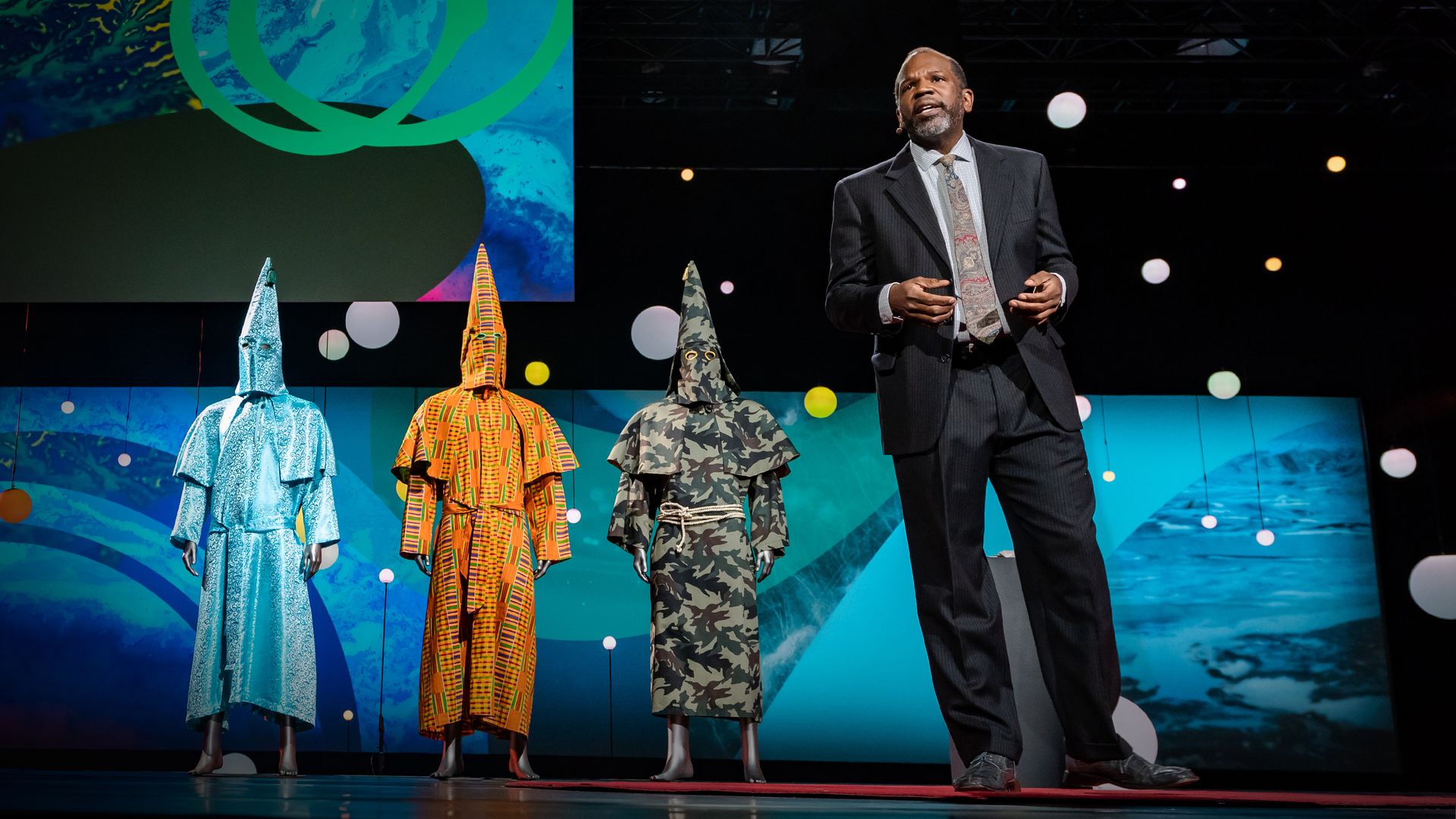
The symbols of systemic racism -- and how to take away their power

Multidisciplinary artist and TED Fellow Paul Rucker is unstitching the legacy of systemic racism in the United States. A collector of artifacts connected to the history of slavery -- from branding irons and shackles to postcards depicting lynchings -- Rucker couldn't find an undamaged Ku Klux Klan robe for his collection, so he began making his own. The result: striking garments in non-traditional fabrics like kente cloth, camouflage and silk that confront the normalization of systemic racism in the US. "If we as a people collectively look at these objects and realize that they are part of our history, we can find a way to where they have no more power over us," Rucker says. (This talk contains graphic images.)

2018

TED Talk

United States
Paul Rucker is a multimedia visual artist, composer, and musician known for integrating live performance, original musical compositions, and visual art installations. His work focuses on illuminating the legacy of enslavement in America and its connection to current socio-political issues. Rucker has received numerous grants, awards, and residencies for his work in visual art and music. He is recognized for his innovative approach to art making, which involves exploring community impacts, human rights issues, historical research, and human emotions. Additionally, Rucker holds various fellowships and teaching positions, including being an Assistant Professor at Virginia Commonwealth University. // Paul Rucker is a visual artist, composer, and musician known for his work that combines various media to explore community impacts, human rights issues, historical research, and human emotions. His current focus is on the prison-industrial complex and the connection between incarceration and slavery. Rucker has exhibited his work nationally, including in educational institutions and prisons, and has collaborated with organizations to address mass incarceration. He holds prestigious fellowships and is currently an Assistant Professor and Curator for Creative Collaboration at VCUarts, Virginia Commonwealth University. // Bring attention to false narratives in history and people left out of the story. Address coordinated exclusion. // Paul Rucker is a multimedia visual artist, composer, and musician whose work delves into the intersections of art, history, and social justice. He is recognized for his innovative approach in integrating live performance, original musical compositions, and visual art installations to shed light on the legacy of enslavement in America and its contemporary socio-political implications. Rucker's artistry extends to exploring community impacts, human rights issues, historical research, and human emotions, with a particular focus on the prison-industrial complex and the ties between incarceration and slavery. Through his exhibitions, collaborations with organizations, and teaching positions at Virginia Commonwealth University, Rucker actively engages in challenging false historical narratives and advocating for marginalized voices in society. // Visual artist + cellist // Paul Rucker is a multimedia visual artist, composer, and musician. His practice often integrates live performance, original musical compositions, and visual art installation. For nearly two decades, Rucker has used his own brand of art making as a social practice, which illuminates the legacy of enslavement in America and its relationship to the current socio-political moment. His work is the product of a rich interactive process, through which he investigates community impacts, human rights issues, historical research, and basic human emotions. Rucker has received numerous grants, awards and residencies for visual art and music. He is a 2012 Creative Capital Grantee in visual art as well as a 2014, 2018, 2019 MAP (Multi-Arts Production) Fund Grantee for performance. In 2015 he received a prestigious Joan Mitchell Painters & Sculptors Grant as well as the Mary Sawyer Baker Award. In 2016 Paul received the Rauschenberg Artist as Activist fellowship and the Smithsonian Artist Research Fellowship, for which he is the first artist in residence at the new National Museum of African American Culture. Residencies include MacDowell Colony, Blue Mountain Center, Ucross Foundation, Art OMI, Banff Centre, Pilchuck Glass School, Rauschenberg Residency, Joan Mitchell Residency, Loghave, Montalvo, Hermitage, Hemera Artist Retreat, Air Serembe, Creative Alliance and the Rockefeller Foundation Study Center in Bellagio, Italy. He will be a Master Teacher at the Atlantic Center for the Arts in 2021. In 2013-2015, he was the Robert W. Deutsch Foundation Artist in Residence and Research Fellow at the Maryland Institute College of Art. He was awarded a 2017 John Simon Guggenheim Fellowship, a 2018 TED Fellowship, a 2020 TED Senior Fellowship and the 2018 Arts Innovator Award from the Dale and Leslie Chihuly Foundation and Artist Trust. His most recent award is a 2020 Art for Justice Fund Fellowship. Rucker is an iCubed Arts Research Fellow and Assistant Professor at Virginia Commonwealth University in Richmond, Virginia and Curator for Creative Collaboration for VCUarts. // Visual artist, cellist and TED Fellow Paul Rucker performs a disarming rendition of "Criminalization of Survival," a piece he created to explore the fragile journey of life in light of the brutality of the immigration crisis. // Multidisciplinary artist and TED Fellow Paul Rucker has developed his own style of cello; he puts chopsticks between his strings, uses the instrument as a drum and experiments with electronics like loop pedals. Moving between reflective storytelling and performance, Rucker shares his inspiration -- and definitely doesn't play the same old Bach. // Multidisciplinary artist and TED Fellow Paul Rucker is unstitching the legacy of systemic racism in the United States. A collector of artifacts connected to the history of slavery -- from branding irons and shackles to postcards depicting lynchings -- Rucker couldn't find an undamaged Ku Klux Klan robe for his collection, so he began making his own. The result: striking garments in non-traditional fabrics like kente cloth, camouflage and silk that confront the normalization of systemic racism in the US. "If we as a people collectively look at these objects and realize that they are part of our history, we can find a way to where they have no more power over us," Rucker says. (This talk contains graphic images.) // Paul Rucker is a multimedia visual artist, composer, and musician whose work delves into the intersections of art, history, and social justice. He is recognized for his innovative approach in integrating live performance, original musical compositions, and visual art installations to shed light on the legacy of enslavement in America and its contemporary socio-political implications. Rucker's artistry extends to exploring community impacts, human rights issues, historical research, and human emotions, with a particular focus on the prison-industrial complex and the ties between incarceration and slavery. Through his exhibitions, collaborations with organizations, and teaching positions at Virginia Commonwealth University, Rucker actively engages in challenging false historical narratives and advocating for marginalized voices in society. // Visual artist + cellist // research, glass, racism, activism, history, human rights, rights, education, immigration, address false narratives, teachers, justice, coordinated exclusion // Maryland|United Kingdom|USA|Richmond|England|Baltimore|Virginia
Maryland|United Kingdom|USA|Richmond|England|Baltimore|Virginia

Paul Rucker

No items found.
2018

29:34

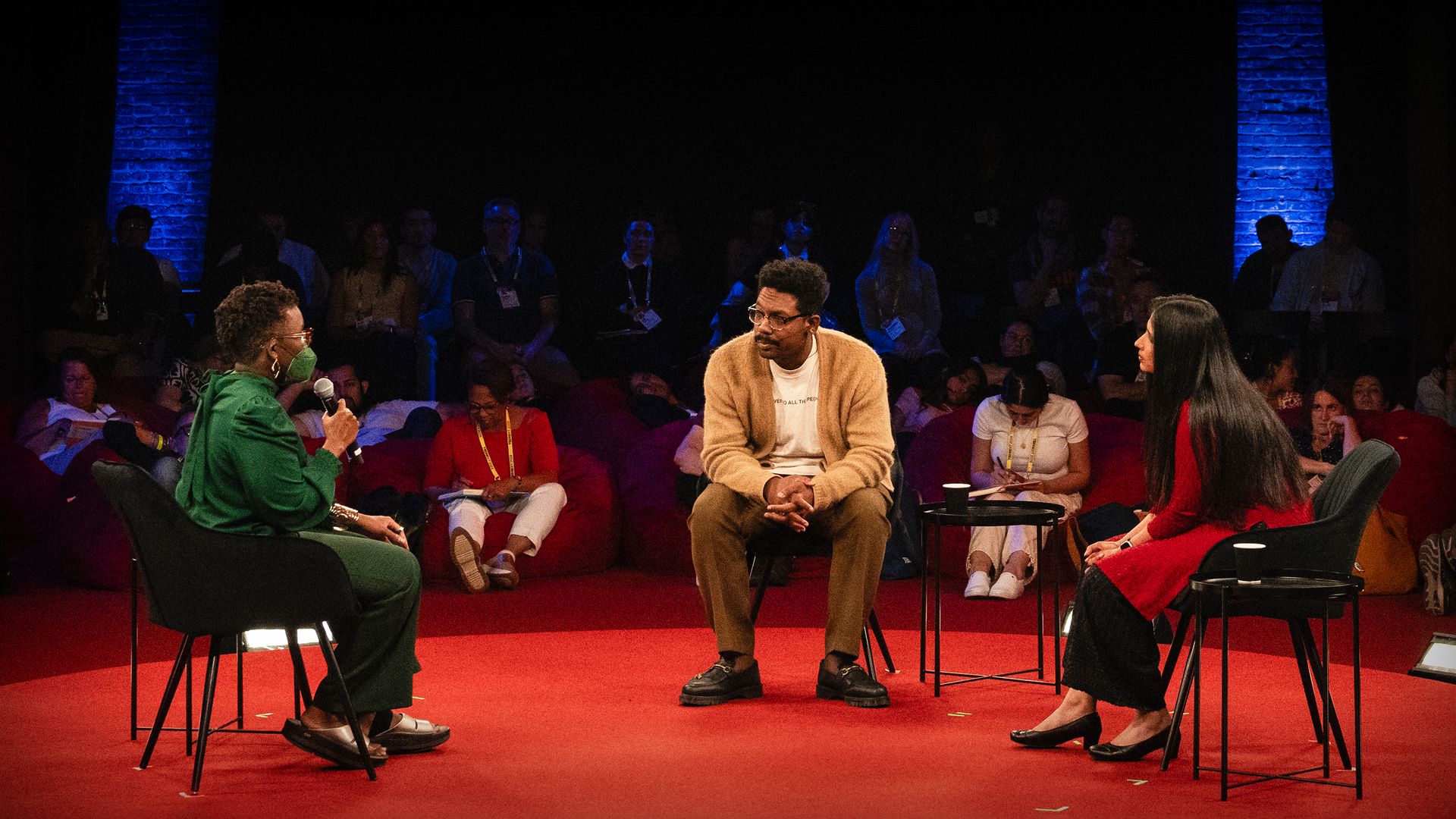
The science and art of uncertainty

What happens when the precision of physics converges with the power of art? Three TED Fellows — Damon Davis, Amma Y. Ghartey-Tagoe Kootin and Shohini Ghose — explore the personal and practical realities of facing uncertainty and meeting change in this jazz-infused conversation. Their wide-ranging discussion illuminates the possibilities of uncertainty, proving that the most profound insights emerge from the most unexpected perspectives. (This conversation was co-created with TED Fellow Paul Rucker, who composed and performed the original music, and TED Fellows Director Lily James Olds.)

2025

TED Talk

United States
Dr. Amma Y. Ghartey-Tagoe Kootin is a multidisciplinary scholartist, writer, performer, and producer known for transforming historical material about black identity into performances for the stage and screen. She has worked in academia and arts/entertainment, including as Vice President of Creative Affairs at JusticeRx. Dr. Amma is recognized for her work on projects like AT BUFFALO: A NEW MUSICAL, which explores themes of America, race, and the 1901 Buffalo, NY Worlds Fair. Her collaborative research projects have received numerous awards and fellowships, and she holds degrees from Harvard University and NYU's Tisch School of the Arts. // AT BUFFALO is an immersive and evocative musical journey through conflicting performances of race in post-Civil War America, tracking historical figures through the tumult of the fair. The organization uses collections from over 30 archives to perform stories virtually verbatim from the fragmented archive of the 1901 Pan-American Exposition. The musical aims to reconstruct the American character in the wake of national crisis by bringing to life historical names like W.E.B. Du Bois, Leon Czolgosz, and William McKinley, as well as lesser-known figures. Through a rich soundscape and innovative storytelling, AT BUFFALO aims to engage audiences with the complex narratives of race and identity during a critical moment in American history. // History helps us understand the roots of the problems we face, if we’d only face it. I transform verbatim archival material – the stuff of history – into works for theatre, television, and other story-driven formats. My work disrupts Hollywood and Broadway's convention of taking creative license with history. I ask: How can we use the best of mass entertainment to help audiences know and confront the truth of the past? My process of “performing the archive” helps us to literally face the past so that we can create new realities for our future. // Dr. Amma Y. Ghartey-Tagoe Kootin is a multidisciplinary scholartist, writer, performer, and producer who specializes in transforming historical material about black identity into compelling performances for the stage and screen. With a background in academia and arts/entertainment, she has notably served as the Vice President of Creative Affairs at JusticeRx. Dr. Amma is best known for her work on projects like AT BUFFALO: A NEW MUSICAL, which delves into themes of America, race, and the 1901 Buffalo, NY Worlds Fair. Her innovative approach involves using verbatim archival material to challenge traditional narratives and engage audiences in critical reflections on history, race, and identity. Through her unique process of "performing the archive," Dr. Amma aims to prompt audiences to confront the truth of the past and envision new possibilities for the future. // Scholar + artist // Scholar and artist working across academia and the entertainment industry to transform archival material about black identity into theatrical performances. http://www.atbuffalomusical.com // JOY All: I am the third daughter of Ghanaian immigrants who came to North America during the height of the U.S. Civil Rights Movement. Born in Tuskegee, Alabama and raised in Manhattan “The Little Apple,” Kansas, I grew up on university campuses as my childhood playground. I am Dr. Amma — a scholartist* and TED Fellow who transforms history + archival material into entertaining works for theatre, television, and film. A Harvard and NYU-Tisch alum, I “perform the archive” through music, dance, emerging technologies, and more so that nations can come together around difficult histories and face the triumphs and tragedies of our collective past. I have worked across academia and the entertainment industry, including previous stints as a professor and VP / head of Creative Affairs for JusticeRx, a production company that had a two-year overall deal with Warner Bros. TV. I am the founder of the national creative team behind AT BUFFALO, a new musical in development about blackness, American identity, and a presidential assassination at the 1901 Buffalo, NY world’s fair. Have a look at my TED talk on AT BUFFALO: https://www.ted.com/speakers/amma_ghartey_tagoe_kootin When I’m not in a writers room, archive, or rehearsal studio, I am resting. Or, working on creative justice initiatives to make Hollywood a more just space for all. Or, napping. Or, baking gluten-free, vegan desserts. Or, dancing full out to a Afrobeats song. Or, creatively dreaming. I am deeply loved by a fun, multi-generational household filled with my husband, parents, and millennial niece who comes to visit from time to time. Tacos and kelewele are my favorite food. I am exci-TED to meet you (and impressed if you’ve read this far.) Feel free to reach out to me on TEDConnect anytime or find me at a snack station. (*Scholartist coined by Joseph Shahadi and Mila Aponte-Gonzalez.) // In this lively talk and performance, artist and TED Fellow Amma Y. Ghartey-Tagoe Kootin offers a sneak peek of her forthcoming musical "At Buffalo." Drawing on archival material from the 1901 Pan-American Exhibition, a world's fair held in Buffalo, New York, the show examines conflicting representations of Black identity exhibited at the fair -- highlighting unsettlingly familiar parallels between American society at the turn of the century and today, and asking: Are we all still part of the show? // Dr. Amma Y. Ghartey-Tagoe Kootin is a multidisciplinary scholartist, writer, performer, and producer who specializes in transforming historical material about black identity into compelling performances for the stage and screen. With a background in academia and arts/entertainment, she has notably served as the Vice President of Creative Affairs at JusticeRx. Dr. Amma is best known for her work on projects like AT BUFFALO: A NEW MUSICAL, which delves into themes of America, race, and the 1901 Buffalo, NY Worlds Fair. Her innovative approach involves using verbatim archival material to challenge traditional narratives and engage audiences in critical reflections on history, race, and identity. Through her unique process of "performing the archive," Dr. Amma aims to prompt audiences to confront the truth of the past and envision new possibilities for the future. // Scholar + artist // technology, musical theatre, entertainment, immigration, research, film, tv, rights, u.s. history - late 19th/early 20th century, executive producer, war, plant-based, scholartist, scholartistry, plants, civil rights, plant-based diet, children, writer, food, creative historian, archival storyteller, justice, performing history // USA|New York|United States|Georgia|Buffalo
USA|New York|United States|Georgia|Buffalo

Amma Ghartey-Tagoe Kootin

No items found.
2025

11:36

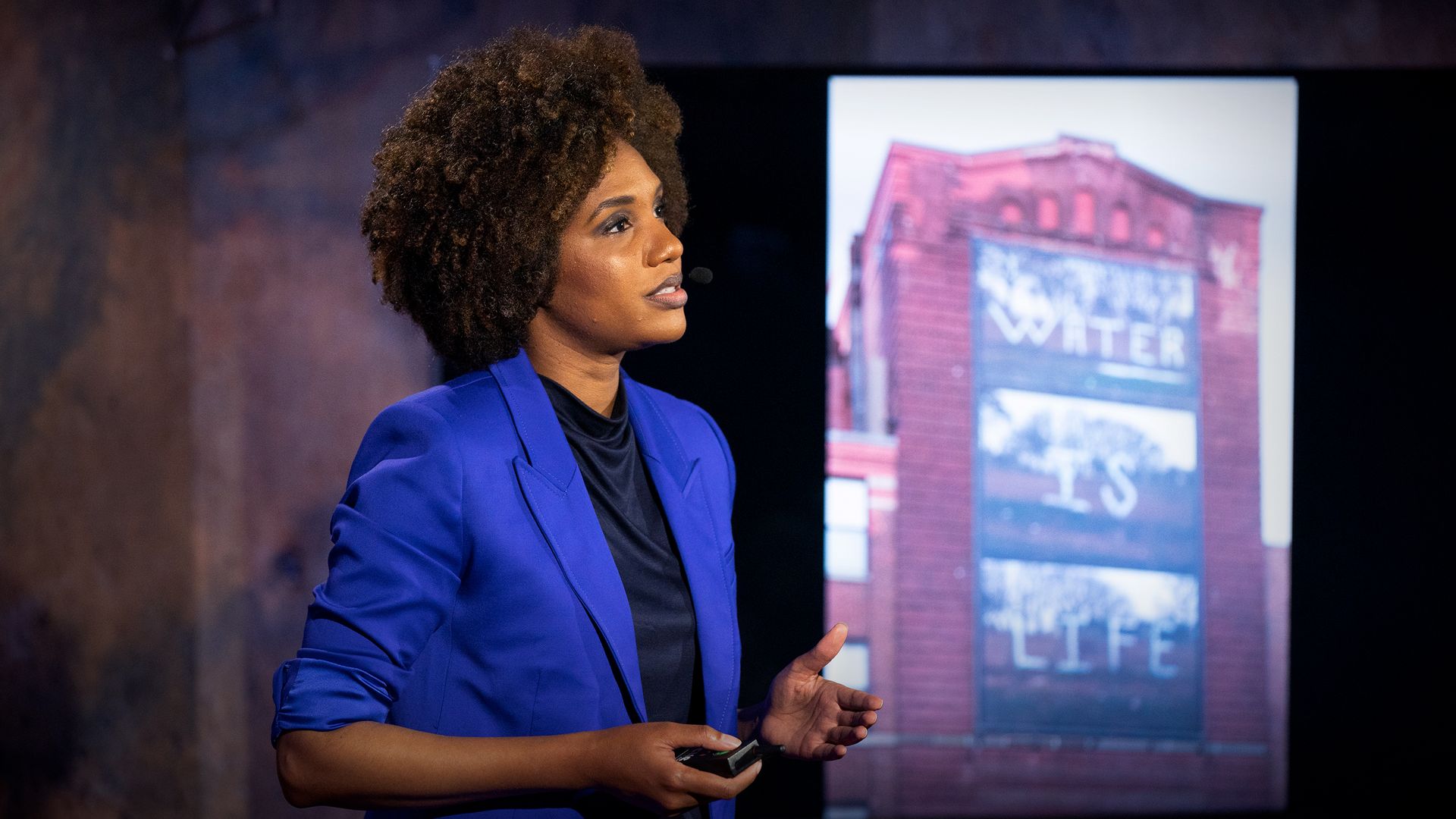
A creative solution for the water crisis in Flint, Michigan

Artist and TED Fellow LaToya Ruby Frazier spent five months living in Flint, Michigan, documenting the lives of those affected by the city's water crisis for her photo essay "Flint is Family." As the crisis dragged on, she realized it was going to take more than a series of photos to bring relief. In this inspiring, surprising talk, she shares the creative lengths she went to in order to bring free, clean water to the people of Flint.

2019

TED Talk

United States
Visual artist + photographer // I am an artist primarily working with photography to explore issues around environmental justice, family and communal history, and private/public space, often blurring the lines between self-portraiture and documentary. My work has a deep concern for the mother/ daughter relationship. Relentlessly documenting encounters with Grandma Ruby (b.1925-2009), Mom (b.1959) and myself (b.1982) enables me to break unspoken intergenerational cycles. We are wrestling with internalized life experiences, perceptions of our-selves and familial personas developed by sociopolitical baggage. All of my photographs are created in Braddock, Pennsylvania, a historical steel mill town from America’s Industrial period. It is home of Andrew Carnegie’s first Steel Mill, The Edgar Thomson Works, (which still functions today). Grandma Ruby, Mom and myself grew up in significantly different social and economic climates in Braddock. Grandma Ruby witnessed Braddock’s prosperous days of Department stores, theaters and restaurants. Mom witnessed the steel mills close and white flight to suburban developments. I witnessed the War on Drugs decimate my family and community. Between our three generations we not only witnessed, we experienced and internalized the end of industrialization and rise of gentrification. Lately I have created photographs and videos that address class inequity, access to health care, and environmental racism. Grandma Ruby died from pancreatic cancer and diabetes, Mom currently suffers from an unknown neurological disorder and cancer and I was diagnosed with lupus fourteen years ago. The underpinning element in my photographs is the collaborative process between my mother and myself. Mom is co-author, artist and subject. She turns the camera on me to document us. I am also the subject and content of the work. This work is not solely social documentary. These are psychological portraits of the identity of the body and how surrounding outside space shapes and forms it physically. I view Grandma Ruby, Mom and myself as one entity. There is an intergenerational transference of our identities existing in the history of Braddock Pennsylvania. // LaToya Ruby Frazier’s artistic practice spans a range of media, including photography, video, performance, installation art and books, and centers on the nexus of social justice, cultural change, and commentary on the American experience. In various interconnected bodies of work, Frazier uses collaborative storytelling with the people who appear in her artwork to address topics of industrialism, rust belt revitalization, environmental justice, access to healthcare, access to clean water, workers’ rights, human rights, family, and communal history. This builds on her commitment to the legacy of 1930s social documentary work and 1960s and ’70s conceptual photography that address urgent social and political issues of everyday life. Frazier’s work has been the subject of many solo exhibitions at institutions in the US and Europe and her work is held in numerous public collections. LaToya Ruby Frazier is a 2015 MacArthur Foundation Fellowship recipient. In 2024 The Museum of Modern Art will exhibit the largest survey on her artwork and practice May 12, 2024 - September 07, 2024. // Artist and TED Fellow LaToya Ruby Frazier spent five months living in Flint, Michigan, documenting the lives of those affected by the city's water crisis for her photo essay "Flint is Family." As the crisis dragged on, she realized it was going to take more than a series of photos to bring relief. In this inspiring, surprising talk, she shares the creative lengths she went to in order to bring free, clean water to the people of Flint. // For the last 12 years, artist and TED Fellow LaToya Ruby Frazier has photographed friends, neighbors and family in Braddock, Pennsylvania. But though the steel town has lately been hailed as a posterchild of "rustbelt revitalization," Frazier's pictures tell a different story, of the real impact of inequality and environmental toxicity. In this short, powerful talk, the TED Fellow shares a deeply personal glimpse of an often-unseen world. // LaToya Ruby Frazier’s artistic practice spans a range of media, including photography, video, performance, installation art and books, and centers on the nexus of social justice, cultural change, and commentary on the American experience. In various interconnected bodies of work, Frazier uses collaborative storytelling with the people who appear in her artwork to address topics of industrialism, rust belt revitalization, environmental justice, access to healthcare, access to clean water, workers’ rights, human rights, family, and communal history. This builds on her commitment to the legacy of 1930s social documentary work and 1960s and ’70s conceptual photography that address urgent social and political issues of everyday life. Frazier’s work has been the subject of many solo exhibitions at institutions in the US and Europe and her work is held in numerous public collections. LaToya Ruby Frazier is a 2015 MacArthur Foundation Fellowship recipient. In 2024 The Museum of Modern Art will exhibit the largest survey on her artwork and practice May 12, 2024 - September 07, 2024. // Visual artist + photographer // water crisis, water, flight, storytelling, environmental racism, art, inequity, photogaphy, human rights, rights, environmental justice, justice, toxic substances, war, racism, documentary, social justice, steel, clean water, industrial, inequality // Alexandria|Virginia|United States|USA
Alexandria|Virginia|United States|USA

LaToya Ruby Frazier

No items found.
2019

04:12

My underwater robot

David Lang is a maker who taught himself to become an amateur oceanographer -- or, he taught a robot to be one for him. In a charming talk Lang, a TED Fellow, shows how he and a network of ocean lovers teamed up to build open-sourced, low-cost underwater explorers.

2013

TED Talk

United States
Ashworth College; Nova Southeastern University; Excelsior College; Community College of the Air Force; Penn Foster; Bowie State University; City Colleges of Chicago-Harold Washington College
David T. Lang is an entrepreneur and writer who focuses on funding scientists and exploring amateur technology scenes. He founded the Experiment Foundation to provide new ways for foundations and organizations to support scientists. Lang has been involved in various initiatives such as Science Better, a podcast interviewing scientists, and projects like Sofar Ocean Technologies, OpenROV, and Open Explorer (now Field Notes), which involve building ocean drones, underwater drones, and a community of explorers. Additionally, Lang has authored a book titled "Zero to Maker" and has a background in managing a sailing school. // OpenROV is a DIY community centered around underwater robots for exploration & adventure. The OpenROV Cockpit is the software for controlling the lost cost ROV kits that OpenROV produces for a community in over 50 countries. A blend of Javascript, HTML5, Socket.IO, Node.js, Ubuntu, and Arduino programming, the Cockpit software is the brains and interface to the ROV as it travels a 100 meters under the surface. // OpenROV is a DIY community centered around underwater robots for exploration & adventure. We're a group of amateur and professional ROV builders and operators from over 50 countries who have a passion for exploring the deep. // Ashworth College; Nova Southeastern University; Excelsior College; Community College of the Air Force; Penn Foster; Bowie State University; City Colleges of Chicago-Harold Washington College // David Lang is a skilled professional with a strong background in developing software for underwater robotics. He has extensive experience working with technologies such as Javascript, HTML5, Socket.IO, Node.js, Ubuntu, and Arduino programming. David has been actively involved in the OpenROV community, contributing to the development of the OpenROV Cockpit software used to control ROV kits for underwater exploration and adventure. His expertise lies in creating innovative solutions for underwater robotics projects and collaborating with a diverse group of ROV builders and operators from around the world. // Embolden scientific curiosity. // David T. Lang is an entrepreneur, writer, and technology enthusiast known for his work in funding scientists and exploring amateur technology scenes. He is the founder of the Experiment Foundation, which offers innovative ways for foundations and organizations to support scientists. Lang has been actively involved in various projects such as Sofar Ocean Technologies, OpenROV, and Open Explorer (now Field Notes), focusing on building ocean drones, underwater drones, and fostering a community of explorers. With a background in managing a sailing school, Lang has authored the book "Zero to Maker" and is recognized for his expertise in developing software for underwater robotics, utilizing technologies like Javascript, HTML5, Node.js, and Arduino programming. His contributions to the OpenROV community and the development of the OpenROV Cockpit software highlight his commitment to creating innovative solutions for underwater exploration projects. // Maker // David Lang is a co-founder of OpenROV, a community of citizen ocean explorers and creators of low-cost underwater robots. He is the author of Zero to Maker and a contributing editor to MAKE: Magazine where he chronicled his journey from under-skilled beginner to manufacturing entrepreneur and ocean explorer. The book is a guide for anyone-- regardless of experience level-- to get involved with the maker movement and digital fabrication tools, like 3D printing. He lives on a sailboat in the San Francisco Bay. // I run the Experiment Foundation. We fund science and technology at the earliest stages — mostly from early-career folks — when the projects and ideas are nascent. Prior to that, I co-founded Sofar (an ocean technology company) and OpenROV (an underwater drone company). // You don't have to be a scientist to help protect the world's oceans, says underwater drone expert and TED Fellow David Lang -- in fact, ordinary citizens have pulled together to save the planet's natural treasures many times in history. Lang asks us to take a lesson from the story of the US National Parks Service, offering a three-point plan for conserving underwater wonders. // David Lang is a maker who taught himself to become an amateur oceanographer -- or, he taught a robot to be one for him. In a charming talk Lang, a TED Fellow, shows how he and a network of ocean lovers teamed up to build open-sourced, low-cost underwater explorers. // David T. Lang is an entrepreneur, writer, and technology enthusiast known for his work in funding scientists and exploring amateur technology scenes. He is the founder of the Experiment Foundation, which offers innovative ways for foundations and organizations to support scientists. Lang has been actively involved in various projects such as Sofar Ocean Technologies, OpenROV, and Open Explorer (now Field Notes), focusing on building ocean drones, underwater drones, and fostering a community of explorers. With a background in managing a sailing school, Lang has authored the book "Zero to Maker" and is recognized for his expertise in developing software for underwater robotics, utilizing technologies like Javascript, HTML5, Node.js, and Arduino programming. His contributions to the OpenROV community and the development of the OpenROV Cockpit software highlight his commitment to creating innovative solutions for underwater exploration projects. // Maker // technology, technical standards, building management, entrepreneurship, buildings, drone, ocean technology, job skills training, citizen scientist, open hardware, 3d printing, parks, oceans, emergency management, robotics, hardware, standards, science, citizen science, accounting standards, amateur invention, software, government, low-cost, manufacturing // San Francisco|USA|California|Berkeley|United States
San Francisco|USA|California|Berkeley|United States

David Lang

No items found.
2013

Why do some bodies respond differently to disease? | Erika Moore

TED Fellow and equity bioengineer Erika Moore investigates how cells controlling inflammation behave differently depending on a patient's background. By focusing on the "who" behind the disease, Moore is uncovering why certain diseases disproportionately affect certain ethnicities, paving the way for more inclusive and effective health care.

2025

Podcasts

United States
Northwestern University; Duke University; University of Florida; Merck; University of Maryland - A. James Clark School of Engineering; JHU Office of Academic Support; Grayson' s Laboratory; Mountain Vista High School; The Johns Hopkins Dean of Student Life; The Johns Hopkins University; Amgen
The Moore Lab, located at the Fischell Department of Bioengineering at the University of Maryland, is dedicated to engineering biomaterial models to harness the regenerative potential of the immune system across health disparities. Led by Dr. Erika Moore, the lab focuses on developing compassionate innovators to revolutionize biomedical research through initiatives in compassion, collaboration, communication, and innovation. The lab's work includes conducting research, teaching financial literacy, advocating for lupus research, and engaging in outreach activities to promote diversity and equity in STEM fields. Dr. Moore's achievements include being selected as a 2024 TED Fellow, receiving prestigious awards, and actively participating in various conferences and initiatives to advance scientific knowledge and inclusivity in the field. // Dr. Erika Moore Taylor is an educator focusing on biomedical engineering, financial literacy, and career/professional development. As an Assistant Professor of Bioengineering at the University of Maryland, College Park, she leads the Moore Lab, conducting research on myeloid immune cell function. Dr. Moore Taylor is a TED Fellow and NSF CAREER Awardee, recognized for her work in understanding immune cell interactions. Additionally, she founded Moore Wealth Inc., a non-profit promoting financial literacy, and provides resources and workshops to empower individuals in managing their finances. Through her work, Dr. Moore Taylor aims to bridge the gap between professional development and financial education, particularly for underrepresented groups in STEM. // Dr. Erika Moore is an Assistant Professor at the University of Maryland, College Park, and the Executive Director of Moore Wealth Inc. Her interests include: immunology, regenerative medicine, biomaterials, personal finance, and financial literacy. Her StrengthFinders are Focus, Achiever, Discipline, Consistency, and Restorative. If she's not working, you will find her reading a book or working out! // Northwestern University; Duke University; University of Florida; Merck; University of Maryland - A. James Clark School of Engineering; JHU Office of Academic Support; Grayson' s Laboratory; Mountain Vista High School; The Johns Hopkins Dean of Student Life; The Johns Hopkins University; Amgen // Erika Moore is an Assistant Professor at the University of Maryland, College Park, with a focus on immunology and regenerative medicine. Additionally, she serves as the Executive Director of Moore Wealth Inc., where she applies her expertise in biomaterials, personal finance, and financial literacy. Erika's professional strengths lie in Focus, Achiever, Discipline, Consistency, and Restorative qualities. Outside of work, she enjoys reading and staying active through workouts. // By designing with a person's background in mind, we can bring more equity to healthcare. I achieve this by developing tissue models for diseases that disproportionately affect people of color. // Dr. Erika Moore is an Assistant Professor of Bioengineering at the University of Maryland, College Park, leading the Moore Lab in pioneering research on engineering biomaterial models to leverage the regenerative potential of the immune system, particularly in addressing health disparities. Her work focuses on understanding myeloid immune cell function and designing tissue models for diseases that disproportionately affect marginalized communities. Dr. Moore is a TED Fellow and NSF CAREER Awardee, recognized for her contributions to advancing scientific knowledge and inclusivity in the field. Beyond her research, she is dedicated to promoting financial literacy through her non-profit organization, Moore Wealth Inc., aiming to empower individuals, particularly underrepresented groups in STEM, in managing their finances and professional development. // Bioengineer // Dr. Erika Moore is an Assistant Professor of Bioengineering at the University of Maryland, College Park, leading the Moore Lab in pioneering research on engineering biomaterial models to leverage the regenerative potential of the immune system, particularly in addressing health disparities. Her work focuses on understanding myeloid immune cell function and designing tissue models for diseases that disproportionately affect marginalized communities. Dr. Moore is a TED Fellow and NSF CAREER Awardee, recognized for her contributions to advancing scientific knowledge and inclusivity in the field. Beyond her research, she is dedicated to promoting financial literacy through her non-profit organization, Moore Wealth Inc., aiming to empower individuals, particularly underrepresented groups in STEM, in managing their finances and professional development. // Bioengineer // research, regenerative, education, immunology, underrepresented, led, biomaterials, tissues, financial literacy, communication, bioengineering, wound healing, disease, health equity, finance, stem // Maryland|USA|Washington DC|Washington|United States|District of Columbia
Maryland|USA|Washington DC|Washington|United States|District of Columbia

Erika Moore Taylor

No items found.
2025