

ted fellows media library

Watch the TED Fellows in action

Watch, listen and connect with the Fellows changing the world through science, art, invention and imagination. 

TED Talks

From unbelievable science to awe-inspiring art, watch powerful talks from our global community of 500+ TED Fellows.

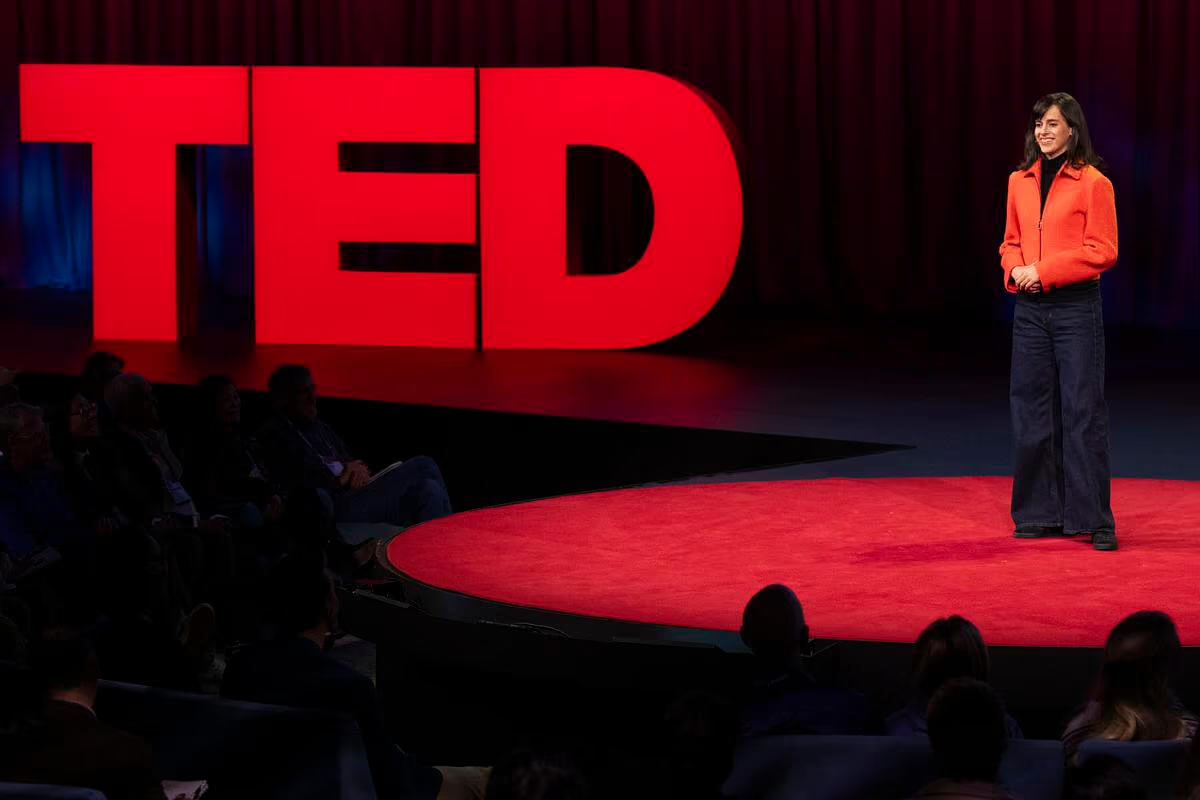
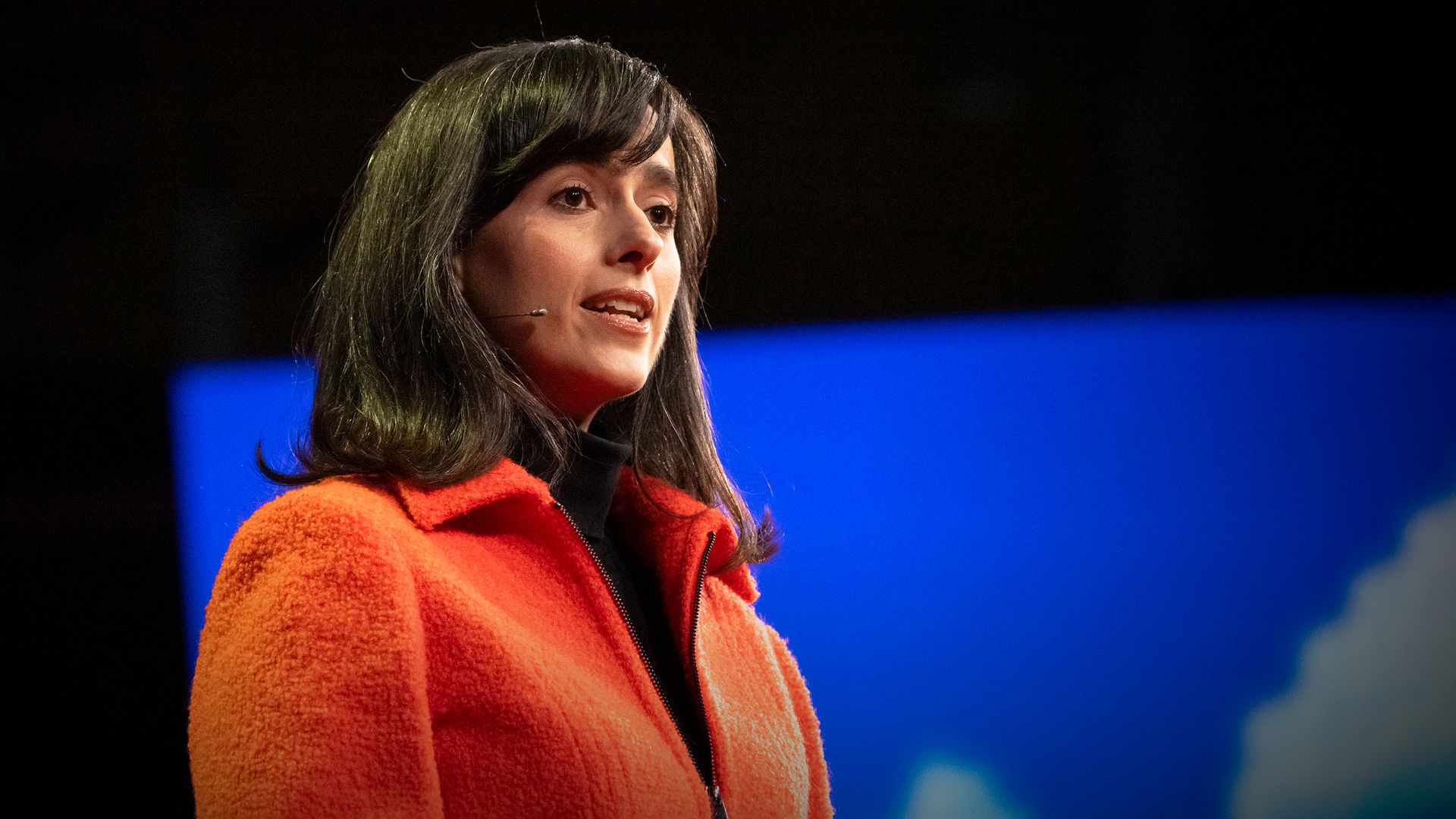
Carissa Véliz

Beware the power of prediction

Podcasts

Hear TED Fellows tell their stories in intimate interviews and learn more about what lies behind their big ideas.

Trinity Tran

Who controls your city's money? | Trinity Tran

What if your city could borrow money from its own bank instead of private lenders? TED Fellow Trinity Tran is leading the push for public banks — which are owned by the people through their local governments — and shows how this model could ensure your local tax dollars stay in your community. 

Ryosuke Takashima

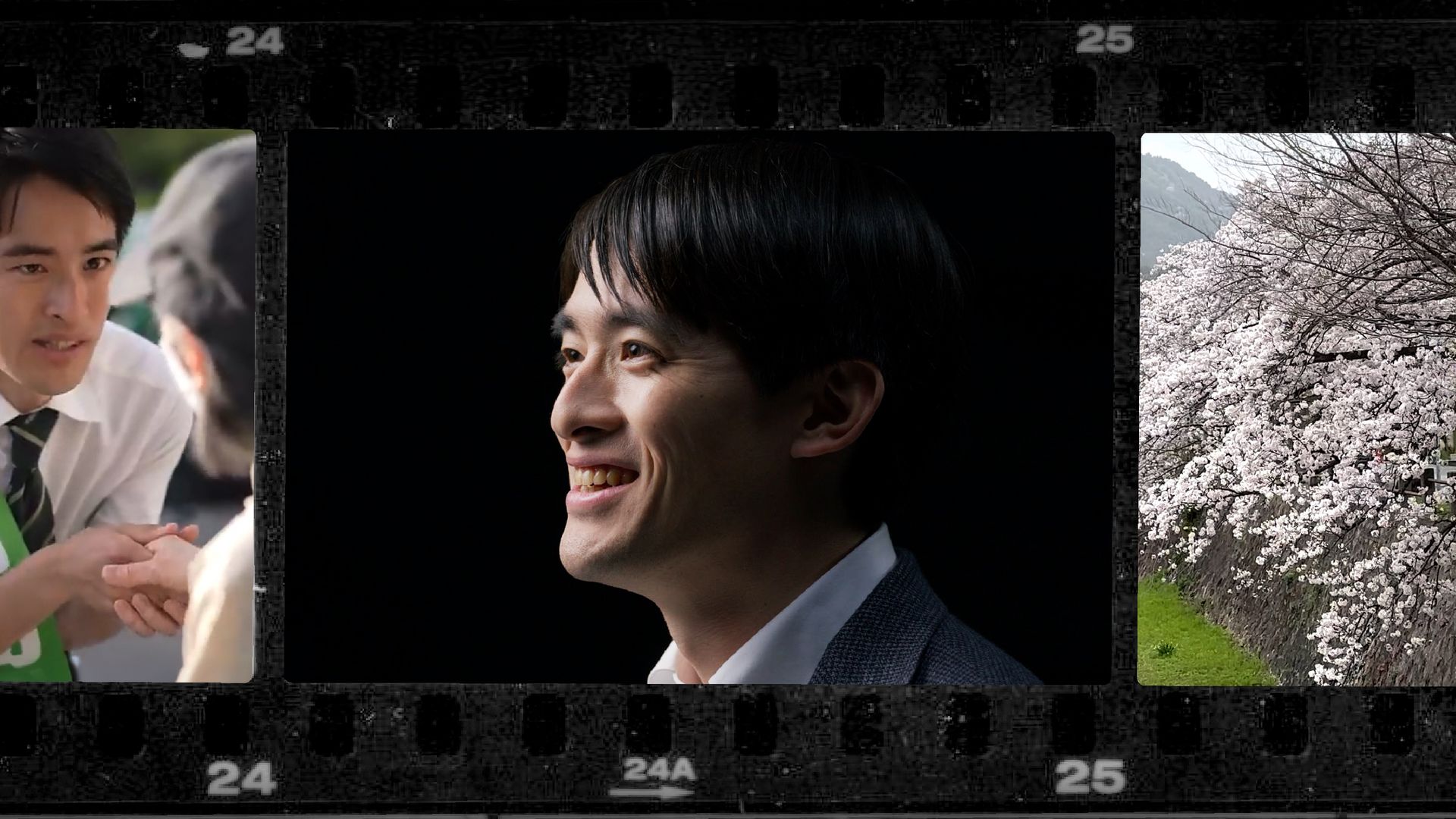
Meet the youngest-ever mayor in Japan's history | Ryosuke Takashima

TED Fellow Ryosuke Takashima is the youngest-ever mayor in Japan's history — but he doesn't consider himself a politician. His approach to leadership is simple: listen to as many voices as possible (from students to elders) in order to figure out what needs fixing. Hear why he thinks inviting citizens to participate in reforming their own communities is the best way to get things done.

Schendy Kernizan

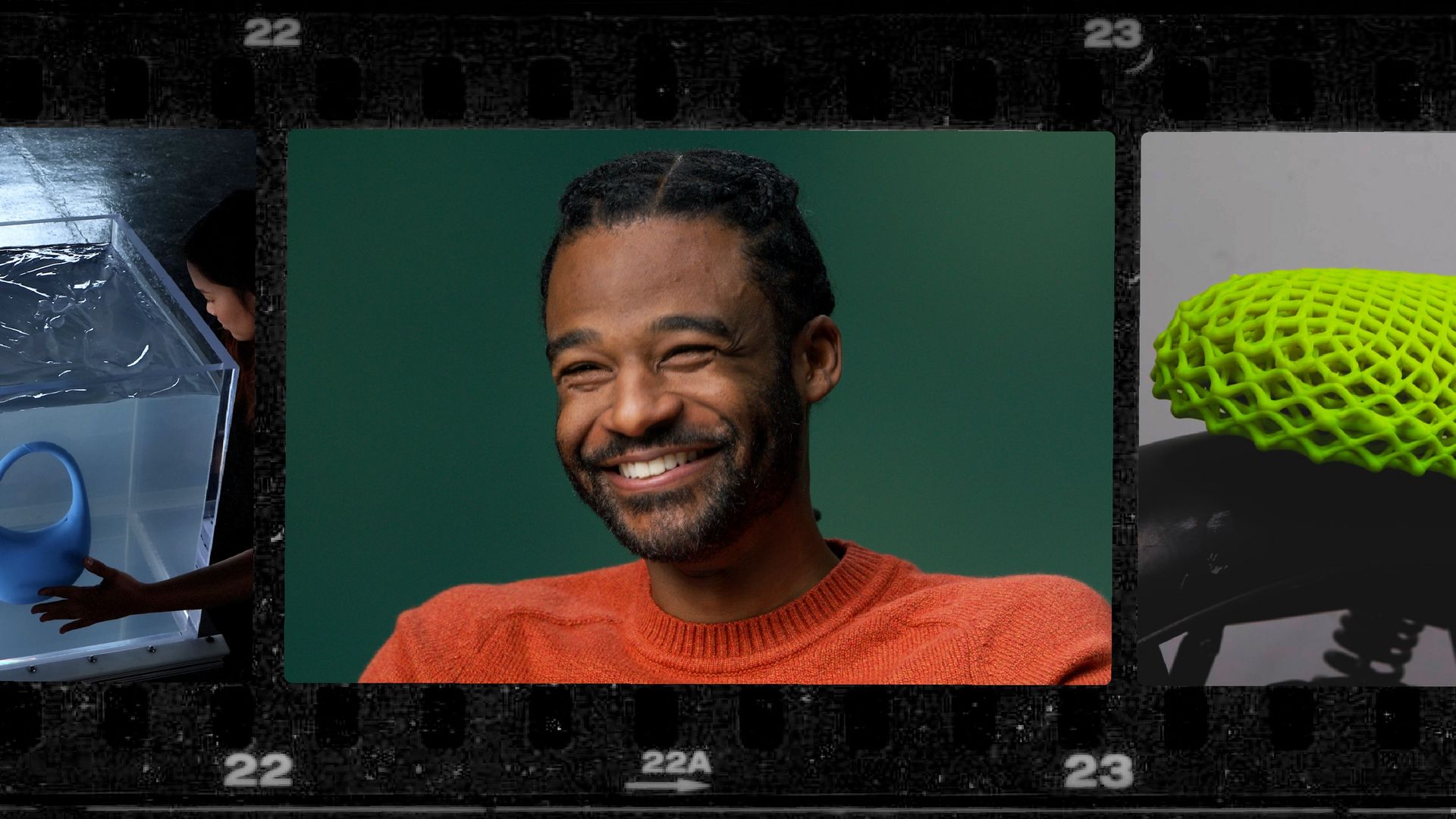
The gravity-defying future of manufacturing | Schendy Kernizan

3D printing promised to reinvent how we make things, but it's mostly stuck producing prototypes with a high level of waste. Designer and TED Fellow Schendy Kernizan found a different way — by printing objects directly into a tub of gel. He explains how this technique eliminates the constraints of gravity, pushing the limits of how we can manufacture objects across medicine, fashion, space travel and more.
Listen to all
Podcast episodes

TED Fellows Films

TED Talks meet documentaries in these short films that explore TED Fellows’ ideas. Dive into all three seasons to explore their mind-blowing innovations. 

05:39

FELLOWS FILM

Meet the youngest-ever mayor in Japan's history

TED Fellow Ryosuke Takashima is the youngest-ever mayor in Japan's history — but he doesn't consider himself a politician. His approach to leadership is simple: listen to as many voices as possible (from students to elders) in order to figure out what needs fixing. Hear why he thinks inviting citizens to participate in reforming their own communities is the best way to get things done.

2026

TED Fellows Film

Ryosuke Takashima
04:47

FELLOWS FILM

The gravity-defying future of manufacturing

3D printing promised to reinvent how we make things, but it's mostly stuck producing prototypes with a high level of waste. Designer and TED Fellow Schendy Kernizan found a different way — by printing objects directly into a tub of gel. He explains how this technique eliminates the constraints of gravity, pushing the limits of how we can manufacture objects across medicine, fashion, space travel and more.

2026

TED Fellows Film

Schendy Kernizan

Fellows Media Library
With 500+ TED Fellows and counting, we’ve got an entire world of media for you to explore. Dive into these talks, short films and podcasts showcasing Fellows turning ideas into action.

Clear
Sort
Thank you! Your submission has been received!
Oops! Something went wrong while submitting the form.

08:11

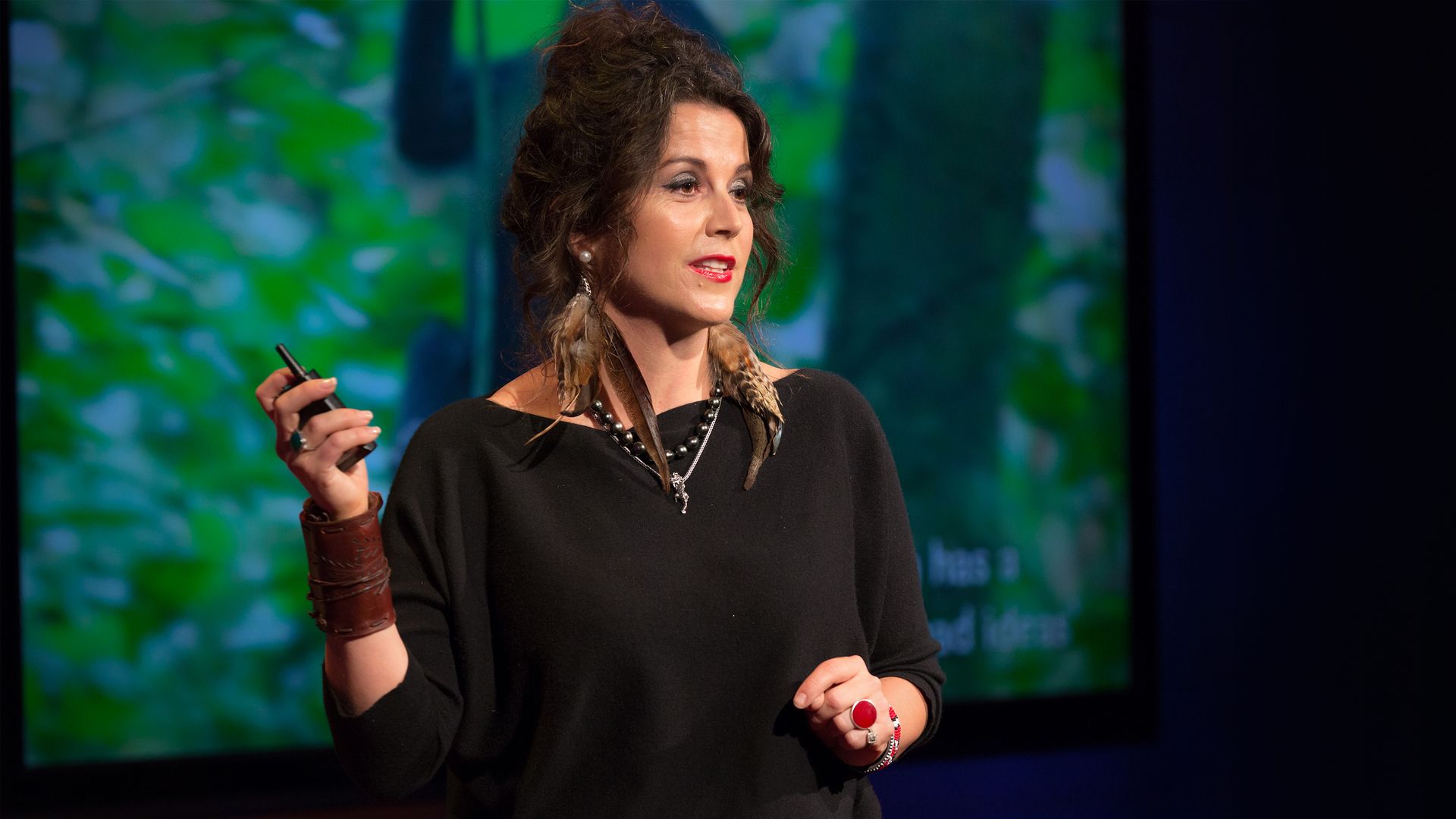
Does nature have a sense of humor?

A scientist walks into a bar...and notices the parallels between improv comedy and evolution. Originally from Chile, Isabel Behncke is an Oxford field primatologist who studies bonobos and traces the roots of social behavior in humans and other primates. After attending a course in improvisational theater, she started to realize that nature's natural evolutionary process amounts to a kind of riffing on ideas.

2019

TED Talk

United States
Primatologist // A Chilean primatologist who studies play behavior among bonobos in the Democratic Republic of the Congo // Scientist, MPhil Cambridge, PhD Oxford. Ethology of human apes & other social animals. I explore & integrate, bonobos laugh. Gruter & TED Fellow. Chile’s Presidential advisor on strategy for science, innovation, technology and knowledge. Love nature & culture, wildness & arts. Based in NYC & Chile. Instagram: isabel_behncke —— Long bio: What makes us human? What does it really mean to be a social animal? And how can these Q’s help humans live win-win with the rest of nature? Knowing our past help us situate our present - & co-create our future. Looking at other animals help us understand ourselves - & our place in the web of life. I am an explorer ethologist by training and essence. I like going to the field, & attempting to look at life at the eye - with my own eyes. To be a story-watcher, to let the complexity of life unfold. I ask questions, travel, observe, think, integrate, & then tell people what I found. I go there, and back. Voy, y vuelvo. I am from Chile, where I learnt to love mountains, exploration & wild things. I was educated in the UK (Oxford, Cambridge & University College London) in behaviour, evolution & ecology. In deep time, complexity, living systems. And a hearty side of British influences, from the Lunar Society to Monty Python & Eddie Izzard. I started working in rainforest conservation in Northern Patagonia. Frustration with our failure to look after nature made me want to understand human nature better - & go back to origins. I then trained as a field primatologist working on the evolutionary roots of social behavior in humans & other animals. Field research led me to walk 3,000+ km in the steamy jungles of Congo observing the social behavior of wild bonobo apes - our closest living relatives. For my PhD I did the first comprehensive study of adult play of bonobos in the wild. The research site was Japanese-directed Wamba, DRC, longest running bonobo site in the world. Chronic bloodshed in Congo meant that at the time I was the first western person to do research there in more than 20 years. Paradox happens to me a lot. Like going into the Heart of Darkness to study play. Or studying matriarchal & most peaceful of great apes -they don't tend to die at the hands of their conspecifics- in a country torn by sexual violence & war. Soon after Congo went to Burning Man & realised it was also adult play of apes in the wild. Instead of jungle, it was desert. Instead of knuckle-walking hairy apes, there were biped naked apes. I continue going every year; collective phenomena make great primatology field-sites. I cannot undo seeing us as social animals. We are embedded in societies & in nature. In my research I saw that play behaviour is like our 'Adaptive Joker' - an ancient wildcard which changes value according to context. It might hold the key to our capacity to adapt to a changing world. The biology of fun is serious business. I apply an evolutionary & complex systems lens to try derive insights onto human behaviour & the modern challenges we face. I ask questions such as why we go to festivals, how can we design rituals for modern life, why trust requires risk-taking, & crucially why is it that the more digital we get, the more understanding of nature (& human nature) we need. Basically I use the Origin of Species to think about the Future of Species. I am currently working on my first book, which is science (human evolution, ethology & primatology) told through adventure travel (field diaries written while in Congo jungle) & sprinkled with classic rock references. Would love to hit notes in an ancient fireside non-fiction storytelling, but with the Rolling Stones, Latin poetic-realism & Darwin as part of the hearth. I enjoy public engagement in different forms (e.g. TED, WIRED, UN, G20, BBC, Nat Geo), concerning questions of how humans & other animals create, connect, play & adapt. Sometimes I curate & co-host 'intellectual safaris' (expeditions of intellectual & geographic exploration) academic conferences & ideas festivals. I like collaborating with thinkers, doers, artists, scientists, explorers. I lived 15 years in the UK (including 3 years of fieldwork in Congo). Now I'm based in NYC & Chile. Night owl, animal person, occasional flaneuse. No allergies. I love reality and the complexity of the world, and think we would be better off embracing it rather than trying to reduce it. I think context, interactions, & trade-offs. Exploration-then-integration is my favored methodology. I am an Associate Professor at the Research Centre for Social Complexity (CICS) in UDD, Santiago Chile, & Fellow of the Bay area based Gruter Institute for research on human behavior & institutions. I’m advising government in my home country. I’m Presidential advisor for Chile’s long term strategy in science, technology, innovation & knowledge. BSc Zoology (UCL), MSc Wildlife Conservation (UCL), MPhil Human Evolution (Cambridge), DPhil Evolutionary Anthropology (Oxford). Gruter & TED Fellow. // With never-before-seen video, primatologist Isabel Behncke Izquierdo (a TED Fellow) shows how bonobo ape society learns from constantly playing -- solo, with friends, even as a prelude to sex. Indeed, play appears to be the bonobos' key to problem-solving and avoiding conflict. If it works for our close cousins, why not for us? // Scientist, MPhil Cambridge, PhD Oxford. Ethology of human apes & other social animals. I explore & integrate, bonobos laugh. Gruter & TED Fellow. Chile’s Presidential advisor on strategy for science, innovation, technology and knowledge. Love nature & culture, wildness & arts. Based in NYC & Chile. Instagram: isabel_behncke —— Long bio: What makes us human? What does it really mean to be a social animal? And how can these Q’s help humans live win-win with the rest of nature? Knowing our past help us situate our present - & co-create our future. Looking at other animals help us understand ourselves - & our place in the web of life. I am an explorer ethologist by training and essence. I like going to the field, & attempting to look at life at the eye - with my own eyes. To be a story-watcher, to let the complexity of life unfold. I ask questions, travel, observe, think, integrate, & then tell people what I found. I go there, and back. Voy, y vuelvo. I am from Chile, where I learnt to love mountains, exploration & wild things. I was educated in the UK (Oxford, Cambridge & University College London) in behaviour, evolution & ecology. In deep time, complexity, living systems. And a hearty side of British influences, from the Lunar Society to Monty Python & Eddie Izzard. I started working in rainforest conservation in Northern Patagonia. Frustration with our failure to look after nature made me want to understand human nature better - & go back to origins. I then trained as a field primatologist working on the evolutionary roots of social behavior in humans & other animals. Field research led me to walk 3,000+ km in the steamy jungles of Congo observing the social behavior of wild bonobo apes - our closest living relatives. For my PhD I did the first comprehensive study of adult play of bonobos in the wild. The research site was Japanese-directed Wamba, DRC, longest running bonobo site in the world. Chronic bloodshed in Congo meant that at the time I was the first western person to do research there in more than 20 years. Paradox happens to me a lot. Like going into the Heart of Darkness to study play. Or studying matriarchal & most peaceful of great apes -they don't tend to die at the hands of their conspecifics- in a country torn by sexual violence & war. Soon after Congo went to Burning Man & realised it was also adult play of apes in the wild. Instead of jungle, it was desert. Instead of knuckle-walking hairy apes, there were biped naked apes. I continue going every year; collective phenomena make great primatology field-sites. I cannot undo seeing us as social animals. We are embedded in societies & in nature. In my research I saw that play behaviour is like our 'Adaptive Joker' - an ancient wildcard which changes value according to context. It might hold the key to our capacity to adapt to a changing world. The biology of fun is serious business. I apply an evolutionary & complex systems lens to try derive insights onto human behaviour & the modern challenges we face. I ask questions such as why we go to festivals, how can we design rituals for modern life, why trust requires risk-taking, & crucially why is it that the more digital we get, the more understanding of nature (& human nature) we need. Basically I use the Origin of Species to think about the Future of Species. I am currently working on my first book, which is science (human evolution, ethology & primatology) told through adventure travel (field diaries written while in Congo jungle) & sprinkled with classic rock references. Would love to hit notes in an ancient fireside non-fiction storytelling, but with the Rolling Stones, Latin poetic-realism & Darwin as part of the hearth. I enjoy public engagement in different forms (e.g. TED, WIRED, UN, G20, BBC, Nat Geo), concerning questions of how humans & other animals create, connect, play & adapt. Sometimes I curate & co-host 'intellectual safaris' (expeditions of intellectual & geographic exploration) academic conferences & ideas festivals. I like collaborating with thinkers, doers, artists, scientists, explorers. I lived 15 years in the UK (including 3 years of fieldwork in Congo). Now I'm based in NYC & Chile. Night owl, animal person, occasional flaneuse. No allergies. I love reality and the complexity of the world, and think we would be better off embracing it rather than trying to reduce it. I think context, interactions, & trade-offs. Exploration-then-integration is my favored methodology. I am an Associate Professor at the Research Centre for Social Complexity (CICS) in UDD, Santiago Chile, & Fellow of the Bay area based Gruter Institute for research on human behavior & institutions. I’m advising government in my home country. I’m Presidential advisor for Chile’s long term strategy in science, technology, innovation & knowledge. BSc Zoology (UCL), MSc Wildlife Conservation (UCL), MPhil Human Evolution (Cambridge), DPhil Evolutionary Anthropology (Oxford). Gruter & TED Fellow. // Primatologist // technology, violence, desert, led, play, social bonding, job skills training, research, design, species, wildlife protection, war, great apes, wildlife, social animals, human evolution, exploration as learning, rainforest protection, adaptive capacity, bonobos, nature, science, rainforest, creativity, government, primatology, ecology, mountains // New York|United States|New York City|Santiago|Chile
New York|United States|New York City|Santiago|Chile

Isabel Behncke

No items found.
2019

10:35

Why I keep speaking up, even when people mock my accent

Artist Safwat Saleem grew up with a stutter -- but as an independent animator, he decided to do his own voiceovers to give life to his characters. When YouTube commenters started mocking his Pakistani accent, it crushed him, and his voice began to leave his work. Hear how this TED Fellow reclaimed his voice and confidence in this charming, thoughtful talk.

2016

TED Talk

United States
Safwat Saleem is a multidisciplinary artist focusing on immigrant narratives and cultural loss from assimilation. His work explores themes of preservation, belonging, resistance, and joy as an immigrant father. Using humor and satire, he challenges perceptions and aims to highlight obscured viewpoints historically. Safwat's practice includes graphic design, illustration, writing, film, and sound, showcased at various prestigious venues. He has received recognition for his work and believes in using art for social impact, collaborating with non-profit organizations. Safwat Saleem resides and works in Phoenix, Arizona. // Through my art practice, I'm giving visibility to immigrant narratives, particularly focusing on the cultural loss from assimilation. My art works create narrative experiences that bring to the foreground points of view that have been obscured historically by hegemonic power. // Safwat Saleem is a multidisciplinary artist based in Phoenix, Arizona, whose work centers on immigrant narratives and cultural loss resulting from assimilation. Through mediums such as graphic design, illustration, writing, film, and sound, Saleem explores themes of preservation, belonging, resistance, and joy as an immigrant father. His art challenges perceptions and aims to amplify marginalized viewpoints, often using humor and satire to engage audiences. Saleem has showcased his work at prestigious venues and received recognition for his impactful contributions. He is committed to using art as a tool for social change and frequently collaborates with non-profit organizations to address pressing issues within immigrant communities. // Graphic designer + satirist // Safwat Saleem is a graphic designer, artist and filmmaker. By day, he is a creative director at Arizona State University, one of the largest public universities in the US. By night, he makes mostly satirical artwork.<br><br> His previous work includes a silly <a target="_new" href="http://safwatsaleem.com/And-Everything-Was-Alright">short film about a day in the life of a lonely bear</a> and an angry <a target="_new" href="http://safwatsaleem.com/A-Bunch-of-Crock">political exhibit</a> that no one liked. In a past life, he founded an online music magazine called Bandbaja that focused on Pakistani music as a socio-political tool. <br><br> Safwat resides in Phoenix, AZ with his wife (and a step-dog named James). He works with a number of clients to make their creative projects a success. // I am a visual artist and graphic designer. Having spent my life as a professional immigrant, my art focuses on the idea of belonging. I work in a variety of media including illustration, writing, animation, audio, video and sculpture. I often combine several media to create multimedia storytelling experiences. In a past life, I was also the founder of Bandbaja, a Pakistani music magazine that promoted the use of modern popular music as a socio-political tool. I have a penchant for doing voiceovers in my videos for all kinds of silly characters like a bear, sheep, greeting card and a whale to name a few. I am a TED Senior Fellow and spend all my free time listening to podcasts. // Artist Safwat Saleem grew up with a stutter -- but as an independent animator, he decided to do his own voiceovers to give life to his characters. When YouTube commenters started mocking his Pakistani accent, it crushed him, and his voice began to leave his work. Hear how this TED Fellow reclaimed his voice and confidence in this charming, thoughtful talk. // Safwat Saleem is a multidisciplinary artist based in Phoenix, Arizona, whose work centers on immigrant narratives and cultural loss resulting from assimilation. Through mediums such as graphic design, illustration, writing, film, and sound, Saleem explores themes of preservation, belonging, resistance, and joy as an immigrant father. His art challenges perceptions and aims to amplify marginalized viewpoints, often using humor and satire to engage audiences. Saleem has showcased his work at prestigious venues and received recognition for his impactful contributions. He is committed to using art as a tool for social change and frequently collaborates with non-profit organizations to address pressing issues within immigrant communities. // Graphic designer + satirist // multidisciplinary art, graphic design, video, design, illustration, immigration, picture books, storytelling, audio, art // Phoenix|USA|Sialkot|Arizona|United States|Pakistan
Phoenix|USA|Sialkot|Arizona|United States|Pakistan

Safwat Saleem

No items found.
2016

04:30

A lens on Georgia's survival in the shadow of a superpower

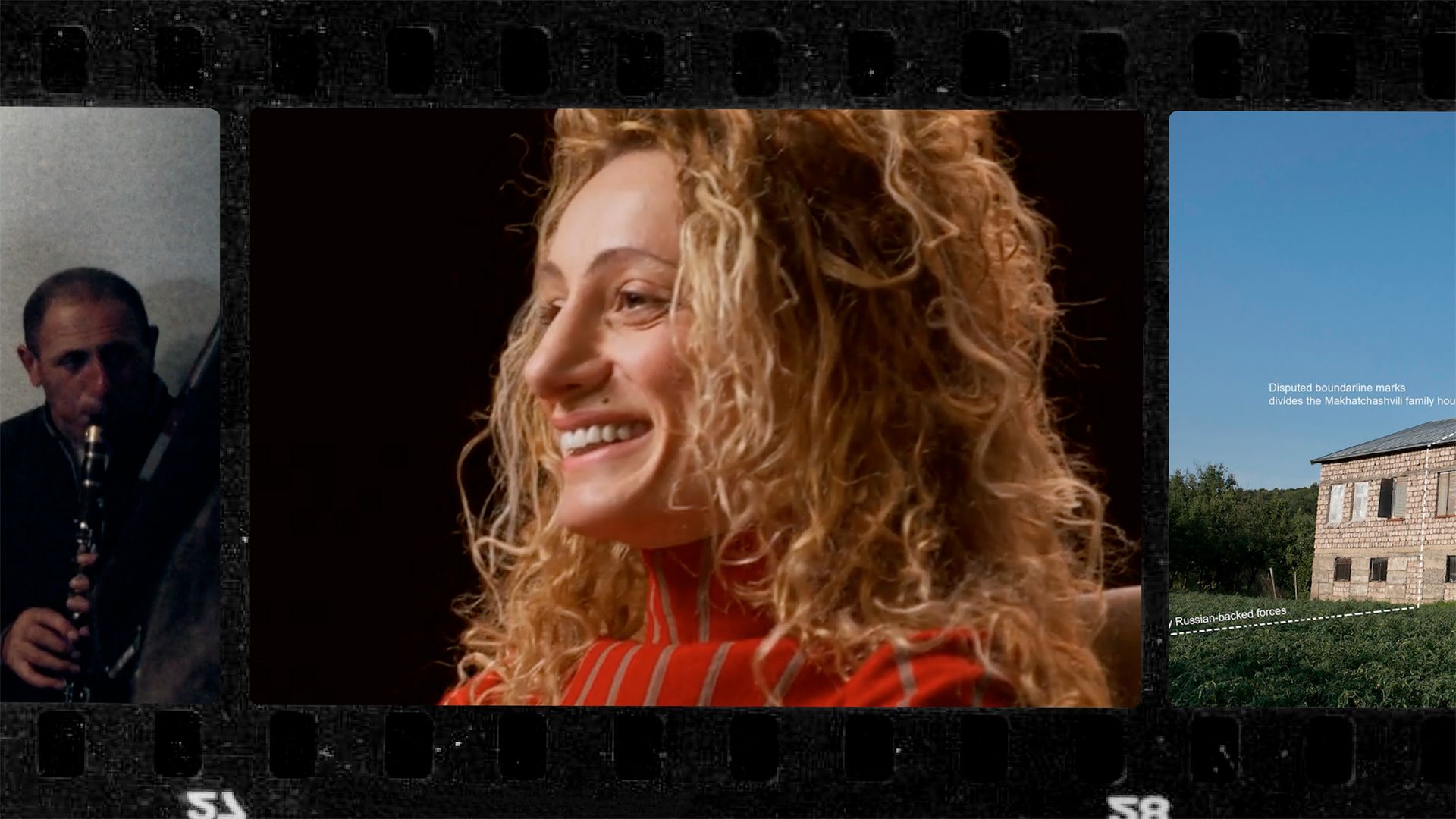
"Georgia is not heard or seen in the world, and many don't even know the location of the country," says TED Fellow and photographer Daro Sulakauri. Through her striking photographs of life in the shadows of Russian occupation, she uses her camera to create a living archive of her home country and defend against the erasure of its borders, culture and history.

2024

TED Fellows Film

Georgia
The organization focuses on documenting and shedding light on various social issues and conflicts in Georgia. They cover topics such as the lives of Chechen refugees in the Pankisi Gorge region, the impact of the pandemic on individuals and families, the plight of disabled children in remote regions, the dark history of black market baby trade, harsh working conditions in the Chiatura City mines, early marriages in Georgia, civil unrest in Kiev, the ethnic tensions in Samtskhe Javakheti, and the challenges faced by those living near the occupied borderlines of breakaway regions. Through photography and storytelling, the organization aims to raise awareness and give a voice to those affected by these issues. // Georgian photojournalist Daro Sulakauri, supported by CatchLight, has launched Shifting Borders, an interactive map and visual archive showcasing the lives of Georgian locals near the Russian occupation border. Through her work, Sulakauri captures the daily struggles and uncertainties faced by these communities, offering a glimpse into the impact of the ongoing conflict. Her storytelling delves into the experiences of individuals like Nina and Tengo, highlighting the challenges and dangers they encounter living near the border. Sulakauri's project sheds light on the complexities of the situation, illustrating the human stories behind geopolitical tensions in the region. // My on-going mission is to explore the limits of the camera, to constantly strive for new solutions and ultimately to create images that inspire, provoke thought, evoke emotions. I believe the result of my work can change something in people’s lives; change society's attitude and guide citizens on a path toward a better way. Using mixed media, I dedicate my work to coverage of a variety of social issues in the South Caucasus region. // Georgian photojournalist Daro Sulakauri is dedicated to documenting social issues and conflicts in Georgia, particularly focusing on the lives of marginalized communities near the Russian occupation border. Through her project "Shifting Borders," supported by CatchLight, Sulakauri creates an interactive map and visual archive that illuminates the daily struggles and uncertainties faced by locals in these regions. Her work captures the human stories behind geopolitical tensions, offering a poignant glimpse into the impact of ongoing conflicts on individuals like Nina and Tengo. Sulakauri's storytelling through photography aims to raise awareness, provoke thought, and evoke emotions, ultimately striving to inspire positive societal change in the South Caucasus region. // Photojournalist // Georgian photojournalist Daro Sulakauri is dedicated to documenting social issues and conflicts in Georgia, particularly focusing on the lives of marginalized communities near the Russian occupation border. Through her project "Shifting Borders," supported by CatchLight, Sulakauri creates an interactive map and visual archive that illuminates the daily struggles and uncertainties faced by locals in these regions. Her work captures the human stories behind geopolitical tensions, offering a poignant glimpse into the impact of ongoing conflicts on individuals like Nina and Tengo. Sulakauri's storytelling through photography aims to raise awareness, provoke thought, and evoke emotions, ultimately striving to inspire positive societal change in the South Caucasus region. // Photojournalist // children, visual art., photojournalism, refugees, unrest, conflicts and war, migration, advocacy campaigns, advocacy, documenting occupation, war, pandemic, investigative journalism, campaigns, conflict photography, mining // Georgia|Tbilisi
Georgia|Tbilisi

Daro Sulakauri

No items found.
2024

The most Martian place on Earth | Armando Azua-Bustos

How can you study Mars without a spaceship? Head to the most Martian place on Earth -- the Atacama Desert in Chile. Astrobiologist Armando Azua-Bustos grew up in this vast, arid landscape and now studies the rare life forms that have adapted to survive there, some in areas with no reported rainfall for the past 400 years. Explore the possibility of finding life elsewhere in the universe without leaving the planet with this quick, funny talk.

2017

Podcasts

Spain
Astrobiologist // TED Fellow 2017. Global Viral Visiting Scientist. Research Scientist at the Center of Astrobiology in Madrid in Spain. Working with NASA to send a greenhouse to the Moon and Mars. Will attempt the first genetic engineering of plants in space. Former Scientific Advisor of the Chilean Senate. Former Director of the Department of Astrobiology of the AngelicvM Institute of Space Research. // How can you study Mars without a spaceship? Head to the most Martian place on Earth -- the Atacama Desert in Chile. Astrobiologist Armando Azua-Bustos grew up in this vast, arid landscape and now studies the rare life forms that have adapted to survive there, some in areas with no reported rainfall for the past 400 years. Explore the possibility of finding life elsewhere in the universe without leaving the planet with this quick, funny talk. // TED Fellow 2017. Global Viral Visiting Scientist. Research Scientist at the Center of Astrobiology in Madrid in Spain. Working with NASA to send a greenhouse to the Moon and Mars. Will attempt the first genetic engineering of plants in space. Former Scientific Advisor of the Chilean Senate. Former Director of the Department of Astrobiology of the AngelicvM Institute of Space Research. // Astrobiologist // research, precipitation, desert, plants, greenhouse // Community of Madrid|Torrejón de Ardoz|Spain
Community of Madrid|Torrejón de Ardoz|Spain

Armando Azua-Bustos

No items found.
2017

07:06

The powerful women on the front lines of climate action

When it comes to big problems like climate change, we tend to focus on big solutions -- but many of the best ideas come from people on the ground, facing day-to-day conservation battles. Sharing her effort to protect the Leseur ecosystem in Indonesia (the last place on Earth where the Sumatran rhino, tiger, elephant and orangutan still roam together in the wild), TED Fellow and conservationist Farwiza Farhan explains the challenges women face on the front lines of forest preservation within patriarchal societies -- and the resilient, world-changing power they hold.

2021

TED Talk

Indonesia
University of Amsterdam; University Sains Malaysia; Universiti Sains Malaysia; The University of Queensland; Madania Boarding School; Radboud University Nijmegen
Farwiza Farhan is a forest conservationist dedicated to protecting, conserving, and restoring the Leuser ecosystem in Sumatra, Indonesia. She emphasizes the importance of inclusive conservation efforts involving various stakeholders, from Indigenous communities to policymakers and NGOs. Farhan serves as the chairperson of the Forest, Nature and Environment Aceh Foundation, focusing on policy, advocacy, and promoting women's and local communities' involvement in environmental decision-making. Currently pursuing a Ph.D., her research focuses on the political economy of natural resource management in Aceh, particularly the Leuser ecosystem. Farhan was honored with the 2022 National Geographic Wayfinder Award for her contributions to conservation. // Forest, Nature & Environment Aceh (HAkA) is an Acehnese NGO led by environmental activist Farwiza Farhan, focusing on protecting the Leuser Ecosystem in Sumatra, Indonesia. The organization emphasizes ground-level species protection and legal advocacy, collaborating with communities to advocate for law enforcement against illegal activities and empowering locals in policymaking. HAkA's vision is the long-term health of Aceh Province socially, financially, and environmentally, achieved through campaigns, lawsuits, collaboration with the government, education initiatives, and more. The organization aims to create a stronger and healthier Aceh by enhancing environmental function and promoting sustainable development. Skills necessary for impactful environmental justice campaigns include listening, collaboration, finding common ground, and dialogue to achieve shared goals. // Farwiza is the chairperson of Forest, Nature and Environment Aceh Foundation (Yayasan HAkA), a grassroots organisation based in Aceh, Sumatra, Indonesia that focus on the conservation, protection and restoration of the Leuser Ecosystem. She mainly work on the policy and advocacy aspects, seeking to increase meaningful access and involvement of local community in the development of policy pertaining to their environment and livelihood. In addition to passionately working to tackle the herculean task of creating permanent conservation status for the Leuser Ecosystem, Farwiza is also mad enough to enrol in a PhD program in the Faculty of Anthropology and Development studies in Radboud University Nijmegen. Her research seek to bring light on the political economy of natural resource management in Aceh, Indonesia, with particular spotlight on (of course) the Leuser Ecosystem. A place so close to her heart. // University of Amsterdam; University Sains Malaysia; Universiti Sains Malaysia; The University of Queensland; Madania Boarding School; Radboud University Nijmegen // Farwiza Farhan is a dedicated environmental advocate and chairperson of the Forest, Nature and Environment Aceh Foundation (Yayasan HAkA) in Aceh, Sumatra, Indonesia. Her work primarily focuses on policy and advocacy efforts aimed at conserving, protecting, and restoring the Leuser Ecosystem. Farwiza is committed to ensuring meaningful community engagement in environmental policy development to safeguard both the ecosystem and local livelihoods. Alongside her grassroots conservation work, she is pursuing a Ph.D. in Anthropology and Development Studies at Radboud University Nijmegen, with a research focus on the political economy of natural resource management in Aceh, particularly within the Leuser Ecosystem. Her passion for environmental conservation and community empowerment drives her multifaceted efforts in academia and on-the-ground conservation initiatives. // Working to conserve, protect and restore the Leuser Ecosystem in Indonesia, but I am also trying to make conservation become more inclusive. The question that drive my work is how to create space for women and other minorities to have voice and meaningful participation. // Farwiza Farhan is an environmental advocate and forest conservationist known for her dedicated work in protecting the Leuser Ecosystem in Sumatra, Indonesia. As the chairperson of the Forest, Nature and Environment Aceh Foundation (HAkA), she leads policy and advocacy efforts to promote inclusive conservation involving Indigenous communities, policymakers, and NGOs. Farhan's commitment to community engagement in environmental decision-making is evident in her initiatives to empower local stakeholders and promote women's involvement in conservation efforts. Currently pursuing a Ph.D., her research focuses on the political economy of natural resource management in Aceh, with a specific emphasis on the Leuser ecosystem. Farhan's passion for environmental conservation and her inclusive approach to conservation efforts have earned her recognition, including the 2022 National Geographic Wayfinder Award. // forest conservationist // Farwiza is an award-winning forest conservationist with a mission to protect, conserve, and restore the Leuser Ecosystem in Sumatra, the last place on earth where the critically endangered sumatran rhino, elephant, tiger and orangutan still roam together in the wild. Her conservation work put emphasis in strenghtening the role of communities in forest protection, as well as advocating for better policy to protect the Leuser Ecosystem. She is 2023 TIME Impact Award recipient, TIME100next 2022, National Geographic Wayfinder Award Winner, 2022 Mulago Fellow, and 2021 TED Fellow. Farwiza is looking to scale up her work in the landscape, and seeking mentorships, partnerships and collaboration opportunity in the space of climate and biodiversity financing - finding ways to make conservation an economically sensible choice for grassroots communities. // When it comes to big problems like climate change, we tend to focus on big solutions -- but many of the best ideas come from people on the ground, facing day-to-day conservation battles. Sharing her effort to protect the Leseur ecosystem in Indonesia (the last place on Earth where the Sumatran rhino, tiger, elephant and orangutan still roam together in the wild), TED Fellow and conservationist Farwiza Farhan explains the challenges women face on the front lines of forest preservation within patriarchal societies -- and the resilient, world-changing power they hold. // Farwiza Farhan is an environmental advocate and forest conservationist known for her dedicated work in protecting the Leuser Ecosystem in Sumatra, Indonesia. As the chairperson of the Forest, Nature and Environment Aceh Foundation (HAkA), she leads policy and advocacy efforts to promote inclusive conservation involving Indigenous communities, policymakers, and NGOs. Farhan's commitment to community engagement in environmental decision-making is evident in her initiatives to empower local stakeholders and promote women's involvement in conservation efforts. Currently pursuing a Ph.D., her research focuses on the political economy of natural resource management in Aceh, with a specific emphasis on the Leuser ecosystem. Farhan's passion for environmental conservation and her inclusive approach to conservation efforts have earned her recognition, including the 2022 National Geographic Wayfinder Award. // forest conservationist // forest protection, minorities, planetary health, grassroots, policymakers, forest, education, biodiversity, led, finance, research, inclusion, resilience, activism, climate, sustainable development , campaign, environmental justice, policy, natural resources, scuba instructor, public policy and advocacy, species, resource management, orangutans, forest conservation, livelihoods, women, public policy, elephant, advocacy, natural resource management, campaigns, conservation, litigation, nature, indigenous, environmental conservation, law, restoration, tiger, government, justice, ecology, endangered species // Indonesia|Jakarta|Banda Aceh|Aceh
Indonesia|Jakarta|Banda Aceh|Aceh

Farwiza Farhan

No items found.
2021

12:44

Why Upgrading Food Distribution Models is Non-Negotiable

Dion Dawson rethinks nutritional philanthropy and the ecosystem of food distribution, shifting emphasis from donor-focused to recipient-focused models. His ideas could change the model of food aid in the U.S. including how hundreds of thousands of people give and receive food, thus going much further than feeding the hungry to build community and transform lives.

2022

TED Talk

United States

Dion Dawson

No items found.
2022

Africa's path to clean mobility -- driven by motorcycles | Adetayo Bamiduro

A lack of infrastructure in parts of Africa has made unregulated, gas-powered motorcycle taxis widespread -- a system that gets people where they need to be, but heavily pollutes the air and excludes drivers from the formal economy. TED Fellow and entrepreneur Adetayo Bamiduro offers his vision for a cleaner, more equitable future, where an electric motorcycle service helps green Africa's transportation and transform the lives and livelihoods of drivers. Hosted on Acast. See acast.com/privacy for more information.

2023

Podcasts

Nigeria
Motorcycle financing entrepreneur // Adetayo is a motorcycle financing entrepreneur and Cofounder of MAX, a mobility platform which provides Africans access to clean vehicles and is improving on the current gig economy model. // A lack of infrastructure in parts of Africa has made unregulated, gas-powered motorcycle taxis widespread -- a system that gets people where they need to be, but heavily pollutes the air and excludes drivers from the formal economy. TED Fellow and entrepreneur Adetayo Bamiduro offers his vision for a cleaner, more equitable future, where an electric motorcycle service helps green Africa's transportation and transform the lives and livelihoods of drivers. // Adetayo is a motorcycle financing entrepreneur and Cofounder of MAX, a mobility platform which provides Africans access to clean vehicles and is improving on the current gig economy model. // Motorcycle financing entrepreneur // infrastructure, ecommerce, entrepreneurship, equity, finance, electric, mobility, motorcycle, fundraising, livelihoods, electric vehicle, electric motorcycle, venture scaling, venture building, vehicles, cars, electric vehicles, clean cars, transportation // Lagos|Nigeria
Lagos|Nigeria

Adetayo Bamiduro

No items found.
2023

A new way to fund health care for the most vulnerable | Andrew Bastawrous

In 2011, eye surgeon Andrew Bastawrous developed a smartphone app that brings quality eye care to remote communities, helping people avoid losing their sight to curable or preventable conditions. Along the way, he noticed a problem: strict funding regulations meant that he could only operate on people with specific diseases, leaving many others without resources for treatment. In this passionate talk, Bastawrous calls for a new health care funding model that's flexible and ambitious -- to deliver better health to everyone, whatever their needs are.

2018

Podcasts

United Kingdom
London School of Hygiene and Tropical Medicine, U. of London; Peek Vision; World Economic Forum; St Peter's, York; Harvard University; John Radcliffe Hospital, Oxford; TED Conferences; University of Leeds; UBS; Ashoka
Peek Vision is an organization that provides software and tools to implement, optimize, and evaluate eye health services in various settings such as schools, communities, and workplaces. Their software and data intelligence platform aim to make eye health services more efficient, effective, and equitable. By partnering with governments and NGOs, Peek helps strengthen health systems and connect more people to better vision. Their technology optimizes eye health services, leading to greater screening coverage, increased attendance at follow-up appointments, and lower costs per person served. Peek's partnership with organizations has enabled them to bring eye care to millions more people across multiple countries. Their software revolutionizes school eye health screening by providing a user-friendly and effective tool for screening large populations without the need for specialist eye health workers. Peek's impact is evident in the increased access to eye care, improved referral pathways, and the ability to track patients efficiently. Through their work, hundreds of thousands more people have been able to unlock their potential through better vision. Their tools are developed using rigorous scientific methods and are backed by numerous peer-reviewed research studies. Peek's commitment to improving vision and eye health is recognized through various awards and partnerships with leading eye health organizations. // The Vision Catalyst Fund (VCF) is a global organization focused on improving access to eye health services, particularly in lower and middle-income countries. The VCF collaborates with various partners and government agencies to address vision issues, such as presbyopia, by providing essential vision care services and distributing reading glasses. Through innovative approaches and partnerships, the VCF aims to reach vulnerable communities and make a significant impact on people's lives, including their health, education, safety, and livelihoods. The organization is committed to funding catalytic programs, raising capital for eye health, and promoting collaboration among NGOs, the private sector, and government entities to create sustainable and equitable eye health programs. Additionally, the VCF works on scaling sources of alternative finance and integrating eye health with other issue areas like education and employment. Through its initiatives and partnerships, the VCF strives to ensure that everyone in need has access to vision care, ultimately illuminating the path to clear vision for communities worldwide. // Working at the London School of Hygiene and Tropical Medicine and undertaking a PhD.PhD project is based in Kenya performing a population based epidemiological study of eye diseases (Cohort Study) to assist in planning health services. Co-founder of Peek Vision - www.peekvision.orgA low-cost smartphone solution for delivering eye care // http://www.ted.com/pages/fellows_TED2014 // London School of Hygiene and Tropical Medicine, U. of London; Peek Vision; World Economic Forum; St Peter's, York; Harvard University; John Radcliffe Hospital, Oxford; TED Conferences; University of Leeds; UBS; Ashoka // Andrew Bastawrous is a dedicated professional with a focus on public health and epidemiology. With a background in eye diseases and health services planning, he has contributed significantly to the field through his work at the London School of Hygiene and Tropical Medicine. Andrew is also known for his role as a co-founder of Peek Vision, a project aimed at providing affordable eye care solutions using smartphone technology. His commitment to improving healthcare access and outcomes is evident in his various endeavors and research projects. // More than 1 billion people live with poor vision. Holding back individuals, communities and countries. Evidence demonstrates that improved vision leads to better educational outcomes, increased productivity and livelihoods, safer roads and enhanced wellbeing and quality of life. Despite simple solutions, the vast majority of these people will not get the pair of glasses or 5 minute cataract operation that would return their sight. This is an unacceptable tragedy. Worse still, trend data shows that despite current efforts, the number of people living with treatable vision loss is increasing and is expected to reach 1.8 billion people by 2050. Our dream and work is to reverse this alarming trend with a proven, technology-driven approach. // Andrew Bastawrous is a dedicated public health professional and epidemiologist with a specialization in eye diseases and health services planning. His significant contributions to the field include his work at the London School of Hygiene and Tropical Medicine. As a co-founder of Peek Vision, Andrew focuses on providing affordable eye care solutions through smartphone technology, aiming to improve healthcare access and outcomes. His commitment to addressing the global issue of poor vision is evident in his research projects and initiatives. Through his work, Andrew strives to reverse the increasing trend of treatable vision loss and ensure that individuals, communities, and countries have access to the eye care they need for improved educational outcomes, productivity, safety, and overall quality of life. // SOCIAL ENTREPRENEUR & EYE SURGEON // Kenya-based ophthalmologist who co-founded Peek, a low-cost smartphone ophthalmic tool that delivers eye care in some of the world's most challenging places, to those who need it most. Andrew is an ophthalmologist and research fellow in international eye health at the International Centre for Eye Health. Andrew has worked in Sierra Leone, Peru, Belize, Sri Lanka, Madagascar and Uganda and is currently based in Kenya working on the collaborative development and testing of Peek. In 2011, Andrew was awarded a Medical Research Council (MRC) and Fight for Sight Fellowship to undertake the first longitudinal population-based study (follow-up study) of eye disease in Africa and the challenges he faced inspired the idea of a smartphone based ophthalmic tool. He has published over 25 peer-reviewed articles focusing on international eye health and mobile technology in healthcare and has co-authored four book chapters. Andrew was awarded the MRC Max Perutz Science writing Award in 2012 and is currently a TED Fellow. // Professor Andrew Bastawrous is Founder & CEO of Peek Vision Ltd and The Peek Vision Foundation. The company is a social enterprise which develops smartphone technology and public health tools to help eye health organisations increase their impact. He is an Ophthalmologist (Eye Surgeon), and Professor in Global Eye Health at the London School of Hygiene & Tropical Medicine where he teaches on public health for eye health and leads a research portfolio. Andrew has worked and undertaken research in over twenty countries including two years living in Kenya where he was leading a major eye disease study and the development and testing of Peek. He has published over 80 peer-reviewed articles focusing on public health and mobile technology in healthcare and has co-authored four book chapters. Andrew was made a TED Fellow in 2014 and has given two TED talks which have together been viewed over 2.5 million times. Peek's end-to-end services (Peek Solutions) are being used to transform eye health in low- and middle-income countries including Zimbabwe, Kenya, Uganda, Tanzania, Ghana, Botswana, South Africa, Ethiopia, Pakistan, India and Nepal with new programmes in development. Currently nearly 50 active programmes are using Peek across 12 countries reaching over 1/4 million people each month. Peek’s vision check app, Peek Acuity, launched on Google Play store in 2016 and is a Class I medical device, which has been used in over 190 countries. The work of Andrew and the Peek team has been recognised with generous awards including the Mazda Rebels with a Cause Prize in partnership with TED, the Gifted Citizen 2014 Award, the Index Design Award, and the Rolex Awards for Enterprise. Peek was voted “best social-impact start-up in Europe” by Google and McKinsey in 2016. All prize money has been re-invested in Peek. Andrew has been listed as one of the world’s 30 most influential people in public health, was selected as a “Young Global Leader” by the World Economic Forum, and is listed as an “Eye Health Leader” by the International Agency for the Prevention of Blindness. In 2016 he received the Clearly Vision Life Time Achievement Award and was made a Rolex Laureate. In 2018 Andrew was made an Ashoka Fellow and UBS Global Visionary and in 2019 he was declared a “Champion of Change” in The Ophthalmologist magazine’s 2019 Power List. In 2018, Andrew was invited to address the Commonwealth Service in the presence of the British Royal Family, Prime Minister, and a global live TV and radio audience. In his address, Andrew highlighted the transformative effects of regaining lost vision, and the importance of international collaboration in ending avoidable blindness and vision loss worldwide. As part of Peek’s mission to bring vision and health to everyone, Andrew is working with major banks, eye health organisations and funders to develop innovative financing models for eye health, the subject of his 2018 TED Talk. In addition to his work as CEO of Peek, Andrew has worked with astrophysicists to crowdsource retinal data, with National Geographic explorers to reach isolated communities, and with artists and activists to advocate for eye care globally (Project Light). Together with his wife Madeleine, he is establishing a social enterprise micro-bakery model in Kenya that provides employment and healthy food opportunities for the mass market. // In 2011, eye surgeon and TED Fellow Andrew Bastawrous developed a smartphone app that brings quality eye care to remote communities, helping people avoid losing their sight to curable or preventable conditions. Along the way, he noticed a problem: strict funding regulations meant that he could only operate on people with specific diseases, leaving many others without resources for treatment. In this passionate talk, Bastawrous calls for a new health care funding model that's flexible and ambitious -- to deliver better health to everyone, whatever their needs are. // Thirty-nine million people in the world are blind, and the majority lost their sight due to curable and preventable diseases. But how do you test and treat people who live in remote areas, where expensive, bulky eye equipment is hard to come by? TED Fellow Andrew Bastawrous demos a smartphone app and cheap hardware that might help. // Andrew Bastawrous is a dedicated public health professional and epidemiologist with a specialization in eye diseases and health services planning. His significant contributions to the field include his work at the London School of Hygiene and Tropical Medicine. As a co-founder of Peek Vision, Andrew focuses on providing affordable eye care solutions through smartphone technology, aiming to improve healthcare access and outcomes. His commitment to addressing the global issue of poor vision is evident in his research projects and initiatives. Through his work, Andrew strives to reverse the increasing trend of treatable vision loss and ensure that individuals, communities, and countries have access to the eye care they need for improved educational outcomes, productivity, safety, and overall quality of life. // SOCIAL ENTREPRENEUR & EYE SURGEON // technology, education, public health, roads, data, jobs, equity, mhealth, social entrepreneur, finance, technology founder, research, activism, design, global health care, leadership, ophthalmology, purpose, livelihoods, eye surgeon, doctor, tech4good, systems change, systems change , advocacy, vision, hardware, workers, science, food, vulnerability, software, government, low-cost, disease // Uganda|United Kingdom|India|Oxford|England|Kenya
Uganda|United Kingdom|India|Oxford|England|Kenya

Andrew Bastawrous

No items found.
2018

09:36

How I teach kids to love science

At the Harbour School in Hong Kong, TED Senior Fellow Cesar Harada teaches citizen science and invention to the next generation of environmentalists. He's moved his classroom into an industrial mega-space where imaginative kids work with wood, metal, chemistry, biology, optics and, occasionally, power tools to create solutions to the threats facing the world's oceans. There, he instills a universal lesson that his own parents taught him at a young age: "You can make a mess, but you have to clean up after yourself."

2015

TED Talk

Singapore
Inventor + environmentalist // Cesar Minoru Harada 原田 実 (29) is an French-Japanese inventor and entrepreneur. 
Cesar invented Protei, a ground-breaking sailing technology. Cesar is also the general coordinator of the future International Ocean Station and oil spill remediation robotics. Cesar moved back from New Orleans - where he was studying the oil spill - back to London where he set up the HQ of Protei as a revolutionary sailing technology. Cesar is now teaching Masters in Design & Environment at Goldsmiths University London. Cesar recently went to Japan to study radioactivity along the eastern coast and hope to come back soon with Protei to measure radioactivity in the Pacific. Similarly Cesar wants to use Protei to study Plastic debris in the oceans and red tides along the coasts of Mexico. Former project leader at MIT in Boston USA, Cesar graduated form the Royal College of Arts Design Interactions in London. He worked at the Southampton University Hydrodynamics laboratory on wave energy. Cesar also studied Industrial design at the ENSCI (les Ateliers Paris) and Animation film at ENSAD (Arts Decoratifs de Paris). His films, performances and installations have been participating many festivals and events in the USA, Japan, France, Greece, Netherlands, Spain, Italy, Russia, Mexico, Germany … He lectured at V2_ Rotterdam, Barbican London, CCCB Barcelona, Goldsmiths University London, Carnegie Mellon Pittsburgh, MIT Media Lab Cambridge, National Institute of Architecture of the Netherlands... // MA Design Interactions, Royal College of Art; MA Animation Film, École Nationale Supérieure des Arts Décoratifs. Cesar Jung-Harada is an Associate Professor at the Business, Communication and Design Cluster at SIT. He teaches innovation, design thinking, and social entrepreneurship, and mentors ocean engineering projects. Cesar was educated at the Ecole Boulle in Paris, obtained his first Master's from the École Nationale Supérieure des Arts Décoratifs in Animation Film, and his second Master's degree in Design Interactions from the Royal College of Arts in London. Cesar was a Researcher and Project Leader at MIT Senseable City Lab in the USA. Cesar was trained in Design Thinking by George Kembel (co-founder of Stanford d-School), Rapid Prototyping by Tom Chi (co-founder of Google X), and entrepreneurship by Daniel Epstein (Forbes: Top 30 Impact Entrepreneurs). Cesar is the Founder and former Director of "MakerBay", a Hong Kong network of innovation centres. Cesar is the Founder and CEO of the ocean robotic startup "Scoutbots" developing ocean sensors and transport technology to explore and protect the oceans, mostly known for the Open Source shape-shifting sailing robot "Protei" which won the StartmeupHK Grand Award. Cesar's work has been exhibited at the V&A in London, at the Musée des Arts et Métiers in Paris, and the team Open _Sailing he led won the Ars Electronica Golden Nica with the concept of the "International Ocean Station" in Austria. Cesar is a TED Senior Fellow and his most popular TED talk has more than 1.8 million views, translated into more than thirty languages. Cesar was the opening plenary speaker of the COP21 (2015 United Nations Climate Change Conference) about ocean innovation before French President Hollande, UN Secretary-General Ban Ki-Moon and Jack Ma. Cesar is a Trustee of the Board of Hamad Bin Khalifa University in Qatar and the Wyng Foundation in Hong Kong. Cesar's current research includes inclusive ocean innovation, impact invention, social innovation, critical and speculative design, ocean exploration and conservation technologies, and creative community building. // At the Harbour School in Hong Kong, TED Senior Fellow Cesar Harada teaches citizen science and invention to the next generation of environmentalists. He's moved his classroom into an industrial mega-space where imaginative kids work with wood, metal, chemistry, biology, optics and, occasionally, power tools to create solutions to the threats facing the world's oceans. There, he instills a universal lesson that his own parents taught him at a young age: "You can make a mess, but you have to clean up after yourself." // When TED Senior Fellow Cesar Harada heard about the devastating effects of the BP Oil spill in the Gulf of Mexico in 2010, he quit his dream job and moved to New Orleans to develop a more efficient way to soak up the oil. He designed a highly maneuverable, flexible boat capable of cleaning large tracts quickly. But rather than turn a profit, he has opted to open-source the design. // MA Design Interactions, Royal College of Art; MA Animation Film, École Nationale Supérieure des Arts Décoratifs. Cesar Jung-Harada is an Associate Professor at the Business, Communication and Design Cluster at SIT. He teaches innovation, design thinking, and social entrepreneurship, and mentors ocean engineering projects. Cesar was educated at the Ecole Boulle in Paris, obtained his first Master's from the École Nationale Supérieure des Arts Décoratifs in Animation Film, and his second Master's degree in Design Interactions from the Royal College of Arts in London. Cesar was a Researcher and Project Leader at MIT Senseable City Lab in the USA. Cesar was trained in Design Thinking by George Kembel (co-founder of Stanford d-School), Rapid Prototyping by Tom Chi (co-founder of Google X), and entrepreneurship by Daniel Epstein (Forbes: Top 30 Impact Entrepreneurs). Cesar is the Founder and former Director of "MakerBay", a Hong Kong network of innovation centres. Cesar is the Founder and CEO of the ocean robotic startup "Scoutbots" developing ocean sensors and transport technology to explore and protect the oceans, mostly known for the Open Source shape-shifting sailing robot "Protei" which won the StartmeupHK Grand Award. Cesar's work has been exhibited at the V&A in London, at the Musée des Arts et Métiers in Paris, and the team Open _Sailing he led won the Ars Electronica Golden Nica with the concept of the "International Ocean Station" in Austria. Cesar is a TED Senior Fellow and his most popular TED talk has more than 1.8 million views, translated into more than thirty languages. Cesar was the opening plenary speaker of the COP21 (2015 United Nations Climate Change Conference) about ocean innovation before French President Hollande, UN Secretary-General Ban Ki-Moon and Jack Ma. Cesar is a Trustee of the Board of Hamad Bin Khalifa University in Qatar and the Wyng Foundation in Hong Kong. Cesar's current research includes inclusive ocean innovation, impact invention, social innovation, critical and speculative design, ocean exploration and conservation technologies, and creative community building. // Inventor + environmentalist // technology, martial arts, entrepreneurship, architecture, metals, led, construction/design, ocean, coastal, art, research, sailing, inclusion, mobility, climate, design, citizen scientist, design strategy, oceans, offshore oil spill, open source, robotics, plastic debris, sensor, industrial design, plastic, wood, science, transportation, cleaning agents, industrial, communication, energy, wave energy // Singapore
Singapore

Cesar Jung-Harada

No items found.
2015

04:47

How I use art to bridge misunderstanding

Director and playwright Adong Judith creates provocative art that sparks dialogue on issues from LGBTQ rights to war crimes. In this quick but powerful talk, the TED Fellow details her work -- including the play "Silent Voices," which brought victims of the Northern Ugandan war against Joseph Kony's rebel group together with political, religious and cultural leaders for transformative talks. "Listening to one another will not magically solve all problems," Judith says. "But it will give a chance to create avenues to start to work together to solve many of humanity's problems."

2018

TED Talk

Uganda
Director + playwright // In 2006, a T. A/Masters student at Makerere University, Adong returned to her war-ravaged hometown, Gulu, to study the use of theatre in the psychosocial therapy of the children who filled the ranks of Kony’s army, one of the largest child armies in human history. Adong knew then that a dissertation that would gather dust in academic shelves would be an injustice to these war-weary yet raw defiant powerful voices that needed to be heard by the world. So, she wrote Silent Voices, a play that depicts a former LRA slave-wife’s struggle to make sense of the justice she was dealt. While working on the play at Sundance Theatre Lab, Adong met her first openly gay person. The encounter challenged her to re-assess her understanding of homosexuality and she wrote Just Me, You and THE SILENCE, partly developed at the Royal Court Theatre in London and read at Makerere University and to 300 Ugandan LGBTQ & the Diplomatic community. Silent Voices’ acclaimed World Premiere at the National Theatre of Uganda amidst fear of Adong’s arrest for her daring portrayal of the government’s role in northern Uganda war crimes was described by many a Ugandan as, ‘the spiritual rebirth of theatre in Uganda since the decline of critical theatre due to political persecution of artists during the Idi Amin Regime’. It brought together victims, political, religious, cultural, Amnesty Commission and transitional justice leaders for critical, transformative conversations about issues of war crimes. For many in the Kampala audience, the atrocities in Gulu were unfamiliar and shocking, eliciting feelings of betrayal by their Government. Without a doubt, Adong had found her calling! However, a filmmaking dream nurtured since the age of 13 after watching her first African film, Consequences (Zimbabwe, 1987) still ate at Adong’s soul. Fall of 2012, she joined Temple University’s MFA Filmmaking and Media Arts under the prestigious Fulbright Fellowship, where true to her calling, her 50mins thesis film, Right Song, Wrong C(h)ord, explores the journey of a young Ugandan woman’s search of home, recognition and respect in the face of racial prejudice and the burgeoning promise of true love in the world of the American Dream. In 2015, Adong returned home with an Acholi language production of the play whose journey started there, which this time around she directed and toured 3 towns of northern Uganda and yet again brought together stakeholders in a conversation and moved Acholi people to tears, christening Adong the ‘rebirth of Okot P’ Bitek’. “The way you captured the events of the war are so spot-on. The most truthful depiction of the war ever. So, I laughed because I recognized myself in the actors on stage. I saw the meaningless atrocities I committed and saw how stupid and meaningless it all was. So, mine was a laugh of recognition, not enjoyment”, explained a former LRA Soldier audience member when Adong expressed disappointment at a few inappropriate laughter. Adong, who is 1 of 12 global Theatre Influencer’ for the 2017 54th Berlin Theatre Meeting, has found a multiplier effect approach that blends her theatre influence goals through an annual summer Theatre Production Apprenticeship she designed that teams up 10 Aspiring Theatre Makers with Renowned Local and International Theatre Makers in a hands-on-on-the-job training under her non-profit production company, Silent Voices Uganda., whose 1st Edition commenced in 2016 upon her return from the ‘Get Lost Program’ Artists Residency in Amsterdam. She continues to write, direct and produce social change plays- Holy Maria (2017), a play that asks, ‘how free is the 21st century woman?’ & Blood (2017), Adong’s Modern Day Impression of Lorraine Hansberry’s Les Blancs that exposes the hypocrisy of White American journalists that flock the African continent to cover stories of ‘barbaric’ acts, while ignoring the savagery unleashed on Black Americans back home. Adong uses a multi-layered storytelling approach that combines conventional and experimental styles with dark humor and a blend of music, dance and drama that exposes absurdities and layers of issues that make her plays accessible to diverse groups. Her plays have received Public Readings in New York, London, Toronto and Chicago and been studied at Ivy League Universities like Princeton, Dartmouth, NYU and UNC, where she has been invited as a visiting artist. Adong’s theatre directing style draws from her cinematic background creating stunning visuals on stage. Veteran Ugandan Art reporter, Wabweyo George described Adong’s 2016 directions of her play Ga-AD! as, “The Hand of God of Ugandan theatre, so reminiscent of Argentinian Diego Maradona's 1986 World Cup epic steal against England…” Adong recently signed a publishing contract with Methuen Publishers, UK for her play, Silent Voices and is currently in pre-production of her 2017 Summer Apprenticeship using the production of her LGBTQ Rights play, Just Me, You and THE SILENCE. // Director and playwright Adong Judith creates provocative art that sparks dialogue on issues from LGBTQ rights to war crimes. In this quick but powerful talk, the TED Fellow details her work -- including the play "Silent Voices," which brought victims of the Northern Ugandan war against Joseph Kony's rebel group together with political, religious and cultural leaders for transformative talks. "Listening to one another will not magically solve all problems," Judith says. "But it will give a chance to create avenues to start to work together to solve many of humanity's problems." // In 2006, a T. A/Masters student at Makerere University, Adong returned to her war-ravaged hometown, Gulu, to study the use of theatre in the psychosocial therapy of the children who filled the ranks of Kony’s army, one of the largest child armies in human history. Adong knew then that a dissertation that would gather dust in academic shelves would be an injustice to these war-weary yet raw defiant powerful voices that needed to be heard by the world. So, she wrote Silent Voices, a play that depicts a former LRA slave-wife’s struggle to make sense of the justice she was dealt. While working on the play at Sundance Theatre Lab, Adong met her first openly gay person. The encounter challenged her to re-assess her understanding of homosexuality and she wrote Just Me, You and THE SILENCE, partly developed at the Royal Court Theatre in London and read at Makerere University and to 300 Ugandan LGBTQ & the Diplomatic community. Silent Voices’ acclaimed World Premiere at the National Theatre of Uganda amidst fear of Adong’s arrest for her daring portrayal of the government’s role in northern Uganda war crimes was described by many a Ugandan as, ‘the spiritual rebirth of theatre in Uganda since the decline of critical theatre due to political persecution of artists during the Idi Amin Regime’. It brought together victims, political, religious, cultural, Amnesty Commission and transitional justice leaders for critical, transformative conversations about issues of war crimes. For many in the Kampala audience, the atrocities in Gulu were unfamiliar and shocking, eliciting feelings of betrayal by their Government. Without a doubt, Adong had found her calling! However, a filmmaking dream nurtured since the age of 13 after watching her first African film, Consequences (Zimbabwe, 1987) still ate at Adong’s soul. Fall of 2012, she joined Temple University’s MFA Filmmaking and Media Arts under the prestigious Fulbright Fellowship, where true to her calling, her 50mins thesis film, Right Song, Wrong C(h)ord, explores the journey of a young Ugandan woman’s search of home, recognition and respect in the face of racial prejudice and the burgeoning promise of true love in the world of the American Dream. In 2015, Adong returned home with an Acholi language production of the play whose journey started there, which this time around she directed and toured 3 towns of northern Uganda and yet again brought together stakeholders in a conversation and moved Acholi people to tears, christening Adong the ‘rebirth of Okot P’ Bitek’. “The way you captured the events of the war are so spot-on. The most truthful depiction of the war ever. So, I laughed because I recognized myself in the actors on stage. I saw the meaningless atrocities I committed and saw how stupid and meaningless it all was. So, mine was a laugh of recognition, not enjoyment”, explained a former LRA Soldier audience member when Adong expressed disappointment at a few inappropriate laughter. Adong, who is 1 of 12 global Theatre Influencer’ for the 2017 54th Berlin Theatre Meeting, has found a multiplier effect approach that blends her theatre influence goals through an annual summer Theatre Production Apprenticeship she designed that teams up 10 Aspiring Theatre Makers with Renowned Local and International Theatre Makers in a hands-on-on-the-job training under her non-profit production company, Silent Voices Uganda., whose 1st Edition commenced in 2016 upon her return from the ‘Get Lost Program’ Artists Residency in Amsterdam. She continues to write, direct and produce social change plays- Holy Maria (2017), a play that asks, ‘how free is the 21st century woman?’ & Blood (2017), Adong’s Modern Day Impression of Lorraine Hansberry’s Les Blancs that exposes the hypocrisy of White American journalists that flock the African continent to cover stories of ‘barbaric’ acts, while ignoring the savagery unleashed on Black Americans back home. Adong uses a multi-layered storytelling approach that combines conventional and experimental styles with dark humor and a blend of music, dance and drama that exposes absurdities and layers of issues that make her plays accessible to diverse groups. Her plays have received Public Readings in New York, London, Toronto and Chicago and been studied at Ivy League Universities like Princeton, Dartmouth, NYU and UNC, where she has been invited as a visiting artist. Adong’s theatre directing style draws from her cinematic background creating stunning visuals on stage. Veteran Ugandan Art reporter, Wabweyo George described Adong’s 2016 directions of her play Ga-AD! as, “The Hand of God of Ugandan theatre, so reminiscent of Argentinian Diego Maradona's 1986 World Cup epic steal against England…” Adong recently signed a publishing contract with Methuen Publishers, UK for her play, Silent Voices and is currently in pre-production of her 2017 Summer Apprenticeship using the production of her LGBTQ Rights play, Just Me, You and THE SILENCE. // Director + playwright // paper, writing, producing and teaching., job skills training, research, music lyrics writing., scholarly paper writing., film, race, war, poetry writing., mining, theatre, children, television and radio dramas directing, research., inspirational talk., government, solo performance., justice // Uganda|Kampala|Central Region
Uganda|Kampala|Central Region

Adong Judith

No items found.
2018

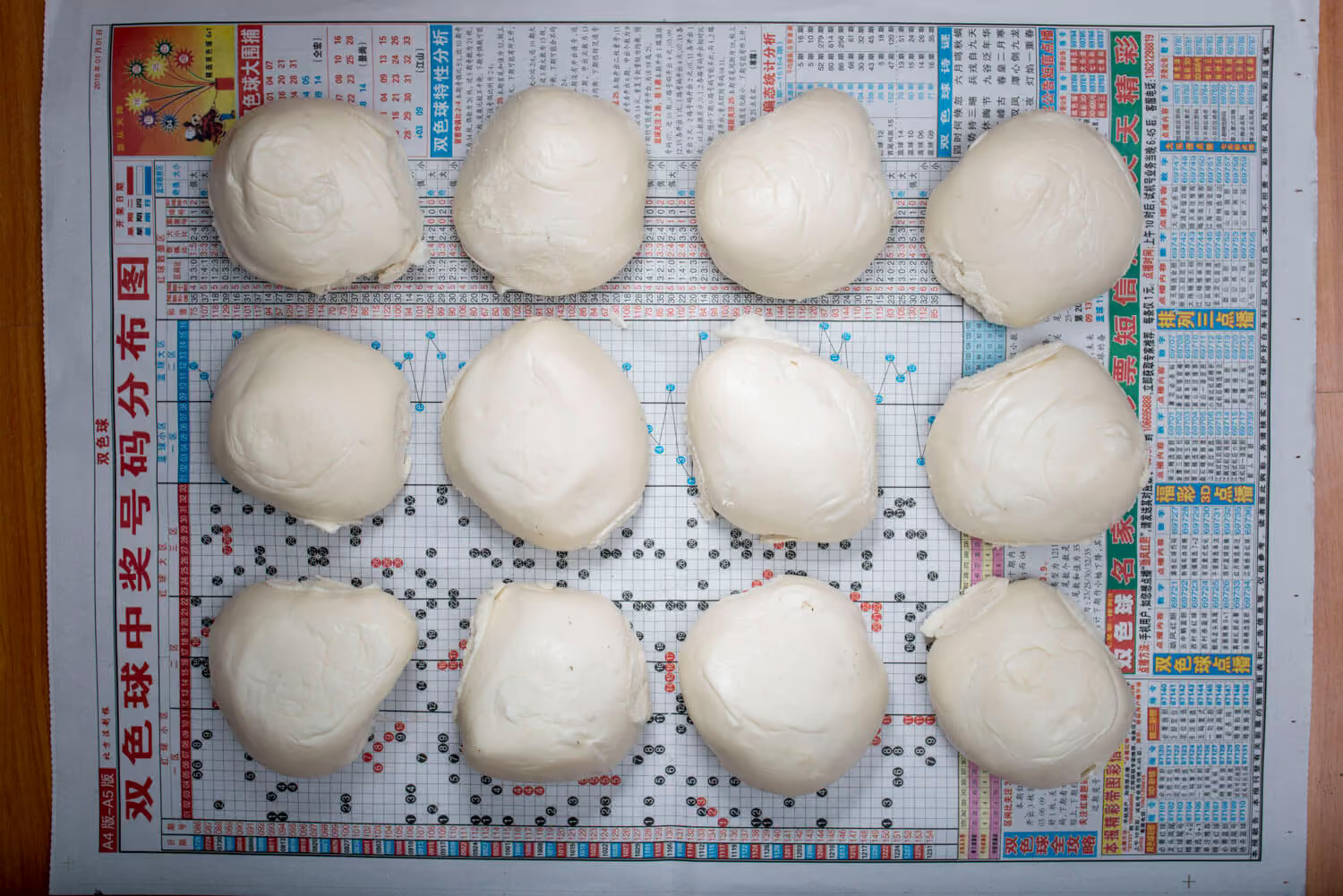
What does poverty look like on a plate? | Huiyi Lin

TED Fellow and economic policy researcher Huiyi Lin is cocreator of "The Poverty Line," an art project examining poverty through the lens of food. By photographing the daily food choices of people living at the poverty line in 38 countries and territories around the world, Lin shines a light on the problem of poverty in a way no policy report ever could.

2025

Podcasts

Singapore
Raffles Girls'‚Äã School; Kynetec; Tsinghua University - Massachusetts Institute of Technology; Raffles Girls' School; RGS; Ministry of Trade and Industry, Singapore; Raffles Junior College; Asymmetrics Research; Grail Insights; TED Fellows Program; National University of Singapore; Action Community for Entrepreneurship (ACE) Beijing Chapter; Tsinghua University; Eco-Business; Chow and Lin; The Poverty Line project
Chow and Lin is an organization that focuses on various social issues through art, particularly using photography and visual arts. They explore topics such as poverty, ecological impact, and social structures through their exhibitions, installations, and projects. Their work delves into the complexities of global issues, including the impact of fish farming, the representation of poverty through food, and the exploration of societal structures. Through collaborations with various organizations and participation in international exhibitions, Chow and Lin aim to provoke critical thinking and discussions on important societal matters. // Asymmetrics Research specializes in providing customized market research solutions for the food and agriculture sector in China and the APAC region. With a focus on understanding the dynamic drivers of change in the industry, they offer rigorous data collection and analysis to help clients make strategic business decisions. Their expertise lies in tracking trends, needs, and gaps in various aspects of the food and agriculture value chain, including food products, food service, food retail, food and ag technology, logistics and distribution, and the rural economy. Through a combination of qualitative and quantitative research methods, they deliver insights on market sizing, end-user studies, regulation and policy impact, sales and distribution channels, supply chain mapping, competition analysis, and technology trends. Asymmetrics Research aims to empower businesses with fact-based analysis to navigate the complexities of the food and agriculture market landscape in China and APAC. // Huiyi impacts commercial and public policy strategies from multi-method data-driven insights. She excels in cross-disciplinary collaborations to create transformational partnerships for public policy review, business market entry and product launch. 15-year career across China and Singapore in private and public sectors. She led two global market research groups' China custom market research businesses supporting Fortune 500 clientele. She has also formulated national enterprise development economic policies and programs. She understands stakeholders' strategic purpose, has strong communication skills, and works across teams for joint innovations. She has founded and now manages a market research and consultancy practice, Asymmetrics Research. Co-artist at Chow and Lin. The crux of the artistic practice lies in the methodology of statistical, mathematical and computational techniques to address global issues. Their work have been exhibited internationally, including St Petersburg’s Hermitage Museum, Beijing’s CAFA Museum and Chicago’s Museum of Contemporary Photography. They won the Luma Rencontres Book Dummy Award, and Falling Walls x Berlin Science Week (Science in the Arts) for The Poverty Line project. Spoken at UN Economic and Social Commission for Asia and the Pacific 5th Session of the Committee on Social Development, Singapore Summit 2019 Young Societal Leaders program, Channel News Asia, Lee Kuan Yew School of Public Policy, New York Parsons School of Design, TedX conferences. // A global community of over 500 remarkable individuals working on-the-ground on world-changing ideas -- the doers, makers, inventors, technologists, filmmakers and photographers, musicians and artists, nonprofit leaders, activists, educators, scientists, entrepreneurs. // Why Asymmetrics? We understand the natural disorder of economic and social systems. We partner clients to deliver reliable, concise answers on "so-what" for informed decisions. The difference: 40+ years of combined customized market research expertise in China and the region; Experience with Fortune 500 companies, academics, senior officials; Knowing the critical points and advising on necessary judgment calls. Focus on providing customized market research on: Consumer products and services; Food; Technology application; Healthcare; Manufacturing; Rural economy.www.asymmetricsresearch.com // The Poverty Line is one of the major artworks by Chow and Lin. It explores a simple question: what does poverty mean? This visual project began in China in 2010 and has since expanded to 31 countries and territories across 6 continents. The Poverty Line uses the universal lens of food to examine the choices you would face if you lived at the poverty line. The project takes a typological photographic approach over time. The images address the complex issues of global poverty using economics, photography and food choices. The project has been exhibited as large scale installations in Paris, Georgia, Hong Kong, Beijing, Taipei. It has been extensively featured in international media including BBC, Le Monde, CNN, Foreign Policy and is in the permanent collection of the Museum of Contemporary Photography, Chicago and Central Academy of Fine Art Museum, Beijing. // Kynetec is the world’s largest market research provider for agriculture and animal health, headquartered in UK. Clients comprise top 10 global agriculture and animal health companies, and large local agriculture groups. Since its management buy-out, it has made strategic acquisitions such as IPSOS’ North America agriculture and animal health business and Kleffmann Group. It has 950 research professionals based in 30 offices across 5 continents. I led the China custom research business, and I was responsible for business development, client management, research solution building and team leadership. We provide solutions for client problems such as market opportunity assessment, post-launch brand health evaluation, pricing review and campaign evaluation. Research methodologies used comprise primary (e.g. surveys, in-depth interviews, FGDs) and secondary desk research, and quantitative and qualitative analysis. // Grail Research is a global customized research agency founded by the Monitor Group and was under the Integreon Group. Our focus industries are TMT, Healthcare, Consumer Goods/Services, and our clients are mainly Fortune 500 companies. We address clients’ business problems by designing project approach and methodologies (secondary research, qualitative and quantitative research) and making data-driven recommendations. I led the China office operations, and am responsible for project management, client engagement, business development and oversight of office and team development matters. Examples of projects led:- Assess opportunities for technology application in education and healthcare sectors to support market potential assessment and entry strategy- Evaluation of China cross-border e-commerce platforms and consumer behavior to inform online vs offline retail strategy- Assess business prospects and competitive positioning of leading pharmaceutical manufacturer as part of commercial due diligence // Eco-Business is the leading media and business intelligence company dedicated to sustainable development and ESG performance in the Asia Pacific. We provide ESG research and consulting on a wide range of issues, and create thought-leadership platforms which improve business practices, inform policy and foster stakeholder collaboration. As independent director for Greater China, my focus is on building our business and research in the region. www.eco-business.com // Eco-Business is the leading media and business intelligence company dedicated to sustainable development and ESG performance in the Asia Pacific. We provide ESG research and consulting on a wide range of issues, and create thought-leadership platforms which improve business practices, inform policy and foster stakeholder collaboration. As independent director for Greater China, my focus is on building our business and research in the region. www.eco-business.com // - Formulated policies and financing programs to support companies expanding overseas - Developed policies and incentives to attract global offshore trading firms- Partnered govt agencies and banks to launch financing programs for startups and small and medium enterprises- Launched nation-wide survey of businesses to improve regulatory environment // ACE is a social movement for entrepreneurs, by entrepreneurs. ACE helps aspiring Singapore entrepreneurs start up by building a vibrant community and connecting them to resources, people and knowledge.The ACE Beijing Chapter is the first Overseas Chapter for ACE. Connected to entrepreneurship communities in China and Singapore, ACE Beijing builds networks and platforms to help Singapore startups access opportunities in Beijing and China. // Raffles Girls'​ School; Kynetec; Tsinghua University - Massachusetts Institute of Technology; Raffles Girls' School; RGS; Ministry of Trade and Industry, Singapore; Raffles Junior College; Asymmetrics Research; Grail Insights; TED Fellows Program; National University of Singapore; Action Community for Entrepreneurship (ACE) Beijing Chapter; Tsinghua University; Eco-Business; Chow and Lin; The Poverty Line project // Huiyi Lin is a seasoned professional with a 15-year career spanning China and Singapore, where she has made significant impacts in both the private and public sectors. She is adept at leveraging multi-method data-driven insights to influence commercial and public policy strategies, excelling in cross-disciplinary collaborations to forge transformational partnerships. Huiyi has led global market research groups, formulated national economic policies, and founded Asymmetrics Research, a successful market research and consultancy practice. Additionally, she is a co-artist at Chow and Lin, where her work combines statistical, mathematical, and computational techniques to address global issues, showcased in prestigious international exhibitions. Huiyi's expertise extends to speaking engagements at high-profile events and institutions, demonstrating her strong communication skills and strategic acumen. // Art opens up new ways to view the world and ask critical questions. Our works make poverty visible, breaks down stereotyped assumptions and builds empathy that we are part of the same system. // Huiyi Lin is a versatile professional with a rich background in market research, economic policy formulation, and art. With a career spanning over 15 years across China and Singapore, she has demonstrated a keen ability to leverage data-driven insights to drive impactful strategies in both the private and public sectors. Huiyi is the founder of Asymmetrics Research, a consultancy specializing in tailored market research solutions for the food and agriculture sector in China and the APAC region. Her expertise in tracking trends, analyzing market dynamics, and providing strategic recommendations has empowered businesses to navigate the complexities of the industry landscape effectively. Furthermore, as a co-artist at Chow and Lin, Huiyi combines statistical, mathematical, and computational techniques to address pressing global issues through art, aiming to provoke critical discussions and raise awareness on social matters. Her multidisciplinary approach, strong communication skills, and strategic acumen underscore her commitment to driving positive change through research and artistic expression. // Visual artist + poverty researcher // Huiyi Lin is a versatile professional with a rich background in market research, economic policy formulation, and art. With a career spanning over 15 years across China and Singapore, she has demonstrated a keen ability to leverage data-driven insights to drive impactful strategies in both the private and public sectors. Huiyi is the founder of Asymmetrics Research, a consultancy specializing in tailored market research solutions for the food and agriculture sector in China and the APAC region. Her expertise in tracking trends, analyzing market dynamics, and providing strategic recommendations has empowered businesses to navigate the complexities of the industry landscape effectively. Furthermore, as a co-artist at Chow and Lin, Huiyi combines statistical, mathematical, and computational techniques to address pressing global issues through art, aiming to provoke critical discussions and raise awareness on social matters. Her multidisciplinary approach, strong communication skills, and strategic acumen underscore her commitment to driving positive change through research and artistic expression. // Visual artist + poverty researcher // technology, entrepreneurship, food technology, fish, data collection, led, education, esg, data, global poverty, finance, research, animal health, agriculture, activism, supply chain, farming, design, sustainable development , food systems, policy, monitoring, rural community development, food system, economics, public policy, data-driven, community development, foster partnerships, logistics, agtech, campaigns, rural, science, food, visual artist, poverty, communication, farmed fish, inequality, ecology, manufacturing, consumerism // Singapore|Greater China|China|Beijing|UK
Singapore|Greater China|China|Beijing|UK

Huiyi Lin

No items found.
Extended interview Lily James Olds Season 1 Fellows Films
2025

How policewomen make communities safer | Ivonne Roman

Less 13 percent of police officers in the United States are women -- despite their proven effectiveness in diffusing violent situations and reducing the use of force. Drawing on more than two decades of experience as a police officer and chief, TED Fellow Ivonne Roman shares how a simple fix to police academy physical fitness tests could help build a more balanced force that benefits communities and officers alike. Hosted on Acast. See acast.com/privacy for more information.

2023

Podcasts

United States
Center for Policing Equity; CNA Corporation; Open Society Foundations; Newark Police Department; TED Conferences; 30x30 Initiative
The 3030 Initiative is a coalition of police leaders, researchers, and professional organizations working to advance the representation and experiences of women in policing agencies across the United States. Currently, women make up only a small percentage of sworn officers and police leadership in the U.S., leading to significant public safety implications. The initiative aims to increase the representation of women in police recruit classes to 30% by 2030 and ensure that police policies and culture support the success of women officers throughout their careers. Through research and evidence-based strategies, the 3030 Initiative addresses barriers to women's inclusion and success in law enforcement, with a focus on improving recruitment, assessment, hiring, retention, promotion, and agency culture. The movement is based on the premise that greater gender diversity in policing leads to better outcomes for communities. // Roman: Pioneering Leader & Advocate for Progressive Change in Policing Evolving Journey from Officer to Chief Beginning my policing career in 1995 with the Newark Police Department, I ascended through every rank, culminating as Police Chief. My leadership was defined by spearheading strategic multi-agency initiatives and launching impactful public/private partnerships, significantly reducing crime and revitalizing downtown Newark. Innovating with NIJ LEADS Scholarship and Women’s Leadership Academy Awarded the National Institute of Justice's LEADS scholarship in 2016, I leveraged this opportunity to establish the Woman's Leadership Academy, advocating for women in policing through evidence-based research. This initiative marked a significant stride towards gender equality in law enforcement. Driving Change with 30x30 Initiative and Global Outreach My efforts transcended national borders with a TED Talks fellowship, amplifying my insights and experiences to a global audience. In collaboration with the NYU Policing Project, I co-founded the 30x30 Initiative, a bold endeavor to increase female representation in policing to 30% by 2030. This project, working hand-in-hand with police departments across the U.S., demonstrates my commitment to shaping a more inclusive and effective policing future. Influential Voice and Recognized Expert in Law Enforcement and Public Policy My expertise and perspectives have been showcased in notable publications like the Marshall Project, VICE, and MarketWatch, with my advocacy work featured in the New York Times, Washington Post, and USA Today. A sought-after commentator on police policies, I contribute regularly to media discussions and academic conferences. My role as an executive fellow at the National Police Foundation, my service on the Measuring Justice police advisory board, and my board membership at the American Society for Evidence-Based Policing reflect my deep involvement in shaping the future of law enforcement. Academic Pursuits and Future Goals I am currently pursuing a PhD in Public Affairs and Community Development at Rutgers, Camden. This academic journey is a continuation of my commitment to integrating academic research with practical law enforcement strategies, aiming to further innovate and enhance public safety and community welfare. // Project Manager for Police Director Consent Decree Negotiation Team coordinator US Dept. of Justice - Violence Reduction Network coordinator Newark Police Foundation liaison Safer Newark Council board member White House Police Data Initiative representative Newark Youth Policy Board member Newark Violence Reduction Initiative coordinator Mayor's Promise Zone Team liaison Public Private Partnerships coordinator Special Conditions Unit commander Newark Community Street Team liaison Greater Newark Youth Violence Consortium liaison Call-Out Program for Youth liaison Homelessness Coalition / Dept. of Health liaison Transparency Project- In efforts to foster police data transparency and accountability, Roman applied to become a Code for America fellow to create Comport, an open data toolkit that lets public safety agencies quickly create an open data site by uploading existing internal affairs data and adding contextual information about policies and programs. On February 18, 2016, the Newark Police Department and the City of Newark was selected as a finalist to participate in the 2016 Code for America’s Community Police Relations Tool (Comport) Pilot. This opportunity will allow the NPD to provide accessibility to open data regarding complaints against personnel, use of force, and officer-involved shooting. Show less // As the Commander of the Special Enforcement and Investigations Bureau, Roman oversees criminal investigations in the Newark Police Department. In addition, the Bureau consists of Special Enforcement Units created to address violence in the City of Newark. The Special Enforcement and Investigations Bureau contains the Investigations Division and the Narcotics and Gangs Division. The Investigations Division is comprised of: Homicide Task Force Major Crimes Section Rapid Response Intelligence Team Firearms Interdiction Team Criminal Intelligence Section Ballistics Unit Robbery Section Fugitive Section Special Victims Unit Auto Squad Youth Aid Section The Narcotics and Gangs Division is comprised of: Narcotics Unit Gang Unit Vice Unit Liaison Unit Show less // As Chief of Police in the City of Newark, Roman was charged with managing the day to day operations of the police force. Upon appointment as Chief, Roman focused on collaboration to address violence in the City of Newark. Through support from Rutgers University and John Jay College, a series of meetings resulted in a reinvigorated partnership between the Newark Police Department and Newark Housing Authority, DEA, FBI, State Police, U.S. Attorney's Office, Essex County Prosecutor and Sheriff's Office, NJ Parole and Probation, YouthBuild, Essex County Family Courts, Newark Youth Policy Board and Independence Family Services. The project launched in the 4th Precinct on March 31, 2014. As of June 1, 2014 the designated grid experienced a 61% decrease in violence. During her tenure as Chief of Police, homicides were reduced by 35%. Show less // Commander of the 2nd Precinct, January 2012-March 2014 Operational control of a precinct encompassing 3 political wards. The 2nd Precinct was once staffed with 205 officers. Due to police lay-offs, attrition and transfers, the 2nd Precinct staffing was reduced to approximately 100 officers during 2012-2013. Through intelligence sharing, community and law enforcement partnerships and close monitoring of crime trends, the 2nd Precinct Command staff was able to reduce overall crime by a combined 13% for calendar years 2012 and 2013. Show less // Internal Affairs Investigator, April 2005-May 2007 investigated complaints against Newark Police Department personnel. Internal Affairs Executive Officer, May 2007-September 2007 assigned investigations and reviewed work submitted by Investigators Gang Unit Commander September, 2007- November 2010 Overall management of the Gang Intelligence Unit and the Gang Suppression Unit. Received Unit of the Year Award from Director Garry McCarthy Received Unit Award from the Hispanic Law Enforcement Society of Essex County Partnered with the Attorney General's Statewide Violent Crime Anti-Gang Initiative (2008) 3rd Precinct Coordinator for Narcotics and Crime Suppression Units, November 2010-May 2011 Responsible for the Narcotics Unit and the Crime Suppression Units Initiated a partnership with the Newark Downtown District for the development of public-private police community center in Downtown Newark Lieutenant, Director's Office, May 2011-January 2012 Project Manager for the creation of the Community Resource Center; a Public/Private Partnership which provides community policing for the Newark Downtown area. The Community Resource Center is located at 189 Market Street. The CRC has led to a reduction in crime and quality of life concerns, and is credited with increased business development in Downtown Newark. Coordinator for the Super Summer Initiative. The multi-agency based Super Summer Initiative provided police presence in high-crime neighborhoods through walking and roving patrols. Clergy and Community Affairs officers provided service to at-risk youth in cooperation with local civic, social, and faith-based organizations. The Fire Department, Neighborhood Services, Department of Health and Family Well-being, State Police, Essex County Sheriff and Prosecutor's Office participated in the Super Summer Initiative, on a daily basis. Show less // Patrol Officer- assigned to the South District of Newark, July 1995 - September 1997 TARGET Team, September 1997-March 1999 The Target Team was a task force created in response to the high number of vehicles reported stolen in the City of Newark. The team received national recognition for their success in reducing car thefts in Newark. NITRO, March 1999-November 1999 Narcotics Interdiction to Reduce Open Air Drug Markets (NITRO) addressed open air-drug markets by targeting street dealers, and investigating citizen drug complaints. YVTF, November 1999-January 2001 The Youth Violence Task Force was created to address violence committed by and perpetrated against the City's youth. The task force worked in collaboration with the Essex County Youth House and Family Court to address violence impacting the children of Newark. Show less // Central Juvenile Arrest Processing Unit-Shift Supervisor, January 2001-May 2002 ensure Juvenile Offenders were processed in accordance to Attorney General Guidelines Prisoner Processing Unit-Shift Supervisor, May 2002-March 2005 ensure safety and timely processing of adult prisoners West District- Desk Supervisor, March 2005 to April 2005 general supervision of Precinct and on-duty personnel // Selected as one of ten TED Talks Fellows for 2019 // Center for Policing Equity; CNA Corporation; Open Society Foundations; Newark Police Department; TED Conferences; 30x30 Initiative // Ivonne Roman is a seasoned law enforcement professional with a diverse background spanning various roles within the policing sector. With over two decades of experience, she has demonstrated exceptional leadership skills, from her early days as a Patrol Officer to her tenure as Chief of Police. Ivonne's career highlights include spearheading strategic initiatives, establishing impactful partnerships, and advocating for gender equality in law enforcement through the Women's Leadership Academy. She is a recognized expert in law enforcement and public policy, with her work featured in reputable publications and media outlets. Currently pursuing a PhD, Ivonne continues to blend academic research with practical strategies to enhance public safety and community welfare. // I am working to transform policing by integrating evidence-based practices that enhance service delivery and reduce unintended harms to communities. I aim to foster better relationships between police and the public and to increase gender diversity within law enforcement through initiatives like the 30x30 Initiative. The impact I hope to have is a more effective, equitable, and just policing system that is guided by scientific research and meets the needs of all community members. The questions that drive my work are: How can we make policing more evidence-based and just? How can we ensure that police practices do not harm the communities they are meant to protect? // Ivonne Roman is a seasoned law enforcement professional with over two decades of experience in various roles within the policing sector. She is a recognized expert in law enforcement and public policy, known for her exceptional leadership skills and strategic initiatives. Ivonne is dedicated to advancing gender equality in law enforcement through initiatives like the Women's Leadership Academy and the 3030 Initiative, which aims to increase the representation of women in policing agencies. Currently pursuing a PhD, she combines academic research with practical strategies to enhance public safety and community welfare. Ivonne's work focuses on integrating evidence-based practices to improve service delivery, foster better police-community relationships, and create a more effective and equitable policing system guided by scientific research. // Police captian // Police captain and co-founder of the Women’s Leadership Academy, an organization working to increase the recruitment and retention of women in policing. // Ivonne Roman cofounded the 30x30 initiative to address the stagnation of women in policing. Currently, women make up only 12% of sworn officers and 3% of police leadership in the U.S. This under-representation of women in policing undermines public safety. Research shows women officers use less force and less excessive force; are named in fewer complaints and lawsuits; are perceived by communities as being more honest and compassionate; see better outcomes for crime victims, especially in sexual assault cases; and make fewer discretionary arrests. The 30×30 Initiative is a coalition of police leaders, researchers, and professional organizations who have joined together to advance the representation and experiences of women in policing agencies across the United States. Our ultimate goal is to increase the representation of women in police recruit classes to 30% by 2030, and to ensure police policies and culture intentionally support the success of qualified women officers throughout their careers. Participating agencies must address intersectionality in all efforts to improve the representation and experiences of women in policing. Intersectionality acknowledges the ways in which people’s multiple identities race and ethnicity, class, gender, sexual orientation, religion, ability, and more—magnify or transform their exposure to discrimination. This means the way race and discrimination is experienced is not the same for everyone. Women of color in particular will often face compounding experiences of bias and discrimination based not only on their gender, but also their race or ethnicity. Though 30×30 focuses on increasing the representation of women, it is critical that agencies apply an intersectional lens when analyzing their culture and practices to better promote the creation of a diverse and inclusive workplace for everyone Roman has 25 years of experience in policing, serving in ranks from police officer to chief of police. Her research interests include evidence-based policing, women in policing, and organizational legitimacy and procedural justice. Roman also enjoys writing. Her work has been featured in the Marshall Project and MarketWatch. As an advocate for evidence-based policing, Roman serves on the board of directors at the American Society of Evidence-Based Policing, and is an executive fellow at the National Police Foundation. She is a National Institute of Justice LEADS (Law Enforcement Advancing Data and Science) Scholar. She is a subject matter expert on recruitment and retention of women in policing. // Less than 13 percent of police officers in the United States are women -- despite their proven effectiveness in diffusing violent situations and reducing the use of force. Drawing on more than two decades of experience as a police officer and chief, TED Fellow Ivonne Roman shares how a simple change to police academy physical fitness tests could help build a more balanced force that benefits communities and officers alike. // Ivonne Roman is a seasoned law enforcement professional with over two decades of experience in various roles within the policing sector. She is a recognized expert in law enforcement and public policy, known for her exceptional leadership skills and strategic initiatives. Ivonne is dedicated to advancing gender equality in law enforcement through initiatives like the Women's Leadership Academy and the 3030 Initiative, which aims to increase the representation of women in policing agencies. Currently pursuing a PhD, she combines academic research with practical strategies to enhance public safety and community welfare. Ivonne's work focuses on integrating evidence-based practices to improve service delivery, foster better police-community relationships, and create a more effective and equitable policing system guided by scientific research. // Police captian // police culture, violence, led, fire, data, equity, gender equity, research, constitutional policing, inclusion, policy, monitoring, at risk youth, feminism, criminal justice reform, women, discrimination, public policy, evidence-based policing, police reform, accessibility, intersectionality, gender, youth, homelessness and housing, vehicles, community development, advocacy, open data, social justice, transparency, cars, children, litigation, policewomen, housing, science, law, equality, accountability, women in policing, justice // Princeton|New Jersey|United States|USA
Princeton|New Jersey|United States|USA

Ivonne Roman

No items found.
2023

04:01

How a worm could save humanity from bad AI

What if AI could think and adapt like a real brain? TED Fellow and AI scientist Ramin Hasani shares how liquid neural networks — a new, more flexible AI technology inspired by physics and living brains — could transform how we solve complex problems.

2024

TED Fellows Film

United States
AI engineer + innovator // AI engineer + innovator

Ramin Hasani

No items found.
2024

05:11

Tracking ancient diseases using ... plaque

Imagine what we could learn about diseases by studying the history of human disease, from ancient hominids to the present. But how? TED Fellow Christina Warinner is an achaeological geneticist, and she's found a spectacular new tool -- the microbial DNA in fossilized dental plaque.

2012

TED Talk

United States
The University of Bonn; University of Oklahoma; University of Zurich; The University of Kansas; Harvard University; Max-Planck-Institute for Evolutionary Anthropology
Christina Warinner's work focuses on studying the intricate relationship between humans, their food, and their microbes. By analyzing food cultures, microbiomes, and biomolecular traces from prehistoric remains, including dental calculus and pottery residues, her research delves into the archaeology of the invisible. Through combining this data with paleogenomic studies, insights into prehistoric migrations, human genetic adaptations, and the complex history of human diets and microbes are uncovered. The goal is to understand how microbes have influenced human evolution and continue to impact health through the microbiome, food systems, and disease. // Christina Warinner is a prominent figure in the field of biomolecular archaeology, specializing in reconstructing the prehistory of human foods and the evolution of the microbiome. Her pioneering work in ancient DNA and proteins research has provided significant insights into prehistoric human health, the ancestral human microbiome, and past human population history. She has published extensively on topics such as the ancient human oral microbiome, milk proteins in ancient dental calculus, and the origins of dairying. Warinner leads multidisciplinary projects combining archaeology, microbiology, and ethnography to understand the origins of dairying and human adaptations to novel foods. She is actively engaged in scientific outreach and has received recognition for her contributions to the field. // Specialties: Molecular (DNA and protein) investigation of ancient human skeletal and mummified remains, with a specialty in ancient oral microbiome research. // I research the bacteria that live in and on the human body, both today and in the remote past. I'm interested in how human behavior influences commensal bacterial communities and how these communities in turn affect human health. // I researched functional allele frequency changes in Medieval Europeans, conducted research on biomolecule preservation in mummified tissues, and started the Ancient Dental Calculus Biomolecular Reservoir Project. // The University of Bonn; University of Oklahoma; University of Zurich; The University of Kansas; Harvard University; Max-Planck-Institute for Evolutionary Anthropology // Christina Warinner is a specialist in molecular investigation of ancient human skeletal and mummified remains, focusing on DNA and protein analysis. With expertise in ancient oral microbiome research, she delves into the bacterial communities residing in and on the human body, exploring their evolution over time. Christina's research extends to understanding the impact of human behavior on commensal bacterial populations and their reciprocal influence on human health. Her work encompasses studying functional allele frequency changes in historical populations, investigating biomolecule preservation in mummified tissues, and initiating projects like the Ancient Dental Calculus Biomolecular Reservoir Project. // I am working to build and expand the field of paleogenomics. My aim is to mainstream ancient DNA research by developing it into a core area of study within biology and anthropology departments around the world as we rewrite the story of human history. This requires demonstrating the power of ancient DNA through high profile reserach articles, serving on the board of academic societies to support and recognize excellent scholars and scholarship in the field, driving the development of new software and resources to catalyze new research, and creating teaching and training opportunities for the next generation by developing online courses and workshops. I am committed to driving each of these activities, in partnership with a network of amazing colleagues around the world. // Christina Warinner is a leading expert in biomolecular archaeology, specializing in the study of ancient human foods and the evolution of the microbiome. Her research integrates analyses of food cultures, microbiomes, and biomolecular traces from prehistoric remains to uncover insights into prehistoric migrations, human genetic adaptations, and the complex history of human diets and microbes. Through her pioneering work in ancient DNA and proteins research, Warinner has made significant contributions to understanding prehistoric human health, the ancestral human microbiome, and past human population history. She leads multidisciplinary projects that combine archaeology, microbiology, and ethnography to investigate the origins of dairying and human adaptations to novel foods, with a focus on the impact of microbes on human evolution and health. Additionally, Warinner is actively engaged in scientific outreach and plays a key role in advancing the field of paleogenomics by promoting ancient DNA research and supporting scholarly endeavors in biology and anthropology departments worldwide. // Archaeological geneticist // With a Ph.D. in Anthropology from Harvard University, Christina Warinner is a biomolecular archaeologist who uses tissue samples from ancient skeletons and mummies to research how humans have evolved to adapt to changing diets, diseases, and environments over the last 10,000 years. She is currently Presidential Research Professor and Assistant Professor of Anthropology at the University of Oklahoma and a Research Affiliate at the Centre for Evolutionary Medicine at the University of Zurich where she applies advanced genomics and proteomics methods to the direct investigation of archaeological human remains. She is currently managing a number of projects around the world, dividing her time between laboratory research in Oklahoma and Zurich and fieldwork in the high Himalayas. // Christina (Tina) Warinner is a Sally Starling Seaver Assistant Professor at the Radcliffe Institute and an assistant professor of anthropology in the Harvard Faculty of Arts and Sciences. She is also a group leader in the Department of Archaeogenetics at the Max Planck Institute for the Science of Human History and professor of biological sciences at the Friedrich Schiller University in Jena, Germany. Warinner specializes in biomolecular archaeology, with an emphasis on reconstructing the prehistory of human foods and the evolution of the microbiome. She is known for her pioneering work in ancient DNA and proteins research, which has contributed significant insights into prehistoric human health, ancestral human oral and gut microbiota, the origins of dairying, and past human migrations. She is a 2014 US National Academy of Sciences Kavli Fellow and a 2012 TED Fellow, and her TED Talks on ancient dental calculus and the evolution of the human diet have been viewed more than 2 million times. In addition to her research, she is actively engaged in public outreach and created the Adventures in Archaeological Science coloring book, now available in eighteen languages, including many indigenous and underrepresented languages. Warinner received her MA and PhD at Harvard University and completed her postdoctoral training at the Centre for Evolutionary Medicine at the University of Zürich, Switzerland and the University of Oklahoma. She was previously a presidential research professor and assistant professor of anthropology at the University of Oklahoma and visiting associate professor at the Technical University of Denmark. // Imagine what we could learn about diseases by studying the history of human disease, from ancient hominids to the present. But how? TED Fellow Christina Warinner is an achaeological geneticist, and she's found a spectacular new tool -- the microbial DNA in fossilized dental plaque. // Christina Warinner is a leading expert in biomolecular archaeology, specializing in the study of ancient human foods and the evolution of the microbiome. Her research integrates analyses of food cultures, microbiomes, and biomolecular traces from prehistoric remains to uncover insights into prehistoric migrations, human genetic adaptations, and the complex history of human diets and microbes. Through her pioneering work in ancient DNA and proteins research, Warinner has made significant contributions to understanding prehistoric human health, the ancestral human microbiome, and past human population history. She leads multidisciplinary projects that combine archaeology, microbiology, and ethnography to investigate the origins of dairying and human adaptations to novel foods, with a focus on the impact of microbes on human evolution and health. Additionally, Warinner is actively engaged in scientific outreach and plays a key role in advancing the field of paleogenomics by promoting ancient DNA research and supporting scholarly endeavors in biology and anthropology departments worldwide. // Archaeological geneticist // paleofeces, lgbt history, data, job skills training, research, microbes, molecular anthropology, archaeology, metagenomics, dental calculus, food system, microbiome, human population, ancient dna, science, food, underrepresented, indigenous, software, microbiology, ancient proteins, paleoproteomics, milk, disease // Cambridge|USA|Germany|United States|Massachusetts|Boston
Cambridge|USA|Germany|United States|Massachusetts|Boston

Christina Warinner

No items found.
2012

The future of good food in China | Matilda Ho

Fresh food free of chemicals and pesticides is hard to come by in China: in 2016, the Chinese government revealed half a million food safety violations in just nine months. In the absence of safe, sustainable food sources, TED Fellow Matilda Ho launched China's first online farmers market, instituting a zero-tolerance test towards pesticides, antibiotics and hormones in food. She shares how she's growing her platform from the ground up and bringing local, organically grown food to the families that need it.

2017

Podcasts

United States
Food entrepreneur + investor // Matilda Ho is a serial entrepreneur and investor driving to create more sustainable food systems. She is founder and managing director of Bits x Bites, China’s first food tech accelerator and VC that invests in startups tackling global food system challenges. With a mission to shape the future of food, Bits x Bites is a big step forward to inspire China’s entrepreneurial community to bring new ideas to solve global issues. In addition to Bits x Bites, Matilda has founded Yimishiji, one of China’s first online farmers markets to bring organic and local produce to families. Yimishiji stands alone as a farm-to-table e-commerce platform that has engineered food education and transparency into the entire supply chain and customer experience. Prior to entrepreneurship, she filled leadership roles at IDEO and BCG (The Boston Consulting Group) in both Shanghai and Washington DC. She holds an MBA from the University of Chicago Booth School of Business. She currently serves as an advisor on the board of Shinho, China’s first and largest organic condiment company. She is named a 2017 TED Fellow. // Fresh food free of chemicals and pesticides is hard to come by in China: in 2016, the Chinese government revealed half a million food safety violations in just nine months. In the absence of safe, sustainable food sources, TED Fellow Matilda Ho launched China's first online farmers market, instituting a zero-tolerance test towards pesticides, antibiotics and hormones in food. She shares how she's growing her platform from the ground up and bringing local, organically grown food to the families that need it. // Matilda Ho is a serial entrepreneur and investor driving to create more sustainable food systems. She is founder and managing director of Bits x Bites, China’s first food tech accelerator and VC that invests in startups tackling global food system challenges. With a mission to shape the future of food, Bits x Bites is a big step forward to inspire China’s entrepreneurial community to bring new ideas to solve global issues. In addition to Bits x Bites, Matilda has founded Yimishiji, one of China’s first online farmers markets to bring organic and local produce to families. Yimishiji stands alone as a farm-to-table e-commerce platform that has engineered food education and transparency into the entire supply chain and customer experience. Prior to entrepreneurship, she filled leadership roles at IDEO and BCG (The Boston Consulting Group) in both Shanghai and Washington DC. She holds an MBA from the University of Chicago Booth School of Business. She currently serves as an advisor on the board of Shinho, China’s first and largest organic condiment company. She is named a 2017 TED Fellow. // Food entrepreneur + investor // technology, global food system, farmers' market, supply chain, education, food, entrepreneurship, pesticides, sustainable food, farmers, government, transparency, food system

Matilda Ho

No items found.
2017