

ted fellows media library

Watch the TED Fellows in action

Watch, listen and connect with the Fellows changing the world through science, art, invention and imagination. 

TED Talks

From unbelievable science to awe-inspiring art, watch powerful talks from our global community of 500+ TED Fellows.

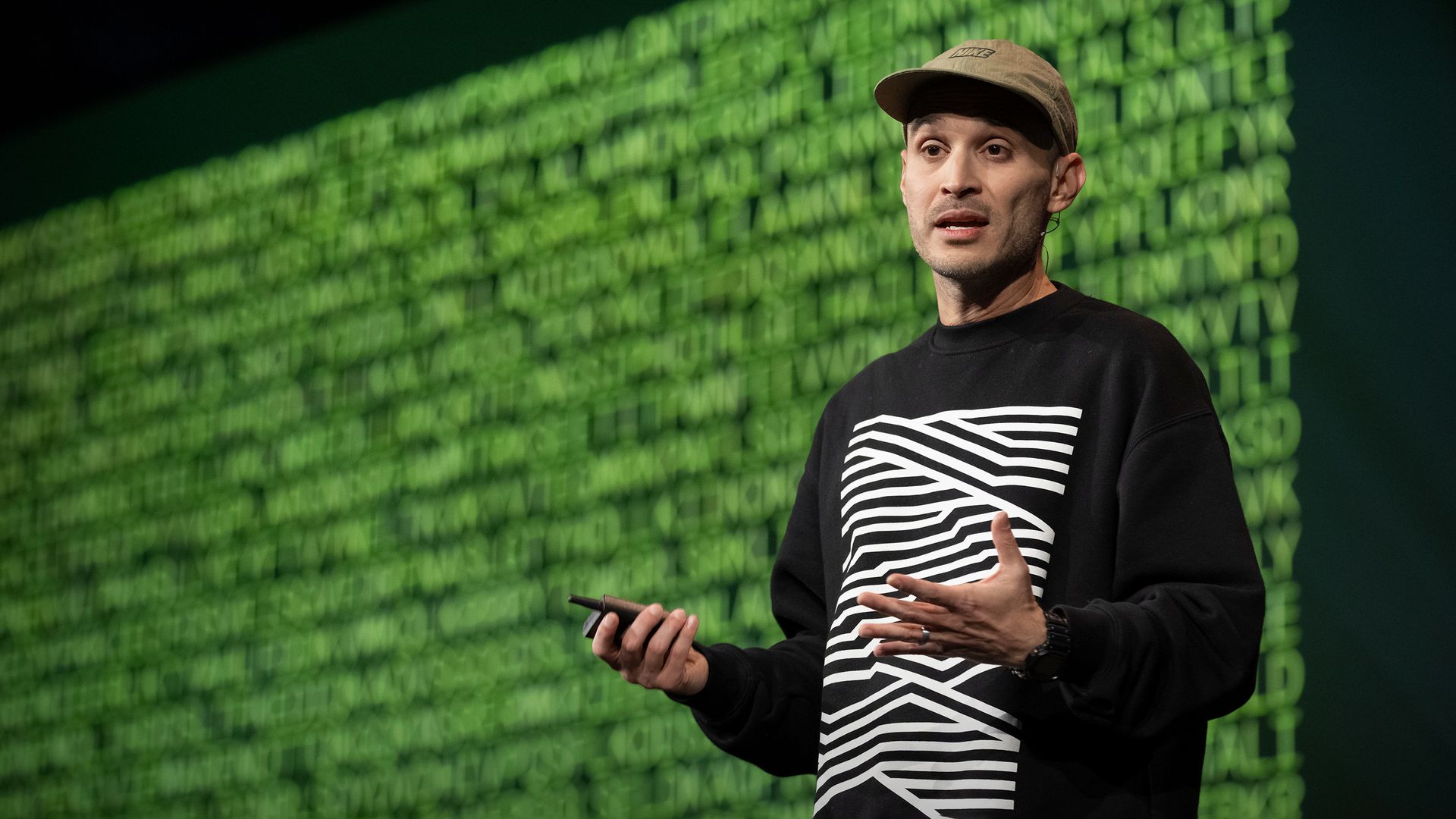
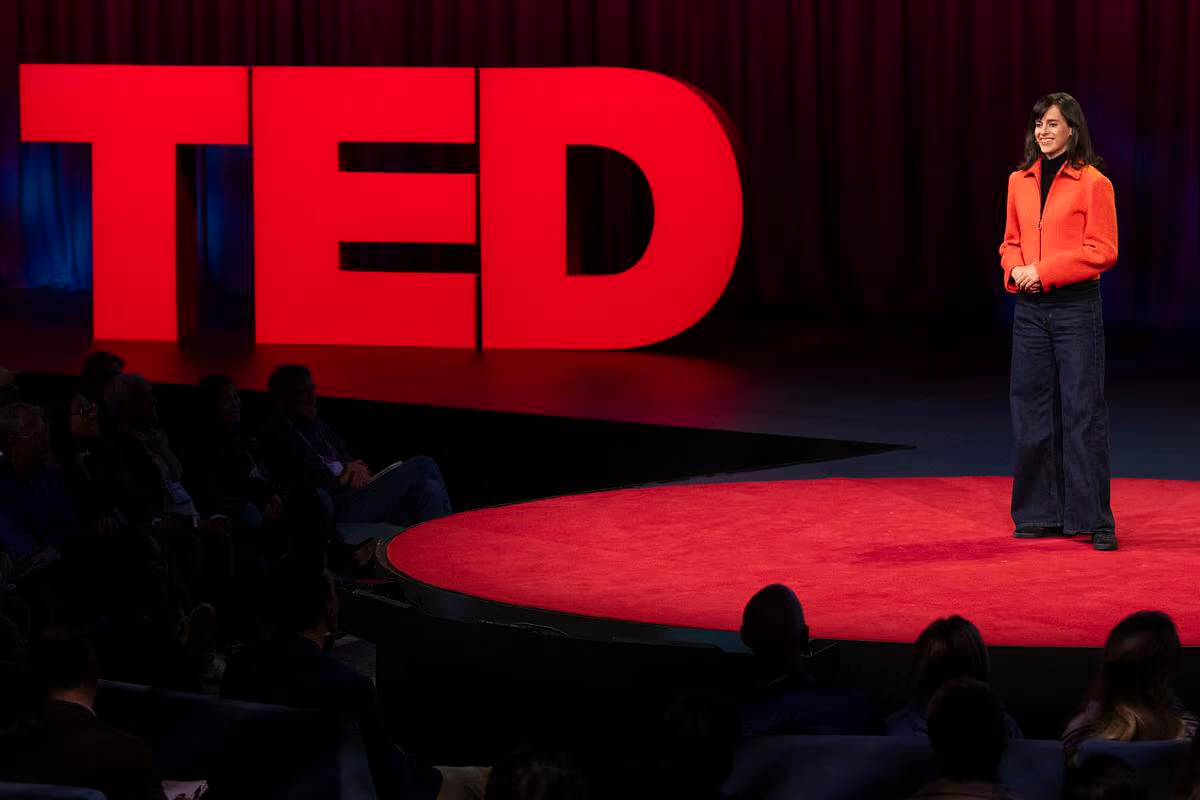
Carissa Véliz

Beware the power of prediction

Podcasts

Hear TED Fellows tell their stories in intimate interviews and learn more about what lies behind their big ideas.

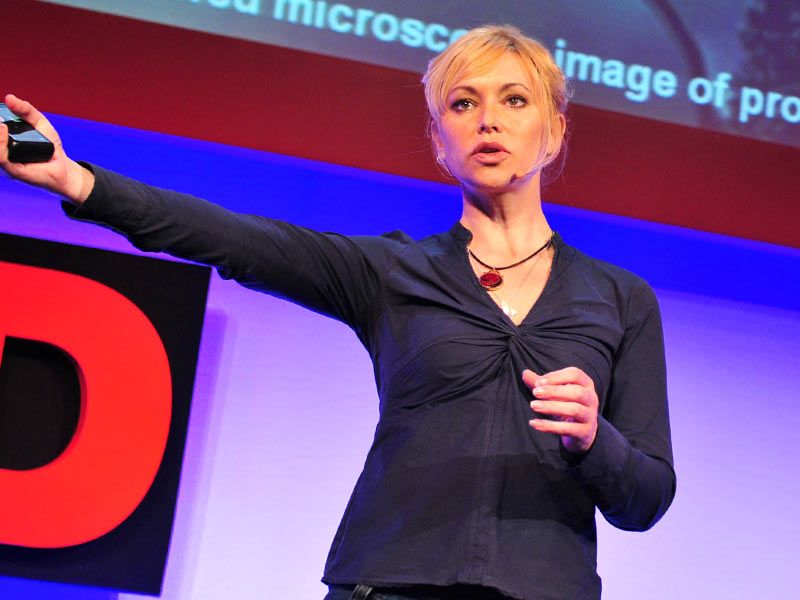
Trinity Tran

Who controls your city's money? | Trinity Tran

What if your city could borrow money from its own bank instead of private lenders? TED Fellow Trinity Tran is leading the push for public banks — which are owned by the people through their local governments — and shows how this model could ensure your local tax dollars stay in your community. 

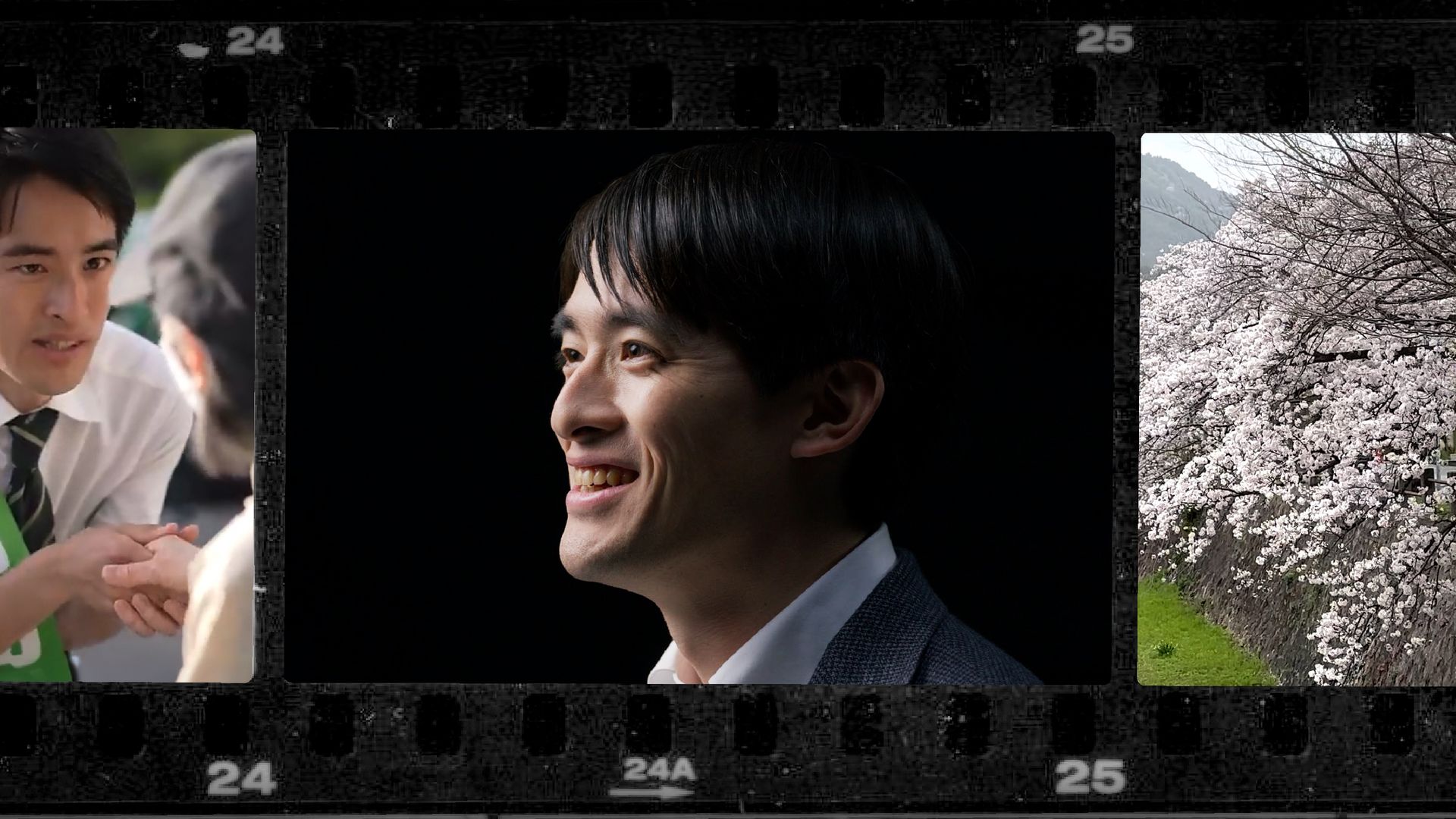
Ryosuke Takashima

Meet the youngest-ever mayor in Japan's history | Ryosuke Takashima

TED Fellow Ryosuke Takashima is the youngest-ever mayor in Japan's history — but he doesn't consider himself a politician. His approach to leadership is simple: listen to as many voices as possible (from students to elders) in order to figure out what needs fixing. Hear why he thinks inviting citizens to participate in reforming their own communities is the best way to get things done.

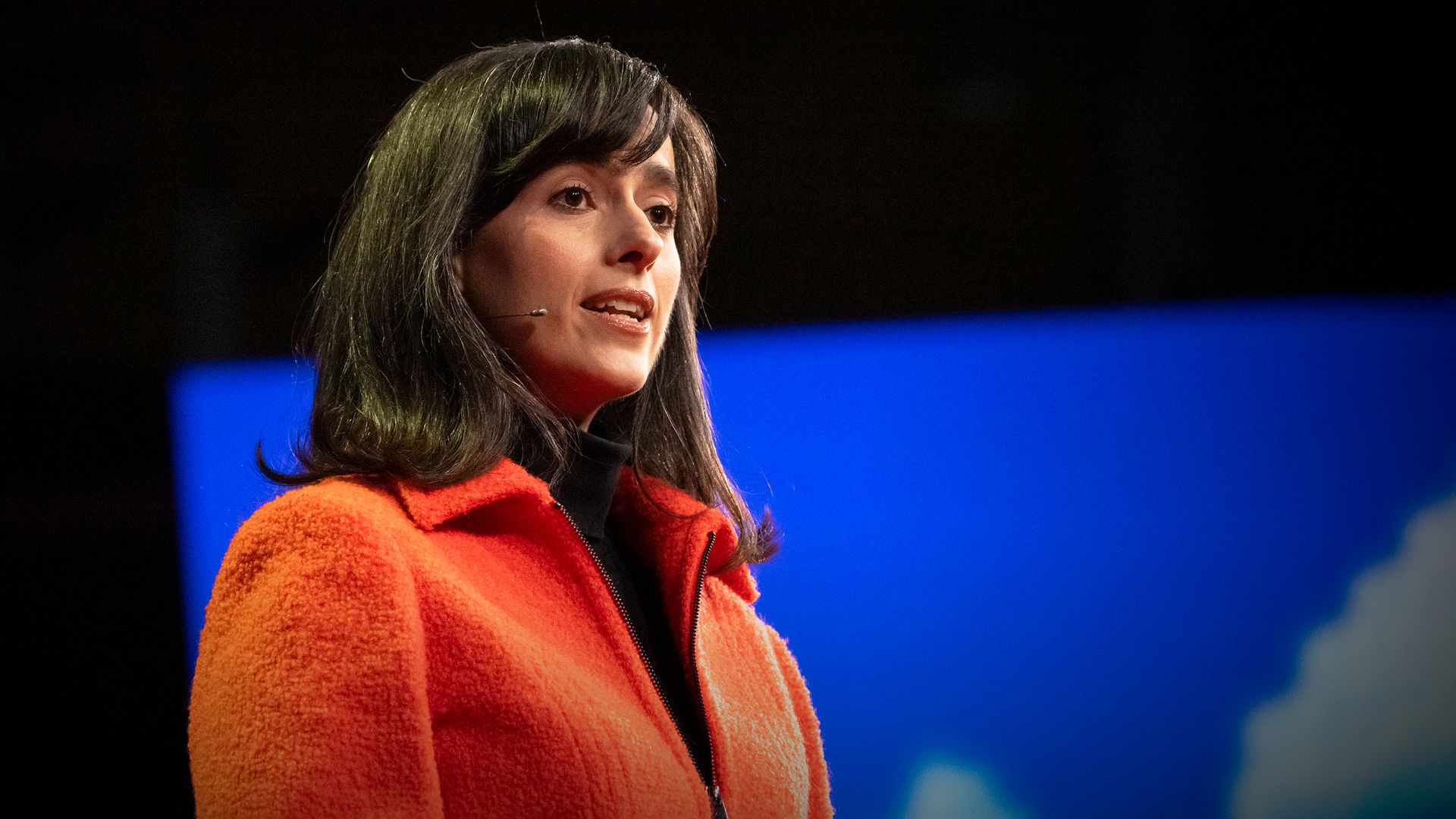
Schendy Kernizan

The gravity-defying future of manufacturing | Schendy Kernizan

3D printing promised to reinvent how we make things, but it's mostly stuck producing prototypes with a high level of waste. Designer and TED Fellow Schendy Kernizan found a different way — by printing objects directly into a tub of gel. He explains how this technique eliminates the constraints of gravity, pushing the limits of how we can manufacture objects across medicine, fashion, space travel and more.
Listen to all
Podcast episodes

TED Fellows Films

TED Talks meet documentaries in these short films that explore TED Fellows’ ideas. Dive into all three seasons to explore their mind-blowing innovations. 

05:39

FELLOWS FILM

Meet the youngest-ever mayor in Japan's history

TED Fellow Ryosuke Takashima is the youngest-ever mayor in Japan's history — but he doesn't consider himself a politician. His approach to leadership is simple: listen to as many voices as possible (from students to elders) in order to figure out what needs fixing. Hear why he thinks inviting citizens to participate in reforming their own communities is the best way to get things done.

2026

TED Fellows Film

Ryosuke Takashima
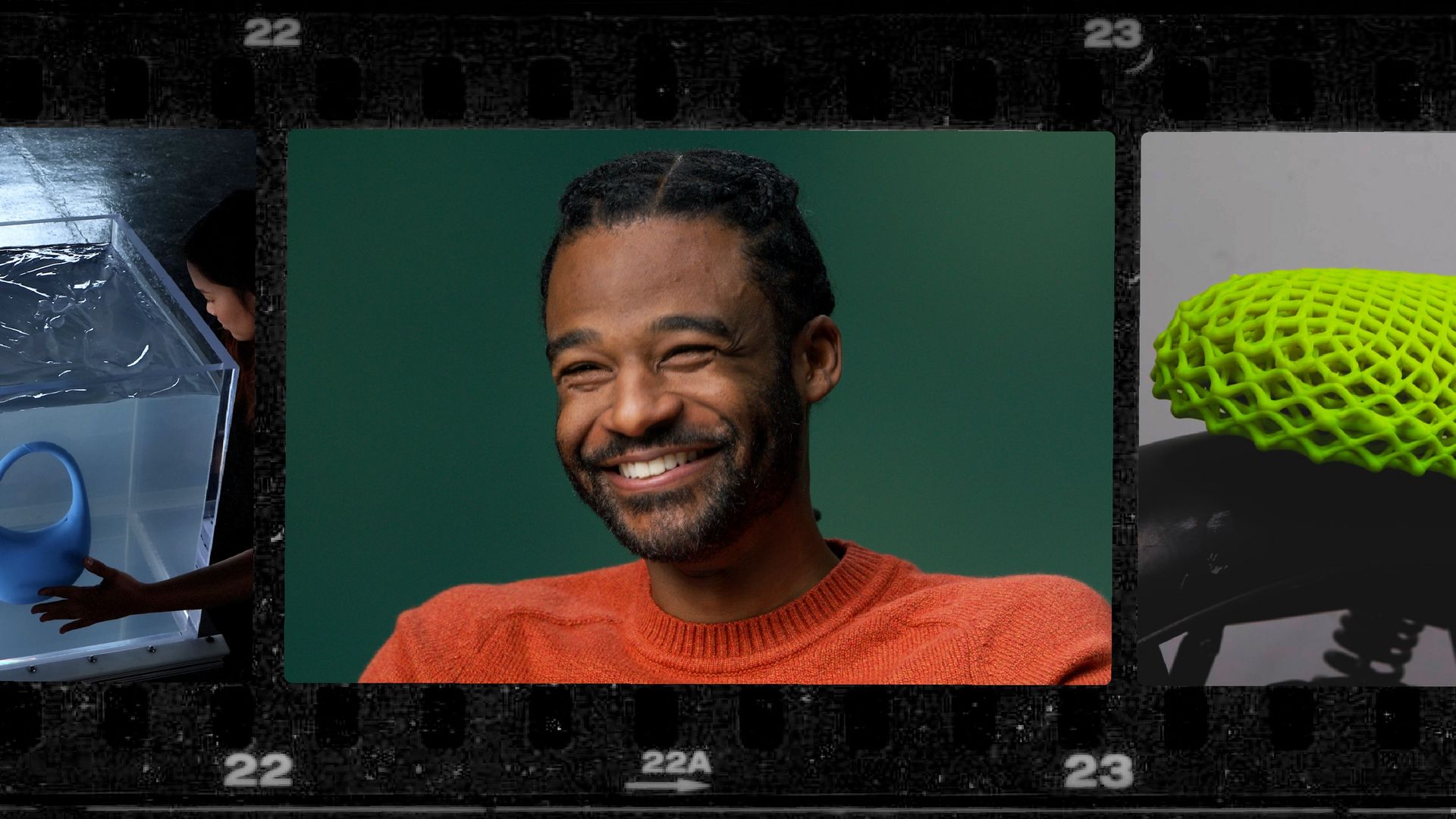
04:47

FELLOWS FILM

The gravity-defying future of manufacturing

3D printing promised to reinvent how we make things, but it's mostly stuck producing prototypes with a high level of waste. Designer and TED Fellow Schendy Kernizan found a different way — by printing objects directly into a tub of gel. He explains how this technique eliminates the constraints of gravity, pushing the limits of how we can manufacture objects across medicine, fashion, space travel and more.

2026

TED Fellows Film

Schendy Kernizan

Fellows Media Library

With 500+ TED Fellows and counting, we’ve got an entire world of media for you to explore. Dive into these talks, short films and podcasts showcasing Fellows turning ideas into action.

Clear
Sort
Thank you! Your submission has been received!
Oops! Something went wrong while submitting the form.

You Have the Rite" | Marc Bamuthi Joseph

In a breathtaking, jazz-inflected spoken-word performance, TED Fellow Marc Bamuthi Joseph shares a Black father's tender and wrenching internal reflection on the pride and terror of seeing his son enter adulthood. Hosted on Acast. See acast.com/privacy for more information.

2024

Podcasts

United States
Performer + Curator // Marc Bamuthi Joseph is a 2017 TED Global Fellow, an inaugural recipient of the Guggenheim Social Practice initiative, and an honoree of the United States Artists Rockefeller Fellowship. He is also the winner of the 2011 Herb Alpert Award in Theatre, and an inaugural recipient of the Doris Duke Performing Artist Award. In pursuit of affirmations of black life in the public realm, he co-founded the Life is Living Festival for Youth Speaks, and created the installation “Black Joy in the Hour of Chaos” for Creative Time. Joseph’s opera libretto, We Shall Not Be Moved, was named one of 2017’s “Best Classical Music Performances” by The New York Times. His evening length work, /peh-LO-tah/, successfully toured across North America for three years, including at BAM’s Harvey Theater as a part of the 2017 Next Wave Festival. His latest piece, “The Just and the Blind” investigates the crisis of over-sentencing in the prison industrial complex, and will premiere at Carnegie Hall in March 2019. Formerly the Chief of Program and Pedagogy at YBCA in San Francisco, Bamuthi currently serves as the Vice President and Artistic Director of Social Impact at The Kennedy Center. // In a breathtaking, jazz-inflected spoken-word performance, TED Fellow Marc Bamuthi Joseph shares a Black father's tender and wrenching internal reflection on the pride and terror of seeing his son enter adulthood. // "Soccer is the only thing on this planet that we can all agree to do together," says theater maker and TED Fellow Marc Bamuthi Joseph. Through his performances and an engagement initiative called "Moving and Passing," Joseph combines music, dance and soccer to reveal accessible, joyful connections between the arts and sports. Learn more about how he's using the beautiful game to foster community and highlight issues facing immigrants. // Marc Bamuthi Joseph is a 2017 TED Global Fellow, an inaugural recipient of the Guggenheim Social Practice initiative, and an honoree of the United States Artists Rockefeller Fellowship. He is also the winner of the 2011 Herb Alpert Award in Theatre, and an inaugural recipient of the Doris Duke Performing Artist Award. In pursuit of affirmations of black life in the public realm, he co-founded the Life is Living Festival for Youth Speaks, and created the installation “Black Joy in the Hour of Chaos” for Creative Time. Joseph’s opera libretto, We Shall Not Be Moved, was named one of 2017’s “Best Classical Music Performances” by The New York Times. His evening length work, /peh-LO-tah/, successfully toured across North America for three years, including at BAM’s Harvey Theater as a part of the 2017 Next Wave Festival. His latest piece, “The Just and the Blind” investigates the crisis of over-sentencing in the prison industrial complex, and will premiere at Carnegie Hall in March 2019. Formerly the Chief of Program and Pedagogy at YBCA in San Francisco, Bamuthi currently serves as the Vice President and Artistic Director of Social Impact at The Kennedy Center. // Performer + Curator // youth, immigration, industrial // California|Oakland|United States|USA
California|Oakland|United States|USA

Marc Bamuthi Joseph

No items found.
2024

07:05

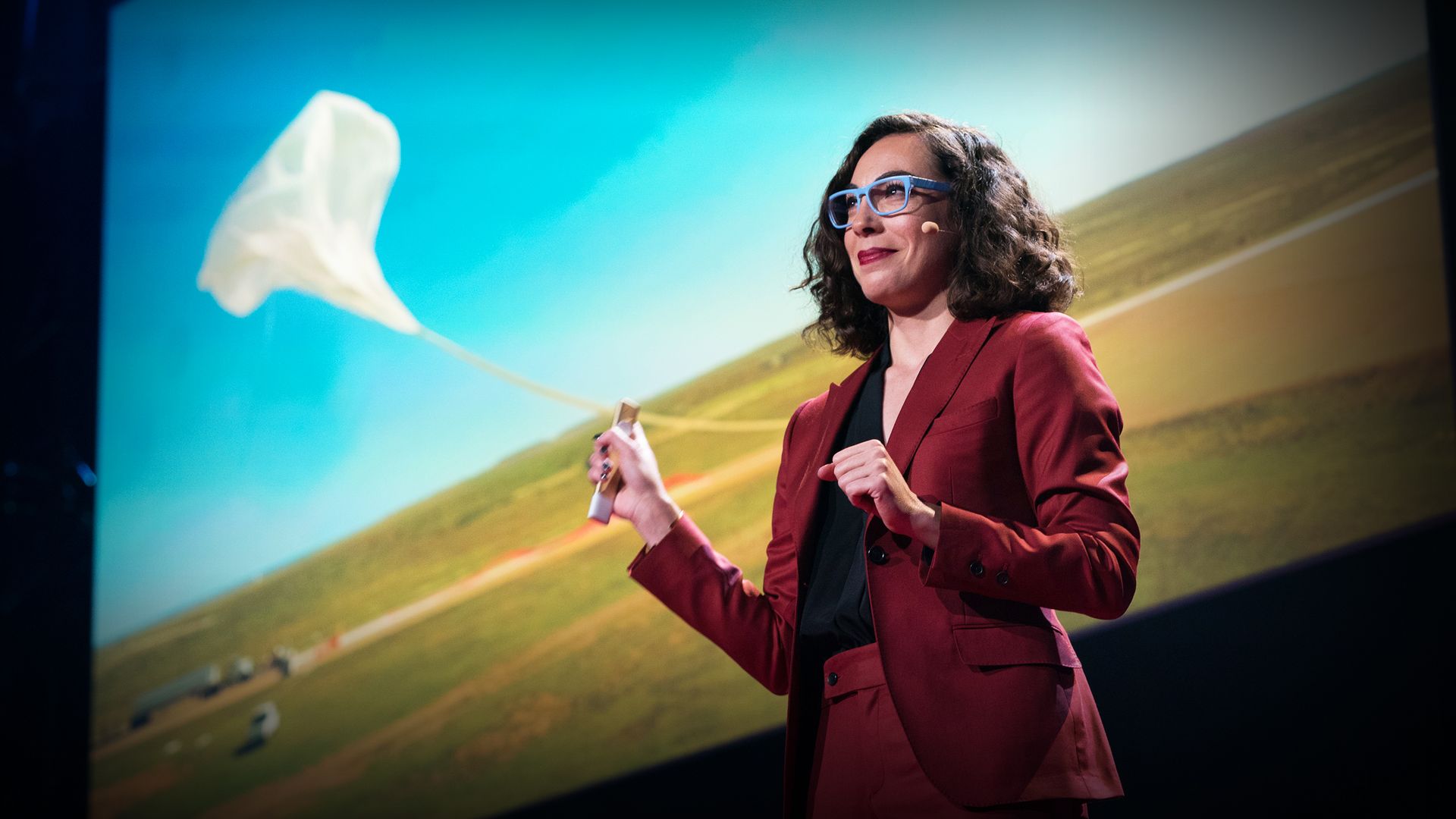
What it takes to launch a telescope

TED Fellow and astronomer Erika Hamden leads the team building FIREBall, a telescope that hangs from a giant balloon at the very edge of space and looks for clues about how stars are created. She takes us inside the roller-coaster, decade-long journey to get the telescope from an idea into orbit -- and shows how failure is inevitable when you're pushing the limits of knowledge.

2019

TED Talk

United States
Columbia University in the City of New York; Harvard University
Dr. Erika Hamden is an astrophysicist known for her work in designing and testing silicon devices for use in the UV, particularly focusing on anti-reflection coatings for delta-doped CCDs. She has been involved in projects like FIREBall-2, a UV balloon-borne telescope, and is interested in developing Skipper CCDs for astronomical use. Additionally, Dr. Hamden is active on social media, collaborating with various brands to make science accessible and engaging. She is also a keynote speaker, presenting on topics such as rebounding from failure, confidence, and scientific subjects. As a professor at the University of Arizona, she is involved in various telescope projects and is the PI of upcoming UV telescope missions like Hyperion and Eos. // Dr. Erika Hamden is a distinguished astrophysicist and a tenured professor at the University of Arizona's Steward Observatory. She serves as the Director of ASI and is renowned for her expertise in constructing space and stratospheric telescopes, as well as advancing telescope technology. Dr. Hamden is a prominent figure in space astrophysics, known for her leadership and initiatives such as NASA's PI Launchpad to mentor early career scientists in developing space missions. She leads various mission concepts like Hyperion and Eos, and is involved in projects like Aspera and FIREBall-2. With a background in Astronomy and Astrophysics from Harvard and a PhD from Columbia University, she has received prestigious awards including a PECASE award and a Nancy Grace Roman Technology Fellowship. Dr. Hamden's contributions extend to academia, research, and outreach, making her a TED Fellow, AAAS If/then Ambassador, and a notable figure in the field. // Columbia University in the City of New York; Harvard University // I'm trying to help us understand more about the universe around us and hopefully appreciate the world we live on a little bit more. I want to understand how everything is made- how galaxies form, how stars form, how OUR galaxy formed, and how OUR little star formed. // Dr. Erika Hamden is a distinguished astrophysicist and a tenured professor at the University of Arizona's Steward Observatory. With expertise in constructing space and stratospheric telescopes, she is known for her leadership in advancing telescope technology. Dr. Hamden has been involved in projects like FIREBall-2 and is leading mission concepts such as Hyperion and Eos. Her work extends to mentoring early career scientists through initiatives like NASA's PI Launchpad and engaging in outreach efforts as a TED Fellow and AAAS If/then Ambassador. With a background in Astronomy and Astrophysics from Harvard and a PhD from Columbia University, she has received prestigious awards like a PECASE award and a Nancy Grace Roman Technology Fellowship. Dr. Hamden's research focuses on understanding the formation of galaxies, stars, and our own solar system, aiming to deepen our knowledge of the universe and foster appreciation for our world. // Astrophysicist // Astrophysicist developing telescopes and new ultraviolet detection technologies to improve our ability to observe distant galaxies. // TED Fellow and astronomer Erika Hamden leads the team building FIREBall, a telescope that hangs from a giant balloon at the very edge of space and looks for clues about how stars are created. She takes us inside the roller-coaster, decade-long journey to get the telescope from an idea into orbit -- and shows how failure is inevitable when you're pushing the limits of knowledge. // Dr. Erika Hamden is a distinguished astrophysicist and a tenured professor at the University of Arizona's Steward Observatory. With expertise in constructing space and stratospheric telescopes, she is known for her leadership in advancing telescope technology. Dr. Hamden has been involved in projects like FIREBall-2 and is leading mission concepts such as Hyperion and Eos. Her work extends to mentoring early career scientists through initiatives like NASA's PI Launchpad and engaging in outreach efforts as a TED Fellow and AAAS If/then Ambassador. With a background in Astronomy and Astrophysics from Harvard and a PhD from Columbia University, she has received prestigious awards like a PECASE award and a Nancy Grace Roman Technology Fellowship. Dr. Hamden's research focuses on understanding the formation of galaxies, stars, and our own solar system, aiming to deepen our knowledge of the universe and foster appreciation for our world. // Astrophysicist // technology, research, science, coatings, astrophysics and space telescope development // Tucson|United States|Arizona|USA
Tucson|United States|Arizona|USA

Erika Hamden

No items found.
2019

02:41

Mining minerals from seawater

The world needs clean water, and more and more, we're pulling it from the oceans, desalinating it, and drinking it. But what to do with the salty brine left behind? In this intriguing short talk, TED Fellow Damian Palin proposes an idea: Mine it for other minerals we need, with the help of some collaborative metal-munching bacteria.

2012

TED Talk

Ireland
Biological miner // I am an Irish research engineer who has long been fascinated by the process of biomineralization–with particular attention on the mechanisms involved for mineral precipitation, making your work on biodegradable bone scaffolds of great interest–believing that the insights gained, particularly through the study of geomicrobiology may allow new strategies to be developed for the production of biocompatible bone implants or may even suggest future radical manufacturing technologies for the production of advanced composites for the automotive and aeronautical industries. Biological structures are synthesized under mild energetic conditions using natural compounds, sparking wide interest in understanding and duplicating such “clean” production processes. As part of my M.Sc., at Imperial College, London, I conducted research at the Centre for Organized Matter Chemistry, Bristol (a group headed by Professor Steven Mann) and also the Geo-Engineering section at the Technical University Delft (TUD), both groups are world leaders in biologically induced mineral precipitation. Research at TUD looked at the Biogrout (Van Paassen, 2009) process, as an analogue for the development of a novel production methodology, where biological agents can be employed as a catalyst for casting useful mineral objects. I received an M.Sc., with merit from Imperial College and exhibited this work at The Science Gallery, Trinity College, Dublin in 2011. Following the work above I was offered a research position at the Singapore Institute of Manufacturing Technology in collaboration with Nanyang Technical University, Singapore. For this position a literature review was proposed and conducted to assess the ability of microorganisms to mine selected minerals out of seawater desalination brine. This study was based on compelling and burgeoning evidence from the field of geomicrobiology, which shows the ubiquitous role microorganisms play in the cycling of minerals on the planet. As lead researcher I am currently conducting experiments and building kinetic models to better understand and control the magnesium content of microbally induced carbonate precipitation. Based on this and the work conducted as part of my M.Sc., I have been invited to make a talk on: Radical production technologies inspired by Nature, at TED Full Spectrum, a conference being held in California of February 2012. It is my aim to continue to research in the field of biomineralization, while exploring the mechanisms responsible for mild energetic mineral (including metal) precipitation for the production of mineral composites. // "Some see nature all ridicule and deformity, and by these I shall not regulate my proportions; and some scarce see nature at all. But to the eyes of a man with imagination nature is imagination itself" –William Blake I have studied and worked for a number of years in the pursuit and development of sustainable technologies. I believe that biologically inspired technologies will play a key role in the development of future sustainable societies and it is my aim to increase his knowledge and skill in this area. Current research is allowing me to assess the ability of microorganisms to precipitate and accumulate minerals (including metals) out of solution. Part of this research includes the use of microfluidic devices to better understand the chemical and kinetic interaction between certain bacteria and their inorganic precipitates. This knowledge will be invaluable–as part of continued evidence–for the development of low energetic production technologies and how if employed or mimicked nature has the potential to provide industry with radical production alternatives. // The world needs clean water, and more and more, we're pulling it from the oceans, desalinating it, and drinking it. But what to do with the salty brine left behind? In this intriguing short talk, TED Fellow Damian Palin proposes an idea: Mine it for other minerals we need, with the help of some collaborative metal-munching bacteria. // "Some see nature all ridicule and deformity, and by these I shall not regulate my proportions; and some scarce see nature at all. But to the eyes of a man with imagination nature is imagination itself" –William Blake I have studied and worked for a number of years in the pursuit and development of sustainable technologies. I believe that biologically inspired technologies will play a key role in the development of future sustainable societies and it is my aim to increase his knowledge and skill in this area. Current research is allowing me to assess the ability of microorganisms to precipitate and accumulate minerals (including metals) out of solution. Part of this research includes the use of microfluidic devices to better understand the chemical and kinetic interaction between certain bacteria and their inorganic precipitates. This knowledge will be invaluable–as part of continued evidence–for the development of low energetic production technologies and how if employed or mimicked nature has the potential to provide industry with radical production alternatives. // Biological miner // technology, water, precipitation, automotive, research, mobility, desalinating, mining, oceans, bicycle, mineral, plastic, nature, science, biodegradable plastic, desalination, clean water, biomineralization, metals, manufacturing, seawater // Kilkenny|Ireland
Kilkenny|Ireland

Damian Palin

No items found.
2012

How to convince others you’re still relevant (hint: start with yourself) with Julie Freeman

2024

Podcasts

United Kingdom
lubric; Translating NatureLtd; The Open Data Institute; TRANSLATING NATURE LTD; RSA (Royal Society of the Arts); Queen Mary, University of London; PwC Consulting; Translating Nature; Cranfield University; MzTEK; Invisible Cape; Fine Acts; FreqOUT!
Translating Nature is an art and design studio that investigates data as an art material. They produce a range of artworks for galleries, museums, commercial venues, and events. Their work involves translating complex processes and data into new ways of experiencing information through virtual and physical installations, animations, sculptures, and sound compositions. The studio explores themes such as trans-species communication systems, local electricity grid data, and the integration of nature and technology. Their projects include interactive installations, data-driven artwork, and explorations of sound and storytelling. The studio collaborates with various partners, researchers, and artists to create innovative and thought-provoking pieces that challenge traditional boundaries in art and technology. // Artist, Researcher, Producer, Curator, Speaker. Julie Freeman is an artist who works with living systems and new technologies. She is a pioneer of large scale installations and online artworks which use real-time data as a living art material. Her work aims to bring audiences wonder and joy through novel and immersive connections to nature. Often translating time-based data from natural sources into robotic sculptures, physical objects, images, sound compositions and animations, her work explores the relationship between science, technology and the living world; questioning the use of networked technology in how we connect to nature. Julie's work ALICE generates its own electricity from urine, and The Lake tracked fish in real time to create music and animation. Over the past 25 years, her award-winning work has been commissioned by and exhibited at leading institutions including; the V&A, London’s Institute of Contemporary Art, Modern Art Oxford The Lowry, and the Science Museum, as well as widely internationally (most recently at the Dunkerque Trienniale, France and ZKM, Germany). Julie co-founded Fine Acts, a global creative studio for social impact that operates across issues and borders. Fine Acts believes in the power of art and play - thinking about ways to make people care and act, and we work with global communities of creatives to create novel avenues to empower activism. She also founded the Open Data Institute’s art programme ‘Data as Culture’ (now ten years old) to help artists working critically with data to promote and exhibit their artwork. Julie is a TED Senior Fellow. She holds a PhD from Queen Mary University of London and leads Translating Nature, a digital and data art studio from Margate, Kent. // Working in collaboration with artists and scientists, we produce artworks that use data drawn from nature as an art material — creating new ways to experience and understand the living systems around us. Our installations have been shown all over the world, and in the UK at the V&A Museum, the Barbican, Science Museum, Somerset House and others. // We are a global creative studio for social impact that operates across issues and borders. We believe in the power of art and play. In our work, we think about ways to make people care and act, and we create novel avenues to empower activism. We: * Nurture collaborations: We bring together activists, artists and techies from across the globe to work on collaborative projects. * Produce powerful art: We create and commission art that raises awareness, triggers action, and fosters greater support for human rights campaigns. * Create effective campaigns: We work with groundbreaking nonprofits from around the world, designing and implementing tailor-made creative campaigns for their needs. * Boost innovation: We design and apply novel formats to explore the intersection of human rights, art and technology. * Support organizations: We consult and train civil society organizations in creative thinking, utilizing art and embracing play as a tool for social change. * Practice playtivism: We see the process of incorporating play and experimentation in activism as vital. We came up with the concept of playtivism – learn more about it from our founder’s TED talk. Fine Acts is co-founded by two TED Senior Fellows and an Obama Scholar, and is advised by some brilliant minds. The Fine Acts Collective currently features more than 40 TED Fellows, and is growing to include other prominent artists and advocates. Fine Acts launched at TED 2015. fineacts.co // The Data as Culture programme is a world class contemporary art programme. We collaborate with artists and organisations interested in working with data, people and network culture critically and materially. Our projects challenge and expand public understanding of data and how it may affect and reflect our lives. Leading and emerging artists are invited to create new work for a broad range of audiences at the ODI, online and at public venues in the UK and Internationally. Our art programmes and partnerships have reached hundreds of thousands of people at venues and online. Artworks have included a semi-sentient vending machine, data collection performances, photographs, networked artworks, pneumatic machines, live-coding performances and ‘stitch-hacked’ jumpers. New calls for commissions are announced on an ongoing basis. // Project management and consultancy for creative arts, science and technology projects ranging from site-specific installations to online communities. // PwC Consulting global Blended Learning Group required an experienced producer to deliver eLearning solutions for internal and external consultants, directors and partners. Headhunted for role by past client.Strategic creative development and enhancement of existing product range.Updated test centre tools, reporting and QA monitoring.Developing and maintaining budgets (up to £500k) & production plans (from 2 weeks to 12 months). // We produce large-scale and online data-driven artworks that use real-tine data from natural systems creating new ways to experience and understand the living systems around us. We working in collaboration with scientists, artists, technologists and organisations. Our installations have been shown all over the world, and in the UK at the V&A Museum, the Barbican, Science Museum, Somerset House and others. // Research. // FreqOUT! is Vital Regeneration’s innovative London based community education programme for young people which originated in Westminster. It explores the artistic and educational potential of wireless technology to engage socially excluded young people living in the 20% most deprived areas of the UK. Experienced artists, tutors and youth workers facilitate activities that encourage young people to discuss and create responses to current issues and technologies. // Working in collaboration with artists and scientists, we produce artworks that use data drawn from nature as an art material — creating new ways to experience and understand the living systems around us. Our installations have been shown all over the world, and in the UK at the V&A Museum, the Barbican, Science Museum, Somerset House and others. // The Data as Culture programme is a world class contemporary art programme. We collaborate with artists and organisations interested in working with data, people and network culture critically and materially. Our projects challenge and expand public understanding of data and how it may affect and reflect our lives. Leading and emerging artists are invited to create new work for a broad range of audiences at the ODI, online and at public venues in the UK and Internationally. Our art programmes and partnerships have reached hundreds of thousands of people at venues and online. Artworks have included a semi-sentient vending machine, data collection performances, photographs, networked artworks, pneumatic machines, live-coding performances and ‘stitch-hacked’ jumpers. New calls for commissions are announced on an ongoing basis. // Artist in Residence at the Microsystems and Nanotechnology Centre, Cranfield University. Supported by a Wellcome Trust Arts Award. More details: http://www.happen.org.uk and http://www.in-particular.net // Fine Acts bridges human rights and art to instigate social change. Our mission is to:* Nurture collaborations: We bring together activists and artists from across the globe to work on collaborative art projects.* Produce powerful art: We curate, commission and promote contemporary art with purpose.* Create effective campaigns: We work with trailblazing, groundbreaking nonprofits, designing and implementing tailor-made, advocacy or awareness-raising campaigns for their needs.* Boost innovation: We design and apply novel formats to explore the intersection of human rights, art and technology.* Support organisations: We consult and train organisations and individuals in creative thinking and utilising art as a tool for social change.We believe that art is one of the best ways to challenge social injustices. Art can be transcending, connecting us to issues on a deeper, emotional level. Art can create a visceral responsе and forge action from empathy.By producing and supporting socially engaged art, and by championing it into public and cultural spaces, we aim to raise awareness, trigger action, and foster greater support for human rights campaigns.Fine Acts is a global nonprofit, operating across issues and borders. We believe that art is one of the best ways to interpret and improve our society. We promote art exciting change. fineacts.co // Artist in Residence at the Microsystems and Nanotechnology Centre, Cranfield University. Supported by a Wellcome Trust Arts Award.More details: http://www.happen.org.uk and http://www.in-particular.net // FreqOUT! is Vital Regeneration’s innovative London based community education programme for young people which originated in Westminster. It explores the artistic and educational potential of wireless technology to engage socially excluded young people living in the 20% most deprived areas of the UK. Experienced artists, tutors and youth workers facilitate activities that encourage young people to discuss and create responses to current issues and technologies. // MzTEK is a non-profit organisation with the aim of addressing the imbalance of women artists working in the fields of new media, computer arts, and technology. // We collaborate with organisations, academia and artists to develop and produce artworks that use data to translate and reflect the living systems around us. // Research. // lubric; Translating NatureLtd; The Open Data Institute; TRANSLATING NATURE LTD; RSA (Royal Society of the Arts); Queen Mary, University of London; PwC Consulting; Translating Nature; Cranfield University; MzTEK; Invisible Cape; Fine Acts; FreqOUT! // Julie Freeman is an artist, researcher, producer, curator, and speaker known for her innovative work with living systems and new technologies. She creates large-scale installations and online artworks that utilize real-time data as a living art material, aiming to immerse audiences in novel connections to nature. Julie's projects often involve translating time-based data from natural sources into various art forms, exploring the intersection of science, technology, and the living world. She co-founded Fine Acts, a global creative studio for social impact, and initiated the Open Data Institute's art program 'Data as Culture'. With a background in digital and data art, Julie's work has been exhibited internationally at prestigious institutions and she holds a PhD from Queen Mary University of London. // I work collaboratively and across disciplines, using sound and data as art materials to produce pioneering artworks — creating new ways to experience and understand the living systems around us. My work explores the relationship between science, technology and the living world–– questioning the use of networked technology in how we connect to nature. // Julie Freeman is an artist, researcher, and curator who explores the intersection of art, technology, and nature through her innovative projects. She is the co-founder of Translating Nature, an art and design studio that creates immersive installations and artworks using real-time data as a living art material. Julie's work involves translating complex processes and data into interactive installations, animations, sculptures, and sound compositions, challenging traditional boundaries in art and technology. With a background in digital and data art, she collaborates with various partners, researchers, and artists to produce thought-provoking pieces that offer new ways of experiencing and understanding the living systems around us. // Data Artist // I am an artist for whom technology plays an integral part of my practice. My dynamic artworks are often shaped by external influences such as humans, animals or environmental factors. My work explores the relationship between science and the natural world, questioning the use of electronic technologies to ‘translate nature’ – whether it is through a swarm of zoomorphic butterflies responding to air pollution levels; a pair of mobile concrete speakers that lurk in galleries spewing sonic samples; using scientific techniques to misguide an audience by manipulating their sense of smell; or by providing an interactive platform from which to view the flap, twitch and prick of dogs’ ears. I often work collaboratively with scientists, experimenting to transform complex processes and data sets into sound compositions, kinetic objects and animations. <br><br> My work is held in a number of private collections, and since 1998 has been shown across the UK in venues such as the Institute of Contemporary Art, the Victoria & Albert Museum, Kinetica, the Barbican Centre and the Science Museum, and internationally in Brazil, Croatia, Lithuania, Luxembourg, Russia and the USA. <br><br> I'm a graduate of the MA Digital Arts at the Lansdown Centre for Electronic Arts, Middlesex University, London and a PhD candidate in Media & Arts Technologies at Queen Mary University of London. I'm also a board member of MzTEK.org and was a founder and Director of Studio Fish, one of the first artist-led organisations set-up in London solely to use digital media in creative and innovative ways (1994-2001). <br><br> I have been lucky enough to be awarded fellowships by the National Endowment for Science Technology and the Arts (2003) and TED.com (2011), and have been funded by the British Psychological Society, the Wellcome Trust and I continue to receive support from the Arts Council England. <br><br> I'm currently the Art Associate at the Open Data Institute, where I lead the Data as Culture art programme. // Julie is an artist and computer scientist who works with data differently. She uses it as an art material to create novel audio visual experiences. Her work includes large-scale installations, kinetic sculptures and online animations which explores how we perceive the relationship between technology, science and nature. She is passionate about understanding the less obvious elements of our world, and about how art can incorporate science and technology to inform our perspective of these unseen layers. Julie is a co-founder of Fine Acts which brings together activists and artists to work on collaborative projects which focus on human rights and social issues. fineacts.co Based in the UK, Julie holds a PhD in Data as an Art Material from Queen Mary University of London. She leads the Data as Culture art programme at the Open Data Institute (founded by Sir Tim Berners-Lee and Sir Nigel Shadbolt), commissioning and exhibiting data art. Instagram @juliefreeman_artist // Julie Freeman is an artist, researcher, and curator who explores the intersection of art, technology, and nature through her innovative projects. She is the co-founder of Translating Nature, an art and design studio that creates immersive installations and artworks using real-time data as a living art material. Julie's work involves translating complex processes and data into interactive installations, animations, sculptures, and sound compositions, challenging traditional boundaries in art and technology. With a background in digital and data art, she collaborates with various partners, researchers, and artists to produce thought-provoking pieces that offer new ways of experiencing and understanding the living systems around us. // Data Artist // technology, taxidermy, electricity grid, education, fish, data collection, butterflies, decarbonising tech, sound, data, off-grid power, art, research, creative technology, pneumatic, activism, design, human rights, rights, data art, advocacy campaigns, monitoring, low carbon web, women, off grid, vr art, carbon, pollution, art & science collaborations, kinetic sculpture, air pollution, data-driven, youth, ai and art, advocacy, open data, low tech, campaigns, nanotechnology, workers, responsible technology, low-carbon, nature, living things, science, bringing artists into organisations, art and human rights activism, electricity, communication, artificial intelligence // Margate|United Kingdom|England
Margate|United Kingdom|England

Julie Freeman

No items found.
2024

13:45

Kings of Africa's Economy

Eric Osiakwan is trying to dispel the notion that all Africa has to offer the world is natural resources. To that end, he has helped set up high-tech infrastructure and businesses in 32 countries across Africa over last decade and a half. He believes that the continent is poised to be the epicenter of a new tech business boom, with mobile devices at the forefront.

2018

TED Talk

Ghana
Serial mobile entrepreneur // Technology entrepreneur who has founded and built companies and organizations like GNVC, GISPA, AfrISPA Internet Research, InHand, PenPlusBytes, African Elections Portal, FOSSFA, Ghana Connect, Ghana Cyber City, WABco; serves on the board of Good Morning Africa, Kuzima, SMSGH, VC4Africa, Seed Engine and Appfrica // Eric Osiakwan is the Executive Secretary for both the African Internet Service Providers Association and the Ghana Internet Service Providers Association. He is also a visiting fellow and scholar at the Stanford University and Reuters Foundation Digital Vision Program. He is a consultant to the World Bank's Information for Development Program on Open Access for Africa; project co-coordinator for UC Berkeley's TIER Group in Ghana; and affiliate of the Berkman Centre for Internet and Society at the Harvard Law School. Osiakwan was invited by the Royal African Society to contributed ideas to Prime Minister Tony Blair's Commission for Africa. He is an associate of Spintrack AB, Balancing Act and African Analysis CC. He is also a director of Internet Research, InHand Ltd. and PenPlusBytes. He co-founded the Ghana New Ventures Competition and is a member of a number of professional bodies, including the Internet Society, Internet Corporation for Assigned Name and Numbers, and Ghana Institute of Information Technology. He co-authored The Internet in Ghana with the Mosaic group, using the GDI methodology, and co-authored the Ghana chapter of Negotiating the Net in Africa: The Politics of Internet Diffusion. // Eric Osiakwan is the Executive Secretary for both the African Internet Service Providers Association and the Ghana Internet Service Providers Association. He is also a visiting fellow and scholar at the Stanford University and Reuters Foundation Digital Vision Program. He is a consultant to the World Bank's Information for Development Program on Open Access for Africa; project co-coordinator for UC Berkeley's TIER Group in Ghana; and affiliate of the Berkman Centre for Internet and Society at the Harvard Law School. Osiakwan was invited by the Royal African Society to contributed ideas to Prime Minister Tony Blair's Commission for Africa. He is an associate of Spintrack AB, Balancing Act and African Analysis CC. He is also a director of Internet Research, InHand Ltd. and PenPlusBytes. He co-founded the Ghana New Ventures Competition and is a member of a number of professional bodies, including the Internet Society, Internet Corporation for Assigned Name and Numbers, and Ghana Institute of Information Technology. He co-authored The Internet in Ghana with the Mosaic group, using the GDI methodology, and co-authored the Ghana chapter of Negotiating the Net in Africa: The Politics of Internet Diffusion. // Serial mobile entrepreneur // technology, research, ict consulti, ict 4 develop, open access, law, isp u, politics // Accra|Ghana|Greater Accra Region
Accra|Ghana|Greater Accra Region

Eric Osiakwan

No items found.
2018

Why we need to imagine different futures | Anab Jain

Anab Jain brings the future to life, creating experiences where people can touch, see and feel the potential of the world we're creating. Do we want a world where intelligent machines patrol our streets, for instance, or where our genetic heritage determines our health care? Jain's projects show why it's important to fight for the world we want. Catch a glimpse of possible futures in this eye-opening talk.

2017

Podcasts

United Kingdom
Multicultural designer // Designer, filmmaker, entrepreneur, inventor, futurescaper: Anab wears many hats, and brings them all together at her multidisciplinary future-facing design studio Superflux. Based in east London, UK and also has a small studio in Ahmedabad, India, Superflux works both a consultancy and a lab, operating in the realm of emerging technologies and experiences, for business, cultural and social purposes. Clients include Nokia, Microsoft, Mattel, NESTA amongst others. Projects include the design of neural prosthetics and augmented vision for the blind, internet-of-things products for the home, alternate autonomous weather systems, ecological robots, RFID-enabled electronic jewellery, prototypes for visualising quantum computing and community-enabling services for urban worlds. Anab regularly speaks on design futurescaping, elastic cities, new technologies and innovation at conferences such as LIFT, World Congress for Information Technology, PICNIC and SIGGRAPH. Honours include the Award of Excellence ICSID, UNESCO Digital Arts Award, and Grand Prix Geneva Human Rights Festival. She has exhibited at MoMA, NY, Apple Computers Inc, Mattel HQ, London Design Festival and British Council. Her work has been profiled in WIRED, Guardian, Popular Science, Marie Claire and Blueprint. Educated in India, Vienna and London, Anab has an MA with distinction in Interaction Design from the Royal College of Art, London. // Anab is Director and Co-founder of critically acclaimed design firm Superflux. The firm works with governments, organisations and communities to translate future uncertainties into present day choices. Superflux’s clients and partners include Govt. of UAE, UNDP, Suncorp, Cabinet Office, Govt. of UK, Microsoft Research, and the V&A Museum. Anab has received awards from ICSID, UNESCO, Geneva Human Rights Festival, Apple Inc., and the UK Government’s Innovation Department. Her work has been shown at MoMA New York, V&A London, Vitra Design Museum and the National Museum of China amongst others. Anab is also Professor of Industrial Design at the University of Applied Arts in Vienna, where she is currently curating a project ‘How Will We Work’ investigating how AI, automation, alternative economies and invisible market forces are transforming the nature of work. Anab sits on the Boards of the Humanitarian Innovation Fund, Media & Journalism at London School of Economics and Participatory City. // Anab Jain brings the future to life, creating experiences where people can touch, see and feel the potential of the world we're creating. Do we want a world where intelligent machines patrol our streets, for instance, or where our genetic heritage determines our health care? Jain's projects show why it's important to fight for the world we want. Catch a glimpse of possible futures in this eye-opening talk. // Anab is Director and Co-founder of critically acclaimed design firm Superflux. The firm works with governments, organisations and communities to translate future uncertainties into present day choices. Superflux’s clients and partners include Govt. of UAE, UNDP, Suncorp, Cabinet Office, Govt. of UK, Microsoft Research, and the V&A Museum. Anab has received awards from ICSID, UNESCO, Geneva Human Rights Festival, Apple Inc., and the UK Government’s Innovation Department. Her work has been shown at MoMA New York, V&A London, Vitra Design Museum and the National Museum of China amongst others. Anab is also Professor of Industrial Design at the University of Applied Arts in Vienna, where she is currently curating a project ‘How Will We Work’ investigating how AI, automation, alternative economies and invisible market forces are transforming the nature of work. Anab sits on the Boards of the Humanitarian Innovation Fund, Media & Journalism at London School of Economics and Participatory City. // Multicultural designer // technology, automation, cities, urban, research, participatory, design, human rights, rights, weather, humanitarian, interaction design, thought leadership, robotics, future visioning and purposing, industrial design, nature, emerging technologies, science, design innovation & strategy, industrial, artificial intelligence, ecology // United Kingdom|England|London
United Kingdom|England|London

Anab Jain

No items found.
2017

13:42

Meat Without Animals: The Future Of Food

Plant-based and cultivated meat are poised to transform the global food system. In an eye-opening talk, food innovator Bruce Friedrich shows how government support can move this industry forward, revolutionizing the way we eat.

2020

TED Talk

United States
The Good Food Institute APAC; Farm Sanctuary; The Good Food Institute India; Grinnell College; The Good Food Institute Israel; The Good Food Institute; The London School of Economics and Political Science (LSE); Baltimore City Public Schools; The Johns Hopkins University; Georgetown University Law Center; The Good Food Institute Europe; Food Solutions Action; The Good Food Institute Brasil
The organization is focused on accelerating the development and adoption of alternative proteins to address global challenges in the food system. They work across science, policy, and industry to advance alternative protein innovation, with a particular emphasis on plant-based, fermentation-derived, and cultivated meats. The organization provides resources, support, and funding opportunities for researchers, entrepreneurs, investors, and companies in the alternative protein space. Their efforts aim to improve food security, reduce environmental impact, and enhance national security by promoting the shift towards alternative proteins as a sustainable and resilient food source. // The Good Food Institute (GFI) is led by President and Founder Bruce Friedrich, who is a prominent figure in the alternative protein industry. Bruce oversees GFI's global strategy and is recognized for his expertise in alternative proteins, global programs, and food innovation. He has been featured in various media outlets and podcasts discussing the importance of modernizing meat production to mitigate climate change and prevent future pandemics. GFI focuses on promoting plant-based and clean meat as sustainable and just protein sources, advocating for government support and investment in alternative proteins to achieve climate goals. // With more than 100 full-time team members across six regions of the world, the Good Food Institute is a 501(c)(3) nonprofit working internationally to make alternative proteins delicious, affordable, and accessible. GFI advances open-access research; mobilizes resources and talent; and empowers partners across the food system to create a sustainable, secure, and just protein supply. GFI is funded entirely by private philanthropic support. See gfi.org.***Team: gfi.org/our-teamJobs: gfi.org/careersStrategy: gfi.org/planYIR: gfi.org/2020 // Taught English and government to 10th and 11th graders in inner-city Baltimore. Named "Teacher of the Year" for my school. Awarded “Recognition of Excellence” for perfect score (200/200) on Praxis II English teacher proficiency exam. // With more than 120 full-time team members across six regions of the world, the Good Food Institute is a 501(c)(3) nonprofit working internationally to make alternative proteins delicious, affordable, and accessible. GFI advances open-access research; mobilizes resources and talent; and empowers partners across the food system to create a sustainable, secure, and just protein supply. GFI is funded entirely by private philanthropic support. See gfi.org. *** Team: gfi.org/our-team Jobs: gfi.org/careers Strategy: gfi.org/plan YIR: gfi.org/2020 // Securing the future of our food system requires action today. With its growing population, America needs a more resilient approach to agriculture - one that prioritizes strengthening all levels of the supply chain. Our mission is to promote solutions that enable our food system to continue supporting farmers and feeding the world in the face of evolving challenges. // Studies consistently show that the primary factors in any consumer’s eating choices are taste, price, and convenience. The Good Food Institute is laser-focused on working to make plant-based and clean meat, dairy, and eggs (real meat, dairy, and eggs, but produced without the use of animals) as delicious, price-competitive, and convenient as possible, through the following:Fostering Innovation: Outreach to top universities for entrepreneurship, synthetic and plant biology, and tissue engineering—to create private and public sector activity focused on advancing innovative alternatives to the products of industrial animal agriculture. Supporting Innovation: Working with the most transformational companies on communications, regulatory work, business plans, venture capital support, and all aspects of their success—to mobilize markets and food technology for maximum transformation away from industrialized animal agriculture. Corporate Engagement: Creating collaborative relationships with food companies, restaurants, and grocery stores to maximize the quality, quantity, and promotion of plant-based alternatives.Institutional Outreach: Educating large grant-making institutions, investors, corporations, and governments about the value of R&D in this field as a critical component in addressing sustainability, climate change, and global hunger—to steer tens of millions of dollars toward alternatives to conventional animal products.Check us out at www.gfi.org, meet our team at www.gfi.org/our-team, and apply to work with us at www.gfi.org/jobs. // Oversaw all legislative, regulatory, and litigation work. // The Good Food Institute APAC; Farm Sanctuary; The Good Food Institute India; Grinnell College; The Good Food Institute Israel; The Good Food Institute; The London School of Economics and Political Science (LSE); Baltimore City Public Schools; The Johns Hopkins University; Georgetown University Law Center; The Good Food Institute Europe; Food Solutions Action; The Good Food Institute Brasil // Bruce Friedrich is a dedicated professional with a background in education and a strong commitment to sustainable food systems. With experience in teaching English and government, he has been recognized for his excellence in the field. Currently, Bruce is a key figure at the Good Food Institute, a nonprofit organization focused on promoting alternative proteins globally. At the institute, he leads a team of over 100 members across multiple regions, working towards making plant-based and clean meat, dairy, and eggs more accessible and affordable. Bruce's expertise lies in fostering innovation, supporting transformative companies, engaging with the corporate sector, and advocating for sustainable food practices. His work involves strategic planning, team management, and collaboration with various stakeholders to drive positive change in the food industry. // I founded the Good Food Institute, a global network of nonprofit science-focused think tanks with more than 225 full-time team members across affiliates in the U.S., India, Israel, Brazil, Singapore, and Europe (UK, Germany, & EC). GFI works on alternative protein policy, science, and corporate engagement - to accelerate the production of plant-based and cultivated meat in order to bolster the global protein supply while protecting our environment, promoting global health, and preventing food insecurity. // Bruce Friedrich is a respected figure in the alternative protein industry, known for his leadership as the President and Founder of The Good Food Institute (GFI). Through GFI, Bruce spearheads global initiatives aimed at advancing plant-based, fermentation-derived, and cultivated meats to address pressing challenges in the food system. His expertise lies in advocating for sustainable and just protein sources, emphasizing the importance of modernizing meat production to combat climate change and enhance food security. With a background in education and a strong commitment to sustainable food systems, Bruce leads a dedicated team at GFI, working tirelessly to promote alternative proteins and drive positive change in the food industry through strategic planning, team management, and collaboration with stakeholders worldwide. // Food innovator // Founder of the Good Food Institute, an organization supporting the creation of plant and cell-based meat for a more healthy and sustainable food system. // Bruce Friedrich is founder & CEO of the Good Food Institute, a global network of nonprofit organizations, with affiliates in the U.S., India, Israel, Brazil, Singapore, and Europe (UK & EU), that works on alternative protein policy, science, and corporate engagement. GFI is accelerating the production of plant-based and cultivated meat in order to bolster the global protein supply while protecting our environment, promoting global health, and preventing food insecurity. Bruce is a TED Fellow, Y Combinator alum, 2021 "American Food Hero" (EatingWell Magazine), and popular speaker on food innovation. He has penned op-eds for the Wall Street Journal, Guardian, USA Today, Los Angeles Times, Wired, CNN, and many other publications. He has represented GFI on the TED Radio Hour, New Yorker Radio Hour, Recode Decode, the Ezra Klein Show, Making Sense (Sam Harris), and a variety of other podcasts and TV programs. Bruce's 2019 TED talk has been viewed more than 2.4 million times and translated into 30 languages. He co-authored two books, contributed chapters or forewords to ten more, and has written seven law review articles. Bruce is also on the board of Food Solutions Action, a 501(c)(4) nonprofit, nonpartisan organization dedicated to accelerating agricultural innovation; he co-founded impact venture funds New Crop Capital and Clear Current Capital, though he has no financial interest in either fund; and he serves on the UN Climate Change Global Innovation Hub Working Group on Nutrition and Health. Bruce graduated magna cum laude from Georgetown Law and also holds degrees from Johns Hopkins University, the London School of Economics, and Grinnell College. // Bruce Friedrich is a respected figure in the alternative protein industry, known for his leadership as the President and Founder of The Good Food Institute (GFI). Through GFI, Bruce spearheads global initiatives aimed at advancing plant-based, fermentation-derived, and cultivated meats to address pressing challenges in the food system. His expertise lies in advocating for sustainable and just protein sources, emphasizing the importance of modernizing meat production to combat climate change and enhance food security. With a background in education and a strong commitment to sustainable food systems, Bruce leads a dedicated team at GFI, working tirelessly to promote alternative proteins and drive positive change in the food industry through strategic planning, team management, and collaboration with stakeholders worldwide. // Food innovator // technology, grassroots, entrepreneurship, food security, education, food technology, led, nutrition, biodiversity, dairy, alternative proteins, biodiversity loss, jobs, finance, cultivated meat, animal agriculture, research, meat, agriculture, resilience, climate, supply chain, food systems, volunteerism, policy, sustainable food, farmers, plant-based, food system, plant-based alternatives, affordable, food policy, climate change, pandemic, plants, environmental impact, teachers, insecurity, alternative protein, litigation, global health, corporate engagement, amr, grassroots organizing, plant-based meat, science, food, national security, law, crops, government, industrial, communication, ecology, pandemic risk // Washington|United States|District of Columbia
Washington|United States|District of Columbia

Bruce Friedrich

No items found.
2020

05:51

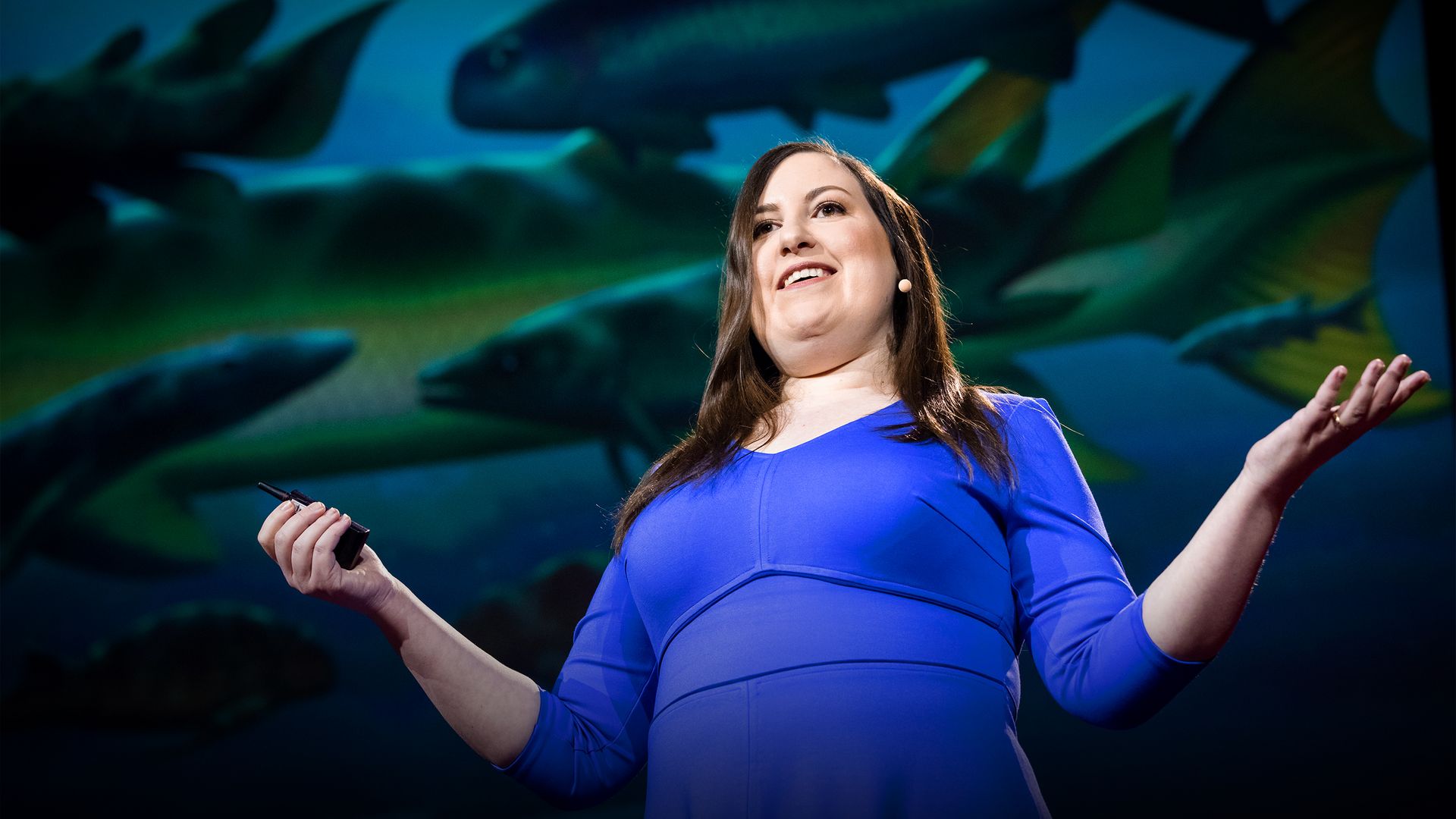
How to win at evolution and survive a mass extinction

Congratulations! By being here, alive, you are one of history's winners -- the culmination of a success story four billion years in the making. The other 99 percent of species who have ever lived on earth are dead -- killed by fire, flood, asteroids, ice, heat and the cold math of natural selection. How did we get so lucky, and will we continue to win? In this short, funny talk, paleobiologist and TED Fellow Lauren Sallan shares insights on how your ancestors' survival through mass extinction made you who you are today.

2017

TED Talk

Japan
University of Chicago; University of Pennsylvania; Okinawa Institute of Science and Technology Graduate University (OIST)
Lauren Sallan is an American academic and paleobiologist known for her work in macroevolution. She is the head of the Macroevolution Unit at the Okinawa Institute of Science and Technology and previously held a position at the University of Pennsylvania. Sallan utilizes big data analytics to study macroevolution, focusing on palaeoichthyology. Her research has delved into the evolution of vertebrates, particularly during critical stages like the End-Devonian extinction and the Hangenberg event. Sallan has been recognized as a TED Senior Fellow and has delivered multiple TED talks on evolution and mass extinctions. She has compiled a comprehensive database of fish fossils spanning millions of years, shedding light on the early evolution of vertebrates and the factors influencing species formation rates. // The Macroevolution Unit at the Okinawa Institute of Science and Technology Graduate University investigates how environmental change, global events, ecological interactions, and key traits have shaped biodiversity over long timescales. They focus on determining the origins of major vertebrate groups, particularly fishes, and key ecosystems, such as marine and freshwater environments. The unit conducts computational analyses of biodiversity databases, spanning from local to global scales and from the present day to the last 600 million years. They also study morphological biodiversity at the species level using various scientific approaches. The research areas include understanding how crises and opportunities have influenced fish biodiversity, the origins of major animal groups, and the impacts of mass extinctions and global crises. The unit's work sheds light on the evolutionary history of vertebrates and the interactions between vertebrates and invertebrates, providing insights into the long-term consequences of environmental changes. // Lauren Sallan is an ichthyologist and paleontologist investigating how environmental change, global events, ecological interactions and key traits shaped biodiversity on timescales outside human observation (macroevolution). Her lab seeks to determine the origins of major vertebrate groups (particularly fishes) and key ecosystems (particularly marine and freshwater) as well as understand how species respond to big challenges – living or environmental, regional or global, gradual or sudden. Lauren is the head of the Macroevolution Unit at the Okinawa Institute of Science and Technology (OIST) an innovative research university that fully supports ideas-driven science. Lauren is building a international team of cross-disciplinary scientists to investigate the evolution of the oceans and the origins of fish biodiversity. Prior to joining OIST, Lauren was the Martin Meyerson Assistant Professor in Interdisciplinary Studies at the University of Pennsylvania. She was one of 10 people selected from a global applicant pool to became a TED Fellow in 2017, and she became a TED Senior Fellow in 2019. Her TED Talks on surviving mass extinction and the evolution of life have received almost 3 million views. Lauren's research has been published in high-profile venues such as Science, Nature, PNAS, and Current Biology. It has also been featured by The New York Times, The Chicago Tribune, the BBC, Forbes, the New Scientist, the Discovery Channel, and the recent popular science book 'The Ends of the World' by Peter Brannen (Harper Collins). // Head of the Macroevolution Unit // Head of the Marine Macroevolution Unit // Incoming Head, Marine Macroevolution Unit // Incoming Head, Marine Macroevolution Unit // University of Chicago; University of Pennsylvania; Okinawa Institute of Science and Technology Graduate University (OIST) // Lauren Sallan is an accomplished ichthyologist and paleontologist specializing in macroevolution, focusing on how environmental changes, global events, and ecological interactions have influenced biodiversity over extended timescales. As the head of the Macroevolution Unit at the Okinawa Institute of Science and Technology (OIST), she leads a diverse team of international scientists in exploring the origins of vertebrate groups, particularly fishes, and major ecosystems in marine and freshwater environments. Prior to her current role, Lauren held a prestigious position as the Martin Meyerson Assistant Professor at the University of Pennsylvania and has been recognized as a TED Fellow and TED Senior Fellow for her impactful research. Her work, featured in renowned scientific journals and mainstream media outlets, sheds light on the evolution of life in response to significant challenges, both environmental and biological. // I am trying to understand the origins and structure of modern marine biodiversity, why some fish species thrive and others fail in the face of environmental and ecological challenges, and how and why our own ancestors, the earliest vertebrates and fishes, first evolved into familiar forms. // Lauren Sallan is an esteemed paleobiologist and ichthyologist renowned for her expertise in macroevolution. Leading the Macroevolution Unit at the Okinawa Institute of Science and Technology, she delves into the evolution of vertebrates, with a particular focus on palaeoichthyology. Sallan's research employs big data analytics to unravel the impacts of environmental changes and global events on biodiversity, especially in fish species. Her work sheds light on the origins of major vertebrate groups, such as fishes, and key ecosystems in marine and freshwater environments. Through her comprehensive database of fish fossils, Sallan provides valuable insights into the early evolution of vertebrates and the factors influencing species formation rates. // Paleobiologist // Paleobiologist using the vast fossil record as a deep time database to explore how mass extinctions, environmental change and shifting ecologies impact biodiversity. // Lauren Sallan is a paleobiologist using cross-disciplinary data analytics and methods to gain insight into the underpinnings of ocean biodiversity and how ecology and evolution operate at scales unobservable by humans (macroevolution). Lauren uses the vast fossil record of fishes as a deep time database, mining to find out why some species persist and diversify while others die off. She has used these methods to discover the lost, largest, 'sixth' mass extinction of vertebrates, reveal how fish heads changed first during their rise to dominance, and show how invasive predators can shift prey evolution at global scales. In Summer 2022, Lauren will become the full-time head of the new Marine Macroevolution Unit at the Okinawa Institute of Science and Technology (OIST) an innovative research university that fully supports ideas-driven science. There she will build a international team of cross-disciplinary scientists to investigate the evolution of the oceans and the origins of fish biodiversity. Lauren is currently the Martin Meyerson Assistant Professor in Interdisciplinary Studies at the University of Pennsylvania, became a TED Fellow in 2017 and a TED Senior Fellow in 2019. Her research has been published in high-profile venues such as Science, Nature, PNAS, and Current Biology. It has also been featured by The New York Times, The Chicago Tribune, the BBC, Forbes, the New Scientist, the Discovery Channel, and the recent popular science book 'The Ends of the World' by Peter Brannen (Harper Collins). Her TED Talks on surviving mass extinction and the evolution of life have received almost 3 million views. // In this hilarious, whirlwind tour of the last four billion years of evolution, paleontologist and TED Fellow Lauren Sallan introduces us to some of the wildly diverse animals that roamed the prehistoric planet (from sharks with wings to galloping crocodiles and long-necked rhinos) and shows why paleontology is about way more than dinosaurs. // Congratulations! By being here, alive, you are one of history's winners -- the culmination of a success story four billion years in the making. The other 99 percent of species who have ever lived on earth are dead -- killed by fire, flood, asteroids, ice, heat and the cold math of natural selection. How did we get so lucky, and will we continue to win? In this short, funny talk, paleobiologist and TED Fellow Lauren Sallan shares insights on how your ancestors' survival through mass extinction made you who you are today. // Lauren Sallan is an esteemed paleobiologist and ichthyologist renowned for her expertise in macroevolution. Leading the Macroevolution Unit at the Okinawa Institute of Science and Technology, she delves into the evolution of vertebrates, with a particular focus on palaeoichthyology. Sallan's research employs big data analytics to unravel the impacts of environmental changes and global events on biodiversity, especially in fish species. Her work sheds light on the origins of major vertebrate groups, such as fishes, and key ecosystems in marine and freshwater environments. Through her comprehensive database of fish fossils, Sallan provides valuable insights into the early evolution of vertebrates and the factors influencing species formation rates. // Paleobiologist // technology, freshwater, ecology, paleontology, marine, education, fish, biodiversity, ocean, fire, scicomm, extinction, data, rhinos, evolution, research, data and analytics, marine biology, species, floods, interdisciplinary studies, mining, oceans, education and outreach, museums, universities, big data, nature, science, mass extinction, ecosystem, fossils, marine ecology // Okinawa|Japan|Onna
Okinawa|Japan|Onna

Lauren Sallan

No items found.
2017

What a scrapyard in Ghana can teach us about innovation | DK Osseo-Asare

In Agbogbloshie, a community in Accra, Ghana, people descend on a scrapyard to mine electronic waste for recyclable materials. Without formal training, these urban miners often teach themselves the workings of electronics by taking them apart and putting them together again. Designer DK Osseo-Asare wondered: What would happen if we connected these self-taught techies with students and young professionals in STEAM fields? The result: a growing maker community where people engage in peer-to-peer, hands-on education, motivated by what they want to create. Learn more about how this African makerspace is pioneering a grassroots circular economy. Hosted on Acast. See acast.com/privacy for more information.

2018

Podcasts

Ghana
Grassroots architect // Ghanaian-American architect and co-founder of DSGN AGNC, an activist design think-tank, and Low Design Office, an architecture studio // DK Osseo-Asare is a designer who makes buildings, landscapes, cities, objects and digital tools. He is assistant professor of architecture and engineering design at Penn State University, where he runs the Humanitarian Materials Lab and serves as Associate Director of Penn State’s Alliance for Education, Science, Engineering and Design with Africa (AESEDA). His research explores material assemblies optimized for massively scalable radical resilience, and integrates synergetics, design innovation, network power, open-source urbanism, digital and bio-fabrication and architecture robots. Osseo-Asare is co-founding principal of Low Design Office (LOWDO), an architecture and integrated design studio based in Ghana and Texas. He led urban and strategic design for the Koumbi City and Anam City new town projects in Ghana and Nigeria. He is cofounder of Agbogbloshie Makerspace Platform (AMP), an open-source maker tech project geared for Africa, winner of the Rockefeller Foundation’s Centennial Innovation Challenge, Design Corps’ 2017 SEED Award for Public Interest Design and exhibited at the 2017 Seoul Biennale for Architecture and Urbanism and Afropixel6 / 2018 Dak’art Biennale of Contemporary African Art. He is a TED Global Fellow, Fulbright Scholar, Africa 4 Tech Digital Champion (EdTech) and presents his work internationally, including the Royal Institute of British Architects, TED Global, Smart City Expo, World Bank CitiSense, Nelson Mandela African Institution of Science and Technology, Next Einstein Initiative/African Institute of Mathematical Sciences, MIT, Harvard, Columbia GSAPP, AfriDesignX / Victoria & Albert Museum in London and on the BBC. // In Agbogbloshie, a community in Accra, Ghana, people descend on a scrapyard to mine electronic waste for recyclable materials. Without formal training, these urban miners often teach themselves the workings of electronics by taking them apart and putting them together again. Designer and TED Fellow DK Osseo-Asare wondered: What would happen if we connected these self-taught techies with students and young professionals in STEAM fields? The result: a growing maker community where people engage in peer-to-peer, hands-on education, motivated by what they want to create. Learn more about how this African makerspace is pioneering a grassroots circular economy. // DK Osseo-Asare is a designer who makes buildings, landscapes, cities, objects and digital tools. He is assistant professor of architecture and engineering design at Penn State University, where he runs the Humanitarian Materials Lab and serves as Associate Director of Penn State’s Alliance for Education, Science, Engineering and Design with Africa (AESEDA). His research explores material assemblies optimized for massively scalable radical resilience, and integrates synergetics, design innovation, network power, open-source urbanism, digital and bio-fabrication and architecture robots. Osseo-Asare is co-founding principal of Low Design Office (LOWDO), an architecture and integrated design studio based in Ghana and Texas. He led urban and strategic design for the Koumbi City and Anam City new town projects in Ghana and Nigeria. He is cofounder of Agbogbloshie Makerspace Platform (AMP), an open-source maker tech project geared for Africa, winner of the Rockefeller Foundation’s Centennial Innovation Challenge, Design Corps’ 2017 SEED Award for Public Interest Design and exhibited at the 2017 Seoul Biennale for Architecture and Urbanism and Afropixel6 / 2018 Dak’art Biennale of Contemporary African Art. He is a TED Global Fellow, Fulbright Scholar, Africa 4 Tech Digital Champion (EdTech) and presents his work internationally, including the Royal Institute of British Architects, TED Global, Smart City Expo, World Bank CitiSense, Nelson Mandela African Institution of Science and Technology, Next Einstein Initiative/African Institute of Mathematical Sciences, MIT, Harvard, Columbia GSAPP, AfriDesignX / Victoria & Albert Museum in London and on the BBC. // Grassroots architect // technology, grassroots, education, architecture, led, buildings, cities, open-source, circular economy, job skills training, urban, research, resilience, activism, design, electronic waste, recycled materials, edtech, waste, making, humanitarian, mining, urbanism, robotics, innovation, science, smart city, synergetics, recyclability // Ghana|Greater Accra Region|Tema
Ghana|Greater Accra Region|Tema

DK Osseo-Asare

No items found.
2018

05:38

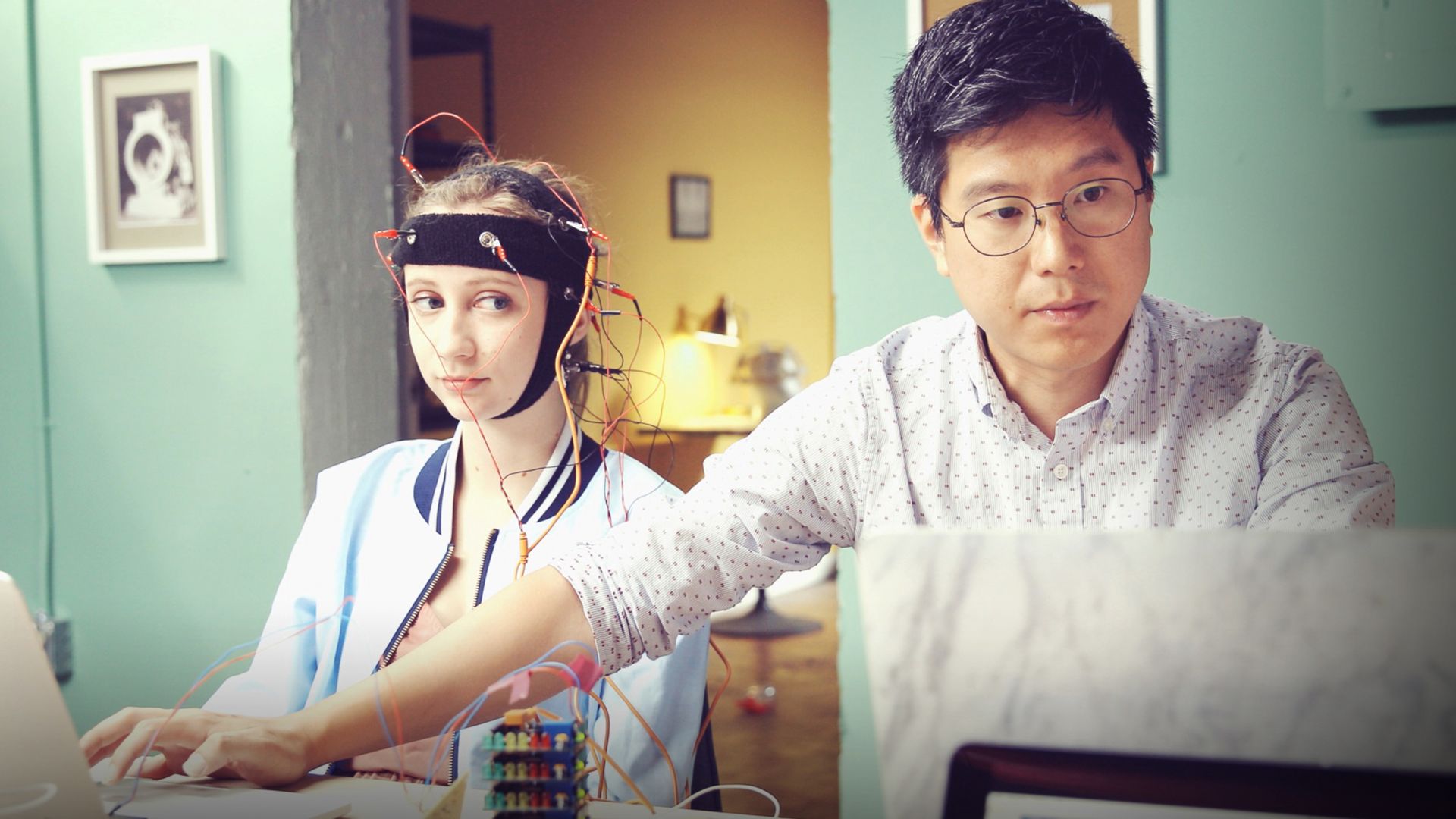
This computer is learning to read your mind

Modern technology lets neuroscientists peer into the human brain, but can it also read minds? Armed with the device known as an electroencephalogram, or EEG, and some computing wizardry, our intrepid neuroscientists attempt to peer into a subject's thoughts.

2018

Other

United States
Michigan State University; Backyard Brains; University of Michigan; University of South Carolina
Backyard Brains is a company founded by neuroscience Ph.D. students with a mission to democratize neuroscience education. They have developed kits that allow individuals, including children, to learn about neuroscience at an early age using off-the-shelf electronics. Their products focus on neuroscience but have expanded into various STEM research fields. The kits enable users to record from neurons in invertebrates, human physiology, neuroengineering devices, and even plant signaling. Backyard Brains has received recognition for their work, including awards from prestigious organizations and the U.S. National Institutes of Health. They have a strong community presence, with TED Talks and collaborations with popular science shows. The company is open-source, transparent about their finances, and offers a range of experiments and lesson plans for educators and enthusiasts. // Adjunct Professor in the Department of Molecular & Integrative Physiology at the University of Michigan // Adjunct Assistant Professor of Neuroscience, Michigan State University // Greg Gage is the co-founder and CEO of Backyard Brains, an organization that develops open-source tools that allow amateurs and students to participate in neural discovery. Greg is an NIH-award winning neuroscientist with 9 popular TED Talks and dozens of peer-reviewed publications. Greg is a Senior Fellow at TED and the recipient of the White House Champion of Change from Barack Obama award for his commitment to citizen science. // Michigan State University; Backyard Brains; University of Michigan; University of South Carolina // Gregory Gage is a seasoned neuroscientist and educator with a strong focus on democratizing neuroscience research. With a background in academia as an Adjunct Professor at the University of Michigan and Michigan State University, Gregory has also made significant contributions as the co-founder and CEO of Backyard Brains. Through this organization, he has spearheaded the development of open-source tools that enable individuals, including students and amateurs, to engage in neural exploration. Gregory's work has been recognized with prestigious accolades such as the White House Champion of Change award, highlighting his dedication to promoting citizen science. His extensive experience is underscored by numerous peer-reviewed publications and engaging TED Talks that have garnered widespread acclaim. // I develop low-fi, hands-on tools to teach neuroscience to students before university. The goal is to track the best students into neuroscience research careers despite their economic backgrounds. // Gregory Gage is a seasoned neuroscientist and educator known for his dedication to democratizing neuroscience education. As the co-founder and CEO of Backyard Brains, he has led the development of open-source kits that make neuroscience accessible to individuals of all ages, including students and amateurs. Gregory's work emphasizes hands-on learning and aims to inspire a new generation of neuroscientists by providing affordable tools for neural exploration. His contributions have been recognized with prestigious awards, such as the White House Champion of Change award, showcasing his commitment to promoting citizen science. Through his extensive experience in academia and innovative approach to teaching neuroscience, Gregory Gage continues to make significant strides in bridging the gap between science education and research opportunities. // Neuroscientist + roboticist // Neuroscientist and co-founder of Backyard Brains, an organization teaching kids and amateurs neuroscience through hands-on experiments to see and hear brain signals from living neurons and also via robotic control of ordinary cockroaches. // Greg Gage is a neuroscientist, engineer and the CEO of Backyard Brains. Greg develops tools, curriculum and experiments that allow the general public participate, hands-on, in neural discovery. He is senior fellow at TED and has given many TED talks (9 online), received the director's innovation award as an investigator at the National Institute of Health (NIH), and was recognized in a White House ceremony for being Obama’s Champion of Change for his commitment to citizen science. In his free time, he enjoys changing diapers of his 2 young daughters. // Them's fighting words if you're an octopus, in that more than one octopus in a space often means a rumble. Our intrepid neuroscientists analyze aggression by observing the fighting behavior of two-spotted octopuses or, if you prefer, octopodes. // What does the love song of a mosquito sound like? Find out as our intrepid neuroscientists explore the meaning of all that annoying buzzing in your ear. // Modern technology lets neuroscientists peer into the human brain, but can it also read minds? Armed with the device known as an electroencephalogram, or EEG, and some computing wizardry, our intrepid neuroscientists attempt to peer into a subject's thoughts. // Gregory Gage is a seasoned neuroscientist and educator known for his dedication to democratizing neuroscience education. As the co-founder and CEO of Backyard Brains, he has led the development of open-source kits that make neuroscience accessible to individuals of all ages, including students and amateurs. Gregory's work emphasizes hands-on learning and aims to inspire a new generation of neuroscientists by providing affordable tools for neural exploration. His contributions have been recognized with prestigious awards, such as the White House Champion of Change award, showcasing his commitment to promoting citizen science. Through his extensive experience in academia and innovative approach to teaching neuroscience, Gregory Gage continues to make significant strides in bridging the gap between science education and research opportunities. // Neuroscientist + roboticist // technology, education, entrepreneurship, electronics, electrical engineering, data, research, citizen scientist, engineering, robots, stem, data analysis, robotics, neuroscience, children, software development, science, software // Michigan|Ann Arbor|United States|USA
Michigan|Ann Arbor|United States|USA

Greg Gage

No items found.
2018

05:52

3 ways to create a truly original design

In a world where design trends are quietly converging — same color palettes, same typography, same illustration styles — how do you make work that actually looks different? Designer and TED Fellow Lope Gutierrez-Ruiz distills his answer into three sharp, counterintuitive ideas, ticking through his studio's own funky creations to show how you can make things that stand out.

2026

TED Talk

United States
A&B Productions; In-House International; UCAB; Gopher Projects & Gopher Illustrated Magazine; Stanford University; Pl√°tanoverde Foundation; The University of Texas at Austin; Citymatter; In-House Intl. Creative; Pl√°tanoverde Magazine
In-House Intl is a branding consultancy based in Austin, TX, operating remotely since 2011. The team, consisting of Michu, Lope, Alex, and Luis, brings a diverse range of expertise, enabling them to solve problems effectively. They have developed strong internal processes that deliver groundbreaking branding results for clients. Partnering with expert collaborators worldwide, they focus on creating compelling brands for audacious clients in various industries. Their approach involves expert guidance, endless curiosity, insight-driven strategies, and designing brands that capture the essence of their clients. They offer services such as brand research, identity design, production, and creative leadership to support clients in unlocking their brand potential. // I design experiences to build a better, more beautiful world — no matter the media or resources. I'm lucky to have spent the past ten years leading creative teams and building partnerships around the world. This work has brought me great joy, numerous awards, and the opportunity to dive headfirst into the topics I feel most passionate about: design, culture, media and data. As the opportunities for creative industries evolve rapidly, so has been the updating of my design and innovation toolbox — to that end I finished a year of skill-sharpening as a media innovation researcher at Stanford University, and I'm currently a Creative Director at In-House International, where I scour the planet looking for talent and great opportunities to showcase its potential. I primarily work in graphic design, branding, editorial design, and web; but more recently I have become more interested in environmental design, motion graphics and data visualization projects. I love tackling difficult problems and the process of researching them, especially from a cross-cultural, multi-disciplinary approach. And I equally enjoy translating those research findings into memorable, transformative experiences for users. I'm a Knight Fellow at Stanford, a Senior Fellow at TED Conferences, and a Vanguard Fellow at NextCity. • Portfolio: weareinhouse.com • Stanford University page: jsk.stanford.edu/fellows/class-of-2015/lope-gutierrez-ruiz // ● Boutique international design and communications firm; known for award-winning work in editorial design, branding, motion graphics. ● Co-founded studio, working with team to successfully expand core portfolio of clients and partners by over 300% in 24 months while diversifying its clientele. Clients include United Nations, Jeep, Samsung, TED Conferences, Nickelodeon, Government of Spain, Stanford University, the University of Texas at Austin, FCB, Rackspace. ● Managed globally distributed creative teams, leading high-involvement open-solution client projects, resulting in 98% on-time and on-budget project deliveries and 85% repeat business. // ● Media start-up covering highly local open gov data, city life media, to grow citizen engagement.● Directed research efforts with focus groups, international civic teams, and data stakeholders,resulting in development road-map and strategy and the deployment of a mobile app prototype.● Led expansion of team and partnerships, which included a White House Fellowship project; teams for data, design, and technical development, and a d.school course project team at Stanford.● Completed and developed a functional mobile prototype following a series of earlier trial models.● Headed UX / UI development and prototype creative briefs for mobile application. // ● Non-profit created to support the award-winning Por el Medio de la Calle festival (PMC), the largest music and visual arts event in Venezuela, taking up over 30+ blocks in downtown Caracas.● Co-directed and curated six editions of PMC Festival, driving 800% growth in attendance during my tenure; from 5,000 to 42,000 attendees.● Led logistics for the presentation of 600+ artists and performers, 300+ volunteers, vendors, diplomatic representation programs, special guests and security teams. Resulted in zero violent incidences or property damages in a notoriously dangerous city for the full five-year span.● Created partnerships with 10+ international cultural institutions and embassies, developing a program of workshops, exchanges, and performances directly impacting over 3,000 people. // ● Platanoverde is a print and digital publishing company, specialized in the promotion of emerging talent in visual arts from Spanish-speaking countries worldwide. ● Published and co-edited 15 editions of Platanoverde Magazine, a publication that set sales records in its market, generating over $600,000 in ad revenue and 30+ corporate partnerships.● Co-created highly influential, trendsetting newsletter platform that reached 18,000+ subscribers weekly with 25-30% open rate, the first of its kind on the Venezuelan market.● Led creative for the production of multimedia products, including music albums circulated with the magazine, online videos, and audio interviews. // ● A&B is one of the preeminent production houses in Latin America, with 100+ advertising awards and 25 years of experience producing TV spots, and short and feature-length films.● Piloted and launched A&B’s first portfolio website and created online presence guidelines for the brand, including development of multi-platform assets and original editorial content.● Assisted in coordinating with clients, designing presentations, creative briefings, outreach activities; and was involved in TV spot production for dozens of Fortune 100 clients. // ● Publishing company covering trends in design, culture and visual arts. ● Conceptualized and developed Gopher brand. Led art direction and content-through-distribution, directing 60+ contributors per issue of the award-winning print and digital magazine, which was sold in 8 countries by the second edition. ● Produced semi-annual live events to engage with readers and advertisers, averaging over 90% venue capacity. // ● Boutique international design and communications firm; known for award-winning work in editorial design, branding, motion graphics.● Co-founded studio, working with team to successfully expand core portfolio of clients and partners by over 300% in 24 months while diversifying its clientele. Clients include United Nations, Jeep, Samsung, TED Conferences, Nickelodeon, Government of Spain, Stanford University, the University of Texas at Austin, FCB, Rackspace.● Managed globally distributed creative teams, leading high-involvement open-solution client projects, resulting in 98% on-time and on-budget project deliveries and 85% repeat business. // ● Fellowship program focused on innovation, entrepreneurship, and leadership in media.● Performed cross-departmental research on product design, prototyping, design thinking, enterprise growth, data analysis, media production; with emphasis on audience engagement.● Completed advanced coursework in multiple Stanford University departments and schools, including the Graduate School of Business, d.school, Computer Sciences, and Communications. // A&B Productions; In-House International; UCAB; Gopher Projects & Gopher Illustrated Magazine; Stanford University; Plátanoverde Foundation; The University of Texas at Austin; Citymatter; In-House Intl. Creative; Plátanoverde Magazine // Lope Gutierrez-Ruiz is a seasoned Creative Director with a passion for designing transformative experiences across various media platforms. With over a decade of experience leading creative teams globally, Lope has garnered numerous awards and recognition for their work in graphic design, branding, editorial design, and web development. Their expertise extends to environmental design, motion graphics, and data visualization projects. Lope's multi-disciplinary approach to problem-solving, coupled with a keen interest in cross-cultural research, enables them to create memorable experiences for users. As a Knight Fellow at Stanford and a Senior Fellow at TED Conferences, Lope continues to push the boundaries of design innovation and user engagement. // OK; but this is a work-in-progress, as I have recently expanded into this work: I hope to help make the world a better place, by developing exhibitions, archives, and materials that showcase the awe-inspiring visual design work done across communities worldwide today, no matter their limitations. To make odes to the indefatigable power of human imagination. // Lope Gutierrez-Ruiz is a seasoned Creative Director with over a decade of experience in designing transformative experiences across various media platforms. Their expertise spans graphic design, branding, editorial design, web development, environmental design, motion graphics, and data visualization. Lope's multi-disciplinary approach to problem-solving, combined with a passion for cross-cultural research, enables them to create memorable user experiences. As a Knight Fellow at Stanford and a Senior Fellow at TED Conferences, Lope has received numerous awards and recognition for their innovative work. They continue to push the boundaries of design innovation and user engagement, collaborating with global teams to deliver groundbreaking results in the field of branding and design. // Culture curator // Lope Gutiérrez-Ruiz [ Austin, USA / Caracas, VE ] – Venezuelan editor, writer and co-founder of Gopher Magazine, Gopher Projects, the Por el Medio de la Calle festival, and the Plátanoverde Foundation, a platform for emerging artists. Founding member and partner at In-House Int'l, a design and communications studio based in Austin, TX. // • TED Senior Fellow • JSK Fellow at Stanford University • Next City's "40 Under 40" Urban Leader • Co-Founder of open gov / hyperlocal media tool Citymatter • Parter at design studio In-House International • Partner at publisher Gopher Projects • Palo Alto, CA / Austin, TX // Lope Gutierrez-Ruiz is a seasoned Creative Director with over a decade of experience in designing transformative experiences across various media platforms. Their expertise spans graphic design, branding, editorial design, web development, environmental design, motion graphics, and data visualization. Lope's multi-disciplinary approach to problem-solving, combined with a passion for cross-cultural research, enables them to create memorable user experiences. As a Knight Fellow at Stanford and a Senior Fellow at TED Conferences, Lope has received numerous awards and recognition for their innovative work. They continue to push the boundaries of design innovation and user engagement, collaborating with global teams to deliver groundbreaking results in the field of branding and design. // Culture curator // citizen engagement, entrepreneurship, visual culture, led, data, urban, research, typography, curator, design, volunteerism, cross-disciplinary, corporate partnerships, data visualization, data analysis, logistics, communication, government // Texas|USA|California|United States|Austin|Palo Alto
Texas|USA|California|United States|Austin|Palo Alto

Lope Gutiérrez Ruiz

No items found.
2026

What I saw at the Ferguson protests | Damon Davis

When artist Damon Davis went to join the protests in Ferguson, Missouri, after police killed Michael Brown in 2014, he found not only anger but also a sense of love for self and community. His documentary "Whose Streets?" tells the story of the protests from the perspective of the activists who showed up to challenge those who use power to spread fear and hate. Hosted on Acast. See acast.com/privacy for more information.

2017

Podcasts

United States
Interdisciplinary artist // Damon Davis is an award-winning interdisciplinary artist who works and resides in St. Louis, Missouri. His scope includes illustration, painting, printmaking, music, film, and public art. His most identifiable work, All Hands on Deck, helped shape public perception of the Ferguson Uprising as part of the broader international human rights movement. Davis has work in the permanent collection at the Smithsonian Museum of African American History, and has exhibited at the MoCADA and San Diego Contemporary Museum of Art. Davis is founder of independent music and art imprint, Far Fetched. He is a recipient of The Riverfront Times Master Mind Award (2013), and Best Hip Hop Producer SLUMfest Award (2014). The documentary short A Story To Tell (2013), which profiled Davis, his work and creative process, won an Emmy Award Mid America for Best Short Form Program. Whose Streets? is his first foray into feature-length documentary; Filmmaker Magazine selected him and Director Sabaah Jordan for their 2016 “25 New Faces of Independent Film.” Davis is a 2015 Firelight Media Producers Lab Fellow and a 2016 Sundance Institute Music and Sound Design Lab Fellow at Skywalker Sound. // When artist Damon Davis went to join the protests in Ferguson, Missouri, after police killed Michael Brown in 2014, he found not only anger but also a sense of love for self and community. His documentary "Whose Streets?" tells the story of the protests from the perspective of the activists who showed up to challenge those who use power to spread fear and hate. // Damon Davis is an award-winning interdisciplinary artist who works and resides in St. Louis, Missouri. His scope includes illustration, painting, printmaking, music, film, and public art. His most identifiable work, All Hands on Deck, helped shape public perception of the Ferguson Uprising as part of the broader international human rights movement. Davis has work in the permanent collection at the Smithsonian Museum of African American History, and has exhibited at the MoCADA and San Diego Contemporary Museum of Art. Davis is founder of independent music and art imprint, Far Fetched. He is a recipient of The Riverfront Times Master Mind Award (2013), and Best Hip Hop Producer SLUMfest Award (2014). The documentary short A Story To Tell (2013), which profiled Davis, his work and creative process, won an Emmy Award Mid America for Best Short Form Program. Whose Streets? is his first foray into feature-length documentary; Filmmaker Magazine selected him and Director Sabaah Jordan for their 2016 “25 New Faces of Independent Film.” Davis is a 2015 Firelight Media Producers Lab Fellow and a 2016 Sundance Institute Music and Sound Design Lab Fellow at Skywalker Sound. // Interdisciplinary artist // activism, human rights, design, rights, documentary // St. Louis|Missouri|United States|USA
St. Louis|Missouri|United States|USA

Damon Davis

No items found.
2017

A new class of drug that could prevent depression and PTSD | Rebecca Brachman

Current treatments for depression and PTSD only suppress symptoms, if they work at all. What if we could prevent these diseases from developing altogether? Neuroscientist and TED Fellow Rebecca Brachman shares the story of her team's accidental discovery of a new class of drug that, for the first time ever, could prevent the negative effects of stress -- and boost a person's ability to recover and grow. Learn how these resilience-enhancing drugs could change the way we treat mental illness. Hosted on Acast. See acast.com/privacy for more information.

2023

Podcasts

United States
Dr. Beck Brachman is a scientist and social entrepreneur leading the field of preventative psychopharmacology. She focuses on developing drugs to enhance psychological resilience against stress and prevent mental illness, such as PTSD and depression. Brachman's work emphasizes the importance of stress resilience as an active biological process and highlights the need for treatments that go beyond symptom suppression to address the underlying causes of psychiatric disorders. Through her research, she aims to pioneer a new class of drugs, called alexigents, that could potentially prevent mental illnesses before they occur. // IMPRINT is an organization currently in the process of launching a new initiative. They are actively seeking new employees and encourage interested individuals to get in touch with them. // My work aims to: 1) Revolutionize how psychiatric diseases treated and thought about. (a) Developing the first drugs to prevent PTSD & depression (primary prevention). (b) Leveraging the immune system to treat, cure, prevent, and diagnose psychiatric disorders. (c) Shifting public (and academic) mindsets away from "mind" and towards "body" as the source of psychiatric diseases. 2) Identify hidden causes of chronic diseases (eg, infections that trigger autoimmune disorders). 3) Help usher in the next wave of social finance that, unlike the current iteration, actually captures the value of social good and directly incentivizes impact via market mechanisms. // Dr. Beck Brachman is a pioneering scientist and social entrepreneur at the forefront of preventative psychopharmacology. Her groundbreaking work focuses on developing drugs, known as alexigents, to enhance psychological resilience against stress and prevent mental illnesses like PTSD and depression. Dr. Brachman's research emphasizes the active biological processes involved in stress resilience and advocates for treatments that address the root causes of psychiatric disorders. Additionally, she is dedicated to revolutionizing the treatment and perception of psychiatric diseases by leveraging the immune system to prevent, treat, and diagnose such conditions. Through her innovative approach, Dr. Brachman is not only reshaping the field of mental health but also contributing to the advancement of social finance models that incentivize impactful social good through market mechanisms. // Neuroscientist + entrepreneur // Rebecca Brachman is a pioneer in the field of preventative psychopharmacology, developing drugs to enhance stress resilience and prevent mental illness. Current treatments for mood disorders only suppress symptoms without addressing the underlying disease, and there are no known cures. The drugs Rebecca discovered could be the first to prevent psychiatric disorders such as post-traumatic stress disorder (PTSD) and depression. Rebecca completed her PhD at Columbia University, prior to which, she was a fellow at the National Institutes of Health, where she discovered that immune cells carry a memory of psychological stress and that white blood cells can act as antidepressants and resilience-enhancers. Rebecca's research has been featured in The Atlantic, WIRED and Business Insider, and her work was recently described on NPR as a "moonshot project that is very much needed in the mental health arena." In addition to conducting ongoing research at Columbia, Rebecca is an NYCEDC Entrepreneurship Lab Fellow and cofounder of Aision -- a NYC biotech startup launched from Columbia University, whose mission is to develop the first drugs that would prevent mental illness. She is also working on a non-profit venture to create novel financial tools to fund scientific research and to repurpose generic drugs, and previously served as the Interim Program Director for Outreach at the Zuckerman Institute at Columbia University. Rebecca is also a playwright and screenwriter. She holds Bachelor's degrees in both neuroscience and creative writing, and she is currently working on a tech-focused writing project with her long-time writing partner, Sean Calder ("Grimm," "Damages," "ER"). She served as the director of NeuWrite, a national network of science-writing groups that fosters ongoing collaboration between scientists, writers and artists, and she has been featured as a storyteller at The Story Collider. Rebecca is a 2017 TED fellow. // Current treatments for depression and PTSD only suppress symptoms, if they work at all. What if we could prevent these diseases from developing altogether? Neuroscientist and TED Fellow Rebecca Brachman shares the story of her team's accidental discovery of a new class of drug that, for the first time ever, could prevent the negative effects of stress -- and boost a person's ability to recover and grow. Learn how these resilience-enhancing drugs could change the way we treat mental illness. // The path to better medicine is paved with accidental yet revolutionary discoveries. In this well-told tale of how science happens, neuroscientist Rebecca Brachman shares news of a serendipitous breakthrough treatment that may prevent mental disorders like depression and PTSD from ever developing. And listen for an unexpected -- and controversial -- twist. // Dr. Beck Brachman is a pioneering scientist and social entrepreneur at the forefront of preventative psychopharmacology. Her groundbreaking work focuses on developing drugs, known as alexigents, to enhance psychological resilience against stress and prevent mental illnesses like PTSD and depression. Dr. Brachman's research emphasizes the active biological processes involved in stress resilience and advocates for treatments that address the root causes of psychiatric disorders. Additionally, she is dedicated to revolutionizing the treatment and perception of psychiatric diseases by leveraging the immune system to prevent, treat, and diagnose such conditions. Through her innovative approach, Dr. Brachman is not only reshaping the field of mental health but also contributing to the advancement of social finance models that incentivize impactful social good through market mechanisms. // Neuroscientist + entrepreneur // research, mental health, resilience, entrepreneurship, biotech, science, immunology, focused research organization, founder, preventing depression and ptsd, neuroscience, disease, social entrepreneur, finance // Los Angeles|San Francisco|USA|New York|California|United States
Los Angeles|San Francisco|USA|New York|California|United States

Beck Brachman

No items found.
2023

07:12

Architecture that repairs itself?

Venice is sinking. To save it, Rachel Armstrong says we need to outgrow architecture made of inert materials and, well, make architecture that grows itself. She proposes a not-quite-alive material that does its own repairs and sequesters carbon, too.

2009

TED Talk

United Kingdom
Applied scientist + architecture researcher // Teaching fellow, The Bartlett School of Architecture; physician; science-fiction author // I work with international scientists and architects to explore cutting-edge, sustainable technologies that take the form of new materials that possess some of the properties of living systems. By creating living materials such as, paint that can 'eat' carbon dioxide and change colour when it is 'full' cities will be able to participate in cleaning up the environment and even repairing some of the damage that we've already created. Collaborative work with architect Philip Beesley has been nominated for a Katerva Award in the field of Urban Design. // Venice is sinking. To save it, Rachel Armstrong says we need to outgrow architecture made of inert materials and, well, make architecture that grows itself. She proposes a not-quite-alive material that does its own repairs and sequesters carbon, too. // I work with international scientists and architects to explore cutting-edge, sustainable technologies that take the form of new materials that possess some of the properties of living systems. By creating living materials such as, paint that can 'eat' carbon dioxide and change colour when it is 'full' cities will be able to participate in cleaning up the environment and even repairing some of the damage that we've already created. Collaborative work with architect Philip Beesley has been nominated for a Katerva Award in the field of Urban Design. // Applied scientist + architecture researcher // technology, urban design, synthetic biology, design, architecture, carbon dioxide, cleaning agents, synthetic biology & architecture, cities, paint, urban, carbon // United Kingdom|England|London
United Kingdom|England|London

Rachel Armstrong

No items found.
2009

04:58

What if every satellite suddenly disappeared?

What would happen if one day all of humanity's artificial satellites suddenly disappeared? Within hours, most of the planet's traffic would grind to a halt, the world economy would shut down, and most countries would declare a state of emergency. Even in the best-case scenario, our civilization would be set back by decades. So, what are the odds of this actually happening? Moriba Jah investigates. [Directed by Darvideo Animation Studio, narrated by Addison Anderson],

2021

Other

United States
Space evironmentalist // Astrodynamicist tracking and monitoring satellites and space garbage to make outer space safe, secure and sustainable for future generations. // Moriba Jah, holder of the Mrs. Pearlie Dashiell Henderson Centennial Fellowship in Engineering, is the director for Computational Astronautical Sciences and Technologies (CAST), a group within the Oden Institute for Computational Engineering and Sciences at The University of Texas at Austin. He is also the Lead for the Space Security and Safety Program at the Robert Strauss Center for International Security and Law. Moriba came to UT Austin by way of the Air Force Research Laboratory and NASA’s Jet Propulsion Laboratory prior to that, where he was a Spacecraft Navigator on a handful of Mars missions. Moriba is a Fellow of multiple organizations: TED, American Institute of Aeronautics and Astronautics (AIAA), American Astronautical Society (AAS), International Association for the Advancement of Space Safety (IAASS), Royal Astronomical Society (RAS), and the Air Force Research Laboratory (AFRL). He has served on the US delegation to the United Nations Committee On Peaceful Uses of Outer Space (UN-COPUOS), is an elected Academician of the International Academy of Astronautics (IAA), and has testified to congress on his work as related to Space Situational Awareness and Space Traffic Management. He’s an Associate Editor of the Elsevier Advances in Space Research journal, and serves on multiple committees: IAA Space Debris, AIAA Astrodynamics, IAF Astrodynamics, and IAF Space Security. // "Most of what we send into outer space never comes back," says astrodynamicist and TED Fellow Moriba Jah. In this forward-thinking talk, Jah describes the space highways orbiting earth and how they're mostly populated by space junk. Learn more about his quest to develop and scale the world's first crowdsourced space traffic monitoring system -- and how it could help solve the debris problem in near-earth space. // Moriba Jah, holder of the Mrs. Pearlie Dashiell Henderson Centennial Fellowship in Engineering, is the director for Computational Astronautical Sciences and Technologies (CAST), a group within the Oden Institute for Computational Engineering and Sciences at The University of Texas at Austin. He is also the Lead for the Space Security and Safety Program at the Robert Strauss Center for International Security and Law. Moriba came to UT Austin by way of the Air Force Research Laboratory and NASA’s Jet Propulsion Laboratory prior to that, where he was a Spacecraft Navigator on a handful of Mars missions. Moriba is a Fellow of multiple organizations: TED, American Institute of Aeronautics and Astronautics (AIAA), American Astronautical Society (AAS), International Association for the Advancement of Space Safety (IAASS), Royal Astronomical Society (RAS), and the Air Force Research Laboratory (AFRL). He has served on the US delegation to the United Nations Committee On Peaceful Uses of Outer Space (UN-COPUOS), is an elected Academician of the International Academy of Astronautics (IAA), and has testified to congress on his work as related to Space Situational Awareness and Space Traffic Management. He’s an Associate Editor of the Elsevier Advances in Space Research journal, and serves on multiple committees: IAA Space Debris, AIAA Astrodynamics, IAF Astrodynamics, and IAF Space Security. // Space evironmentalist // technology, space surveillance, space situational awareness, traffic, propulsion, traffic management, data, astrodynamics, research, data and analytics, orbit determination and prediction, multi-source information fusion, monitoring, fusion, data analytics, data science, science, law // Texas|Austin|United States|USA
Texas|Austin|United States|USA

Moriba Jah

No items found.
2021