

ted fellows media library

Watch the TED Fellows in action

Watch, listen and connect with the Fellows changing the world through science, art, invention and imagination. 

TED Talks

From unbelievable science to awe-inspiring art, watch powerful talks from our global community of 500+ TED Fellows.

Carissa Véliz

Beware the power of prediction

Podcasts

Hear TED Fellows tell their stories in intimate interviews and learn more about what lies behind their big ideas.

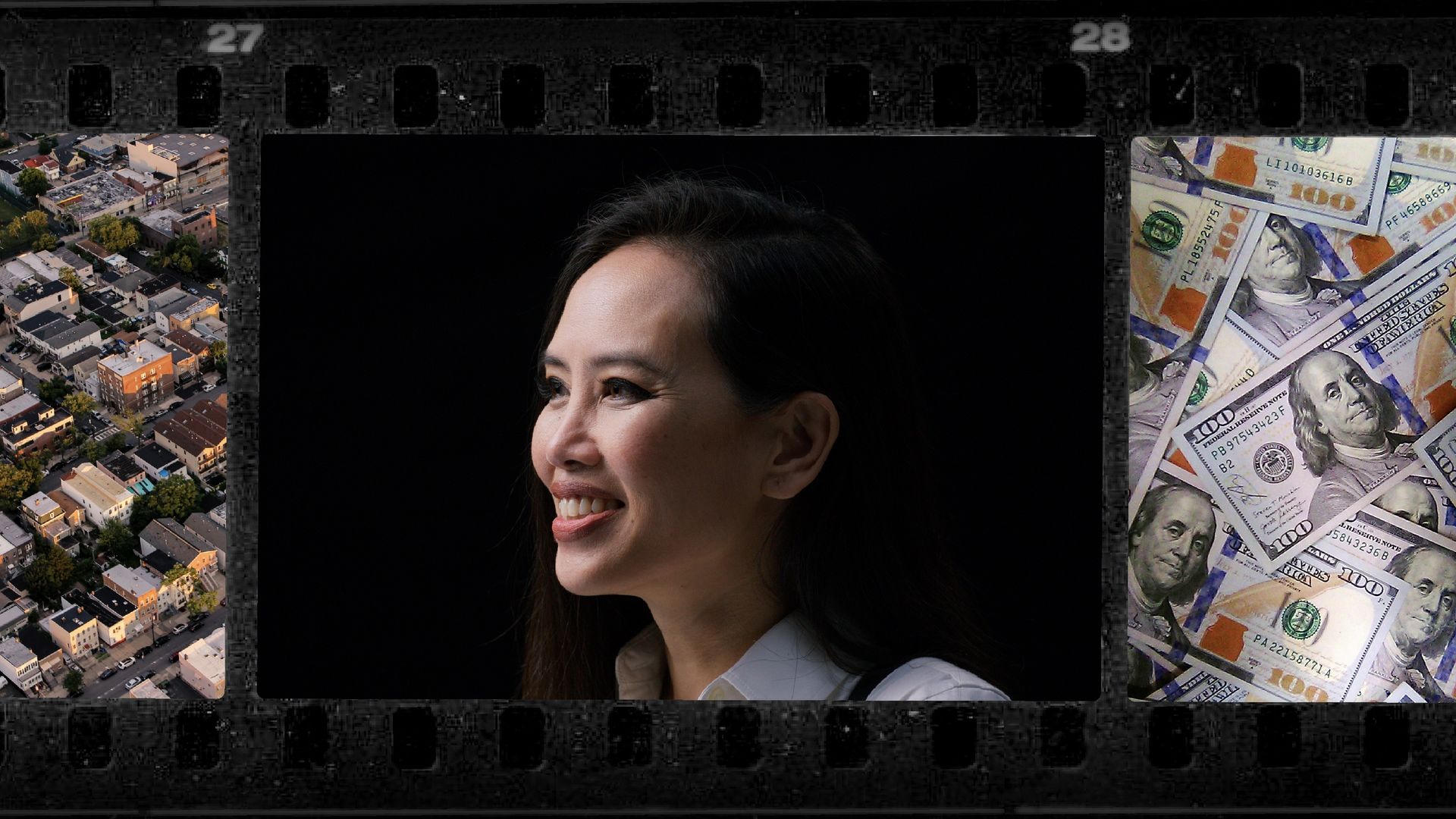
Trinity Tran

Who controls your city's money? | Trinity Tran

What if your city could borrow money from its own bank instead of private lenders? TED Fellow Trinity Tran is leading the push for public banks — which are owned by the people through their local governments — and shows how this model could ensure your local tax dollars stay in your community. 

Ryosuke Takashima

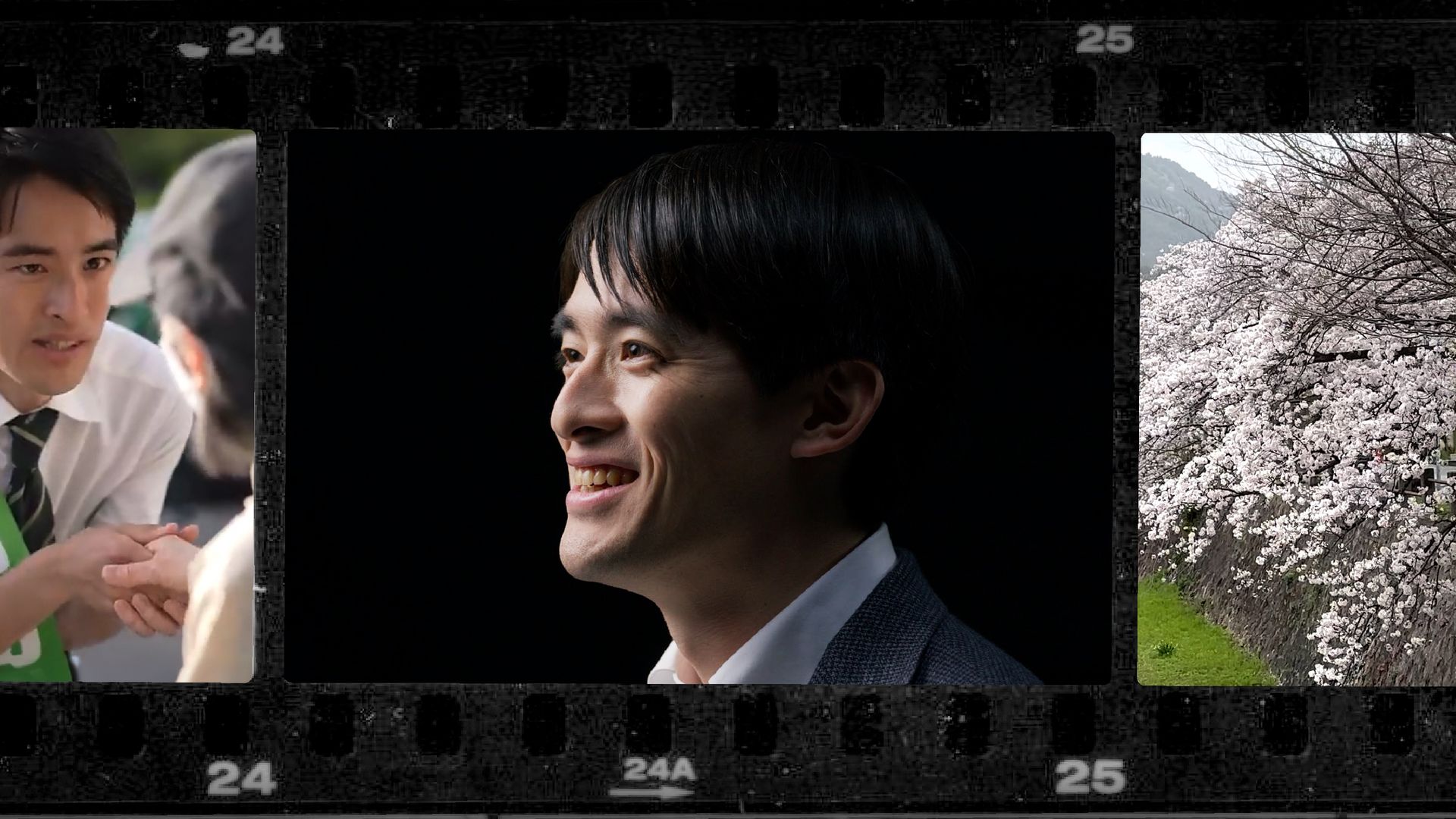
Meet the youngest-ever mayor in Japan's history | Ryosuke Takashima

TED Fellow Ryosuke Takashima is the youngest-ever mayor in Japan's history — but he doesn't consider himself a politician. His approach to leadership is simple: listen to as many voices as possible (from students to elders) in order to figure out what needs fixing. Hear why he thinks inviting citizens to participate in reforming their own communities is the best way to get things done.

Schendy Kernizan

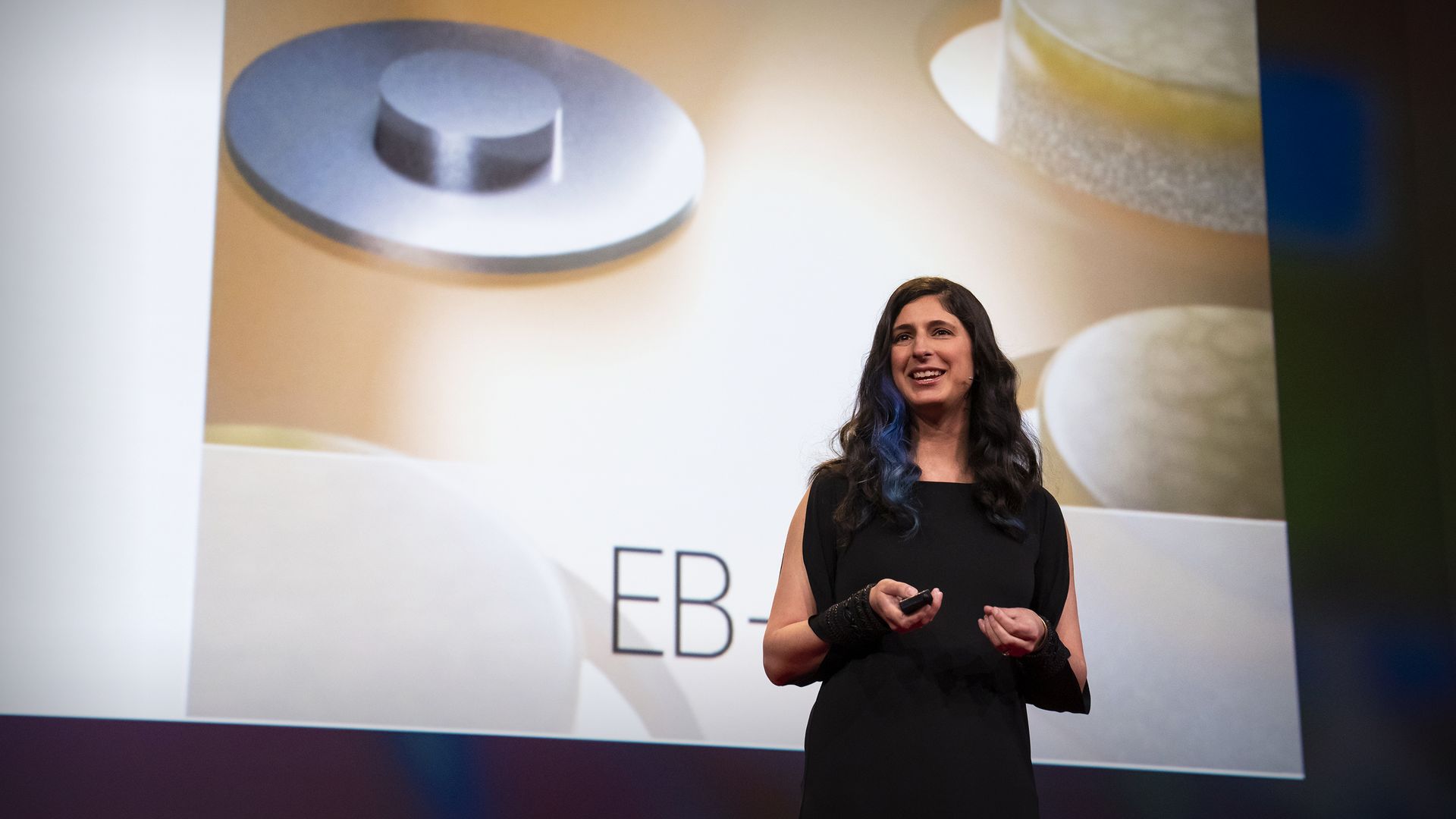
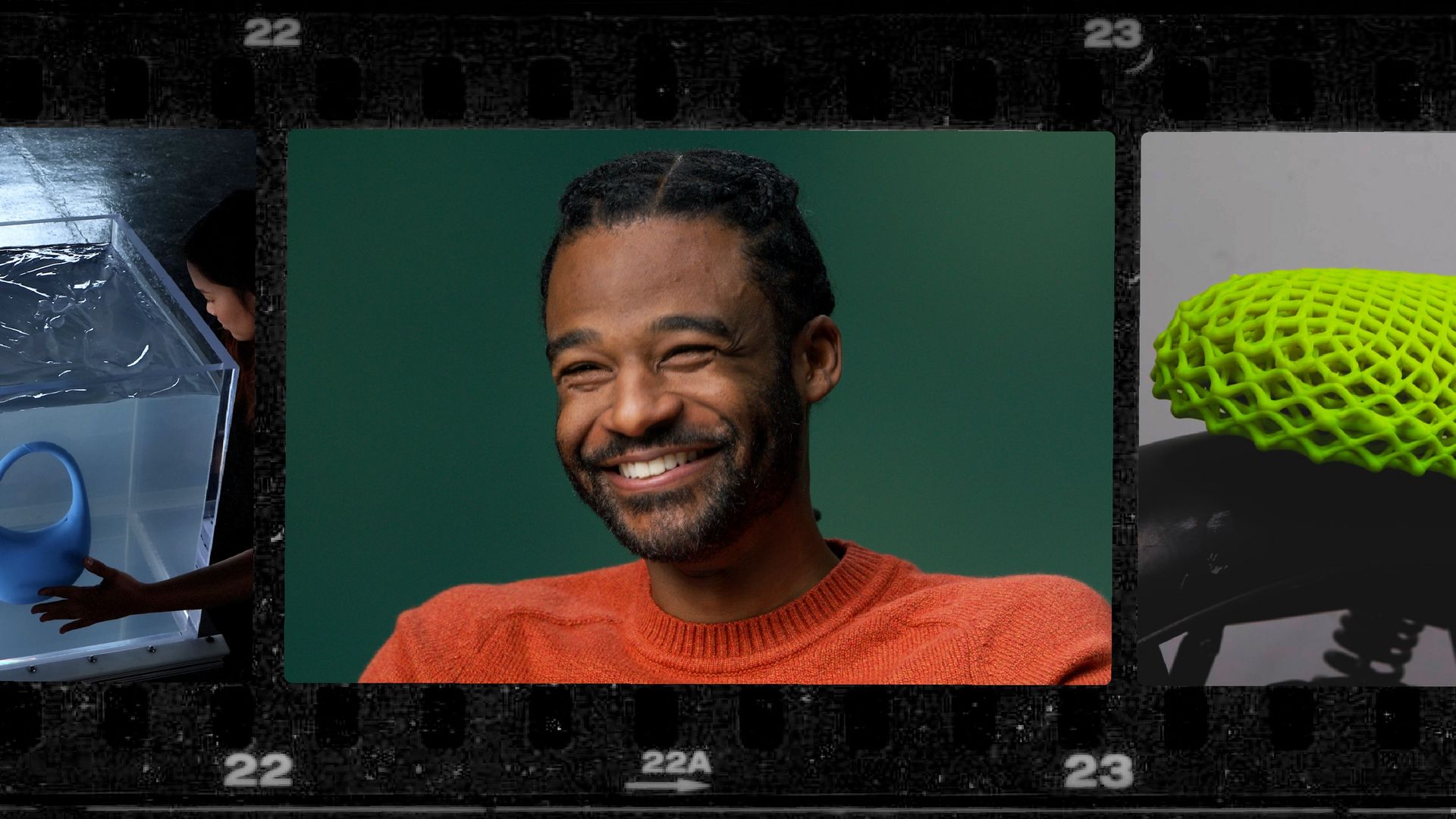
The gravity-defying future of manufacturing | Schendy Kernizan

3D printing promised to reinvent how we make things, but it's mostly stuck producing prototypes with a high level of waste. Designer and TED Fellow Schendy Kernizan found a different way — by printing objects directly into a tub of gel. He explains how this technique eliminates the constraints of gravity, pushing the limits of how we can manufacture objects across medicine, fashion, space travel and more.
Listen to all
Podcast episodes

TED Fellows Films

TED Talks meet documentaries in these short films that explore TED Fellows’ ideas. Dive into all three seasons to explore their mind-blowing innovations. 

05:39

FELLOWS FILM

Meet the youngest-ever mayor in Japan's history

TED Fellow Ryosuke Takashima is the youngest-ever mayor in Japan's history — but he doesn't consider himself a politician. His approach to leadership is simple: listen to as many voices as possible (from students to elders) in order to figure out what needs fixing. Hear why he thinks inviting citizens to participate in reforming their own communities is the best way to get things done.

2026

TED Fellows Film

Ryosuke Takashima
04:47

FELLOWS FILM

The gravity-defying future of manufacturing

3D printing promised to reinvent how we make things, but it's mostly stuck producing prototypes with a high level of waste. Designer and TED Fellow Schendy Kernizan found a different way — by printing objects directly into a tub of gel. He explains how this technique eliminates the constraints of gravity, pushing the limits of how we can manufacture objects across medicine, fashion, space travel and more.

2026

TED Fellows Film

Schendy Kernizan

Fellows Media Library
With 500+ TED Fellows and counting, we’ve got an entire world of media for you to explore. Dive into these talks, short films and podcasts showcasing Fellows turning ideas into action.

Clear
Sort
Thank you! Your submission has been received!
Oops! Something went wrong while submitting the form.

03:17

Meet the Water Canary

After a crisis, how can we tell if water is safe to drink? Current tests are slow and complex, and the delay can be deadly, as in the cholera outbreak after Haiti's earthquake in 2010. TED Fellow Sonaar Luthra previews his design for a simple tool that quickly tests water for safety -- the Water Canary.

2012

TED Talk

United States
I'm building and strengthening mechanisms for accountability to ensure we minimize the hazards associated with a warming planet and a transforming hydrological cycle. I split my efforts evenly between climate justice and defense/national security issues. // Water testing innovator // Creator of Water Canary, a water-testing device that collects real-time water quality data from the field. // Sonaar Luthra is a world-renowned water and climate consultant who forecasts water and climate risks, drawing on a deep understanding of how essential models, institutions and markets are struggling to adapt to rapid transformations in our planet's water cycle. He is the CEO/Founder of Water Canary, a Senior TED Fellow, a RAND Pardee non-resident fellow, an Ecological Security Fellow at the Council on Strategic Risks, and a Security Fellow at the Truman National Security Project. Sonaar studied at Bowdoin College, Oxford and NYU. He teaches "Water in the 21st Century" for MA Sustainability candidates at Harvard Summer School. He was recognized as a speaker and specialist in water quality and climate change by the Obama State Department, he is an ambassador for the Fight Forever Chemicals campaign run by Participant Media and the film Dark Waters, and his work has been featured in TED, WIRED, Maven’s Notebook, NPR, the BBC, the CBC, Al-Jazeera, the Architectural Review, and the Obama White House Water Summit's Commitments to Action on Building a Sustainable Water Future. // We need a global weather service for water, says entrepreneur and TED Fellow Sonaar Luthra. In a talk about environmental accountability, Luthra shows how we could forecast water shortages and risks with a global data collection effort -- just like we monitor the movement of storms -- and better listen to what the earth is telling us. // After a crisis, how can we tell if water is safe to drink? Current tests are slow and complex, and the delay can be deadly, as in the cholera outbreak after Haiti's earthquake in 2010. TED Fellow Sonaar Luthra previews his design for a simple tool that quickly tests water for safety -- the Water Canary. // Sonaar Luthra is a world-renowned water and climate consultant who forecasts water and climate risks, drawing on a deep understanding of how essential models, institutions and markets are struggling to adapt to rapid transformations in our planet's water cycle. He is the CEO/Founder of Water Canary, a Senior TED Fellow, a RAND Pardee non-resident fellow, an Ecological Security Fellow at the Council on Strategic Risks, and a Security Fellow at the Truman National Security Project. Sonaar studied at Bowdoin College, Oxford and NYU. He teaches "Water in the 21st Century" for MA Sustainability candidates at Harvard Summer School. He was recognized as a speaker and specialist in water quality and climate change by the Obama State Department, he is an ambassador for the Fight Forever Chemicals campaign run by Participant Media and the film Dark Waters, and his work has been featured in TED, WIRED, Maven’s Notebook, NPR, the BBC, the CBC, Al-Jazeera, the Architectural Review, and the Obama White House Water Summit's Commitments to Action on Building a Sustainable Water Future. // Water testing innovator // technology, water, climate justice, water policy, compliance, data collection, environmental accountability, water quality, data, cleantech, opportunity zones, adaptation, i forecast water and climate risks. , agriculture, water management, climate, design, water risk, weather, climate adaptation, deep adaptation, policy, monitoring, storms, hurricanes and tornadoes, public policy, water risk management, remote sensing, climate change, environmental, data science, campaigns, optics, extreme weather, water markets, environmental data, science, remote-sensing, national security, clean tech, hurricanes, accountability, risk management, justice, ecology // DC|Los Angeles|Seattle|India|USA|California|Washington|United States|Palm Springs|New Delhi
DC|Los Angeles|Seattle|India|USA|California|Washington|United States|Palm Springs|New Delhi

Sonaar Luthra

No items found.
2012

A simple birth kit for mothers in the developing world | Zubaida Bai

TED Fellow Zubaida Bai works with medical professionals, midwives and mothers to bring dignity and low-cost interventions to women's health care. In this quick, inspiring talk, she presents her clean birth kit in a purse, which contains everything a new mother needs for a hygienic birth and a healthy delivery -- no matter where in the world (or how far from a medical clinic) she might be. Hosted on Acast. See acast.com/privacy for more information.

2023

Podcasts

United States
Women's health advocate // Zubaida is regarded as a leader in the field of designing and engineering low-cost health products appropriate for the developing world. She has a Master’s in Engineering (product development and design) from Dalarna University, Sweden and an MBA (social and sustainable enterprises) from Colorado State University, USA. With over 6 years of experience in the social sector specifically in innovations in health and commercialization. Zubaida now heads AYZH, a social enterprise aimed at bringing technology solutions to rural women.. Zubaida founded AYZH as a way to increase the income and health of women in rural India by enabling them to be the producers of tools like sterile birth kits, designed to help women thrive. Zubaida’s professional experience, combined with her personal passion for empowering underserved women, led to her being selected as a TED India fellow (2009), Ashoka Maternal Health fellow (2010-2011), and most recently an Echoing Green fellow (2012). In 2011, Zubaida’s design of the flagship AYZH product JANMA the clean birth kit being chosen one of the 61 products globally designed to improve life by INDEX Awards. // Zubaida Bai is President and CEO of Grameen Foundation, headquartered in Washington, DC. She leads Grameen Foundation in its mission to end poverty and hunger by building ecosystems that support women in leveraging their own capacity to contribute to the prosperity of their families and communities. Bai is a social entrepreneur and women's health advocate with more than 18 years in the social impact space. Building on her expertise as a mechanical engineer, product designer, and empathetic communicator, Bai put her passion for bettering the lives of women to work when founding her company, ayzh, (pronounced eyes) in 2009. This women's reproductive health product and services business serving emerging and frontier markets has improved the lives of over 1 million women and evolved into a global enterprise. After leading the organization for 12 years she now serves on its board. Prior to joining Grameen Foundation, Bai was the managing director of CARE Social Ventures where she used her strategic expertise, global perspective, and hands-on Operational and P&L experience to convert locally created philanthropic programs into financially sustainable global social enterprises. She helped organizations assess their feasibility, providing business support such as CEO and Board recruiting, strategic planning, and future business strategy. Bai has served on boards of several high impact social businesses in countries like Bangladesh, Zambia and India. She also stays close to her engineering roots by serving on the Board of Advisors of medtech startups such as SISU Global Health. She is a Visiting Social Innovator with Harvard University’s Social Innovative Change Initiative (SICI) and a member of the Governing Body of SEMA Reproductive Health and the Impact Advisory Council of TOMS Shoes. Some of Bai’s recognitions of note are Young Global Leader by the World Economic Forum, a Maternal Health Champion by Ashoka, and a Sustainable Development Goals Pioneer (United Nations Global Compact). She has spoken at multiple global forums including the United Nations and TED. Bai holds a master’s degree in Mechanical Engineering and an MBA. She was also conferred with an Honorary Doctor of Humane Letters degree by Claremont Graduate University in 2018 for her ability to work at the intersection of various sectors seamlessly, and to energetically bring her unique insights and fresh perspective to the table. // TED Fellow Zubaida Bai works with medical professionals, midwives and mothers to bring dignity and low-cost interventions to women's health care. In this quick, inspiring talk, she presents her clean birth kit in a purse, which contains everything a new mother needs for a hygienic birth and a healthy delivery -- no matter where in the world (or how far from a medical clinic) she might be. // Zubaida Bai is President and CEO of Grameen Foundation, headquartered in Washington, DC. She leads Grameen Foundation in its mission to end poverty and hunger by building ecosystems that support women in leveraging their own capacity to contribute to the prosperity of their families and communities. Bai is a social entrepreneur and women's health advocate with more than 18 years in the social impact space. Building on her expertise as a mechanical engineer, product designer, and empathetic communicator, Bai put her passion for bettering the lives of women to work when founding her company, ayzh, (pronounced eyes) in 2009. This women's reproductive health product and services business serving emerging and frontier markets has improved the lives of over 1 million women and evolved into a global enterprise. After leading the organization for 12 years she now serves on its board. Prior to joining Grameen Foundation, Bai was the managing director of CARE Social Ventures where she used her strategic expertise, global perspective, and hands-on Operational and P&L experience to convert locally created philanthropic programs into financially sustainable global social enterprises. She helped organizations assess their feasibility, providing business support such as CEO and Board recruiting, strategic planning, and future business strategy. Bai has served on boards of several high impact social businesses in countries like Bangladesh, Zambia and India. She also stays close to her engineering roots by serving on the Board of Advisors of medtech startups such as SISU Global Health. She is a Visiting Social Innovator with Harvard University’s Social Innovative Change Initiative (SICI) and a member of the Governing Body of SEMA Reproductive Health and the Impact Advisory Council of TOMS Shoes. Some of Bai’s recognitions of note are Young Global Leader by the World Economic Forum, a Maternal Health Champion by Ashoka, and a Sustainable Development Goals Pioneer (United Nations Global Compact). She has spoken at multiple global forums including the United Nations and TED. Bai holds a master’s degree in Mechanical Engineering and an MBA. She was also conferred with an Honorary Doctor of Humane Letters degree by Claremont Graduate University in 2018 for her ability to work at the intersection of various sectors seamlessly, and to energetically bring her unique insights and fresh perspective to the table. // Women's health advocate // technology, entrepreneurship, appropriate technology, led, menstrual hygine, equity, hunger and poverty, sustainable development goals, design, sustainable development , fundraising, women, women's health and wellbeing, gender, advocacy, underserved, women's health, maternal and newborn health, rural, hunger, poverty, low-cost, ecosystem, income // Fort Collins|United States|Colorado|USA
Fort Collins|United States|Colorado|USA

Zubaida Bai

No items found.
2023

06:55

The doctors, nurses and aid workers rebuilding Syria

Local humanitarians are beacons of light in the darkness of war, says humanitarian aid entrepreneur and TED Fellow Rola Hallam. She's working to help responders on the ground in devastated communities like Syria, where the destruction of health care is being used as a weapon of war. One of her campaigns achieved a global first: a crowdfunded hospital. Since it opened in 2017, the aptly named Hope Hospital has treated thousands of children. "Local humanitarians have the courage to persist, to dust themselves off from the wreckage and to start again, risking their lives to save others," Hallam says. "We can match their courage by not looking away or turning our backs."

2018

TED Talk

United Kingdom
Humanitarian aid entrepreneur // Dr Rola Hallam bio Name: Rola Hallam Title(s) & affiliation(s): Dr, CEO & Founder, CanDo Short bio: Rola is a consultant anaesthetist, humanitarian, human rights advocate and social entrepreneur. She is the founder and CEO of CanDo, a not-for-profit social enterprise delivering resources directly to local humanitarians who provide essential healthcare to their war-devastated communities. She played an integral part in building 7 hospitals in the north of the Syria, including the world's first crowdfunded hospital. She is an international speaker and advocate for the cessation of targeting of civilians and children in war zones, and the protection of medical neutrality. Rola is also the first Syrian TED Fellow. // Local humanitarians are beacons of light in the darkness of war, says humanitarian aid entrepreneur and TED Fellow Rola Hallam. She's working to help responders on the ground in devastated communities like Syria, where the destruction of health care is being used as a weapon of war. One of her campaigns achieved a global first: a crowdfunded hospital. Since it opened in 2017, the aptly named Hope Hospital has treated thousands of children. "Local humanitarians have the courage to persist, to dust themselves off from the wreckage and to start again, risking their lives to save others," Hallam says. "We can match their courage by not looking away or turning our backs." // Dr Rola Hallam bio Name: Rola Hallam Title(s) & affiliation(s): Dr, CEO & Founder, CanDo Short bio: Rola is a consultant anaesthetist, humanitarian, human rights advocate and social entrepreneur. She is the founder and CEO of CanDo, a not-for-profit social enterprise delivering resources directly to local humanitarians who provide essential healthcare to their war-devastated communities. She played an integral part in building 7 hospitals in the north of the Syria, including the world's first crowdfunded hospital. She is an international speaker and advocate for the cessation of targeting of civilians and children in war zones, and the protection of medical neutrality. Rola is also the first Syrian TED Fellow. // Humanitarian aid entrepreneur // children, frontline medicine, child health, human rights, anesthesia, rights, protection of healthcare, medicine, led, healthcare, storytelling, advocacy, locally led aid, war, campaigns, humanitarian // United Kingdom|England|London
United Kingdom|England|London

Rola Hallam

No items found.
2018

04:14

What's missing in the global debate over refugees

In the ongoing debate over refugees, we hear from everyone -- from politicians who pledge border controls to citizens who fear they'll lose their jobs -- everyone, that is, except migrants themselves. Why are they coming? Journalist and TED Fellow Yasin Kakande explains what compelled him and many others to flee their homelands, urging a more open discussion and a new perspective. Because humanity's story, he reminds us, is a story of migration: "There are no restrictions that could ever be so rigorous to stop the wave of migration that has determined our human history," he says.

2018

TED Talk

United States
Black Writers Ink is a platform that celebrates independent journalism by sharing opinions and thoughts on current global issues. The organization aims to provide insightful online content on a variety of topics such as health, fashion, food, events, fiction, travel, and education. Subscribing to their newsletters keeps individuals informed and engaged with their content. // I'm advocating for fairness and justice for Black African people and migrants. Through my writing, I aim to expose imperialistic tendencies, exploitation, and the plunder of Africa. // Yasin Kakande is a dedicated journalist and advocate who uses his platform, Black Writers Ink, to shed light on global issues, particularly focusing on the experiences of Black African people and migrants. Through his writing, he addresses topics such as imperialism, exploitation, and social justice, aiming to bring awareness to the challenges faced by marginalized communities. Black Writers Ink serves as a valuable resource for individuals seeking insightful perspectives on a range of subjects including health, fashion, food, events, fiction, travel, and education. Kakande's work not only informs but also inspires conversations around fairness and justice for those often overlooked in mainstream narratives. // Investigative journalist+ author // Yasin Kakande is the author of "Slave States: The Practice of Kafala in the Gulf Arab Region and "The Ambitious Struggle: An African Journalist's Journey of Hope and Identity in a Land of Migrants." // In the ongoing debate over refugees, we hear from everyone -- from politicians who pledge border controls to citizens who fear they'll lose their jobs -- everyone, that is, except migrants themselves. Why are they coming? Journalist and TED Fellow Yasin Kakande explains what compelled him and many others to flee their homelands, urging a more open discussion and a new perspective. Because humanity's story, he reminds us, is a story of migration: "There are no restrictions that could ever be so rigorous to stop the wave of migration that has determined our human history," he says. // Yasin Kakande is a dedicated journalist and advocate who uses his platform, Black Writers Ink, to shed light on global issues, particularly focusing on the experiences of Black African people and migrants. Through his writing, he addresses topics such as imperialism, exploitation, and social justice, aiming to bring awareness to the challenges faced by marginalized communities. Black Writers Ink serves as a valuable resource for individuals seeking insightful perspectives on a range of subjects including health, fashion, food, events, fiction, travel, and education. Kakande's work not only informs but also inspires conversations around fairness and justice for those often overlooked in mainstream narratives. // Investigative journalist+ author // author, education, food, expose, refugees, journalist, jobs, justice, land, migration // USA|United States|Waltham|Massachusetts|Africa|Boston
USA|United States|Waltham|Massachusetts|Africa|Boston

Yasin Kakande

No items found.
2018

11:03

A new way to fund health care for the most vulnerable

In 2011, eye surgeon and TED Fellow Andrew Bastawrous developed a smartphone app that brings quality eye care to remote communities, helping people avoid losing their sight to curable or preventable conditions. Along the way, he noticed a problem: strict funding regulations meant that he could only operate on people with specific diseases, leaving many others without resources for treatment. In this passionate talk, Bastawrous calls for a new health care funding model that's flexible and ambitious -- to deliver better health to everyone, whatever their needs are.

2018

TED Talk

United Kingdom
London School of Hygiene and Tropical Medicine, U. of London; Peek Vision; World Economic Forum; St Peter's, York; Harvard University; John Radcliffe Hospital, Oxford; TED Conferences; University of Leeds; UBS; Ashoka
Peek Vision is an organization that provides software and tools to implement, optimize, and evaluate eye health services in various settings such as schools, communities, and workplaces. Their software and data intelligence platform aim to make eye health services more efficient, effective, and equitable. By partnering with governments and NGOs, Peek helps strengthen health systems and connect more people to better vision. Their technology optimizes eye health services, leading to greater screening coverage, increased attendance at follow-up appointments, and lower costs per person served. Peek's partnership with organizations has enabled them to bring eye care to millions more people across multiple countries. Their software revolutionizes school eye health screening by providing a user-friendly and effective tool for screening large populations without the need for specialist eye health workers. Peek's impact is evident in the increased access to eye care, improved referral pathways, and the ability to track patients efficiently. Through their work, hundreds of thousands more people have been able to unlock their potential through better vision. Their tools are developed using rigorous scientific methods and are backed by numerous peer-reviewed research studies. Peek's commitment to improving vision and eye health is recognized through various awards and partnerships with leading eye health organizations. // The Vision Catalyst Fund (VCF) is a global organization focused on improving access to eye health services, particularly in lower and middle-income countries. The VCF collaborates with various partners and government agencies to address vision issues, such as presbyopia, by providing essential vision care services and distributing reading glasses. Through innovative approaches and partnerships, the VCF aims to reach vulnerable communities and make a significant impact on people's lives, including their health, education, safety, and livelihoods. The organization is committed to funding catalytic programs, raising capital for eye health, and promoting collaboration among NGOs, the private sector, and government entities to create sustainable and equitable eye health programs. Additionally, the VCF works on scaling sources of alternative finance and integrating eye health with other issue areas like education and employment. Through its initiatives and partnerships, the VCF strives to ensure that everyone in need has access to vision care, ultimately illuminating the path to clear vision for communities worldwide. // Working at the London School of Hygiene and Tropical Medicine and undertaking a PhD.PhD project is based in Kenya performing a population based epidemiological study of eye diseases (Cohort Study) to assist in planning health services. Co-founder of Peek Vision - www.peekvision.orgA low-cost smartphone solution for delivering eye care // http://www.ted.com/pages/fellows_TED2014 // London School of Hygiene and Tropical Medicine, U. of London; Peek Vision; World Economic Forum; St Peter's, York; Harvard University; John Radcliffe Hospital, Oxford; TED Conferences; University of Leeds; UBS; Ashoka // Andrew Bastawrous is a dedicated professional with a focus on public health and epidemiology. With a background in eye diseases and health services planning, he has contributed significantly to the field through his work at the London School of Hygiene and Tropical Medicine. Andrew is also known for his role as a co-founder of Peek Vision, a project aimed at providing affordable eye care solutions using smartphone technology. His commitment to improving healthcare access and outcomes is evident in his various endeavors and research projects. // More than 1 billion people live with poor vision. Holding back individuals, communities and countries. Evidence demonstrates that improved vision leads to better educational outcomes, increased productivity and livelihoods, safer roads and enhanced wellbeing and quality of life. Despite simple solutions, the vast majority of these people will not get the pair of glasses or 5 minute cataract operation that would return their sight. This is an unacceptable tragedy. Worse still, trend data shows that despite current efforts, the number of people living with treatable vision loss is increasing and is expected to reach 1.8 billion people by 2050. Our dream and work is to reverse this alarming trend with a proven, technology-driven approach. // Andrew Bastawrous is a dedicated public health professional and epidemiologist with a specialization in eye diseases and health services planning. His significant contributions to the field include his work at the London School of Hygiene and Tropical Medicine. As a co-founder of Peek Vision, Andrew focuses on providing affordable eye care solutions through smartphone technology, aiming to improve healthcare access and outcomes. His commitment to addressing the global issue of poor vision is evident in his research projects and initiatives. Through his work, Andrew strives to reverse the increasing trend of treatable vision loss and ensure that individuals, communities, and countries have access to the eye care they need for improved educational outcomes, productivity, safety, and overall quality of life. // SOCIAL ENTREPRENEUR & EYE SURGEON // Kenya-based ophthalmologist who co-founded Peek, a low-cost smartphone ophthalmic tool that delivers eye care in some of the world's most challenging places, to those who need it most. Andrew is an ophthalmologist and research fellow in international eye health at the International Centre for Eye Health. Andrew has worked in Sierra Leone, Peru, Belize, Sri Lanka, Madagascar and Uganda and is currently based in Kenya working on the collaborative development and testing of Peek. In 2011, Andrew was awarded a Medical Research Council (MRC) and Fight for Sight Fellowship to undertake the first longitudinal population-based study (follow-up study) of eye disease in Africa and the challenges he faced inspired the idea of a smartphone based ophthalmic tool. He has published over 25 peer-reviewed articles focusing on international eye health and mobile technology in healthcare and has co-authored four book chapters. Andrew was awarded the MRC Max Perutz Science writing Award in 2012 and is currently a TED Fellow. // Professor Andrew Bastawrous is Founder & CEO of Peek Vision Ltd and The Peek Vision Foundation. The company is a social enterprise which develops smartphone technology and public health tools to help eye health organisations increase their impact. He is an Ophthalmologist (Eye Surgeon), and Professor in Global Eye Health at the London School of Hygiene & Tropical Medicine where he teaches on public health for eye health and leads a research portfolio. Andrew has worked and undertaken research in over twenty countries including two years living in Kenya where he was leading a major eye disease study and the development and testing of Peek. He has published over 80 peer-reviewed articles focusing on public health and mobile technology in healthcare and has co-authored four book chapters. Andrew was made a TED Fellow in 2014 and has given two TED talks which have together been viewed over 2.5 million times. Peek's end-to-end services (Peek Solutions) are being used to transform eye health in low- and middle-income countries including Zimbabwe, Kenya, Uganda, Tanzania, Ghana, Botswana, South Africa, Ethiopia, Pakistan, India and Nepal with new programmes in development. Currently nearly 50 active programmes are using Peek across 12 countries reaching over 1/4 million people each month. Peek’s vision check app, Peek Acuity, launched on Google Play store in 2016 and is a Class I medical device, which has been used in over 190 countries. The work of Andrew and the Peek team has been recognised with generous awards including the Mazda Rebels with a Cause Prize in partnership with TED, the Gifted Citizen 2014 Award, the Index Design Award, and the Rolex Awards for Enterprise. Peek was voted “best social-impact start-up in Europe” by Google and McKinsey in 2016. All prize money has been re-invested in Peek. Andrew has been listed as one of the world’s 30 most influential people in public health, was selected as a “Young Global Leader” by the World Economic Forum, and is listed as an “Eye Health Leader” by the International Agency for the Prevention of Blindness. In 2016 he received the Clearly Vision Life Time Achievement Award and was made a Rolex Laureate. In 2018 Andrew was made an Ashoka Fellow and UBS Global Visionary and in 2019 he was declared a “Champion of Change” in The Ophthalmologist magazine’s 2019 Power List. In 2018, Andrew was invited to address the Commonwealth Service in the presence of the British Royal Family, Prime Minister, and a global live TV and radio audience. In his address, Andrew highlighted the transformative effects of regaining lost vision, and the importance of international collaboration in ending avoidable blindness and vision loss worldwide. As part of Peek’s mission to bring vision and health to everyone, Andrew is working with major banks, eye health organisations and funders to develop innovative financing models for eye health, the subject of his 2018 TED Talk. In addition to his work as CEO of Peek, Andrew has worked with astrophysicists to crowdsource retinal data, with National Geographic explorers to reach isolated communities, and with artists and activists to advocate for eye care globally (Project Light). Together with his wife Madeleine, he is establishing a social enterprise micro-bakery model in Kenya that provides employment and healthy food opportunities for the mass market. // In 2011, eye surgeon and TED Fellow Andrew Bastawrous developed a smartphone app that brings quality eye care to remote communities, helping people avoid losing their sight to curable or preventable conditions. Along the way, he noticed a problem: strict funding regulations meant that he could only operate on people with specific diseases, leaving many others without resources for treatment. In this passionate talk, Bastawrous calls for a new health care funding model that's flexible and ambitious -- to deliver better health to everyone, whatever their needs are. // Thirty-nine million people in the world are blind, and the majority lost their sight due to curable and preventable diseases. But how do you test and treat people who live in remote areas, where expensive, bulky eye equipment is hard to come by? TED Fellow Andrew Bastawrous demos a smartphone app and cheap hardware that might help. // Andrew Bastawrous is a dedicated public health professional and epidemiologist with a specialization in eye diseases and health services planning. His significant contributions to the field include his work at the London School of Hygiene and Tropical Medicine. As a co-founder of Peek Vision, Andrew focuses on providing affordable eye care solutions through smartphone technology, aiming to improve healthcare access and outcomes. His commitment to addressing the global issue of poor vision is evident in his research projects and initiatives. Through his work, Andrew strives to reverse the increasing trend of treatable vision loss and ensure that individuals, communities, and countries have access to the eye care they need for improved educational outcomes, productivity, safety, and overall quality of life. // SOCIAL ENTREPRENEUR & EYE SURGEON // technology, education, public health, roads, data, jobs, equity, mhealth, social entrepreneur, finance, technology founder, research, activism, design, global health care, leadership, ophthalmology, purpose, livelihoods, eye surgeon, doctor, tech4good, systems change, systems change , advocacy, vision, hardware, workers, science, food, vulnerability, software, government, low-cost, disease // Uganda|United Kingdom|India|Oxford|England|Kenya
Uganda|United Kingdom|India|Oxford|England|Kenya

Andrew Bastawrous

No items found.
2018

06:15

The cockroach beatbox

By dissecting a cockroach ... yes, live on stage ... TED Fellow and neuroscientist Greg Gage shows how brains receive and deliver electric impulses -- and how legs can respond. This talk comes from the TED-Ed project.

2012

Other

United States
Michigan State University; Backyard Brains; University of Michigan; University of South Carolina
Backyard Brains is a company founded by neuroscience Ph.D. students with a mission to democratize neuroscience education. They have developed kits that allow individuals, including children, to learn about neuroscience at an early age using off-the-shelf electronics. Their products focus on neuroscience but have expanded into various STEM research fields. The kits enable users to record from neurons in invertebrates, human physiology, neuroengineering devices, and even plant signaling. Backyard Brains has received recognition for their work, including awards from prestigious organizations and the U.S. National Institutes of Health. They have a strong community presence, with TED Talks and collaborations with popular science shows. The company is open-source, transparent about their finances, and offers a range of experiments and lesson plans for educators and enthusiasts. // Adjunct Professor in the Department of Molecular & Integrative Physiology at the University of Michigan // Adjunct Assistant Professor of Neuroscience, Michigan State University // Greg Gage is the co-founder and CEO of Backyard Brains, an organization that develops open-source tools that allow amateurs and students to participate in neural discovery. Greg is an NIH-award winning neuroscientist with 9 popular TED Talks and dozens of peer-reviewed publications. Greg is a Senior Fellow at TED and the recipient of the White House Champion of Change from Barack Obama award for his commitment to citizen science. // Michigan State University; Backyard Brains; University of Michigan; University of South Carolina // Gregory Gage is a seasoned neuroscientist and educator with a strong focus on democratizing neuroscience research. With a background in academia as an Adjunct Professor at the University of Michigan and Michigan State University, Gregory has also made significant contributions as the co-founder and CEO of Backyard Brains. Through this organization, he has spearheaded the development of open-source tools that enable individuals, including students and amateurs, to engage in neural exploration. Gregory's work has been recognized with prestigious accolades such as the White House Champion of Change award, highlighting his dedication to promoting citizen science. His extensive experience is underscored by numerous peer-reviewed publications and engaging TED Talks that have garnered widespread acclaim. // I develop low-fi, hands-on tools to teach neuroscience to students before university. The goal is to track the best students into neuroscience research careers despite their economic backgrounds. // Gregory Gage is a seasoned neuroscientist and educator known for his dedication to democratizing neuroscience education. As the co-founder and CEO of Backyard Brains, he has led the development of open-source kits that make neuroscience accessible to individuals of all ages, including students and amateurs. Gregory's work emphasizes hands-on learning and aims to inspire a new generation of neuroscientists by providing affordable tools for neural exploration. His contributions have been recognized with prestigious awards, such as the White House Champion of Change award, showcasing his commitment to promoting citizen science. Through his extensive experience in academia and innovative approach to teaching neuroscience, Gregory Gage continues to make significant strides in bridging the gap between science education and research opportunities. // Neuroscientist + roboticist // Neuroscientist and co-founder of Backyard Brains, an organization teaching kids and amateurs neuroscience through hands-on experiments to see and hear brain signals from living neurons and also via robotic control of ordinary cockroaches. // Greg Gage is a neuroscientist, engineer and the CEO of Backyard Brains. Greg develops tools, curriculum and experiments that allow the general public participate, hands-on, in neural discovery. He is senior fellow at TED and has given many TED talks (9 online), received the director's innovation award as an investigator at the National Institute of Health (NIH), and was recognized in a White House ceremony for being Obama’s Champion of Change for his commitment to citizen science. In his free time, he enjoys changing diapers of his 2 young daughters. // Them's fighting words if you're an octopus, in that more than one octopus in a space often means a rumble. Our intrepid neuroscientists analyze aggression by observing the fighting behavior of two-spotted octopuses or, if you prefer, octopodes. // What does the love song of a mosquito sound like? Find out as our intrepid neuroscientists explore the meaning of all that annoying buzzing in your ear. // Modern technology lets neuroscientists peer into the human brain, but can it also read minds? Armed with the device known as an electroencephalogram, or EEG, and some computing wizardry, our intrepid neuroscientists attempt to peer into a subject's thoughts. // Gregory Gage is a seasoned neuroscientist and educator known for his dedication to democratizing neuroscience education. As the co-founder and CEO of Backyard Brains, he has led the development of open-source kits that make neuroscience accessible to individuals of all ages, including students and amateurs. Gregory's work emphasizes hands-on learning and aims to inspire a new generation of neuroscientists by providing affordable tools for neural exploration. His contributions have been recognized with prestigious awards, such as the White House Champion of Change award, showcasing his commitment to promoting citizen science. Through his extensive experience in academia and innovative approach to teaching neuroscience, Gregory Gage continues to make significant strides in bridging the gap between science education and research opportunities. // Neuroscientist + roboticist // technology, education, entrepreneurship, electronics, electrical engineering, data, research, citizen scientist, engineering, robots, stem, data analysis, robotics, neuroscience, children, software development, science, software // Michigan|Ann Arbor|United States|USA
Michigan|Ann Arbor|United States|USA

Greg Gage

No items found.
2012

05:24

Who controls your city's money?

What if your city could borrow money from its own bank instead of private lenders? TED Fellow Trinity Tran is leading the push for public banks — which are owned by the people through their local governments — and shows how this model could ensure your local tax dollars stay in your community.

2026

TED Fellows Film

United States

Trinity Tran

No items found.
2026

05:24

Documentary films that explore trauma -- and make space for healing

Through documentary films following survivors of trauma, TED Fellow Almudena Toral makes invisible psychological scars seen. She shares the heartbreaking story of Adayanci Pérez, a six-year-old girl from Guatemala suffering from post-traumatic stress disorder (PTSD) due to her encounter with US immigration enforcement. A powerful call to give voice to those who are silenced -- and pressure governments to change their course of action.

2021

TED Talk

United States
Visual journalist // Almudena Toral is a 2020 TED fellow and the Executive Producer at ProPublica, the investigative news organization, where she heads the documentary film and video department. She previously headed the enterprise video team at Univision News Digital – the team covered the U.S. and Latin America through documentaries, photo essays, visuals for interactives and special projects, illustration and animation. Prior to joining Univision, she taught video storytelling at Craig Newmark Graduate School of Journalism, pursued her own projects worldwide as a freelance journalist and worked at The New York Times and TIME. Her work has also been published by The Guardian, AlJazeera, VICE, The Intercept, Canal+, NPR, PBS and other outlets. A short documentary Toral produced on children PTSD after the 'zero tolerance' policy was named 2019 World Press Photo Online Video of the Year. Toral's work has also been recognized by four News & Documentary Emmys, four Edward R. Murrow awards, Pictures of the Year International, RFK Human Rights Journalism awards, the Hillman Prize, PDN Photo Annual, the National Press Photographers Association Best of Photojournalism, the Webbys, an Ortega & Gasset award, a Gabo Prize, Rey de España awards, regional Emmys, National Headliner, Deadline Press Club, New York Press Club awards and others. She's a 2020 TED fellow, a 2019 Ochberg fellow at the Dart Center at Columbia University and a 2019-2020 Carter Center fellow. Almudena has also been a grantee of The Pulitzer Center on Crisis Reporting, the International Women's Media Foundation and The International Reporting Project. // Through documentary films following survivors of trauma, TED Fellow Almudena Toral makes invisible psychological scars seen. She shares the heartbreaking story of Adayanci Pérez, a six-year-old girl from Guatemala suffering from post-traumatic stress disorder (PTSD) due to her encounter with US immigration enforcement. A powerful call to give voice to those who are silenced -- and pressure governments to change their course of action. // Almudena Toral is a 2020 TED fellow and the Executive Producer at ProPublica, the investigative news organization, where she heads the documentary film and video department. She previously headed the enterprise video team at Univision News Digital – the team covered the U.S. and Latin America through documentaries, photo essays, visuals for interactives and special projects, illustration and animation. Prior to joining Univision, she taught video storytelling at Craig Newmark Graduate School of Journalism, pursued her own projects worldwide as a freelance journalist and worked at The New York Times and TIME. Her work has also been published by The Guardian, AlJazeera, VICE, The Intercept, Canal+, NPR, PBS and other outlets. A short documentary Toral produced on children PTSD after the 'zero tolerance' policy was named 2019 World Press Photo Online Video of the Year. Toral's work has also been recognized by four News & Documentary Emmys, four Edward R. Murrow awards, Pictures of the Year International, RFK Human Rights Journalism awards, the Hillman Prize, PDN Photo Annual, the National Press Photographers Association Best of Photojournalism, the Webbys, an Ortega & Gasset award, a Gabo Prize, Rey de España awards, regional Emmys, National Headliner, Deadline Press Club, New York Press Club awards and others. She's a 2020 TED fellow, a 2019 Ochberg fellow at the Dart Center at Columbia University and a 2019-2020 Carter Center fellow. Almudena has also been a grantee of The Pulitzer Center on Crisis Reporting, the International Women's Media Foundation and The International Reporting Project. // Visual journalist // children, human rights, rights, immigration, policy, documentary, women

Almudena Toral

No items found.
2021

09:01

On violin and cello, "Passacaglia"

It's a master class in collaboration as violinist Robert Gupta and cellist Joshua Roman perform Halvorsen's "Passacaglia" for violin and viola. Roman takes the viola part on his Stradivarius cello. It's powerful to watch the two musicians connect moment to moment (and recover from a mid-performance hiccup). The two are both TED Fellows, and their deep connection powers this sparkling duet.

2011

TED Talk

United States
Joshua Roman is a renowned cello soloist and composer known for his expressive tone and musical gifts. He is dedicated to bringing classical music to new audiences through genre-bending programs and collaborations with world-class artists. Roman has performed with leading orchestras worldwide and is recognized for his innovative use of digital and social media. He is also involved in composing and premiering works by contemporary composers. Roman's recent project, "Immunity," explores his personal journey with long COVID through a blend of music and storytelling. Additionally, his work includes chamber operas based on Edgar Allan Poe's stories, such as "The Tell-Tale Heart." Collaborations and performances with various artists and ensembles showcase Roman's versatile talent and commitment to musical innovation. // How do we create moments of connection that have a positive and lasting impact on people's lives? How can we bring creativity to each and every human? What role does accepting and even embracing vulnerability and imperfection play in the next phase of human evolution? // Joshua Roman is a versatile cellist and composer dedicated to expanding the reach of classical music through innovative collaborations and genre-bending performances. With a focus on engaging new audiences, Roman leverages digital and social media platforms to showcase his expressive tone and musical prowess. His repertoire includes premiering works by contemporary composers and crafting projects like "Immunity," which intertwines music and personal narratives. Roman's creative endeavors extend to chamber operas inspired by Edgar Allan Poe's tales, exemplifying his commitment to musical innovation and storytelling. Through diverse collaborations and performances worldwide, Roman showcases his ability to connect with audiences and push the boundaries of traditional classical music. // Cellist + Composer // Dubbed a “Classical Rock Star” by the press, cellist Joshua Roman has earned a national reputation for performing a wide range of repertoire with absolute commitment to communicating the essence of the music at its most organic level. For his ongoing creative initiatives on behalf of classical music, he was named a 2011 TED Fellow. Among recent highlights, Mr. Roman was guest artist for the Seattle Symphony’s opening night gala, as well as debuted with the San Francisco Symphony, Ensemble Orchestral de Paris and the Mariinsky Theatre as a concerto soloist. He has performed duos with Yo-Yo Ma at the State Department, at the Oslo Freedom Forum in Norway and other premiere events. As a recitalist and chamber musician, Mr. Roman has presented concerts at San Francisco Performances, Seattle Chamber Music Society, Caramoor Festival, La Jolla SummerFest, and on the Dame Myra Hess series in Chicago. Beyond performance, Mr. Roman is Artistic Director of TownMusic in Seattle where he creates programs that feature new works and reflect the eclectic range of his musical influences and inspirations. In 2009 Mr. Roman was the only guest artist invited to play an unaccompanied solo during the YouTube Symphony Orchestra’s debut concert at Carnegie Hall. Before embarking on a solo career, he was principal cellist of the Seattle Symphony for two seasons, a position he won in 2006 at the age of 22. Mr. Roman is grateful for the loan of an 1899 cello by Giulio Degani of Venice. // Joshua Roman, an Arnhold Creative Associate at Juilliard, is a cello soloist and composer hailed for his “effortlessly expressive tone… and playful zest for exploration” (New York Times), as well as his “extraordinary technical and musical gifts" and “blend of precision and almost improvisatory freedom… that goes straight to the heart" (San Francisco Chronicle). His genre-bending programs and wide-ranging collaborations have grown out of an “enthusiasm for musical evolution that is as contagious as his love for the classics" (Seattle Times). As a soloist, Roman’s “exceptionally high quality of performances” (LA Times) combines “the expressive control of Casals with the creative individuality and virtuoso flair of Hendrix himself” (Gramophone). He has performed with leading orchestras around the world, including the Los Angeles Philharmonic, San Francisco Symphony, New World Symphony, Toronto Symphony, among others, and, was principal cellist at Seattle Symphony from age 22 to 24. Recent career highlights include his sold-out ‘Well-Being Concert’ at Carnegie Hall in December 2023, and the launch of his intimate musical exploration project Immunity, a program combining performance and storytelling to confront the impact of the long-COVID that nearly ended his career. As a composer, he has been commissioned by Music Academy of the West, Illinois Philharmonic, ProMusica Chamber Orchestra, Grace Cathedral, and more, and he has written for the JACK Quartet, violinist Vadim Gluzman, and conductor David Danzmayr. Equally accomplished as an interpreter of the music of other contemporary composers, Roman has premiered works by Mason Bates, Reena Esmail, Timo Andres, Gabriela Lena Frank, Aaron Jay Kernis, Lisa Bielawa, and others. A native of Oklahoma City, Roman studied at the Cleveland Institute of Music with Richard Aaron and Desmond Hoebig. Roman plays an 1830 Giovanni Francesco Pressenda on a generous loan through The Stradivari Society of Chicago. // Harmoniously weaving together the art of dance and the science of mechanical engineering, Huang Yi performs a man-machine dance duet with KUKA -- a robot he conceptualized and programmed -- set to stirring cello by Joshua Roman. // Legendary dance choreographer Bill T. Jones and TED Fellows Joshua Roman and Somi didn't know exactly what was going to happen when they took the stage at TED2015. They just knew they wanted to offer the audience an opportunity to witness creative collaboration in action. The result: An improvised piece they call "The Red Circle and the Blue Curtain," so extraordinary it had to be shared ... // It's a master class in collaboration as violinist Robert Gupta and cellist Joshua Roman perform Halvorsen's "Passacaglia" for violin and viola. Roman takes the viola part on his Stradivarius cello. It's powerful to watch the two musicians connect moment to moment (and recover from a mid-performance hiccup). The two are both TED Fellows, and their deep connection powers this sparkling duet. // Joshua Roman is a versatile cellist and composer dedicated to expanding the reach of classical music through innovative collaborations and genre-bending performances. With a focus on engaging new audiences, Roman leverages digital and social media platforms to showcase his expressive tone and musical prowess. His repertoire includes premiering works by contemporary composers and crafting projects like "Immunity," which intertwines music and personal narratives. Roman's creative endeavors extend to chamber operas inspired by Edgar Allan Poe's tales, exemplifying his commitment to musical innovation and storytelling. Through diverse collaborations and performances worldwide, Roman showcases his ability to connect with audiences and push the boundaries of traditional classical music. // Cellist + Composer // music, robotics, science, creating magical moments, opening hearts, cello, vulnerability, covid // USA|New York|California|United States|Santa Barbara
USA|New York|California|United States|Santa Barbara

Joshua Roman

No items found.
2011

08:44

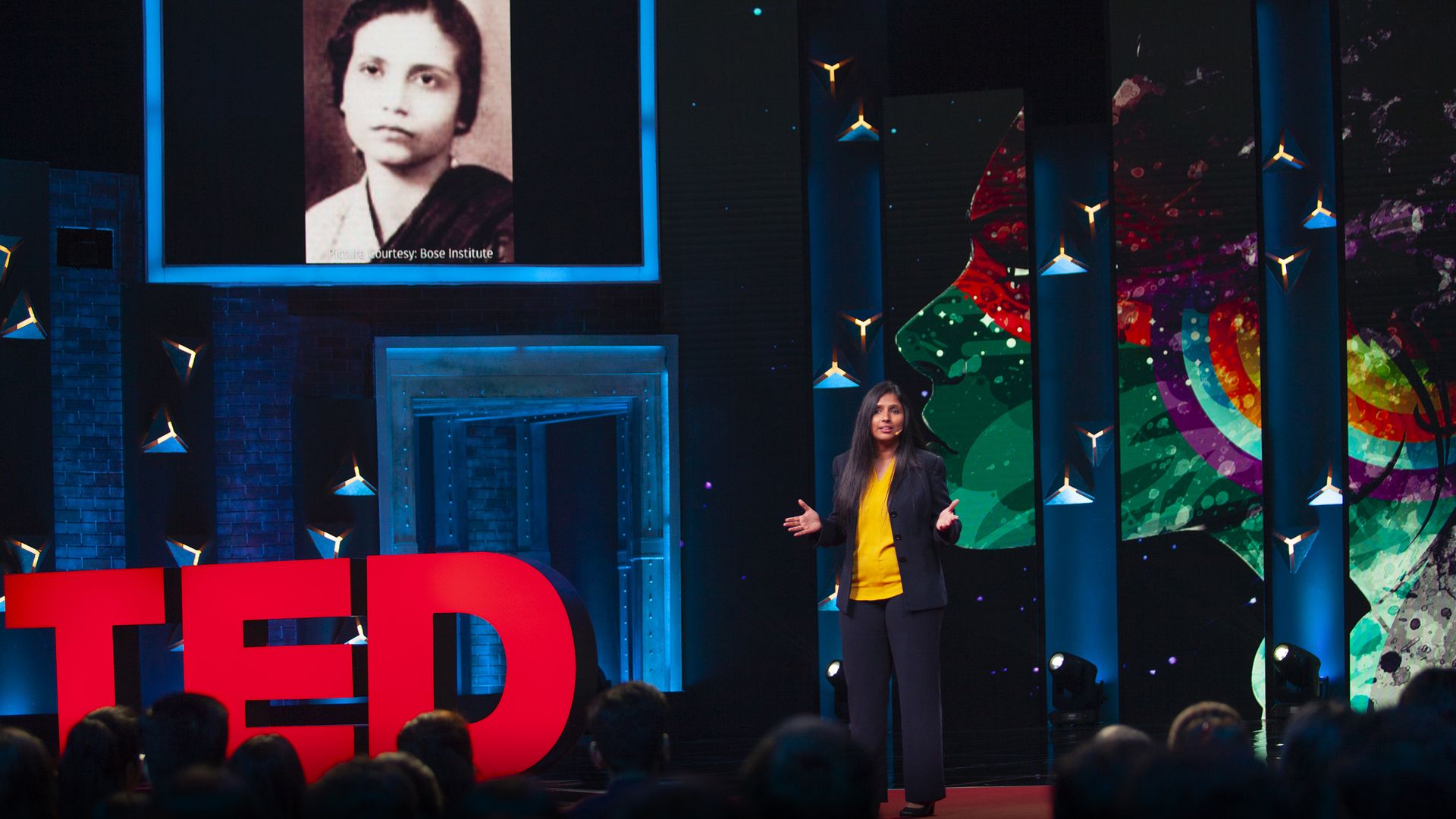
A celebration of women scientists -- and why we need more of them

In an inspiring talk, quantum physicist and author Shohini Ghose calls attention to the women throughout history who made scientific breakthroughs in fields that overlooked them -- and offers a vision of a world that encourages and supports women in STEM.

2020

TED Talk

Canada
Quantum Algorithms Institute; Wilfrid Laurier University
The organization is led by a Professor of Physics and Computer Science who is also the NSERC Chair for Women in Science and Engineering. Their research focuses on quantum information science, exploring the applications of quantum physics in computation and communication. They also investigate the relationship between classical chaos theory and quantum physics. The organization is involved in initiatives addressing gender issues and diversity in science. The professor teaches courses on quantum mechanics and quantum computing. Their work includes publications, book chapters, and conference proceedings on topics such as blockchain platforms, quantum protocols, chaos theory, and quantum entanglement. // Quantum Algorithms Institute; Wilfrid Laurier University // Quantum technologies have the potential to transform computing, communication and sensors, and could impact healthcare, finance, IT, environment and much more. I am working to help build a global quantum-powered ecosystem that will benefit society while avoiding the many dangers of emerging technologies. // Shohini Ghose is a Professor of Physics and Computer Science, as well as the NSERC Chair for Women in Science and Engineering. Her research primarily revolves around quantum information science, delving into the practical applications of quantum physics in computation and communication. She also explores the interplay between classical chaos theory and quantum physics. Beyond her academic pursuits, Ghose is actively engaged in initiatives aimed at addressing gender disparities and promoting diversity in the field of science. She imparts her knowledge through teaching courses on quantum mechanics and quantum computing. Ghose's scholarly contributions span various publications, book chapters, and conference proceedings covering diverse topics such as blockchain platforms, quantum protocols, chaos theory, and quantum entanglement. // Quantum physicist, equity advocate // I always wanted to be an explorer like Rakesh Sharma, the first Indian to go to space. I haven’t made it to space yet, but I did become an explorer of the quantum world as a physics Professor in Waterloo, Canada. I examine how quantum physics can transform computing and communication. My colleagues and I were the first to observe the effect of chaos on quantum entanglement. I am passionate about building an inclusive science community as the Founding Director of the Laurier Centre for Women in Science (WinS) and the NSERC Chair for Women in Science and Engineering in Ontario. I was thrilled to become a 2014 TED Fellow and a 2018 TED Senior Fellow. I currently serve on the Scientific Board of the UNESCO International Basic Sciences Program. I still dream of going to space. // A quantum computer isn't just a more powerful version of the computers we use today; it's something else entirely, based on emerging scientific understanding -- and more than a bit of uncertainty. Enter the quantum wonderland with TED Fellow Shohini Ghose and learn how this technology holds the potential to transform medicine, create unbreakable encryption and even teleport information. // Shohini Ghose is a Professor of Physics and Computer Science, as well as the NSERC Chair for Women in Science and Engineering. Her research primarily revolves around quantum information science, delving into the practical applications of quantum physics in computation and communication. She also explores the interplay between classical chaos theory and quantum physics. Beyond her academic pursuits, Ghose is actively engaged in initiatives aimed at addressing gender disparities and promoting diversity in the field of science. She imparts her knowledge through teaching courses on quantum mechanics and quantum computing. Ghose's scholarly contributions span various publications, book chapters, and conference proceedings covering diverse topics such as blockchain platforms, quantum protocols, chaos theory, and quantum entanglement. // Quantum physicist, equity advocate // technology, led, diversity, chaos theory, equity, finance, research, inclusion, women, quantum physics, gender, blockchain, diversity and inclusion, sensor, quantum internet, science communication, science, quantum computing, communication, gender issues in science // Waterloo|Vancouver|Ontario|Toronto|Canada
Waterloo|Vancouver|Ontario|Toronto|Canada

Shohini Ghose

No items found.
2020

08:08

Sanitation is a basic human right

Warning: This talk might contain much more than you'd ever want to know about the way the world poops. But as sanitation activist (and TED Fellow) Francis de los Reyes asks — doesn't everyone deserve a safe place to go?

2014

TED Talk

United States
University of the Philippines; University of Illinois at Urbana-Champaign; Gawad Kalinga USA; North Carolina State University; Philippine Science HS; Gawad Kalinga; University of Illinois Urbana-Champaign; Filipino-American Performing Artists of NC; TED Conferences; Iowa State University
Dr. de los Reyes is a distinguished professor at North Carolina State University with expertise in civil, construction, and environmental engineering. His research focuses on biological processes, environmental biotechnology, and sanitation in developing countries. He has received numerous awards for his work and has collaborated on projects in various countries. His research projects include wastewater treatment, microbial ecology, pit latrine emptying technology, and anaerobic digestion. Additionally, he is involved in international research experiences and initiatives to improve water, sanitation, and hygiene in marginalized communities. // Dr. Francis L. de los Reyes III is the Glenn E. and Phyllis J. Futrell Distinguished Professor of Civil, Construction, and Environmental Engineering, University Faculty Scholar, Associate Faculty of Microbiology, and Training Faculty of Biotechnology at North Carolina State University. He is a TED Fellow and WEF Fellow. He has been teaching and doing research for over 23 years. His research focuses on: (1) fundamental and practical issues in environmental biotechnology, microbial ecology, and environmental engineering; and (2) sanitation in low- and medium-income countries. He has been a consultant for industry, engineering firms, and public utilities on activated sludge operation, solids separation problems, and molecular microbiology techniques. Fellow, Water Environment Federation, 2021 Patents for Humanity Award, US Patent Office, 2020 (for Flexcrevator patent) Corresponding Member, National Academy of Science and Technology of the Philippines, 2020 NC State Academy of Excellence in Global Engagement, 2019 RELX Group Environmental Challenge Award, 2018 NC State Outstanding Teacher Award (Academy of Outstanding Faculty in Teaching), 2018 Steven K. Dentel AEESP Award for Global Outreach, 2017 American Academy of Environmental Engineers) Excellence in Environmental Engineering and Science Honor Award, 2017 (with J. Ducoste and T. Aziz) Water Environment Federation Gordon M. Fair Distinguished Engineering Educator Award, 2015 UPLB Outstanding Alumnus Award, 2015 UP Alumni Association in America Distinguished Alumnus, 2015 NC State Alumni Outstanding Extension Award, 2015 NC State Academy of Outstanding Faculty in Extension and Engagement, 2015 Marist School Outstanding Alumnus Award, 2015 Outstanding Global Engagement Award, 2014 AEESP Service Award, 2013 Transatlantic Partnership in Excellence in Engineering Scholarship, 2013 Koh Lectureship Award in Engineering, Philippine-American Academy of Sciene and Engineering, 2013 Jackson Rigney International Service Award, 2012 Gawad Lagablab Award (Outstanding Alumnus of Philippine Science HS for Environmental Engineering and Biotechnology), 2011 Selected Participant, Frontiers of Engineering, National Academy of Engineering, 2010 Iowa State University Outstanding Young Alumnus Award, 2010 NCSU Earthwise Award, 2010 TED Fellow (2009 TEDIndia) Distinguished Alumnus Award, CEAT, UPLB, 2008 Balik-Scientist Award, Department of Science and Technology, 2008 NSF CAREER Award, 2001-2006 Elected member, Philippine-American Academy of Scientists and Engineers, 2004 // “Gawad Kalinga,” translated in English means to “give care”, is a Philippine-based movement that aims to end poverty by first restoring the dignity of the poor. It employs an integrated and holistic approach to empowerment with values-formation and leadership development at its core. Established in 2003, The Foundation currently works with over 2,000 communities and has been recognized as the 2006 Ramon Magsaysay Awardee & 2012 Skoll Awardee for Social Entrepreneurship. // The Filipino-American Performing Artists of North Carolina (FAPA-NC) is a collaboration of Filipino-Americans in the North Carolina Triangle area who wish to impart to, and share with our generation Filipino culture, history and values through music, dance, literature, drama, visual arts and crafts. // The TED Fellows program is designed to bring together young world-changers and trailblazers who have shown unusual accomplishment and exceptional courage. // “Gawad Kalinga,” translated in English means to “give care”, is a Philippine-based movement that aims to end poverty by first restoring the dignity of the poor. It employs an integrated and holistic approach to empowerment with values-formation and leadership development at its core. Established in 2003, The Foundation currently works with over 2,000 communities and has been recognized as the 2006 Ramon Magsaysay Awardee & 2012 Skoll Awardee for Social Entrepreneurship. // The Filipino-American Performing Artists of North Carolina (FAPA-NC) is a collaboration of Filipino-Americans in the North Carolina Triangle area who wish to impart to, and share with our generation Filipino culture, history and values through music, dance, literature, drama, visual arts and crafts. // University of the Philippines; University of Illinois at Urbana-Champaign; Gawad Kalinga USA; North Carolina State University; Philippine Science HS; Gawad Kalinga; University of Illinois Urbana-Champaign; Filipino-American Performing Artists of NC; TED Conferences; Iowa State University // Dr. Francis L. de los Reyes III is a distinguished professor at North Carolina State University with over 23 years of experience in teaching and research. His expertise lies in environmental biotechnology, microbial ecology, and environmental engineering, with a particular focus on sanitation in low- and medium-income countries. Dr. de los Reyes has received numerous accolades for his contributions to the field, including being a TED Fellow and a Water Environment Federation Fellow. He has also been recognized for his outstanding teaching and global engagement efforts. Additionally, he has served as a consultant for various industry sectors, engineering firms, and public utilities, providing expertise in areas such as activated sludge operation and molecular microbiology techniques. // Providing safe and sustainable sanitation services to all. Technologies and solutions for environmental problems in wastes and wastewater. Uplifting the bottom 5 M families in the Philippines. // Dr. Francis de los Reyes III is a distinguished professor at North Carolina State University, specializing in civil, construction, and environmental engineering. With a focus on biological processes and environmental biotechnology, his research delves into sanitation issues in developing nations. Dr. de los Reyes has garnered recognition through numerous awards and collaborations on global projects. His expertise spans wastewater treatment, microbial ecology, pit latrine technology, and anaerobic digestion. Engaged in international research endeavors, he actively contributes to initiatives enhancing water, sanitation, and hygiene in underserved communities, embodying a commitment to advancing sustainable solutions for environmental challenges worldwide. // Environmental engineer + sanitation activist // Dr. Francis L. de los Reyes III is a Professor of Civil, Construction, and Environmental Engineering, Associate Faculty of Microbiology, and Training Faculty of Biotechnology at North Carolina State University. His research focuses on biological processes and combines modeling, bioreactor experiments, and molecular microbial ecology tools in addressing fundamental and practical issues in environmental biotechnology and environmental engineering. An important area of his research and teaching is water and sanitation in developing countries. <p> He has been awarded Outstanding Alumnus Awards from Iowa State University (2010), the University of the Philippines-Los Banos (2008), and Philippine Science High School (Gawad Lagablab Award, 2011). He is a 2008 DOST Balik-Scientist awardee, and is an Adjunct Professor at UP Los Banos, where he serves on MS and PhD thesis and dissertation committees, and conducts research with UPLB scientists. He has received the US National Science Foundation CAREER Award (‘the highest science award given to young faculty’) in 2001 for his research and education efforts, the NCSU Earthwise Award in 2010, the Kimley-Horn Faculty Award in 2003 for outstanding research, the ASCE Editor’s Award for contributions to the Journal of Environmental Engineering, and various US national awards for best research. His students have won state (NC AWWA/WEA), national (WEF) and international (IWA) awards for research presentations and posters. <p> Current and past research projects (funding of ~ $4.5 M in last 10 years) include: quantitative microbial risk assessment of graywater reuse (WRRI), molecular analysis and modeling of the competition between filaments and floc-formers in activated sludge (NSF), analysis of the ecophysiology of nitrifiers and denitrifiers in microbial floc (NSF), optimization of a swine waste treatment system for nitrogen removal (US Department of Agriculture), analysis of the fate of bioagents in landfills (EPA), microbial characterization of landfills (Waste Management, Inc.), molecular techniques for groundwater remedation sites (US DOE/DOD), investigation of foam control methods (Hazen and Sawyer), development of probes for environmentally versatile Bacillus strains (Novozymes Biochemicals, Inc.), improvement of sludge dewatering (NC WRRI), microbial ecology of grease interceptors (CSPA) and the system-wide optimization of wastewater treatment plants using genetic algorithms. <p> He is the author/co-author of 40 book chapters and journal papers, 102 conference papers/presentations, and has given 54 invited talks. He has been a consultant for industry, engineering firms, and public utilities on activated sludge operation, solids separation problems, and molecular microbiology techniques in the Philippines, India, China, and Montenegro. He has also mentored an Engineers Without Borders group that developed a sanitation system for a village in Peru. He served on the Editorial Board of the journal Water Research and is currently on the Editorial Board of ASCE Journal of Environmental Engineering, and Philippine Science Letters. He is a Board Member of the Philippine American Academy of Scientists and Engineers. <p> Dr. de los Reyes received his BS in Agricultural Engineering (magna cum laude) from the University of the Philippines-Los Banos in 1990, MS in Civil Engineering from Iowa State University in 1994, and PhD in Environmental Engineering from the University of Illinois at Urbana-Champaign in 2000. He is married to Josephine Caballes-de los Reyes, and has three children- Mithi Alexa, Miguel Bayan, and Mireya Kathryn. He is the Raleigh-Durham Coordinator of Gawad Kalinga USA (since 2005). The North Carolina GK branch has raised funds for 3 GK villages (90 homes) in Quirino, Naga, and Masbate, and has supported GK’s efforts to sustain these and other villages. He is also involved in Green Kalinga (GK’s environmental arm) and has helped in education and training of GK volunteers. He is Founding Vice-President and has been a Board Member of the Filipino-American Performing Artists of North Carolina (FAPA-NC) since 2001. FAPA aims to teach Filipino-American youth the culture of the Philippines through dances, music, and art. // Francis is an environmental engineer, a professor of Environmental Engineering, Microbiology, and Biotechnology at NC State University, a teacher and researcher, a University Faculty Scholar, and a coordinator for a non-profit organization helping to lift developing countries out of poverty. His research and teaching focuses on wastewater treatment, engineering and microbiology of contaminant removal from solid and liquid wastes, molecular microbial ecology, and water and sanitation for developing countries. Francis obtained a BS in Agricultural Engineering from the University of the Philippines-Los Banos, a MS in Civil Engineering from Iowa State University, and a PhD in Environmental Engineering from the University of Illinois. He has received national and international awards for research, including the NSF CAREER Award (“the highest science award given to young faculty) and a Distinguished Alumnus Award from UPLB. He has worked with government agencies, municipalities, universities, and companies in the US, China, Montenegro, the Philippines, Belgium, South Africa, India, and Malawi as consultant or visiting scientist. As the NC Triangle Area Coordinator of Gawad Kalinga, a non-profit movement with the aim of transforming slums in developing countries to colorful villages, he has coordinated efforts to establish 3 villages in the Philippines, helping to rebuild the lives of 90 families. He is a marathoner and enjoys Taekwondo. // Warning: This talk might contain much more than you'd ever want to know about the way the world poops. But as sanitation activist (and TED Fellow) Francis de los Reyes asks — doesn't everyone deserve a safe place to go? // Dr. Francis de los Reyes III is a distinguished professor at North Carolina State University, specializing in civil, construction, and environmental engineering. With a focus on biological processes and environmental biotechnology, his research delves into sanitation issues in developing nations. Dr. de los Reyes has garnered recognition through numerous awards and collaborations on global projects. His expertise spans wastewater treatment, microbial ecology, pit latrine technology, and anaerobic digestion. Engaged in international research endeavors, he actively contributes to initiatives enhancing water, sanitation, and hygiene in underserved communities, embodying a commitment to advancing sustainable solutions for environmental challenges worldwide. // Environmental engineer + sanitation activist // technology, renewable, water, reuse, developing countries, agriculture, microbes, public utilities, drinking water sources, construction, rural villages, biotech, environmental consciousness, environmental impact, rural, empowerment, microbiology, energy, sanitation, entrepreneurship, compliance, global water and sanitation, water sanitation, waste management, geospatial analysis, research, climate, water resources, groundwater, youth, advocacy, teachers, energy policy, watershed, rain water, industrial, soil, environmental engineering, education, environmental accountability, drinking water, water quality, stormwater management, hydrology, activism, environmental education, environmental policy and advocacy, sustainable development , wetland, plants, wastewater treatment, risk assessment, extreme weather, wastewater, drinking water quality, science, poverty, nitrogen, watershed management, stormwater, capacity building, microbial ecology, waste to resources and energy, swine, anaerobic digestion, industrial water treatment, job skills training, marginalized communities, water management, volunteerism, policy, environmental management, science in developing countries, utilities, waste, bioreactor, marginalized, environmental, renewable energy, air quality, education and training, accountability, government, slum, ecology // USA|Raleigh|United States|North Carolina|Manila|Philippines
USA|Raleigh|United States|North Carolina|Manila|Philippines

Francis De Los Reyes

No items found.
2014

08:08

The new natural history

What if two different fish species, living thousands of miles apart from each other, hold the key to Earth's history? Evolutionary biologist and ichthyologist Prosanta Chakrabarty demonstrates the vitality of studies in nature, using 21st century tools to trace Earth's distant history, explain why it is the way it is today -- and theorize its potential futures.

2023

TED Talk

United States
Smithsonian Institution; Fulbright Association; Canadian Museum of Nature; AAAS; University of Michigan; McGill University; National Science Foundation; American Museum of Natural History; TED Conferences; Louisiana State University
Prosanta Chakrabarty, Ph.D., is a renowned ichthyologist and evolutionary biologist known for his work on the biodiversity, biogeography, phylogenomics, and taxonomy of fishes. He has described over a dozen new fish species from various countries and has conducted natural history research in more than 35 countries. As the principal investigator of a lab focusing on fish research, he has collaborated with postdocs and graduate students from diverse backgrounds. Dr. Chakrabarty has held various prestigious positions, including serving as the President of the American Society of Ichthyologists and Herpetologists, a Program Director at the National Science Foundation, and a Fulbright Distinguished Chair in Ottawa. He is a TED Senior Fellow and a National Geographic Certified Educator, known for his engaging presentations that blend solid science with historical context and humor. Dr. Chakrabarty's public science outreach efforts aim to inspire curiosity and understanding of evolution and natural history research among audiences of all ages. He is available as a keynote speaker on topics such as STEM, diversity, academia, and collaboration in science, tailoring his talks and workshops to specific audiences. Dr. Chakrabarty has spoken at prestigious institutions // I study fishes to better understand Earth history and evolution. I am a Public Speaker available to speak at your graduation, or as a keynote. I can speak about STEM, STEAM, diversity, academia, and collaboration. https://www.prosanta.org/ // I am an ichthyologist, evolutionary biologist and systematist. I have authored more than 50 scientific publications and wrote "A Guide to Academia: Getting into and Surviving Grad School, Postdocs, and a Research Job." // Elected in 2018 for "distinguished contributions to evolutionary biology, focusing on the bioluminescent systems and historical biogeography of freshwater fishes, and for effectively communicating science to the public." https://www.lsu.edu/mediacenter/news/2018/11/27aaas2018.php // https://blog.ted.com/meet-the-2018-class-of-ted-fellows-and-senior-fellows/ // DEB Cluster // Research on bioluminescent fishes // Smithsonian Institution; Fulbright Association; Canadian Museum of Nature; AAAS; University of Michigan; McGill University; National Science Foundation; American Museum of Natural History; TED Conferences; Louisiana State University // Prosanta Chakrabarty is an accomplished ichthyologist, evolutionary biologist, and systematist with a focus on studying fishes to unravel Earth's history and evolution. With over 50 scientific publications to his name, he is recognized for his distinguished contributions to evolutionary biology, particularly in the realms of bioluminescent systems and historical biogeography of freshwater fishes. Prosanta is also a proficient public speaker, offering engaging talks on STEM, STEAM, diversity, academia, and collaboration. His expertise extends to academia, as evidenced by his book "A Guide to Academia," which provides insights into navigating graduate school, postdocs, and research careers. // I'd like more people to understand evolution, including the parts related to gender, race, sex and sexuality. I wrote a recent book, 'Explaining Life Through Evolution' that was based on one of my talks. I'd also like for more people to understand biodiversity and how natural historians like myself aren't just swashbuckling but also careful and mindful recorders of the Earth's biodiversity. // Prosanta Chakrabarty, Ph.D., is a distinguished ichthyologist and evolutionary biologist whose work focuses on the biodiversity, biogeography, phylogenomics, and taxonomy of fishes. With over a dozen newly described fish species and research spanning more than 35 countries, he has made significant contributions to the field. Dr. Chakrabarty's expertise extends to public speaking, where he delivers engaging presentations on STEM, diversity, academia, and collaboration, aiming to inspire curiosity and understanding of evolution and natural history research. He is also the author of "A Guide to Academia," offering valuable insights into navigating academic careers. Through his work and outreach efforts, Dr. Chakrabarty seeks to promote a deeper appreciation for evolution, biodiversity, and the importance of natural history research. // Ichthyologist // Ichthyologist (I study fishes!) Evolutionary biologist and natural historian researching and discovering new species while exploring the world in an effort to understand fundamental aspects of biological diversity. Also a former Program Director at the National Science Foundation so ask me about fundamental basic science research. I am also a Fulbright Distinguished Chair, a AAAS Fellow, and Chair of LSU's Center for Collaborative Knowledge (so ask me about making connections between scientists and humanists/artists). Watch my TED talks — “4 billion years of evolution in six minutes” & “Clues to prehistoric times, found in blind cavefish” And my TEDed — "What can DNA tests really tell us about our ancestry?" Also my new book ‘Explaining Life Through Evolution’ is available at the TED2022 Bookstore // Prosanta Chakrabarty, Ph.D., is a distinguished ichthyologist and evolutionary biologist whose work focuses on the biodiversity, biogeography, phylogenomics, and taxonomy of fishes. With over a dozen newly described fish species and research spanning more than 35 countries, he has made significant contributions to the field. Dr. Chakrabarty's expertise extends to public speaking, where he delivers engaging presentations on STEM, diversity, academia, and collaboration, aiming to inspire curiosity and understanding of evolution and natural history research. He is also the author of "A Guide to Academia," offering valuable insights into navigating academic careers. Through his work and outreach efforts, Dr. Chakrabarty seeks to promote a deeper appreciation for evolution, biodiversity, and the importance of natural history research. // Ichthyologist // freshwater, rivers and lakes, marine, education, fish, biodiversity, rivers, evolution, natural history, ichthyology, evolution research, freshwaters, research, design, bioinformatics, species, wildlife, stem, oceans, gender, science communication, science, genetics, communication, curation, ecology // Louisiana|United States|Baton Rouge|USA
Louisiana|United States|Baton Rouge|USA

Prosanta Chakrabarty

No items found.
2023

05:19

The future of repairing the human body

As humans live longer than ever before, we need our implants to last as long as we do, says bioengineer Nina Tandon. Using stem cells and digital fabrication, she's working on growing anatomically precise spare parts for the human body, replacing damaged bones, cartilage and more with implants that fit perfectly and hold up for a lifetime.

2023

TED Talk

United States
Tissue engineering researcher // An American electrical engineer and research scientist who explores how electrical stimulation encourages tissue growth. She is also a certified yoga instructor who explores the intersections between mindfulness, education and the scientific process in her own life, and, increasingly, with her students! // Nina Tandon is CEO and co-founder of EpiBone, the world’s first company growing living human bones for skeletal reconstruction. She is the co-author of Super Cells: Building with Biology, a book that explores the new frontier of biotech. Nina has also been awarded Crain's New York, Forty Under 40; Ernst & Young, Winning Woman; and Goldman Sachs, 100 Most Intriguing Entrepreneurs. She has a Bachelor’s in Electrical Engineering from the Cooper Union, a Master’s in Bioelectrical Engineering from MIT, a PhD in Biomedical Engineering, as well as an MBA from Columbia University. Her PhD research focused on studying electrical signaling in the context of tissue engineering, and has worked with cardiac, skin, bone, and neural tissue. // As humans live longer than ever before, we need our implants to last as long as we do, says bioengineer Nina Tandon. Using stem cells and digital fabrication, she's working on growing anatomically precise spare parts for the human body, replacing damaged bones, cartilage and more with implants that fit perfectly and hold up for a lifetime. // Each of our bodies is utterly unique, which is a lovely thought until it comes to treating an illness -- when every body reacts differently, often unpredictably, to standard treatment. Tissue engineer Nina Tandon talks about a possible solution: Using pluripotent stem cells to make personalized models of organs on which to test new drugs and treatments, and storing them on computer chips. (Call it extremely personalized medicine.) // Tissue engineer and TED Fellow Nina Tandon is growing artificial hearts and bones. To do that, she needs new ways of caring for artificially grown cells -- techniques she's developed by the simple but powerful method of copying their natural environments. // Nina Tandon is CEO and co-founder of EpiBone, the world’s first company growing living human bones for skeletal reconstruction. She is the co-author of Super Cells: Building with Biology, a book that explores the new frontier of biotech. Nina has also been awarded Crain's New York, Forty Under 40; Ernst & Young, Winning Woman; and Goldman Sachs, 100 Most Intriguing Entrepreneurs. She has a Bachelor’s in Electrical Engineering from the Cooper Union, a Master’s in Bioelectrical Engineering from MIT, a PhD in Biomedical Engineering, as well as an MBA from Columbia University. Her PhD research focused on studying electrical signaling in the context of tissue engineering, and has worked with cardiac, skin, bone, and neural tissue. // Tissue engineering researcher // jewelry design & silversmithing, education, entrepreneurship, electrical engineering, making fresh pasta, research, watergun assassination, design, stem, bioreactors, stem cells, biotech, jewelry, bioelectricity, climbing fences, tissue engineering, biomimicry, headstands // United States|New York
United States|New York

Nina Tandon

No items found.
2023

09:04

What should humans take to space (and leave behind)?

One day, humans will explore space en masse and live scattered across the solar system on planets like Mars and beyond. Inspired by his time as artist-in-residence at the European Space Agency, TED Fellow Jorge Mañes Rubio wants to rethink what we need to bring on this grand journey -- and more importantly, what we should leave behind. Mañes Rubio takes us on an Earthbound journey through cultural practices and his own designs that blend science, art and ritual, encouraging a bold reimagining of what a future free of prejudice and exploitation could look like.

2021

TED Talk

Netherlands
Conceptual artist // There is a nebulous factor that successful artists and Jorge Mañes Rubio have. This factor is a relentless, yet stylish, drive to accomplish something significant, to make a difference, to fulfil a vision—in a big way. It’s inexorable. Jorge recontextualizes the common and overlooked in our society and reveals it to us in a way that makes us know more about what we thought we already understood. And he does it with a warmth or humor that includes us—not excludes or demeans. There’s a compassionate, shared, embracing energy to his art. It draws us in, makes us more aware and more human. Jorge Mañes Rubio is a sort of sociohistorical alchemist. When he travels, he absorbs what he sees and hears, and uses it as raw material to “reimagine what could be instead.” He graduated in Design Products from the Royal College of Art London in 2010, where he confirmed his indefatigable desire to travel beyond the usual scopes of design. In 2014 he obtained the prestigious TED fellowship and a year later the S&R Foundation Washington Award. Rubio has been a guest lecturer at several international conferences, his work is regularly exhibited in galleries, museums and art centers worldwide, and he’s currently artist in residence at the European Space Agency. // “There is a nebulous factor that successful artists and Jorge Mañes Rubio have. This factor is a relentless, yet stylish, drive to accomplish something significant, to make a difference, to fulfill a vision—in a big way. It’s inexorable. Jorge recontextualizes the common and overlooked in our society and reveals it to us in a way that makes us know more about what we thought we already understood. And he does it with a warmth or humour that includes us—not excludes or demeans. There’s a compassionate, shared, embracing energy to his art. It draws us in, makes us more aware and more human.” // One day, humans will explore space en masse and live scattered across the solar system on planets like Mars and beyond. Inspired by his time as artist-in-residence at the European Space Agency, TED Fellow Jorge Mañes Rubio wants to rethink what we need to bring on this grand journey -- and more importantly, what we should leave behind. Mañes Rubio takes us on an Earthbound journey through cultural practices and his own designs that blend science, art and ritual, encouraging a bold reimagining of what a future free of prejudice and exploitation could look like. // “There is a nebulous factor that successful artists and Jorge Mañes Rubio have. This factor is a relentless, yet stylish, drive to accomplish something significant, to make a difference, to fulfill a vision—in a big way. It’s inexorable. Jorge recontextualizes the common and overlooked in our society and reveals it to us in a way that makes us know more about what we thought we already understood. And he does it with a warmth or humour that includes us—not excludes or demeans. There’s a compassionate, shared, embracing energy to his art. It draws us in, makes us more aware and more human.” // Conceptual artist // cultural dialogue, design, science, solar, art // Netherlands|North Holland|Amsterdam
Netherlands|North Holland|Amsterdam

Jorge Manes Rubio

No items found.
2021

How Black girls can reclaim their voice in music | Kyra Gaunt

How does music shape us? Digital ethnomusicologist and TED Fellow Kyra Gaunt studies how Black girls can preserve the integrity of their own voices while listening, dancing and singing to pop songs largely engineered by men, often with lyrics that express anti-Black, patriarchal sentiments. In a quick, incisive talk, she shows how Black girls can disrupt the stereotypes and stigmas buried within this music and chart their own revolution in sound. Hosted on Acast. See acast.com/privacy for more information.

2023

Podcasts

United States
I want to provide a safe world for Black girls to play online free of sexualization, sexploitation, and anti-black sexism or misogynoir on video-sharing platforms like YouTube, WSHH, and TikTok. Girls deserve to learn about comprehensive sex, learn that their bodies are their own to practice assertiveness, self-care, and sexual offense protection and privacy. If chronic exposure to racism has caused the weathering of Black women’s sexual and reproductive health since it was first theorized in the early 1990s, what does chronic and ubiquitous exposure to sexism in adolescent Black girls’ intimate bedroom musical play cause during the transition from childhood into adulthood? // Ethnomusicologist // Kyra D. Gaunt, Ph.D., a singer-songwriter versed in classical music, jazz and R&B songwriting, an adjunct associate professor of ethnomusicology, cultural anthropology and sociology and as a social media expert. Currently, I am an Adjunct Associate Professor at Baruch College at the City University of New York. I identify as a black feminist ethnomusicologist specializing in the study and performance of musical blackness and digital ethnography on YouTube. My next book is a digital ethnography of black girls’ twerking and music-related videos on YouTube. This digital work expands on my previous scholarship The Games Black Girls Play: Learning the Ropes from Double-Dutch to Hip-Hop, which won the Alan Merriam Prize for the most outstanding English-speaking monograph awarded by the Society for Ethnomusicology (SEM) in 2007. <http://www.amazon.com/Games-Black-Girls-Play-ebook/dp/B004DULQOM> Former SEM president Deborah Wong described the book as “a radical counter-history [showing] how African American girls—interlocutors who are triply minoritized through race, gender, and age—are producing music culture that has profound influences on [adult] popular music and the popular imagination. She calls for an engaged ethnomusicology and moves gracefully through an array of anti-essentialist perspectives on race and gender. She argues that ‘kinetic orality’ is key to African American musicking and that the body is always a locus of memory and communality. From somatic historiography to serious cross-talk with girls, Gaunt offers new methodologies for ethnomusicological work.” As both a scholar and a performer, I bring a committed advocacy for empowering emerging adults to become consumers of their own productivity—great citizens and professionals now not when you graduate—while demonstrating the value of a diverse and communal intellectual and cross-ethnic engagement that needs to be cultivated in our gadget-distracted age especially in higher education. She is a sought-after international speaker, a connector and a successful curator of several e-books she self-published including Could You Be Bigger? <http://tedfellows.posterous.com/40454117>, a set of op-eds by emerging adults on structural racism. Her original music is available on CDBaby and iTunes. You can follow her on Twitter and Facebook @kyraocity. Her website is kyraocity.wordpress.com // Innovative Black feminist scholar in digital and embodied ethnomusicology | Professor | Author | Senior TED Fellow | Singer-Songwriter Kyra D. Gaunt, Ph.D. has been a cutting-edge scholar in the field of embodied ethnomusicology for more than two decades. She currently teaches at the SUNY Albany. Her book The Games Black Girls Play: Learning the Ropes from Double-Dutch to Hip-Hop, funded by NEH and the Ford Foundation, won the 2007 Alan Merriam Prize from The Society of Ethnomusicology. The book and Kyra’s earlier publications contributed to the emergence of hip-hop music studies, black girlhood studies, and hip-hop feminism. Her current research explores the intersections of music, tech, and violence targeting Black girls shaped ecologically by the "musical Internet" from YouTube to TikTok. Check out her 2022 TED Talk How Black Girls Can Reclaim Their Voice in Music . Kyra earned her PhD from the University of Michigan-Ann Arbor and presently teaches at University at Albany-SUNY. In addition to scholarship, Kyra is a federally-certified expert witness in cases involving social media, especially FB. Check out her Small Thing, Big Idea episode, "How the Jump Rope Got its Rhythm," which has 7.1M+ Facebook views (that's more views the Adichie's "The Danger of a Single Story" or Byran Stevenson's TED talk). It has also been translated into 28 different languages. // How does music shape us? Digital ethnomusicologist and TED Fellow Kyra Gaunt studies how Black girls can preserve the integrity of their own voices while listening, dancing and singing to pop songs largely engineered by men, often with lyrics that express anti-Black, patriarchal sentiments. In a quick, incisive talk, she shows how Black girls can disrupt the stereotypes and stigmas buried within this music and chart their own revolution in sound. // "Down down, baby, down down the roller coaster..." Hip-hop owes a lot to the queens of double dutch. Ethnomusicologist Kyra Gaunt takes us on a tour of the fascinating history of the jump rope. // Innovative Black feminist scholar in digital and embodied ethnomusicology | Professor | Author | Senior TED Fellow | Singer-Songwriter Kyra D. Gaunt, Ph.D. has been a cutting-edge scholar in the field of embodied ethnomusicology for more than two decades. She currently teaches at the SUNY Albany. Her book The Games Black Girls Play: Learning the Ropes from Double-Dutch to Hip-Hop, funded by NEH and the Ford Foundation, won the 2007 Alan Merriam Prize from The Society of Ethnomusicology. The book and Kyra’s earlier publications contributed to the emergence of hip-hop music studies, black girlhood studies, and hip-hop feminism. Her current research explores the intersections of music, tech, and violence targeting Black girls shaped ecologically by the "musical Internet" from YouTube to TikTok. Check out her 2022 TED Talk How Black Girls Can Reclaim Their Voice in Music . Kyra earned her PhD from the University of Michigan-Ann Arbor and presently teaches at University at Albany-SUNY. In addition to scholarship, Kyra is a federally-certified expert witness in cases involving social media, especially FB. Check out her Small Thing, Big Idea episode, "How the Jump Rope Got its Rhythm," which has 7.1M+ Facebook views (that's more views the Adichie's "The Danger of a Single Story" or Byran Stevenson's TED talk). It has also been translated into 28 different languages. // Ethnomusicologist // technology, sociology, violence, tiktok, black girlhood studies, education, digital ethnomusicologist, black feminist studies, musical play, research, wikipedia, qualitative researcher, youtube, misogynoir, racism, consultant dei, gender, advocacy, ethnomusicology, children, voiceover artist, girls, digital media scholar // New York|United States|Albany|USA
New York|United States|Albany|USA

Kyra Gaunt, Ph.D.

No items found.
2023