
ted fellows media library

Watch the TED Fellows in action

Watch, listen and connect with the Fellows changing the world through science, art, invention and imagination. 

TED Talks

From unbelievable science to awe-inspiring art, watch powerful talks from our global community of 500+ TED Fellows.

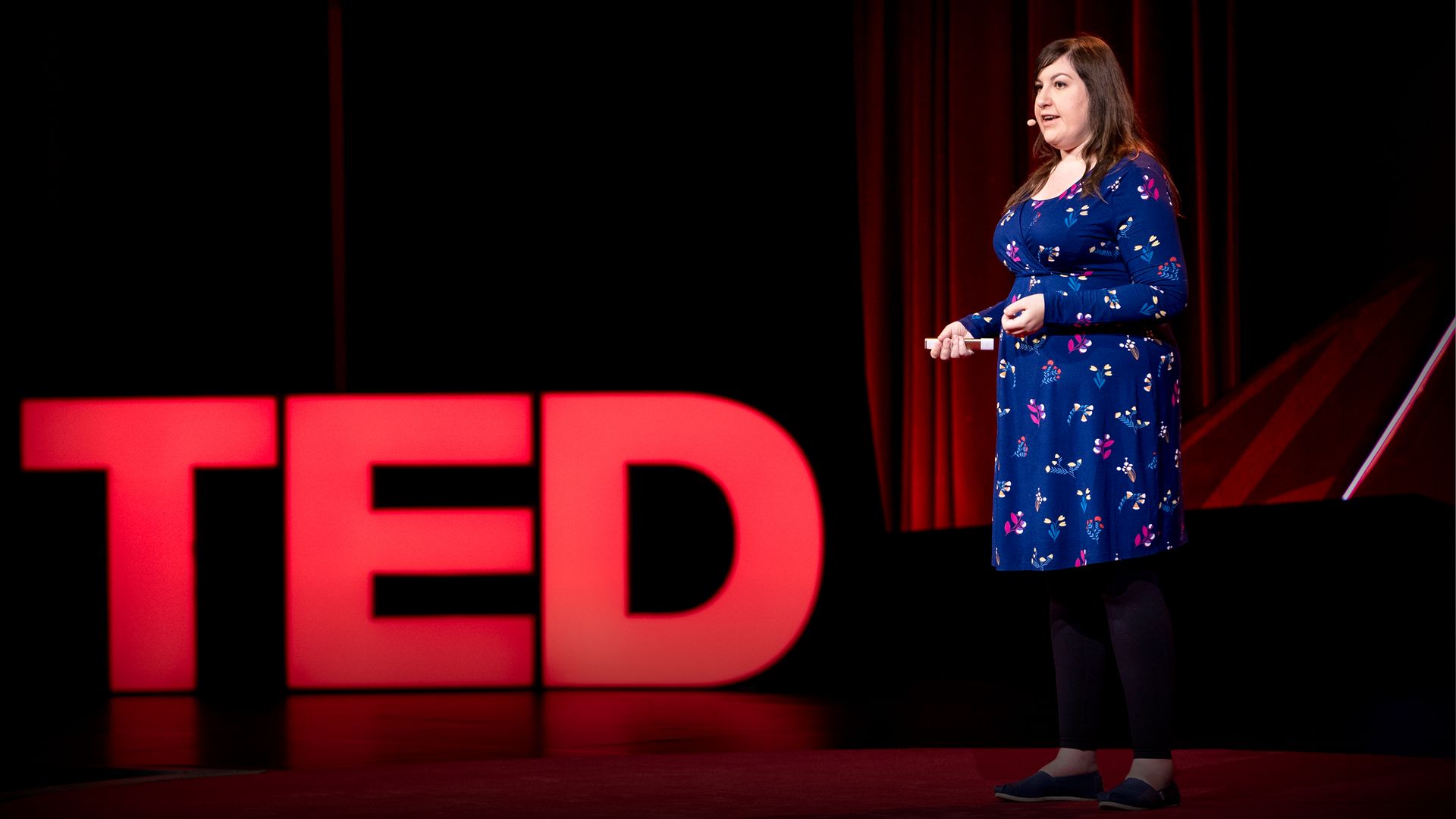
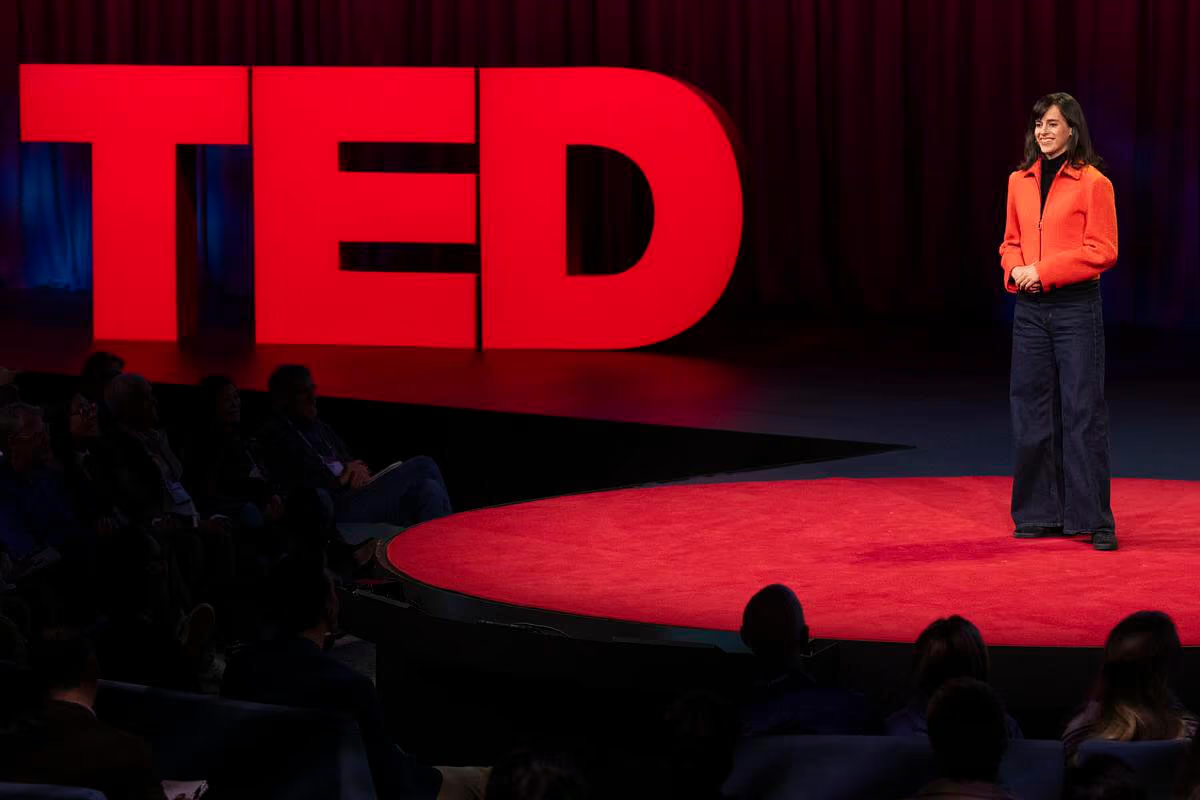
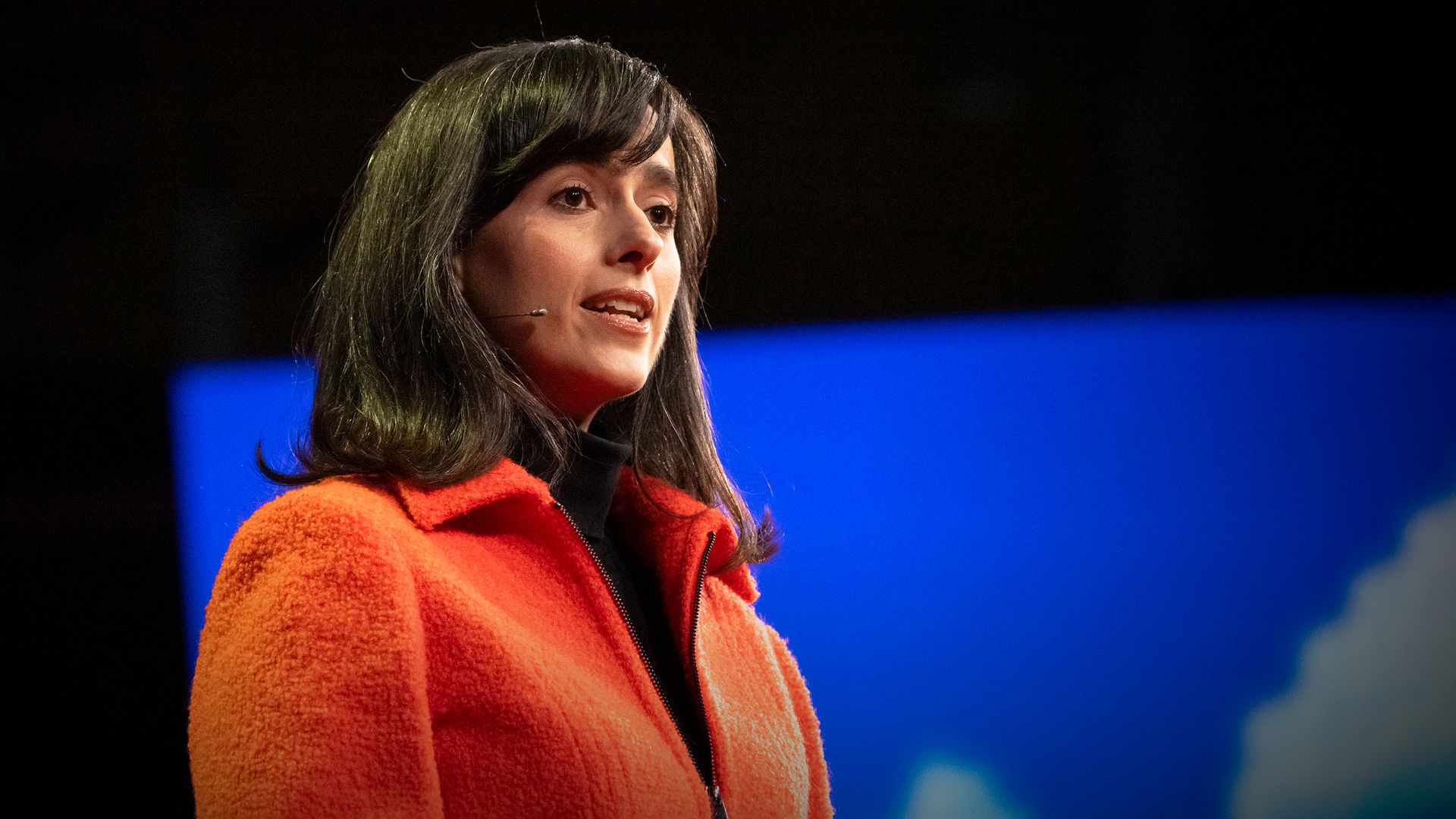
Carissa Véliz

Beware the power of prediction

Podcasts

Hear TED Fellows tell their stories in intimate interviews and learn more about what lies behind their big ideas.

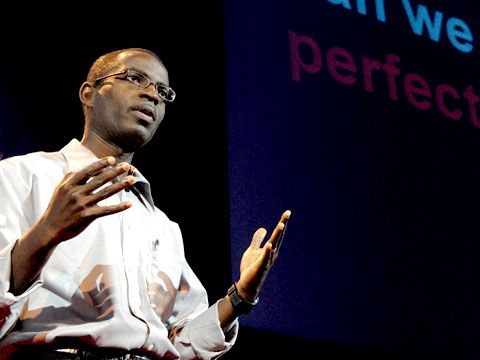
Trinity Tran

Who controls your city's money? | Trinity Tran

What if your city could borrow money from its own bank instead of private lenders? TED Fellow Trinity Tran is leading the push for public banks — which are owned by the people through their local governments — and shows how this model could ensure your local tax dollars stay in your community. 

Ryosuke Takashima

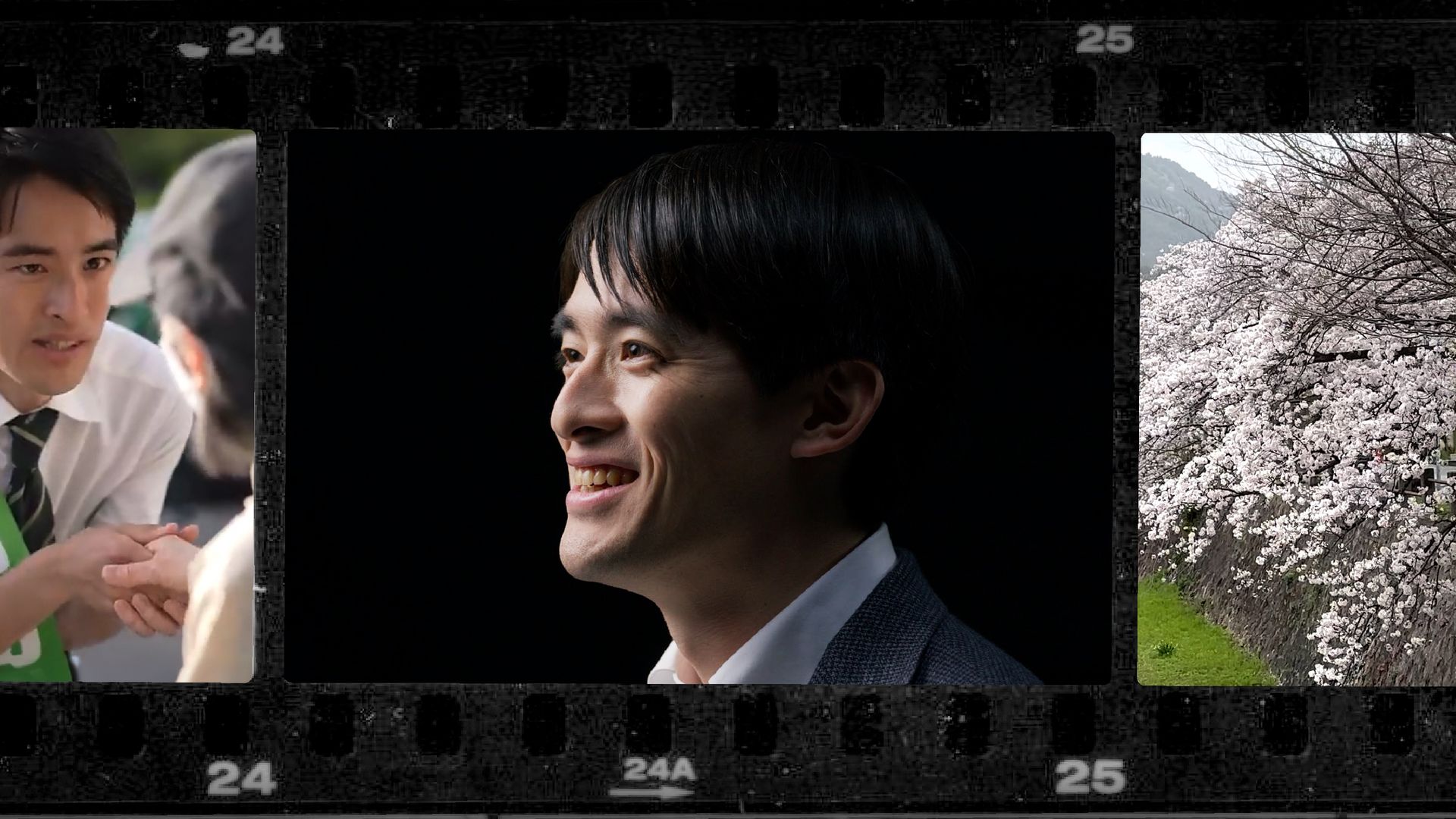
Meet the youngest-ever mayor in Japan's history | Ryosuke Takashima

TED Fellow Ryosuke Takashima is the youngest-ever mayor in Japan's history — but he doesn't consider himself a politician. His approach to leadership is simple: listen to as many voices as possible (from students to elders) in order to figure out what needs fixing. Hear why he thinks inviting citizens to participate in reforming their own communities is the best way to get things done.

Schendy Kernizan

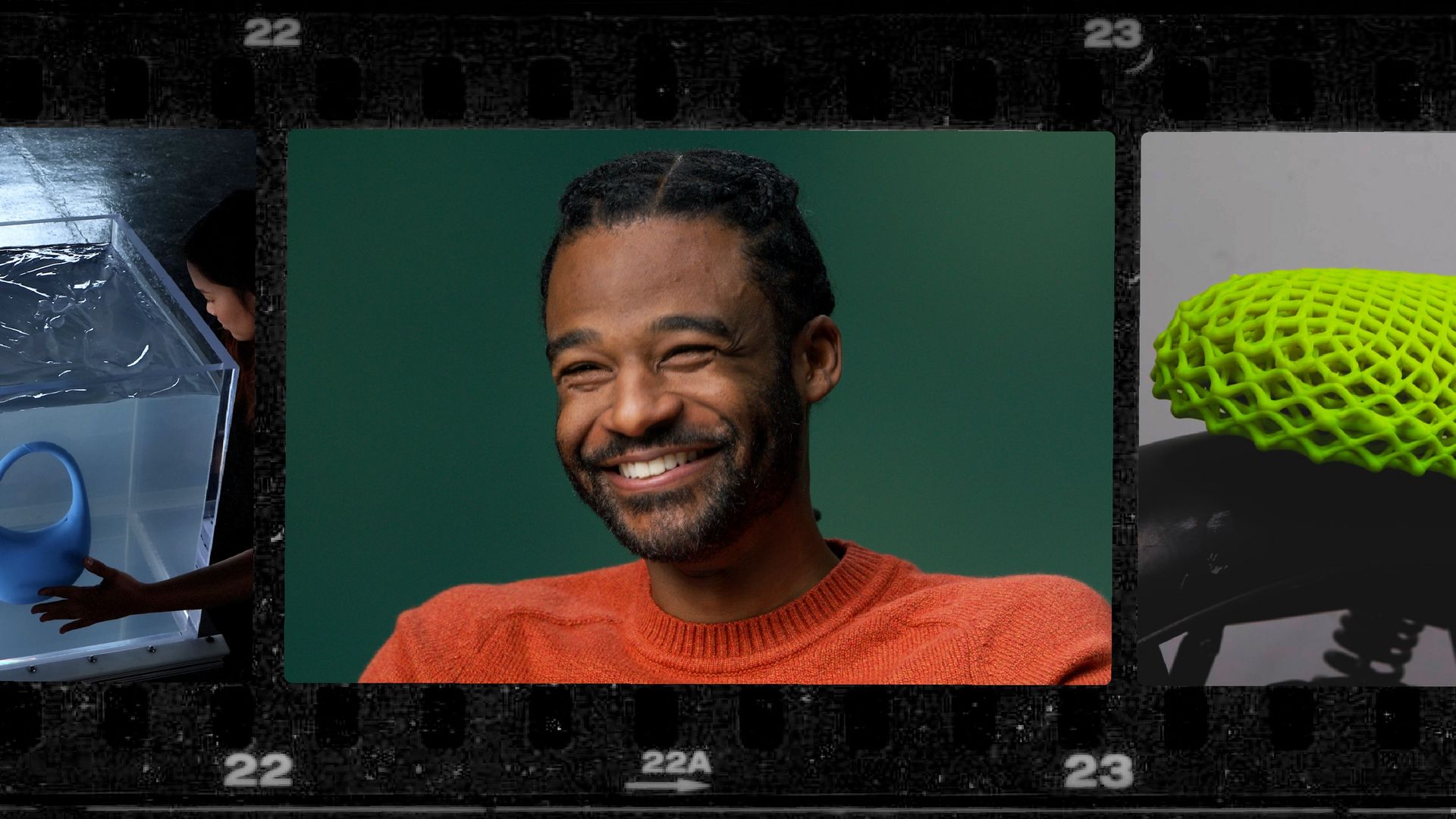
The gravity-defying future of manufacturing | Schendy Kernizan

3D printing promised to reinvent how we make things, but it's mostly stuck producing prototypes with a high level of waste. Designer and TED Fellow Schendy Kernizan found a different way — by printing objects directly into a tub of gel. He explains how this technique eliminates the constraints of gravity, pushing the limits of how we can manufacture objects across medicine, fashion, space travel and more.
Listen to all
Podcast episodes

TED Fellows Films

TED Talks meet documentaries in these short films that explore TED Fellows’ ideas. Dive into all three seasons to explore their mind-blowing innovations. 

05:39

FELLOWS FILM

Meet the youngest-ever mayor in Japan's history

TED Fellow Ryosuke Takashima is the youngest-ever mayor in Japan's history — but he doesn't consider himself a politician. His approach to leadership is simple: listen to as many voices as possible (from students to elders) in order to figure out what needs fixing. Hear why he thinks inviting citizens to participate in reforming their own communities is the best way to get things done.

2026

TED Fellows Film

Ryosuke Takashima
04:47

FELLOWS FILM

The gravity-defying future of manufacturing

3D printing promised to reinvent how we make things, but it's mostly stuck producing prototypes with a high level of waste. Designer and TED Fellow Schendy Kernizan found a different way — by printing objects directly into a tub of gel. He explains how this technique eliminates the constraints of gravity, pushing the limits of how we can manufacture objects across medicine, fashion, space travel and more.

2026

TED Fellows Film

Schendy Kernizan

Fellows Media Library

With 500+ TED Fellows and counting, we’ve got an entire world of media for you to explore. Dive into these talks, short films and podcasts showcasing Fellows turning ideas into action.

Clear
Sort
Thank you! Your submission has been received!
Oops! Something went wrong while submitting the form.

05:44

Can we make things that make themselves?

MIT researcher Skylar Tibbits works on self-assembly -- the idea that instead of building something (a chair, a skyscraper), we can create materials that build themselves, much the way a strand of DNA zips itself together. It's a big concept at early stages; Tibbits shows us three in-the-lab projects that hint at what a self-assembling future might look like.

2011

TED Talk

United States
Inventor // SKYLAR TIBBITS is a trained Architect, Designer and Computer Scientist whose research currently focuses on developing self-assembly technologies for large-scale structures in our physical environment. Skylar graduated from Philadelphia University with a 5 yr. Bachelor of Architecture degree and minor in experimental computation. Continuing his education at MIT, he received a Masters of Science in Design + Computation and a Masters of Science in Computer Science. Skylar is currently a lecturer in MIT's Department of Architecture, teaching graduate and undergraduate design studios and co-teaching How to Make (Almost) Anything, a seminar at MIT's Media Lab. Skylar was recently awarded a TED2012 Senior Fellowship, a TED2011 Fellowship and has been named a Revolutionary Mind in SEED Magazine's 2008 Design Issue. His previous work experience includes: Zaha Hadid Architects, Asymptote Architecture, SKIII Space Variations and Point b Design. Skylar has exhibited work at a number of venues around the world including: the Guggenheim Museum NY and the Beijing Biennale, lectured at MoMA and SEED Media Group's MIND08 Conference, Storefront for Art and Architecture, the Rhode Island School of Design, the Institute for Computational Design in Stuttgart and The Center for Architecture NY. He has been published in numerous articles and built large-scale installations around the world from Paris, Calgary, NY to Frankfurt and MIT. As a guest critic, Skylar has visited a range of schools from the University of Pennsylvania, Pratt Institute and Harvard's Graduate School of Design. Skylar has collaborated with a number of influential people over the years including: Neil Gershenfeld and The Center for Bits and Atoms, Erik and Marty Demaine at MIT, Adam Bly at SEED Media Group and Marc Fornes of THEVERYMANY. In 2007, Skylar Tibbits and Marc Fornes co-curated Scriptedbypurpose, the first exhibition focused exclusively on scripted processes within design. SJET LLC, founded by Skylar Tibbits in 2007, was initiated as platform for experimental computation + design and has grown into a multidisciplinary research based practice. SJET crosses disciplines from architecture + design, fabrication, computer science to robotics... SJET is a direct result of an endless search for more... // Skylar Tibbits is a designer and computer scientist whose research focuses on developing self-assembly and programmable materials within the built environment. Tibbits is the founder and co-director of the Self-Assembly Lab at MIT, and Associate Professor of Design Research in the Department of Architecture. Tibbits has a professional degree in architecture and a minor in experimental computation from Philadelphia University, and a masters in design computation and masters computer science from MIT. He has worked at a number of design offices including Zaha Hadid Architects, Asymptote Architecture and Point b Design. He has designed and built large-scale installations and exhibited in galleries around the world, including the Centre Pompidou, Philadelphia Museum of Art, Cooper Hewitt Smithsonian Design Museum, Victoria and Albert Museum and various others. He is the author of the book Self-Assembly Lab: Experiments in Programming Matter (Routledge, 2016), Active Matter (MIT Press, 2017), co-editor of Being Material (MIT Press 2019) and the Editor-In-Chief of the journal 3D Printing and Additive Manufacturing. Awards include LinkedIn's Next Wave Award for Top Professionals under 35 (2016), R&D Innovator of the Year (2015), National Geographic Emerging Explorer (2015), an Inaugural WIRED Fellowship (2014), the Architectural League Prize (2013), Ars Electronica Next Idea Award (2013), TED Senior Fellow (2012) and 2008 he was named a Revolutionary Mind by SEED magazine. // What if we could harness the ocean's movement to protect coastal communities from rising sea levels? Designer and TED Fellow Skylar Tibbits shows how his lab is creating a dynamic, adaptable system of underwater structures that uses energy from ocean waves to accumulate sand and restore eroding shorelines -- working with the forces of nature to build rather than destroy. // 3D printing has grown in sophistication since the late 1970s; TED Fellow Skylar Tibbits is shaping the next development, which he calls 4D printing, where the fourth dimension is time. This emerging technology will allow us to print objects that then reshape themselves or self-assemble over time. Think: a printed cube that folds before your eyes, or a printed pipe able to sense the need to expand or contract. // MIT researcher Skylar Tibbits works on self-assembly -- the idea that instead of building something (a chair, a skyscraper), we can create materials that build themselves, much the way a strand of DNA zips itself together. It's a big concept at early stages; Tibbits shows us three in-the-lab projects that hint at what a self-assembling future might look like. // Skylar Tibbits is a designer and computer scientist whose research focuses on developing self-assembly and programmable materials within the built environment. Tibbits is the founder and co-director of the Self-Assembly Lab at MIT, and Associate Professor of Design Research in the Department of Architecture. Tibbits has a professional degree in architecture and a minor in experimental computation from Philadelphia University, and a masters in design computation and masters computer science from MIT. He has worked at a number of design offices including Zaha Hadid Architects, Asymptote Architecture and Point b Design. He has designed and built large-scale installations and exhibited in galleries around the world, including the Centre Pompidou, Philadelphia Museum of Art, Cooper Hewitt Smithsonian Design Museum, Victoria and Albert Museum and various others. He is the author of the book Self-Assembly Lab: Experiments in Programming Matter (Routledge, 2016), Active Matter (MIT Press, 2017), co-editor of Being Material (MIT Press 2019) and the Editor-In-Chief of the journal 3D Printing and Additive Manufacturing. Awards include LinkedIn's Next Wave Award for Top Professionals under 35 (2016), R&D Innovator of the Year (2015), National Geographic Emerging Explorer (2015), an Inaugural WIRED Fellowship (2014), the Architectural League Prize (2013), Ars Electronica Next Idea Award (2013), TED Senior Fellow (2012) and 2008 he was named a Revolutionary Mind by SEED magazine. // Inventor // technology, sea level, education, architecture, buildings, coastal communities, coastal, research, design, 3d printing, emerging technology, oceans, built environment, natural shorelines, robotics, island, ocean waves, nature, additive manufacturing, science, sea level rise, manufacturing // Boston|Massachusetts|United States|USA
Boston|Massachusetts|United States|USA

Skylar Tibbits

No items found.
2011

06:05

How to stop the metaverse from becoming the internet's bad sequel

"The metaverse is already on fire, and we haven't even built it yet," says TED Fellow and video game lawyer Micaela Mantegna. She lays out why the metaverse is at risk of inheriting some of the internet's worst traits, like unchecked surveillance -- and shows how we could redirect its fate through new laws grounded in kindness and connection.

2022

TED Talk

Argentina
Video game lawyer // Hi there nice to meet you! 🙌 I am Micaela Mantegna, a video game lawyer and activist known as Abogamer, (a portmanteau of 'abogada', the Spanish word for lawyer, and gamer). Some facts about me: ✔️My first book "ARTficial: creativity, AI and copyright" is currently on press! 🎉 ✔️Currently, I am a TED Fellow and an affiliate at the Berkman Klein Center at Harvard, doing research at the intersection of video games, AI ethics, ©️ , immersive technologies for extended reality (XR) with a focus on the governance of the Metaverse. ✔️As an activist, I am the founder of Women In Games Argentina (WIGAr), a non-profit working towards a more inclusive gaming industry; and a Women in Games International (WIGJ) Ambassador. ✔️I have been featured by EA in the official video of my favorite video game. Just ask me, is great to start a conversation! ;) Here you can find more about me and my work: https://cyber.harvard.edu/people/micaela-mantegna // "The metaverse is already on fire, and we haven't even built it yet," says TED Fellow and video game lawyer Micaela Mantegna. She lays out why the metaverse is at risk of inheriting some of the internet's worst traits, like unchecked surveillance -- and shows how we could redirect its fate through new laws grounded in kindness and connection. // Hi there nice to meet you! 🙌 I am Micaela Mantegna, a video game lawyer and activist known as Abogamer, (a portmanteau of 'abogada', the Spanish word for lawyer, and gamer). Some facts about me: ✔️My first book "ARTficial: creativity, AI and copyright" is currently on press! 🎉 ✔️Currently, I am a TED Fellow and an affiliate at the Berkman Klein Center at Harvard, doing research at the intersection of video games, AI ethics, ©️ , immersive technologies for extended reality (XR) with a focus on the governance of the Metaverse. ✔️As an activist, I am the founder of Women In Games Argentina (WIGAr), a non-profit working towards a more inclusive gaming industry; and a Women in Games International (WIGJ) Ambassador. ✔️I have been featured by EA in the official video of my favorite video game. Just ask me, is great to start a conversation! ;) Here you can find more about me and my work: https://cyber.harvard.edu/people/micaela-mantegna // Video game lawyer // research, technology, inclusion, activism, ethics, metaverse, governance, copyright, fire, artificial intelligence ethics, artificial intelligence, xr, women, video games // Argentina
Argentina

Micaela Mantegna

No items found.
2022

06:32

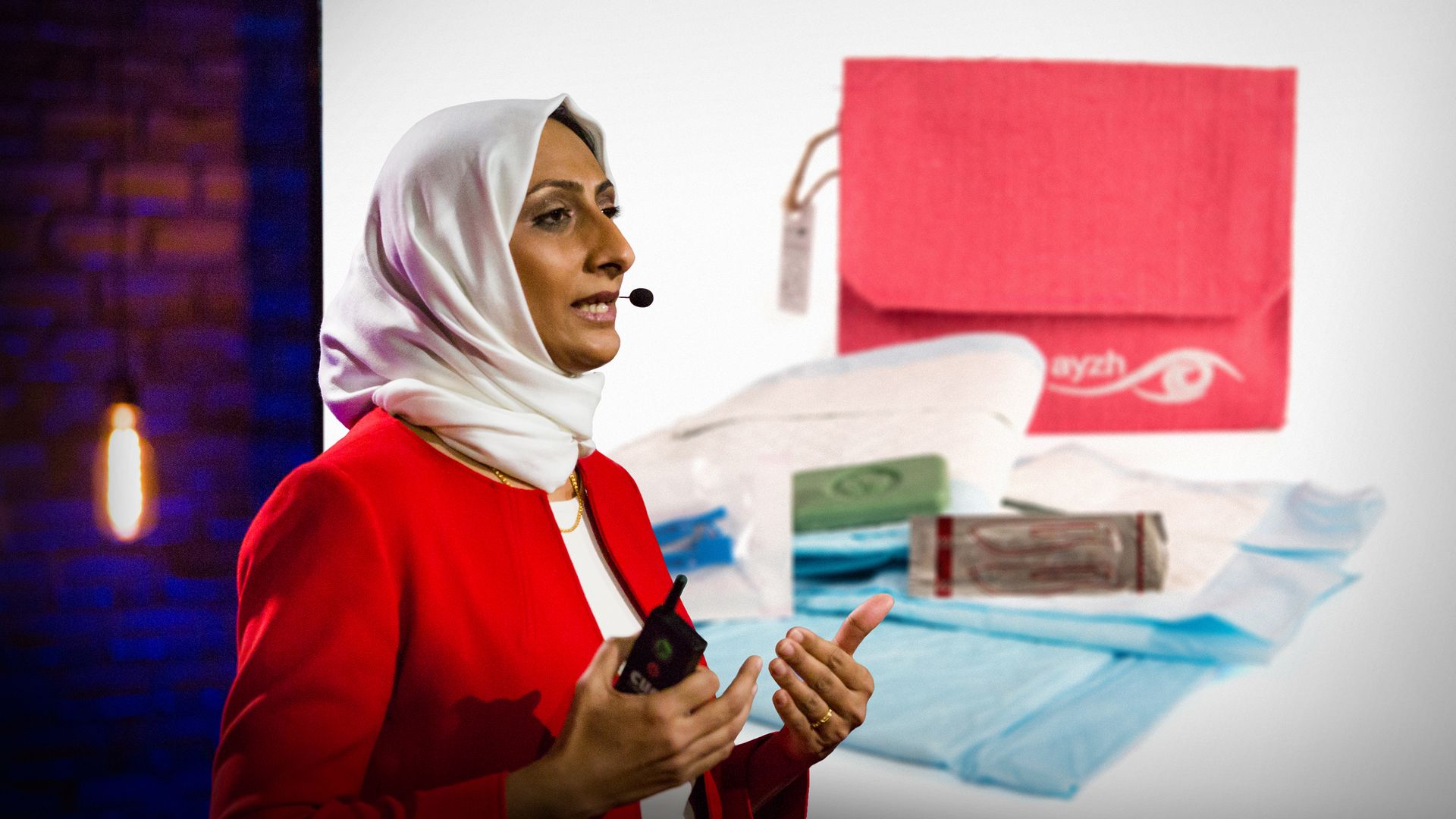
A simple birth kit for mothers in the developing world

TED Fellow Zubaida Bai works with medical professionals, midwives and mothers to bring dignity and low-cost interventions to women's health care. In this quick, inspiring talk, she presents her clean birth kit in a purse, which contains everything a new mother needs for a hygienic birth and a healthy delivery -- no matter where in the world (or how far from a medical clinic) she might be.

2017

TED Talk

United States
Women's health advocate // Zubaida is regarded as a leader in the field of designing and engineering low-cost health products appropriate for the developing world. She has a Master’s in Engineering (product development and design) from Dalarna University, Sweden and an MBA (social and sustainable enterprises) from Colorado State University, USA. With over 6 years of experience in the social sector specifically in innovations in health and commercialization. Zubaida now heads AYZH, a social enterprise aimed at bringing technology solutions to rural women.. Zubaida founded AYZH as a way to increase the income and health of women in rural India by enabling them to be the producers of tools like sterile birth kits, designed to help women thrive. Zubaida’s professional experience, combined with her personal passion for empowering underserved women, led to her being selected as a TED India fellow (2009), Ashoka Maternal Health fellow (2010-2011), and most recently an Echoing Green fellow (2012). In 2011, Zubaida’s design of the flagship AYZH product JANMA the clean birth kit being chosen one of the 61 products globally designed to improve life by INDEX Awards. // Zubaida Bai is President and CEO of Grameen Foundation, headquartered in Washington, DC. She leads Grameen Foundation in its mission to end poverty and hunger by building ecosystems that support women in leveraging their own capacity to contribute to the prosperity of their families and communities. Bai is a social entrepreneur and women's health advocate with more than 18 years in the social impact space. Building on her expertise as a mechanical engineer, product designer, and empathetic communicator, Bai put her passion for bettering the lives of women to work when founding her company, ayzh, (pronounced eyes) in 2009. This women's reproductive health product and services business serving emerging and frontier markets has improved the lives of over 1 million women and evolved into a global enterprise. After leading the organization for 12 years she now serves on its board. Prior to joining Grameen Foundation, Bai was the managing director of CARE Social Ventures where she used her strategic expertise, global perspective, and hands-on Operational and P&L experience to convert locally created philanthropic programs into financially sustainable global social enterprises. She helped organizations assess their feasibility, providing business support such as CEO and Board recruiting, strategic planning, and future business strategy. Bai has served on boards of several high impact social businesses in countries like Bangladesh, Zambia and India. She also stays close to her engineering roots by serving on the Board of Advisors of medtech startups such as SISU Global Health. She is a Visiting Social Innovator with Harvard University’s Social Innovative Change Initiative (SICI) and a member of the Governing Body of SEMA Reproductive Health and the Impact Advisory Council of TOMS Shoes. Some of Bai’s recognitions of note are Young Global Leader by the World Economic Forum, a Maternal Health Champion by Ashoka, and a Sustainable Development Goals Pioneer (United Nations Global Compact). She has spoken at multiple global forums including the United Nations and TED. Bai holds a master’s degree in Mechanical Engineering and an MBA. She was also conferred with an Honorary Doctor of Humane Letters degree by Claremont Graduate University in 2018 for her ability to work at the intersection of various sectors seamlessly, and to energetically bring her unique insights and fresh perspective to the table. // TED Fellow Zubaida Bai works with medical professionals, midwives and mothers to bring dignity and low-cost interventions to women's health care. In this quick, inspiring talk, she presents her clean birth kit in a purse, which contains everything a new mother needs for a hygienic birth and a healthy delivery -- no matter where in the world (or how far from a medical clinic) she might be. // Zubaida Bai is President and CEO of Grameen Foundation, headquartered in Washington, DC. She leads Grameen Foundation in its mission to end poverty and hunger by building ecosystems that support women in leveraging their own capacity to contribute to the prosperity of their families and communities. Bai is a social entrepreneur and women's health advocate with more than 18 years in the social impact space. Building on her expertise as a mechanical engineer, product designer, and empathetic communicator, Bai put her passion for bettering the lives of women to work when founding her company, ayzh, (pronounced eyes) in 2009. This women's reproductive health product and services business serving emerging and frontier markets has improved the lives of over 1 million women and evolved into a global enterprise. After leading the organization for 12 years she now serves on its board. Prior to joining Grameen Foundation, Bai was the managing director of CARE Social Ventures where she used her strategic expertise, global perspective, and hands-on Operational and P&L experience to convert locally created philanthropic programs into financially sustainable global social enterprises. She helped organizations assess their feasibility, providing business support such as CEO and Board recruiting, strategic planning, and future business strategy. Bai has served on boards of several high impact social businesses in countries like Bangladesh, Zambia and India. She also stays close to her engineering roots by serving on the Board of Advisors of medtech startups such as SISU Global Health. She is a Visiting Social Innovator with Harvard University’s Social Innovative Change Initiative (SICI) and a member of the Governing Body of SEMA Reproductive Health and the Impact Advisory Council of TOMS Shoes. Some of Bai’s recognitions of note are Young Global Leader by the World Economic Forum, a Maternal Health Champion by Ashoka, and a Sustainable Development Goals Pioneer (United Nations Global Compact). She has spoken at multiple global forums including the United Nations and TED. Bai holds a master’s degree in Mechanical Engineering and an MBA. She was also conferred with an Honorary Doctor of Humane Letters degree by Claremont Graduate University in 2018 for her ability to work at the intersection of various sectors seamlessly, and to energetically bring her unique insights and fresh perspective to the table. // Women's health advocate // technology, entrepreneurship, appropriate technology, led, menstrual hygine, equity, hunger and poverty, sustainable development goals, design, sustainable development , fundraising, women, women's health and wellbeing, gender, advocacy, underserved, women's health, maternal and newborn health, rural, hunger, poverty, low-cost, ecosystem, income // Fort Collins|United States|Colorado|USA
Fort Collins|United States|Colorado|USA

Zubaida Bai

No items found.
2017

06:50

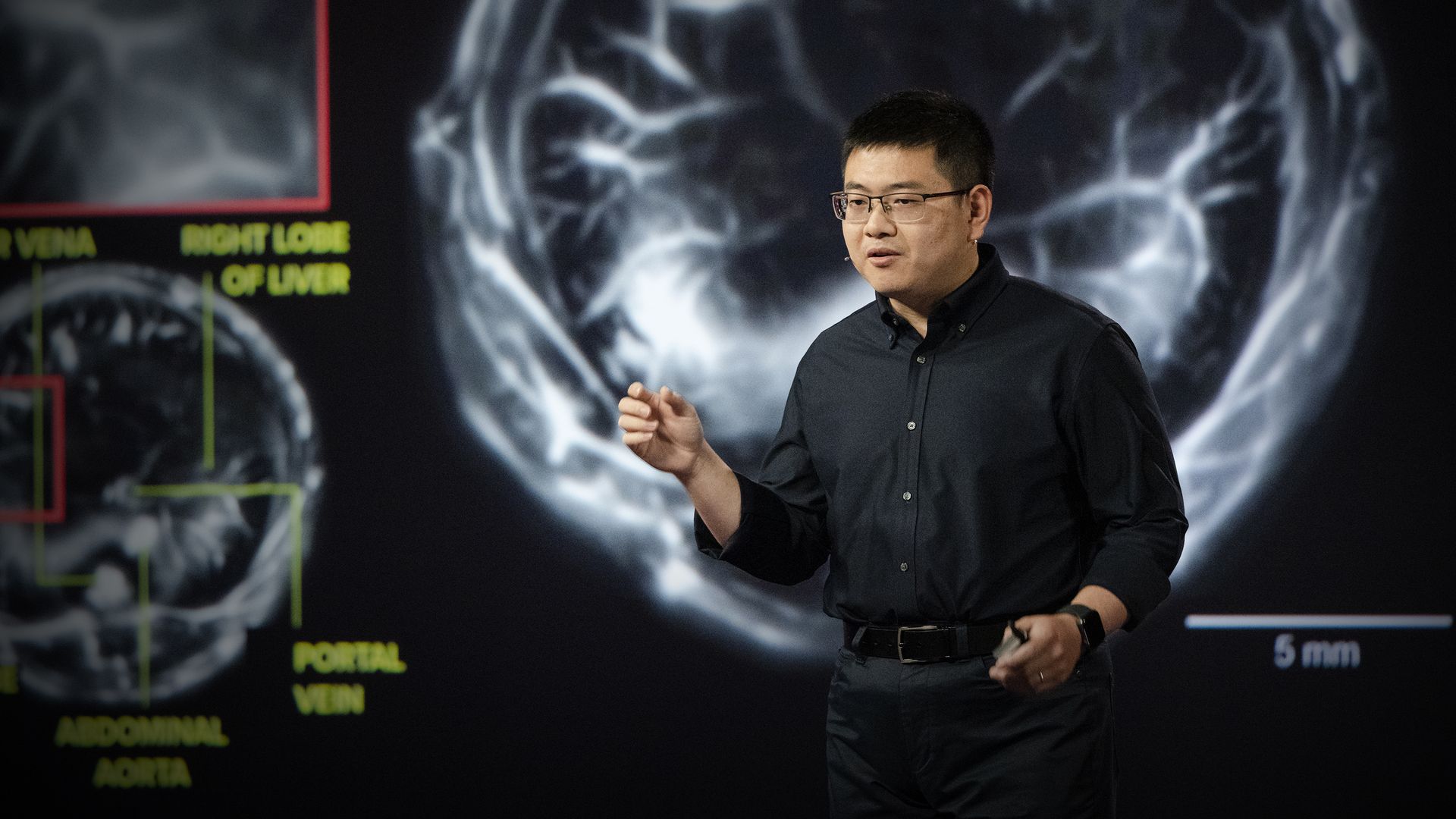
The incredible cancer-detecting potential of photoacoustic imaging

Could we use the energy from light and sound to detect disease? TED Fellow Lei Li shares the exciting promise of photoacoustic imaging: an affordable, painless and accurate method of converting light into sound in order to create high-resolution images of what's going on inside our bodies. From early detection of breast cancer to steering medicine-delivering micro-robots, learn how this cutting-edge technology could open up a new world of possibility when it comes to seeing, tracking and diagnosing disease.

2022

TED Talk

United States
Washington University in St. Louis; Harbin Institute of Technology; Caltech; Rice University Electrical and Computer Engineering
The organization focuses on advancing medical imaging technology, specifically in the field of photoacoustic imaging. They have developed innovative techniques such as Single-Impulse Panoramic Photoacoustic Computed Tomography (SIP-PACT), which offers high-resolution imaging for diagnosing diseases like cancer and understanding brain functions. Their research includes integrating photoswitchable phytochrome probes with photoacoustic tomography to achieve high sensitivity and multiscale imaging. They have also worked on PACT-guided microrobots for targeted navigation in intestines and photoacoustic microscopy for high-speed, high-resolution imaging of biological samples. The organization's work aims to revolutionize medical imaging by utilizing light to probe molecules directly, providing functional, metabolic, anatomical, histological, and molecular information in a safe and efficient manner. // PhD Degree // Washington University in St. Louis; Harbin Institute of Technology; Caltech; Rice University Electrical and Computer Engineering // Developing a new and effective skin disease diagnosis methodology for all populations regardless of skin color. This can address the inequity of dark-skinned patients who are often late or misdiagnosed for their dermatological disease. // Lei Li is a leading expert in advancing medical imaging technology, particularly in the field of photoacoustic imaging. Their innovative techniques, such as Single-Impulse Panoramic Photoacoustic Computed Tomography (SIP-PACT), have significantly contributed to high-resolution imaging for diagnosing diseases like cancer and understanding brain functions. Lei Li's research involves integrating photoswitchable phytochrome probes with photoacoustic tomography to achieve high sensitivity and multiscale imaging. They have also pioneered work on PACT-guided microrobots for targeted navigation in intestines and developed photoacoustic microscopy for high-speed, high-resolution imaging of biological samples. Lei Li's contributions aim to revolutionize medical imaging by utilizing light to directly probe molecules, offering comprehensive information in a safe and efficient manner. // Medical imaging innovator // Lei Li is currently a postdoctoral scholar in the Department of Medical Engineering at Caltech. In 2019, he obtained his Ph.D. degree from the Department of Electrical Engineering at Caltech. His overarching research goal is to develop new medical imaging technology that uses light to visualize brain functions and cancer progression. Toward this goal, he has developed advanced photoacoustic computed tomography (PACT)—an imaging modality that combines light and sound for deep-tissue imaging—to non-invasively visualize wholebody dynamics, study brain functions, detect tumor growth and metastasis, and navigate microrobots inside the body. He also shapes the benchtop system towards a wearable device. These works enable wide-range applications in neuroscience, cancer research, and clinical translation. He is now combining light, sound and artificial intelligence to detect early-stage cancer and better understand the brain. // Could we use the energy from light and sound to detect disease? TED Fellow Lei Li shares the exciting promise of photoacoustic imaging: an affordable, painless and accurate method of converting light into sound in order to create high-resolution images of what's going on inside our bodies. From early detection of breast cancer to steering medicine-delivering micro-robots, learn how this cutting-edge technology could open up a new world of possibility when it comes to seeing, tracking and diagnosing disease. // Lei Li is a leading expert in advancing medical imaging technology, particularly in the field of photoacoustic imaging. Their innovative techniques, such as Single-Impulse Panoramic Photoacoustic Computed Tomography (SIP-PACT), have significantly contributed to high-resolution imaging for diagnosing diseases like cancer and understanding brain functions. Lei Li's research involves integrating photoswitchable phytochrome probes with photoacoustic tomography to achieve high sensitivity and multiscale imaging. They have also pioneered work on PACT-guided microrobots for targeted navigation in intestines and developed photoacoustic microscopy for high-speed, high-resolution imaging of biological samples. Lei Li's contributions aim to revolutionize medical imaging by utilizing light to directly probe molecules, offering comprehensive information in a safe and efficient manner. // Medical imaging innovator // technology, research, inequity, optical imaging, data analysis, wearables, medical imaging, affordable, bioinformatics, electrical engineering, biophotonics, digital health, data, artificial intelligence, machine learning, disease // Texas|USA|Houston|California|United States|Pasadena
Texas|USA|Houston|California|United States|Pasadena

Lei Li

No items found.
2022

08:02

Government surveillance — this is just the beginning

Privacy researcher Christopher Soghoian sees the landscape of government surveillance shifting beneath our feet, as an industry grows to support monitoring programs. Through private companies, he says, governments are buying technology with the capacity to break into computers, steal documents and monitor activity — without detection. This TED Fellow gives an unsettling look at what's to come.

2014

TED Talk

United States
Privacy researcher + activist // American privacy researcher and activist who focuses on online privacy, including both consumer issues and government surveillance. // Dubbed the “Ralph Nader for the Internet Age” by Wired and “the most prominent of a new breed of activist technology researchers” by the Economist, Christopher Soghoian works at the intersection of technology, law, and policy. A leading expert on privacy, surveillance, and information security, Soghoian is currently a TechCongress Fellow, working for Senator Ron Wyden. Prior to that, he was the Principal Technologist at the American Civil Liberties Union. A TED Senior Fellow, Soghoian has been named a top innovator under 35 by the MIT Technology Review, and was an Open Society Foundations Fellow. Soghoian completed his Ph.D. at Indiana University in 2012, which focused on the role that Internet and telephone companies play in enabling government surveillance of their customers. // The smartphone you use reflects more than just personal taste ... it could determine how closely you can be tracked, too. Privacy expert and TED Fellow Christopher Soghoian details a glaring difference between the encryption used on Apple and Android devices and urges us to pay attention to a growing digital security divide. "If the only people who can protect themselves from the gaze of the government are the rich and powerful, that's a problem," he says. "It's not just a cybersecurity problem -- it's a civil rights problem." // Who is listening in on your phone calls? On a landline, it could be anyone, says privacy activist Christopher Soghoian, because surveillance backdoors are built into the phone system by default, to allow governments to listen in. But then again, so could a foreign intelligence service ... or a criminal. Which is why, says Soghoian, some tech companies are resisting governments' call to build the same backdoors into mobile phones and new messaging systems. From this TED Fellow, learn how some tech companies are working to keep your calls and messages private. // Privacy researcher Christopher Soghoian sees the landscape of government surveillance shifting beneath our feet, as an industry grows to support monitoring programs. Through private companies, he says, governments are buying technology with the capacity to break into computers, steal documents and monitor activity — without detection. This TED Fellow gives an unsettling look at what's to come. // Dubbed the “Ralph Nader for the Internet Age” by Wired and “the most prominent of a new breed of activist technology researchers” by the Economist, Christopher Soghoian works at the intersection of technology, law, and policy. A leading expert on privacy, surveillance, and information security, Soghoian is currently a TechCongress Fellow, working for Senator Ron Wyden. Prior to that, he was the Principal Technologist at the American Civil Liberties Union. A TED Senior Fellow, Soghoian has been named a top innovator under 35 by the MIT Technology Review, and was an Open Society Foundations Fellow. Soghoian completed his Ph.D. at Indiana University in 2012, which focused on the role that Internet and telephone companies play in enabling government surveillance of their customers. // Privacy researcher + activist // technology, mobile phones, activism, cybersecurity, privacy & surveillance, civil liberties, science, rights, computer science, law, policy, security, monitoring, government, civil rights // Washington|United States|District of Columbia
Washington|United States|District of Columbia

Christopher Soghoian

No items found.
2014

05:04

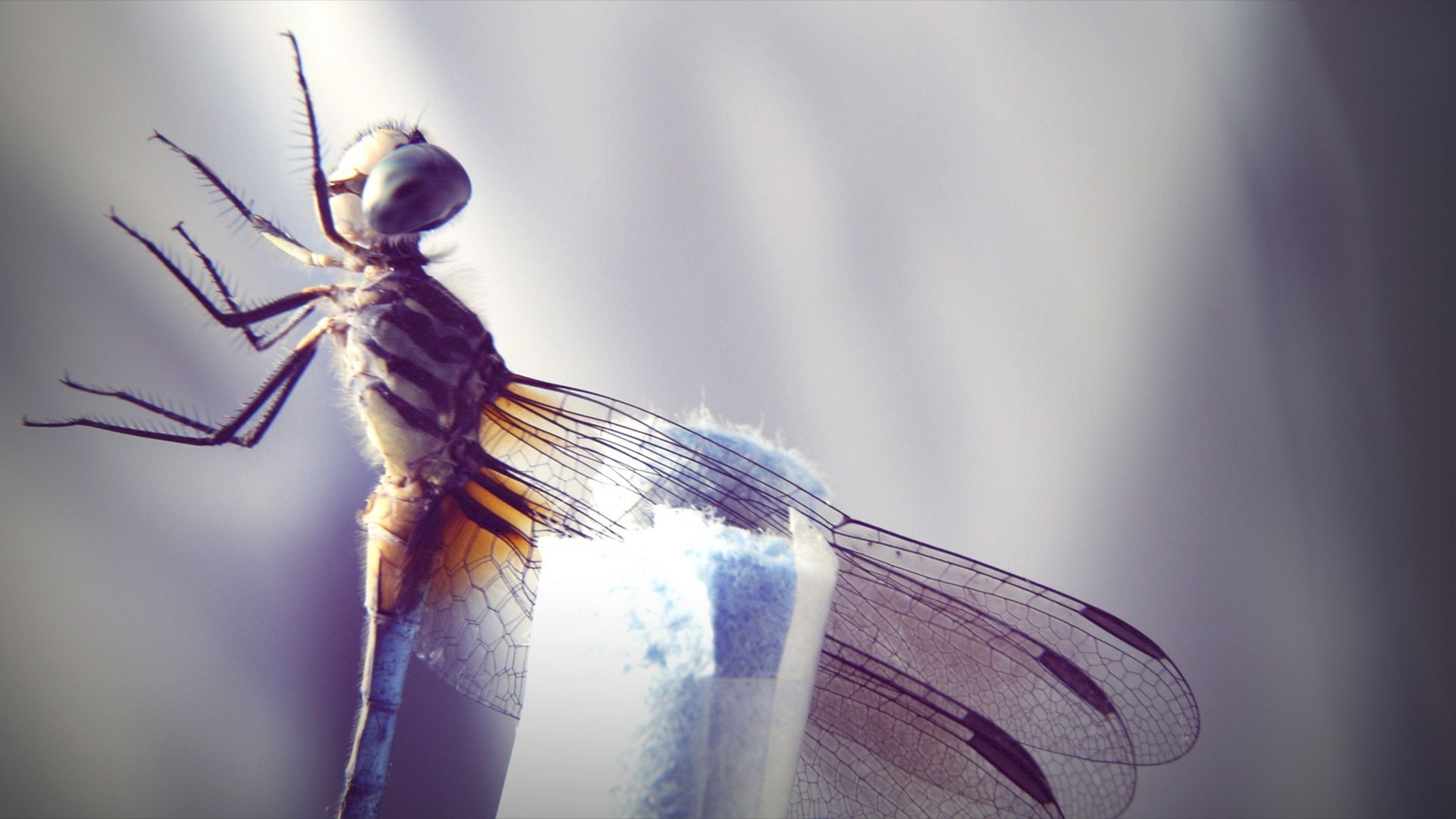
How a dragonfly's brain is designed to kill

Dragonflies can catch prey with near perfect accuracy, the best among all predators. But how does something with so few neurons achieve such prowess? Our intrepid neuroscientists explore how a dragonfly unerringly locks onto its preys and captures it within milliseconds using just sensors and a fake fly.

2018

Other

United States
Michigan State University; Backyard Brains; University of Michigan; University of South Carolina
Backyard Brains is a company founded by neuroscience Ph.D. students with a mission to democratize neuroscience education. They have developed kits that allow individuals, including children, to learn about neuroscience at an early age using off-the-shelf electronics. Their products focus on neuroscience but have expanded into various STEM research fields. The kits enable users to record from neurons in invertebrates, human physiology, neuroengineering devices, and even plant signaling. Backyard Brains has received recognition for their work, including awards from prestigious organizations and the U.S. National Institutes of Health. They have a strong community presence, with TED Talks and collaborations with popular science shows. The company is open-source, transparent about their finances, and offers a range of experiments and lesson plans for educators and enthusiasts. // Adjunct Professor in the Department of Molecular & Integrative Physiology at the University of Michigan // Adjunct Assistant Professor of Neuroscience, Michigan State University // Greg Gage is the co-founder and CEO of Backyard Brains, an organization that develops open-source tools that allow amateurs and students to participate in neural discovery. Greg is an NIH-award winning neuroscientist with 9 popular TED Talks and dozens of peer-reviewed publications. Greg is a Senior Fellow at TED and the recipient of the White House Champion of Change from Barack Obama award for his commitment to citizen science. // Michigan State University; Backyard Brains; University of Michigan; University of South Carolina // Gregory Gage is a seasoned neuroscientist and educator with a strong focus on democratizing neuroscience research. With a background in academia as an Adjunct Professor at the University of Michigan and Michigan State University, Gregory has also made significant contributions as the co-founder and CEO of Backyard Brains. Through this organization, he has spearheaded the development of open-source tools that enable individuals, including students and amateurs, to engage in neural exploration. Gregory's work has been recognized with prestigious accolades such as the White House Champion of Change award, highlighting his dedication to promoting citizen science. His extensive experience is underscored by numerous peer-reviewed publications and engaging TED Talks that have garnered widespread acclaim. // I develop low-fi, hands-on tools to teach neuroscience to students before university. The goal is to track the best students into neuroscience research careers despite their economic backgrounds. // Gregory Gage is a seasoned neuroscientist and educator known for his dedication to democratizing neuroscience education. As the co-founder and CEO of Backyard Brains, he has led the development of open-source kits that make neuroscience accessible to individuals of all ages, including students and amateurs. Gregory's work emphasizes hands-on learning and aims to inspire a new generation of neuroscientists by providing affordable tools for neural exploration. His contributions have been recognized with prestigious awards, such as the White House Champion of Change award, showcasing his commitment to promoting citizen science. Through his extensive experience in academia and innovative approach to teaching neuroscience, Gregory Gage continues to make significant strides in bridging the gap between science education and research opportunities. // Neuroscientist + roboticist // Neuroscientist and co-founder of Backyard Brains, an organization teaching kids and amateurs neuroscience through hands-on experiments to see and hear brain signals from living neurons and also via robotic control of ordinary cockroaches. // Greg Gage is a neuroscientist, engineer and the CEO of Backyard Brains. Greg develops tools, curriculum and experiments that allow the general public participate, hands-on, in neural discovery. He is senior fellow at TED and has given many TED talks (9 online), received the director's innovation award as an investigator at the National Institute of Health (NIH), and was recognized in a White House ceremony for being Obama’s Champion of Change for his commitment to citizen science. In his free time, he enjoys changing diapers of his 2 young daughters. // Them's fighting words if you're an octopus, in that more than one octopus in a space often means a rumble. Our intrepid neuroscientists analyze aggression by observing the fighting behavior of two-spotted octopuses or, if you prefer, octopodes. // What does the love song of a mosquito sound like? Find out as our intrepid neuroscientists explore the meaning of all that annoying buzzing in your ear. // Modern technology lets neuroscientists peer into the human brain, but can it also read minds? Armed with the device known as an electroencephalogram, or EEG, and some computing wizardry, our intrepid neuroscientists attempt to peer into a subject's thoughts. // Gregory Gage is a seasoned neuroscientist and educator known for his dedication to democratizing neuroscience education. As the co-founder and CEO of Backyard Brains, he has led the development of open-source kits that make neuroscience accessible to individuals of all ages, including students and amateurs. Gregory's work emphasizes hands-on learning and aims to inspire a new generation of neuroscientists by providing affordable tools for neural exploration. His contributions have been recognized with prestigious awards, such as the White House Champion of Change award, showcasing his commitment to promoting citizen science. Through his extensive experience in academia and innovative approach to teaching neuroscience, Gregory Gage continues to make significant strides in bridging the gap between science education and research opportunities. // Neuroscientist + roboticist // technology, education, entrepreneurship, electronics, electrical engineering, data, research, citizen scientist, engineering, robots, stem, data analysis, robotics, neuroscience, children, software development, science, software // Michigan|Ann Arbor|United States|USA
Michigan|Ann Arbor|United States|USA

Greg Gage

No items found.
2018

12:25

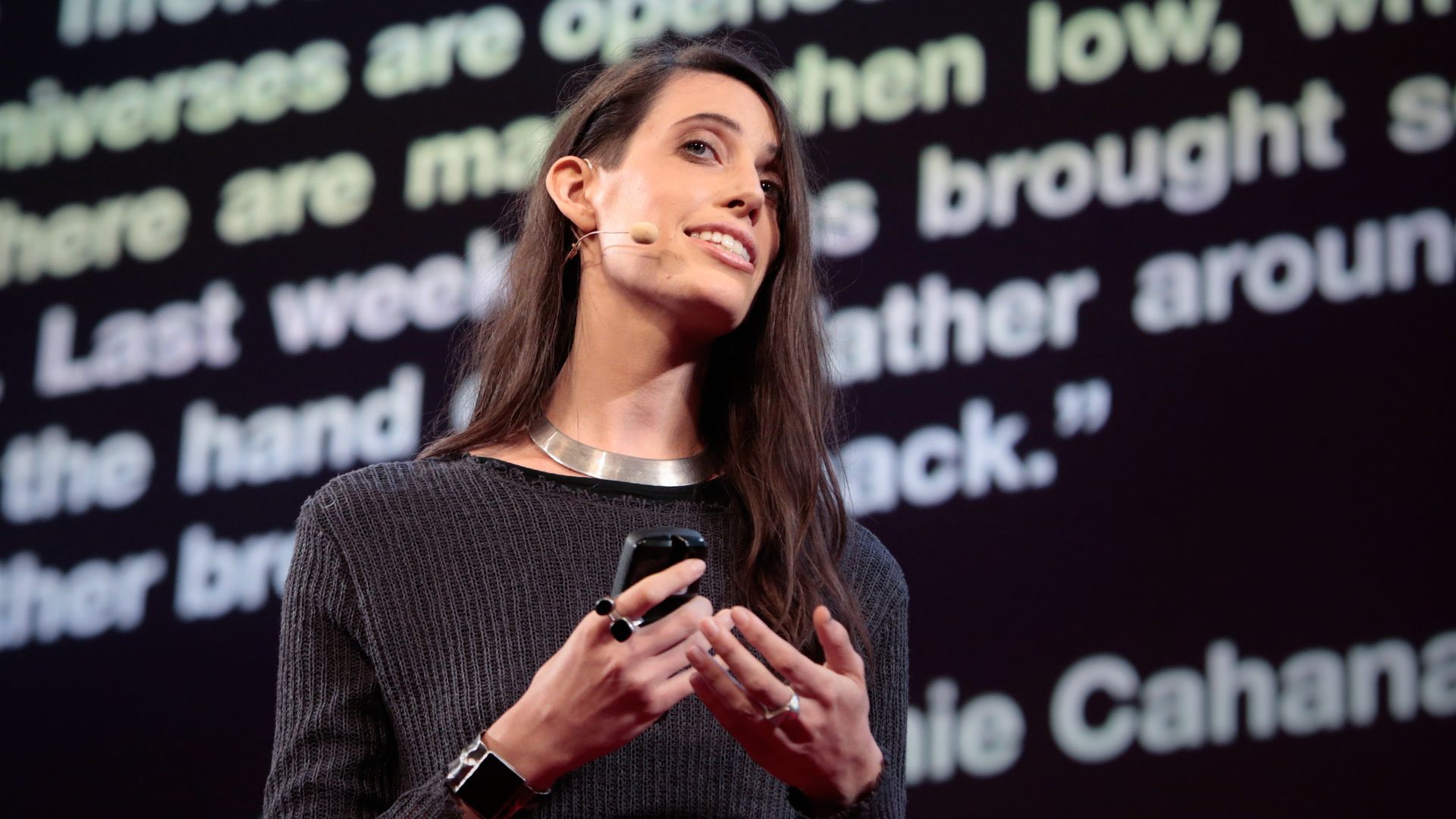
My father, locked in his body but soaring free

In 2011 Ronnie Cahana suffered a severe stroke that left him with locked-in syndrome: completely paralyzed except for his eyes. While this might shatter a normal person’s mental state, Cahana found peace in “dimming down the external chatter,” and “fell in love with life and body anew.” In a somber, emotional talk, his daughter Kitra shares how she documented her father's spiritual experience, as he helped guide others even in a state of seeming helplessness.

2014

TED Talk

United States
Kitra Cahana is an acclaimed documentary photographer, filmmaker, and TED speaker. Her work delves into important social, anthropological, and spiritual themes, capturing deeply human stories with sensitivity and depth. Through her photography and films, Kitra Cahana explores the lives of modern nomads, marginalized cultures, and individuals facing challenging circumstances. She has received numerous awards and recognitions for her impactful storytelling, including a Peabody Award and a TED Senior Fellowship. // I am only just discovering and refining my voice and my purpose in this world. But I know the contours of this purpose and that is to make the world more empathetic. I wish that through my work people see the other with a measure more of kindness and generosity. So much of the violence and pain that humans exert on other humans is due to them not seeing each other in their fullness. We are quick to judge, to misunderstand and to see the worst in others. My work hopes to change just a small part of that. // Kitra Cahana is an accomplished documentary photographer, filmmaker, and TED speaker whose work focuses on exploring social, anthropological, and spiritual themes. Through her sensitive and profound storytelling, Cahana sheds light on the lives of modern nomads, marginalized cultures, and individuals facing adversity. Her impactful photography and films aim to foster empathy and understanding among viewers, encouraging them to see the world through a lens of kindness and generosity. With accolades such as a Peabody Award and a TED Senior Fellowship, Kitra Cahana's work stands as a testament to her commitment to capturing the human experience with depth and compassion. // Vagabond photojournalist + conceptual artist // Canadian photographer who has spent the past three years researching and documenting nomadic youth identities in the United States. // KITRA'S TED TALK: http://www.ted.com/talks/kitra_cahana_my_father_locked_in_his_body_but_soaring_free Kitra Cahana is a documentary, fine art photographer and filmmaker whose work explores important social, anthropological, and spiritual themes. She has photographed multiple stories for National Geographic Magazine. She is currently directing and producing a series of short Doc films for the CBC. As a documentary photographer, Kitra embeds herself in communities, often for months at a time. She has chronicled the daily lives of teens at a Texas high school, told the story of a Venezuelan cult, followed a group of nomadic youth across the United States. As a fine art photographer and video artist Kitra focuses on the less explicable, often pushing the possibilities of the photographic medium. Her work in this genre deals with themes of the body and spirituality, a topic she took on following her father's spiritual experience following a brain stem stroke. // In 2011 Ronnie Cahana suffered a severe stroke that left him with locked-in syndrome: completely paralyzed except for his eyes. While this might shatter a normal person’s mental state, Cahana found peace in “dimming down the external chatter,” and “fell in love with life and body anew.” In a somber, emotional talk, his daughter Kitra shares how she documented her father's spiritual experience, as he helped guide others even in a state of seeming helplessness. // As a young girl, photojournalist and TED Fellow Kitra Cahana dreamed about running away from home to live freely on the road. Now as an adult and self-proclaimed vagabond, she follows modern nomads into their homes -- boxcars, bus stops, parking lots, rest stop bathrooms -- giving a glimpse into a culture on the margins. // Kitra Cahana is an accomplished documentary photographer, filmmaker, and TED speaker whose work focuses on exploring social, anthropological, and spiritual themes. Through her sensitive and profound storytelling, Cahana sheds light on the lives of modern nomads, marginalized cultures, and individuals facing adversity. Her impactful photography and films aim to foster empathy and understanding among viewers, encouraging them to see the world through a lens of kindness and generosity. With accolades such as a Peabody Award and a TED Senior Fellowship, Kitra Cahana's work stands as a testament to her commitment to capturing the human experience with depth and compassion. // Vagabond photojournalist + conceptual artist // public transit, violence, marginalized, photography, filmmaking, youth, buses, photojournalism, documentary, teen, art, stem // USA|Tucson|Arizona|Montreal|United States|Canada
USA|Tucson|Arizona|Montreal|United States|Canada

Kitra Cahana

No items found.
2014

09:04

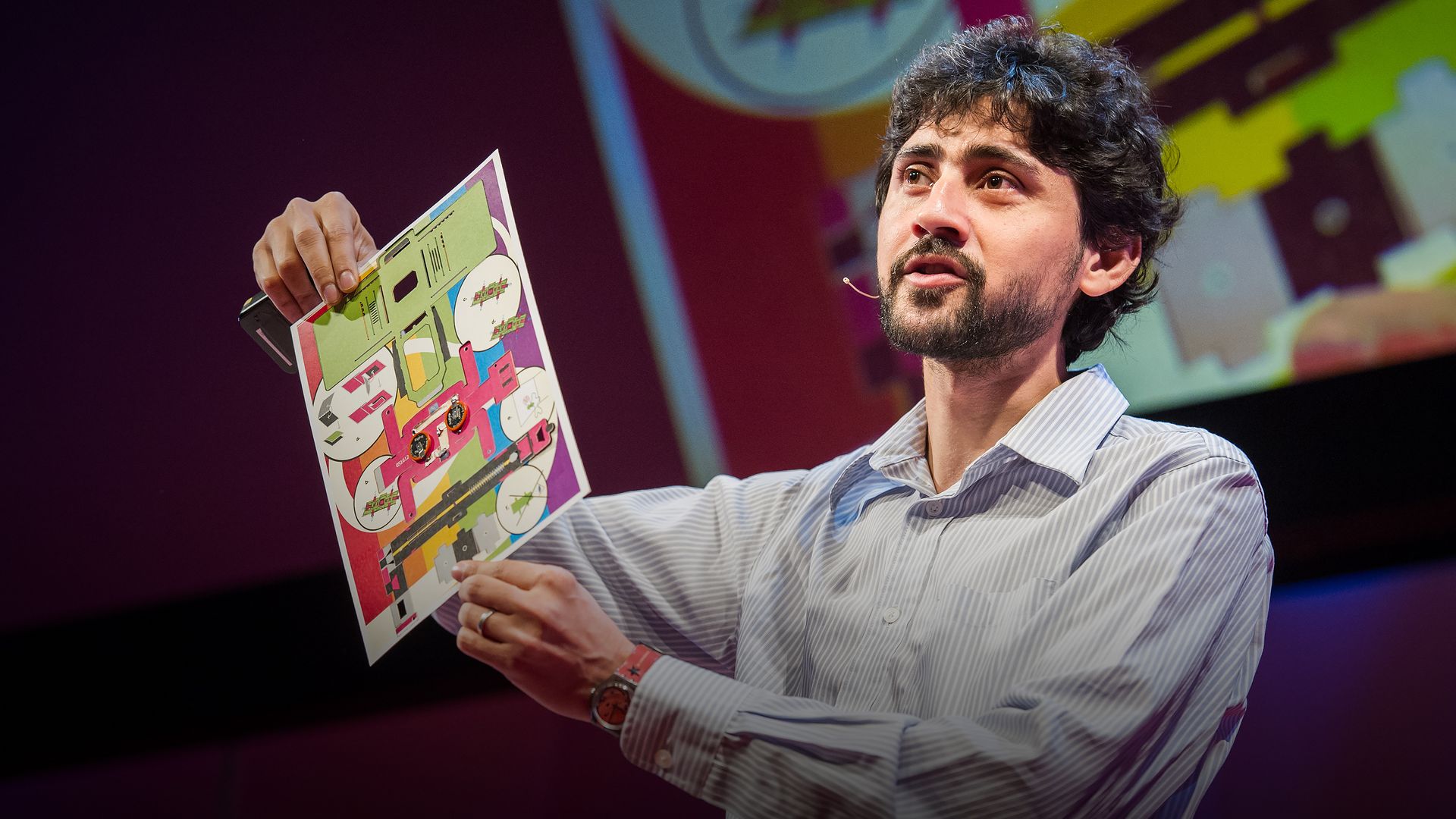
A 50-cent microscope that folds like origami

Perhaps you’ve punched out a paper doll or folded an origami swan? TED Fellow Manu Prakash and his team have created a microscope made of paper that's just as easy to fold and use. A sparkling demo that shows how this invention could revolutionize healthcare in developing countries … and turn almost anything into a fun, hands-on science experiment.

2014

TED Talk

United States
Physicist + inventor // Assistant Professor, BioEngineering, Stanford University Junior Fellow (Physics) at Harvard Society of Fellows, Physicist pursuing research to elucidate physical principles of biological matter at molecular, cellular and organismic scale and working to understand what makes animate matter so special. Inventor of technologies for Global Health that are appropriate to implement in developing countries with close feedback from users around the world. // Manu Prakash is an Assistant Professor in the Department of Bioengineering at Stanford University where he runs a curiosity driven research group in the field of Physical Biology - with goals to elucidate physical design principles in biology at organismic, cellular and molecular scales. A significant effort is spent in designing and building precision tools to probe and perturb biological machines. This approach brings together experimental and theoretical techniques from soft-condensed matter physics, theory of computation and unconventional fabrication to open problems in biology. He is also an inventor at heart and is currently focusing on technological solutions to problems in global health. Jokingly - he was once heard saying "We work on 19th century problems with 21st century tools". // Inventor Manu Prakash turns everyday materials into powerful scientific devices, from paper microscopes to a clever new mosquito tracker. From the TED Fellows stage, he demos Paperfuge, a hand-powered centrifuge inspired by a spinning toy that costs 20 cents to make and can do the work of a $1,000 machine, no electricity required. // Perhaps you’ve punched out a paper doll or folded an origami swan? TED Fellow Manu Prakash and his team have created a microscope made of paper that's just as easy to fold and use. A sparkling demo that shows how this invention could revolutionize healthcare in developing countries … and turn almost anything into a fun, hands-on science experiment. // Manu Prakash is an Assistant Professor in the Department of Bioengineering at Stanford University where he runs a curiosity driven research group in the field of Physical Biology - with goals to elucidate physical design principles in biology at organismic, cellular and molecular scales. A significant effort is spent in designing and building precision tools to probe and perturb biological machines. This approach brings together experimental and theoretical techniques from soft-condensed matter physics, theory of computation and unconventional fabrication to open problems in biology. He is also an inventor at heart and is currently focusing on technological solutions to problems in global health. Jokingly - he was once heard saying "We work on 19th century problems with 21st century tools". // Physicist + inventor // technology, physical biology, biodiversity, paper, fluid mechanics, bioengineering, research, developing countries, applied physics, design, developmental biology, microfluidics, global health, science, biophysics, electricity, invention, ecology, scaling laws // California|United States|Stanford|USA
California|United States|Stanford|USA

Manu Prakash

No items found.
2014

18:11

Could a drug prevent depression and PTSD?

The path to better medicine is paved with accidental yet revolutionary discoveries. In this well-told tale of how science happens, neuroscientist Beck Brachman shares news of a serendipitous breakthrough treatment that may prevent mental disorders like depression and PTSD from ever developing. And listen for an unexpected -- and controversial -- twist.

2016

TED Talk

United States
Dr. Beck Brachman is a scientist and social entrepreneur leading the field of preventative psychopharmacology. She focuses on developing drugs to enhance psychological resilience against stress and prevent mental illness, such as PTSD and depression. Brachman's work emphasizes the importance of stress resilience as an active biological process and highlights the need for treatments that go beyond symptom suppression to address the underlying causes of psychiatric disorders. Through her research, she aims to pioneer a new class of drugs, called alexigents, that could potentially prevent mental illnesses before they occur. // IMPRINT is an organization currently in the process of launching a new initiative. They are actively seeking new employees and encourage interested individuals to get in touch with them. // My work aims to: 1) Revolutionize how psychiatric diseases treated and thought about. (a) Developing the first drugs to prevent PTSD & depression (primary prevention). (b) Leveraging the immune system to treat, cure, prevent, and diagnose psychiatric disorders. (c) Shifting public (and academic) mindsets away from "mind" and towards "body" as the source of psychiatric diseases. 2) Identify hidden causes of chronic diseases (eg, infections that trigger autoimmune disorders). 3) Help usher in the next wave of social finance that, unlike the current iteration, actually captures the value of social good and directly incentivizes impact via market mechanisms. // Dr. Beck Brachman is a pioneering scientist and social entrepreneur at the forefront of preventative psychopharmacology. Her groundbreaking work focuses on developing drugs, known as alexigents, to enhance psychological resilience against stress and prevent mental illnesses like PTSD and depression. Dr. Brachman's research emphasizes the active biological processes involved in stress resilience and advocates for treatments that address the root causes of psychiatric disorders. Additionally, she is dedicated to revolutionizing the treatment and perception of psychiatric diseases by leveraging the immune system to prevent, treat, and diagnose such conditions. Through her innovative approach, Dr. Brachman is not only reshaping the field of mental health but also contributing to the advancement of social finance models that incentivize impactful social good through market mechanisms. // Neuroscientist + entrepreneur // Rebecca Brachman is a pioneer in the field of preventative psychopharmacology, developing drugs to enhance stress resilience and prevent mental illness. Current treatments for mood disorders only suppress symptoms without addressing the underlying disease, and there are no known cures. The drugs Rebecca discovered could be the first to prevent psychiatric disorders such as post-traumatic stress disorder (PTSD) and depression. Rebecca completed her PhD at Columbia University, prior to which, she was a fellow at the National Institutes of Health, where she discovered that immune cells carry a memory of psychological stress and that white blood cells can act as antidepressants and resilience-enhancers. Rebecca's research has been featured in The Atlantic, WIRED and Business Insider, and her work was recently described on NPR as a "moonshot project that is very much needed in the mental health arena." In addition to conducting ongoing research at Columbia, Rebecca is an NYCEDC Entrepreneurship Lab Fellow and cofounder of Aision -- a NYC biotech startup launched from Columbia University, whose mission is to develop the first drugs that would prevent mental illness. She is also working on a non-profit venture to create novel financial tools to fund scientific research and to repurpose generic drugs, and previously served as the Interim Program Director for Outreach at the Zuckerman Institute at Columbia University. Rebecca is also a playwright and screenwriter. She holds Bachelor's degrees in both neuroscience and creative writing, and she is currently working on a tech-focused writing project with her long-time writing partner, Sean Calder ("Grimm," "Damages," "ER"). She served as the director of NeuWrite, a national network of science-writing groups that fosters ongoing collaboration between scientists, writers and artists, and she has been featured as a storyteller at The Story Collider. Rebecca is a 2017 TED fellow. // Current treatments for depression and PTSD only suppress symptoms, if they work at all. What if we could prevent these diseases from developing altogether? Neuroscientist and TED Fellow Rebecca Brachman shares the story of her team's accidental discovery of a new class of drug that, for the first time ever, could prevent the negative effects of stress -- and boost a person's ability to recover and grow. Learn how these resilience-enhancing drugs could change the way we treat mental illness. // The path to better medicine is paved with accidental yet revolutionary discoveries. In this well-told tale of how science happens, neuroscientist Rebecca Brachman shares news of a serendipitous breakthrough treatment that may prevent mental disorders like depression and PTSD from ever developing. And listen for an unexpected -- and controversial -- twist. // Dr. Beck Brachman is a pioneering scientist and social entrepreneur at the forefront of preventative psychopharmacology. Her groundbreaking work focuses on developing drugs, known as alexigents, to enhance psychological resilience against stress and prevent mental illnesses like PTSD and depression. Dr. Brachman's research emphasizes the active biological processes involved in stress resilience and advocates for treatments that address the root causes of psychiatric disorders. Additionally, she is dedicated to revolutionizing the treatment and perception of psychiatric diseases by leveraging the immune system to prevent, treat, and diagnose such conditions. Through her innovative approach, Dr. Brachman is not only reshaping the field of mental health but also contributing to the advancement of social finance models that incentivize impactful social good through market mechanisms. // Neuroscientist + entrepreneur // research, mental health, resilience, entrepreneurship, biotech, science, immunology, focused research organization, founder, preventing depression and ptsd, neuroscience, disease, social entrepreneur, finance // Los Angeles|San Francisco|USA|New York|California|United States
Los Angeles|San Francisco|USA|New York|California|United States

Beck Brachman

No items found.
2016

09:10

Goats, blockchain and the future of money

What if smallholder farmers could use their produce and livestock to pay for goods and services? TED Fellow and alternative currency enthusiast Fariel Salahuddin is working to make this a reality in places including rural Pakistan, where basic necessities like water and electricity are often expensive or inaccessible. She explores how the way we exchange value has evolved over time -- from bartering to blockchain -- and shares a new perspective on currency that promotes self-reliance for farmers and creates a more inclusive economy.

2022

TED Talk

Pakistan
Knox College; Faber Capital; UNDP; Lahore University of Management Sciences; UpTrade(Goats for water); UpTrade (Goats for Water) ; Columbia | SIPA; Asian Development Bank (ADB); Cartier Women's Initiative; Karachi Grammar School; Columbia University - School of International and Public Affairs; Asian Development Bank; Energy Policy Project; USAID; JS Investments; Summit; USAID - Energy Policy Project - AEAI; The World Bank
UpTrade is an organization founded by Fariel Salahuddin that focuses on enabling smallholder rural, off-grid farming communities in Pakistan to meet their farming and household needs using livestock as currency. Recognizing the lack of access to electricity and expensive diesel-powered pumps in rural areas, UpTrade facilitates the exchange of livestock for solar water pumps and other solar devices. Through a three-party agreement with communities and an energy partner, UpTrade ensures the installation and maintenance of water pumps, while also selling livestock through its electronic market platform. The organization aims to empower farmers to use their produce and livestock as currency, expanding its reach to potentially reach one billion smallholder farmers globally. UpTrade's innovative approach has already doubled the number of people with access to electricity and water between 2019 and 2020, emphasizing self-reliance and community empowerment as key outcomes of their work. // Fariel has over 10 years of international experience in energy finance, project… // Project lead for development of Power Sector Integrated Model (PSIM). PSIM is a dynamic excel based tool to evaluate the quantitative impact of various policy interventions including tariff, operational and fuel mix and price changes on over all sector operational and financial performance. // The report quantifies the existing stock of circular debt within Pakistan's power sector while analyzing and quantifying the factors that have led to the accumulation of sector debt to over $8 billion. It examines the impact of debt on generation and efficient provisioning of electricity to the Public. The report recommends strategies to remove the existing stock of debt while preventing the accumulation debt in the future. // Business Plan for GENCO III comprehensively analyzes financial, technical, HR and Legal issues that have led to the entity's poor financial and technical performance. The BP recommends an action plan for re-vamping the entity to bring about technical and financial improvements. // Knox College; Faber Capital; UNDP; Lahore University of Management Sciences; UpTrade(Goats for water); UpTrade (Goats for Water) ; Columbia | SIPA; Asian Development Bank (ADB); Cartier Women's Initiative; Karachi Grammar School; Columbia University - School of International and Public Affairs; Asian Development Bank; Energy Policy Project; USAID; JS Investments; Summit; USAID - Energy Policy Project - AEAI; The World Bank // Fariel Salahuddin is an experienced professional with a background in energy finance and project management. With over a decade of international experience, Fariel has demonstrated expertise in developing tools and models to evaluate the impact of policy interventions on the operational and financial performance of the energy sector. Fariel has led projects such as the development of the Power Sector Integrated Model (PSIM), a dynamic tool that assesses the effects of various factors on the sector's performance. Additionally, Fariel has worked on reports analyzing and addressing issues such as circular debt within the power sector and devising strategies for financial and technical improvements in entities like GENCO III. // I and my team are changing the money systems of the world to make them inclusive of those that are currently left out of the traditional fiat-based, centralized money systems. We do this by enabling the use of non-traditional assets (goats, cows, maize) as a means of exchange for smallholder farmers in Pakistan and Kenya instead of fiat. By using use assets as money we have found their affordability for key productive assets moves from becoming out of affordability to easily affordable. // Fariel Salahuddin is a seasoned professional with a diverse background in energy finance, project management, and innovative economic models. As the founder of UpTrade, Fariel has spearheaded a groundbreaking initiative that empowers smallholder rural communities in Pakistan by facilitating the exchange of livestock for essential solar-powered devices. Through UpTrade's unique approach, Fariel aims to revolutionize traditional money systems, enabling farmers to utilize their produce and livestock as currency. With a strong focus on community empowerment and self-reliance, Fariel's work has already doubled access to electricity and water for numerous individuals. Fariel's expertise extends to developing tools like the Power Sector Integrated Model (PSIM) and addressing complex issues such as circular debt within the energy sector, showcasing a commitment to driving impactful change in the industry. // Barter economist // Fariel Salahuddin is the Founder and CEO of UpTrade (Goats for Water), a company that targets rural poverty in developing countries by enabling smallholder farmers to use their livestock as currency to purchase otherwise unaffordable assets such as solar water pumps, solar home lighting systems, smartphones etc. The model is based out of Pakistan and has been successfully tested in other developing countries. Fariel started her career as an energy professional and has worked in energy finance, project development and energy policy, advising private sector and government stakeholders in Pakistan, Egypt, Indonesia and the MENA region. She has a MPA from the School of International and Public Affairs, University of Columbia and a B.Sc. In Economics from the Lahore University of Management Sciences. She is a TED Fellow, Summit Fellow, Cartier Women’s Initiatives Fellow and a Fulbright Fellow. Her work has been featured by the BBC, Inc. Magazine, Vikatan Magazine. // What if smallholder farmers could use their produce and livestock to pay for goods and services? TED Fellow and alternative currency enthusiast Fariel Salahuddin is working to make this a reality in places including rural Pakistan, where basic necessities like water and electricity are often expensive or inaccessible. She explores how the way we exchange value has evolved over time -- from bartering to blockchain -- and shares a new perspective on currency that promotes self-reliance for farmers and creates a more inclusive economy. // Fariel Salahuddin is a seasoned professional with a diverse background in energy finance, project management, and innovative economic models. As the founder of UpTrade, Fariel has spearheaded a groundbreaking initiative that empowers smallholder rural communities in Pakistan by facilitating the exchange of livestock for essential solar-powered devices. Through UpTrade's unique approach, Fariel aims to revolutionize traditional money systems, enabling farmers to utilize their produce and livestock as currency. With a strong focus on community empowerment and self-reliance, Fariel's work has already doubled access to electricity and water for numerous individuals. Fariel's expertise extends to developing tools like the Power Sector Integrated Model (PSIM) and addressing complex issues such as circular debt within the energy sector, showcasing a commitment to driving impactful change in the industry. // Barter economist // renewable, infrastructure, water, maize, sustainable finance, entrepreneurship, alternate currency, led, inclusive finance, lighting, efficiency, finance, developing countries, inclusion, agriculture, solar thermal, climate, farming, sustainable development , infrastructure projects, sustainable agriculture, policy, alternate money systems, farmers, solar home power, off grid, clean energy, economics, heating, public policy, power, affordable, smallholder, blockchain, statistical analysis, solar, renewable energy, energy policy, rural poor, livestock, goats, energy finance, rural, smallholder farmers, energy efficiency, empowerment, rural areas, solar water, governance, law, electricity, poverty, electricity pricing, government, energy // Netherlands|Sindh|Paris|France|Bolivia|Pakistan|Santa Cruz|Karachi|Amsterdam
Netherlands|Sindh|Paris|France|Bolivia|Pakistan|Santa Cruz|Karachi|Amsterdam

Fariel Salahuddin

No items found.
2022

07:22

Why I risked my life to expose a government massacre

A war zone can pass for a mostly peaceful place when no one is watching, says investigative journalist and TED Fellow Anjan Sundaram. In this short, incisive talk, he takes us inside the conflict in the Central African Republic, where he saw the methodical preparation for ethnic cleansing, and shares a lesson about why it's important to bear witness to other people's suffering. "Ignored people in all our communities tell us something important about who we are," Sundaram says. "A witness can become precious, and their gaze most necessary, when violence passes silently, unseen and unheard."

2017

TED Talk

United States
Berggruen Institute; metaLAB (at) Harvard & FU Berlin; Ecole normale supérieure; VICE Media; The Rockefeller Foundation; Yale University; Centre on Armed Groups; Penguin Random House; King's College London; McKinsey & Company; Indian Institute of Technology, Madras; TED Conferences; Skoll Foundation; University of East Anglia
Anjan Sundaram is a war reporter and author with a background in mathematics and a Ph.D. in journalism from Yale. He has been involved in various projects such as TED talks, an Artificial Intelligence series, and TV shows focusing on different topics like India's taboos and Cambodia. Sundaram has also published books that have received praise from notable figures. His art pieces are inspired by his reporting on climate justice, showcasing the courage and trauma of environmental defense communities. The artworks incorporate elements from his journalism and personal experiences, creating a visual representation of conflict zones and environmental issues. // Anjan Sundaram is an Indian author, journalist, academic, and television presenter known for his immersive and courageous reporting. He has authored three memoirs of journalism, including "Stringer," "Bad News," and "Breakup," which have received critical acclaim and awards. Sundaram's work focuses on war reporting, particularly in the Democratic Republic of Congo and Rwanda, shedding light on the persecution of journalists and the effects of conflicts on families. He has also ventured into television with series exploring the impact of algorithms and nationalism. Sundaram's writing has been compared to renowned authors like Ryszard Kapuciski and V.S. Naipaul, and he has received prestigious awards for his impactful journalism. // Author. Present TV shows. Mathematician. www.anjansundaram.com // Berggruen Institute; metaLAB (at) Harvard & FU Berlin; Ecole normale supérieure; VICE Media; The Rockefeller Foundation; Yale University; Centre on Armed Groups; Penguin Random House; King's College London; McKinsey & Company; Indian Institute of Technology, Madras; TED Conferences; Skoll Foundation; University of East Anglia // Anjan Sundaram is a versatile professional with experience as an author, television show presenter, and mathematician. With a diverse skill set spanning across these fields, Anjan brings a unique perspective to his work. His expertise in mathematics likely informs his approach to problem-solving and analysis, which is evident in his various projects and endeavors. Anjan's ability to communicate complex ideas through his writing and television appearances showcases his talent for engaging with audiences on different platforms. For more information about Anjan and his work, visit www.anjansundaram.com. // Hold power accountable by shedding light on inspiring humans in some of the world’s bleakest places // Anjan Sundaram is a multi-talented individual known for his work as a war reporter, author, and television presenter. With a Ph.D. in journalism and a background in mathematics, Sundaram brings a unique perspective to his projects. His writing, including acclaimed memoirs like "Stringer" and "Bad News," sheds light on conflicts in regions like the Democratic Republic of Congo and Rwanda, highlighting the challenges faced by journalists and families in these areas. Sundaram's television series delve into topics such as Artificial Intelligence and nationalism, showcasing his versatility and ability to engage audiences across different mediums. Through his work, Sundaram aims to hold power accountable and bring attention to the stories of individuals in some of the world's most challenging environments. // Author + investigative journalist // Anjan Sundaram (b. 1983, Ranchi, India) is the author of three award-winning memoirs of journalism, Stringer, Bad News and Breakup, and has been called "one of the great reporters of our age" by the BBC foreign correspondent Fergal Keane. He was an Artist in Residence at the Bellagio Center, run by the Rockefeller Foundation, in 2019, and has served as a Fellow at TED, The Berggruen Institute, The Skoll Foundation, and King’s College. Anjan has received a Frontline Club Award, a Moore Prize, and a Reuters Prize, with award citations and critics repeatedly comparing him to the Polish reporter Ryszard Kapuscinski and the Nobel Laureates V.S. Naipaul and William Faulkner. Anjan’s work centers marginalized communities in the world’s greatest but most neglected conflicts. Anjan creates personal, subjective, and non-authoritative narratives to evoke wonder and a sense of inspiration, by immersing audiences in the reporter’s experience on human rights and environmental frontlines. Anjan’s books have been featured by Christiane Amanpour and Fareed Zakaria on CNN, on The Daily Show with Jon Stewart, and Democracy Now by Amy Goodman. He writes for Granta magazine, The New York Times, and the New York Review of Books. His TED talk received over a million views, and he will speak again at TED about his reporting in 2024. Anjan graduated from Yale University and holds a PhD in creative writing and journalism from the University of East Anglia. // A war zone can pass for a mostly peaceful place when no one is watching, says investigative journalist and TED Fellow Anjan Sundaram. In this short, incisive talk, he takes us inside the conflict in the Central African Republic, where he saw the methodical preparation for ethnic cleansing, and shares a lesson about why it's important to bear witness to other people's suffering. "Ignored people in all our communities tell us something important about who we are," Sundaram says. "A witness can become precious, and their gaze most necessary, when violence passes silently, unseen and unheard." // Anjan Sundaram is a multi-talented individual known for his work as a war reporter, author, and television presenter. With a Ph.D. in journalism and a background in mathematics, Sundaram brings a unique perspective to his projects. His writing, including acclaimed memoirs like "Stringer" and "Bad News," sheds light on conflicts in regions like the Democratic Republic of Congo and Rwanda, highlighting the challenges faced by journalists and families in these areas. Sundaram's television series delve into topics such as Artificial Intelligence and nationalism, showcasing his versatility and ability to engage audiences across different mediums. Through his work, Sundaram aims to hold power accountable and bring attention to the stories of individuals in some of the world's most challenging environments. // Author + investigative journalist // violence, climate justice, television, entrepreneurship, biodiversity, investigative journalism, marginalized communities, dictatorship, research, war correspondence, press freedom, climate, human rights, rights, environmental policy and advocacy, policy, free speech, war, literature, marginalized, journalism, advocacy, environment, environmental defenders, indigenous, accountability, communication, artificial intelligence, justice, ecology // Mexico|Mexico City|India
Mexico|Mexico City|India

Anjan Sundaram

No items found.
2017

05:41

The small and surprisingly dangerous detail the police track about you

A very unsexy-sounding piece of technology could mean that the police know where you go, with whom, and when: the automatic license plate reader. These cameras are innocuously placed all across small-town America to catch known criminals, but as lawyer and TED Fellow Catherine Crump shows, the data they collect in aggregate could have disastrous consequences for everyone the world over.

2014

TED Talk

United States
University of Virginia; Turun yliopisto; Stanford University; Turun yliopisto - University of Turku; White House Domestic Policy Council; UC Berkeley; Stanford University Law School
Catherine Crump is the Director of the Samuelson Law, Technology & Public Policy Clinic at UC Berkeley School of Law. Her work focuses on civil liberties advocacy, particularly in protecting privacy and free speech in the face of increasing surveillance. She has litigated cases related to government use of social media information, electronic surveillance, and court orders affecting online content. Crump has testified before Congress and other legislative bodies on issues such as cell phone tracking and national security surveillance. Her scholarly work addresses the regulation of surveillance technology, emphasizing local democratic control. With a background at the American Civil Liberties Union, Crump has been involved in significant legal challenges and authored influential reports on privacy issues. She is a Stanford University graduate and has received recognition for her contributions to the public interest. // University of Virginia; Turun yliopisto; Stanford University; Turun yliopisto - University of Turku; White House Domestic Policy Council; UC Berkeley; Stanford University Law School // I work to ensure that technology is used to strengthen rather than diminish civil rights and liberties. I focus often on the criminal legal system, where there are fewer protections than expected to ensure technology is accurate and safe. // Catherine Crump is a dedicated civil liberties advocate and Director of the Samuelson Law, Technology & Public Policy Clinic at UC Berkeley School of Law. Her expertise lies in safeguarding privacy and free speech rights amidst growing surveillance practices. With a background at the American Civil Liberties Union, Crump has actively engaged in impactful legal challenges and authored influential reports on privacy issues. She has litigated cases concerning government use of social media data, electronic surveillance, and online content regulation. Crump's scholarly work delves into the regulation of surveillance technology, emphasizing the importance of local democratic control. Her advocacy extends to testifying before legislative bodies on critical issues like cell phone tracking and national security surveillance, aiming to ensure that technology upholds civil rights and liberties, particularly within the criminal legal system. // Attorney + privacy advocate // A civil liberties lawyer whose work focuses on combating government surveillance and protecting the free speech rights of political protesters. She has filed cases challenging the NSA and the Department of Homeland security. // I am an Assistant Clinical Professor of Law and Associate Director of the Samuelson Law, Technology & Public Policy Clinic, at Berkeley Law School. I'm an experienced litigator specializing in constitutional matters, and have represented a broad range of clients seeking to vindicate their First and Fourth Amendment rights. I also have extensive experience litigating to compel the disclosure of government records under the Freedom of Information Act. My primary interest is the impact of new technologies on civil liberties. Representative matters include serving as counsel in the ACLU’s challenge to the National Security Agency’s mass collection of Americans’ call records; representing artists, media outlets and others challenging a federal internet censorship law, and representing a variety of clients seeking to invalidate the government’s policy of conducting suspicionless searches of laptops and other electronic devices at the international border. Prior to coming to Berkeley, I was a staff attorney at the ACLU for nearly nine years. // A very unsexy-sounding piece of technology could mean that the police know where you go, with whom, and when: the automatic license plate reader. These cameras are innocuously placed all across small-town America to catch known criminals, but as lawyer and TED Fellow Catherine Crump shows, the data they collect in aggregate could have disastrous consequences for everyone the world over. // Catherine Crump is a dedicated civil liberties advocate and Director of the Samuelson Law, Technology & Public Policy Clinic at UC Berkeley School of Law. Her expertise lies in safeguarding privacy and free speech rights amidst growing surveillance practices. With a background at the American Civil Liberties Union, Crump has actively engaged in impactful legal challenges and authored influential reports on privacy issues. She has litigated cases concerning government use of social media data, electronic surveillance, and online content regulation. Crump's scholarly work delves into the regulation of surveillance technology, emphasizing the importance of local democratic control. Her advocacy extends to testifying before legislative bodies on critical issues like cell phone tracking and national security surveillance, aiming to ensure that technology upholds civil rights and liberties, particularly within the criminal legal system. // Attorney + privacy advocate // technology, public policy, policing, rights, national security, law, policy, advocacy, free speech, government, data, civil rights, surveillance, disclosures, public police // California|Berkeley|United States|USA
California|Berkeley|United States|USA

Catherine Crump

No items found.
2014

08:35

A brief tour of the last 4 billion years (dinosaurs not included)

In this hilarious, whirlwind tour of the last four billion years of evolution, paleontologist and TED Fellow Lauren Sallan introduces us to some of the wildly diverse animals that roamed the prehistoric planet (from sharks with wings to galloping crocodiles and long-necked rhinos) and shows why paleontology is about way more than dinosaurs.

2020

TED Talk

Japan
University of Chicago; University of Pennsylvania; Okinawa Institute of Science and Technology Graduate University (OIST)
Lauren Sallan is an American academic and paleobiologist known for her work in macroevolution. She is the head of the Macroevolution Unit at the Okinawa Institute of Science and Technology and previously held a position at the University of Pennsylvania. Sallan utilizes big data analytics to study macroevolution, focusing on palaeoichthyology. Her research has delved into the evolution of vertebrates, particularly during critical stages like the End-Devonian extinction and the Hangenberg event. Sallan has been recognized as a TED Senior Fellow and has delivered multiple TED talks on evolution and mass extinctions. She has compiled a comprehensive database of fish fossils spanning millions of years, shedding light on the early evolution of vertebrates and the factors influencing species formation rates. // The Macroevolution Unit at the Okinawa Institute of Science and Technology Graduate University investigates how environmental change, global events, ecological interactions, and key traits have shaped biodiversity over long timescales. They focus on determining the origins of major vertebrate groups, particularly fishes, and key ecosystems, such as marine and freshwater environments. The unit conducts computational analyses of biodiversity databases, spanning from local to global scales and from the present day to the last 600 million years. They also study morphological biodiversity at the species level using various scientific approaches. The research areas include understanding how crises and opportunities have influenced fish biodiversity, the origins of major animal groups, and the impacts of mass extinctions and global crises. The unit's work sheds light on the evolutionary history of vertebrates and the interactions between vertebrates and invertebrates, providing insights into the long-term consequences of environmental changes. // Lauren Sallan is an ichthyologist and paleontologist investigating how environmental change, global events, ecological interactions and key traits shaped biodiversity on timescales outside human observation (macroevolution). Her lab seeks to determine the origins of major vertebrate groups (particularly fishes) and key ecosystems (particularly marine and freshwater) as well as understand how species respond to big challenges – living or environmental, regional or global, gradual or sudden. Lauren is the head of the Macroevolution Unit at the Okinawa Institute of Science and Technology (OIST) an innovative research university that fully supports ideas-driven science. Lauren is building a international team of cross-disciplinary scientists to investigate the evolution of the oceans and the origins of fish biodiversity. Prior to joining OIST, Lauren was the Martin Meyerson Assistant Professor in Interdisciplinary Studies at the University of Pennsylvania. She was one of 10 people selected from a global applicant pool to became a TED Fellow in 2017, and she became a TED Senior Fellow in 2019. Her TED Talks on surviving mass extinction and the evolution of life have received almost 3 million views. Lauren's research has been published in high-profile venues such as Science, Nature, PNAS, and Current Biology. It has also been featured by The New York Times, The Chicago Tribune, the BBC, Forbes, the New Scientist, the Discovery Channel, and the recent popular science book 'The Ends of the World' by Peter Brannen (Harper Collins). // Head of the Macroevolution Unit // Head of the Marine Macroevolution Unit // Incoming Head, Marine Macroevolution Unit // Incoming Head, Marine Macroevolution Unit // University of Chicago; University of Pennsylvania; Okinawa Institute of Science and Technology Graduate University (OIST) // Lauren Sallan is an accomplished ichthyologist and paleontologist specializing in macroevolution, focusing on how environmental changes, global events, and ecological interactions have influenced biodiversity over extended timescales. As the head of the Macroevolution Unit at the Okinawa Institute of Science and Technology (OIST), she leads a diverse team of international scientists in exploring the origins of vertebrate groups, particularly fishes, and major ecosystems in marine and freshwater environments. Prior to her current role, Lauren held a prestigious position as the Martin Meyerson Assistant Professor at the University of Pennsylvania and has been recognized as a TED Fellow and TED Senior Fellow for her impactful research. Her work, featured in renowned scientific journals and mainstream media outlets, sheds light on the evolution of life in response to significant challenges, both environmental and biological. // I am trying to understand the origins and structure of modern marine biodiversity, why some fish species thrive and others fail in the face of environmental and ecological challenges, and how and why our own ancestors, the earliest vertebrates and fishes, first evolved into familiar forms. // Lauren Sallan is an esteemed paleobiologist and ichthyologist renowned for her expertise in macroevolution. Leading the Macroevolution Unit at the Okinawa Institute of Science and Technology, she delves into the evolution of vertebrates, with a particular focus on palaeoichthyology. Sallan's research employs big data analytics to unravel the impacts of environmental changes and global events on biodiversity, especially in fish species. Her work sheds light on the origins of major vertebrate groups, such as fishes, and key ecosystems in marine and freshwater environments. Through her comprehensive database of fish fossils, Sallan provides valuable insights into the early evolution of vertebrates and the factors influencing species formation rates. // Paleobiologist // Paleobiologist using the vast fossil record as a deep time database to explore how mass extinctions, environmental change and shifting ecologies impact biodiversity. // Lauren Sallan is a paleobiologist using cross-disciplinary data analytics and methods to gain insight into the underpinnings of ocean biodiversity and how ecology and evolution operate at scales unobservable by humans (macroevolution). Lauren uses the vast fossil record of fishes as a deep time database, mining to find out why some species persist and diversify while others die off. She has used these methods to discover the lost, largest, 'sixth' mass extinction of vertebrates, reveal how fish heads changed first during their rise to dominance, and show how invasive predators can shift prey evolution at global scales. In Summer 2022, Lauren will become the full-time head of the new Marine Macroevolution Unit at the Okinawa Institute of Science and Technology (OIST) an innovative research university that fully supports ideas-driven science. There she will build a international team of cross-disciplinary scientists to investigate the evolution of the oceans and the origins of fish biodiversity. Lauren is currently the Martin Meyerson Assistant Professor in Interdisciplinary Studies at the University of Pennsylvania, became a TED Fellow in 2017 and a TED Senior Fellow in 2019. Her research has been published in high-profile venues such as Science, Nature, PNAS, and Current Biology. It has also been featured by The New York Times, The Chicago Tribune, the BBC, Forbes, the New Scientist, the Discovery Channel, and the recent popular science book 'The Ends of the World' by Peter Brannen (Harper Collins). Her TED Talks on surviving mass extinction and the evolution of life have received almost 3 million views. // In this hilarious, whirlwind tour of the last four billion years of evolution, paleontologist and TED Fellow Lauren Sallan introduces us to some of the wildly diverse animals that roamed the prehistoric planet (from sharks with wings to galloping crocodiles and long-necked rhinos) and shows why paleontology is about way more than dinosaurs. // Congratulations! By being here, alive, you are one of history's winners -- the culmination of a success story four billion years in the making. The other 99 percent of species who have ever lived on earth are dead -- killed by fire, flood, asteroids, ice, heat and the cold math of natural selection. How did we get so lucky, and will we continue to win? In this short, funny talk, paleobiologist and TED Fellow Lauren Sallan shares insights on how your ancestors' survival through mass extinction made you who you are today. // Lauren Sallan is an esteemed paleobiologist and ichthyologist renowned for her expertise in macroevolution. Leading the Macroevolution Unit at the Okinawa Institute of Science and Technology, she delves into the evolution of vertebrates, with a particular focus on palaeoichthyology. Sallan's research employs big data analytics to unravel the impacts of environmental changes and global events on biodiversity, especially in fish species. Her work sheds light on the origins of major vertebrate groups, such as fishes, and key ecosystems in marine and freshwater environments. Through her comprehensive database of fish fossils, Sallan provides valuable insights into the early evolution of vertebrates and the factors influencing species formation rates. // Paleobiologist // technology, freshwater, ecology, paleontology, marine, education, fish, biodiversity, ocean, fire, scicomm, extinction, data, rhinos, evolution, research, data and analytics, marine biology, species, floods, interdisciplinary studies, mining, oceans, education and outreach, museums, universities, big data, nature, science, mass extinction, ecosystem, fossils, marine ecology // Okinawa|Japan|Onna
Okinawa|Japan|Onna

Lauren Sallan

No items found.
2020

05:09

Trash cart superheroes

In Brazil, "catadores" collect junk and recyclables. But while they provide a vital service that benefits all, they are nearly invisible as they roam the streets. Enter graffiti artist Mundano, a TED Fellow. In a spirited talk, he describes his project "Pimp My Carroça," which has transformed these heroic workers' carts into things of beauty and infused them with a sense of humor. It's a movement that is going global.

2014

TED Talk

Brazil
Mundano is an artist and activist known for founding projects like Pimp My Carroca, Cataki, Megafone Ativismo, and Parede Viva. They are currently involved in researching various topics. Their work focuses on artivism, addressing issues such as plastic pollution, social injustices, and environmental concerns. Mundano's art often involves reinterpreting historical artworks and creating pieces that raise awareness about pressing issues like plastic waste and the rights of marginalized communities. They advocate for legislative changes to combat plastic pollution and promote sustainable practices. Additionally, Mundano is actively engaged in supporting waste pickers and raising awareness about the challenges they face. // Mundano, also known as Thiago Mundano, is a Brazilian street artist known for his impactful and socially conscious work. He gained recognition for his street art in the early 2000s and has been involved in various projects, including painting graffiti on the legislative assembly plaque in Ibirapuera Park, So Paulo. Mundano is the founder of the movement Pimp My Carroca, which involves painting the carts of Brazilian trash collectors in collaboration with other artists. One of his notable murals, Workers of Brumadinho, serves as a memorial to the miners who lost their lives in a dam burst in Minas Gerais, Brazil. In 2021, Mundano created a large mural titled The Forest Brigade in So Paulo using ash from fires in the Amazon rainforest to raise awareness about deforestation. // Fighting for social justice was always what drove me in my work, and trough artivism I try to bring the spotlight to topics like climate change, bringing value to waste pickers and protecting indigenous rights // Thiago Mundano, a Brazilian artist and activist, is recognized for his impactful artivism that addresses pressing social and environmental issues. Mundano is the founder of projects like Pimp My Carroca, Cataki, Megafone Ativismo, and Parede Viva, which aim to raise awareness about plastic pollution, social injustices, and environmental concerns. Through his art, which often reinterprets historical works, Mundano advocates for legislative changes to combat plastic pollution and promote sustainable practices. His work also includes supporting waste pickers and highlighting the challenges they face. Mundano's dedication to social justice and environmental activism shines through his art, which serves as a powerful tool for advocacy and raising awareness on critical global issues. // Graffiti artist + activist // A Brazilian street artist and activist who created “Pimp My Carroça”, a crowdfunded, community-led movement to raise awareness about the invisible work garbage collectors do with carroças in Brazil and around the world. // MUNDANO is an artivist, born in São Paulo, Brazil, with worldwide recognition for using his art, his talks, and for standing up against social inequality. Either in a public space, or in over 320 ‘’carroças” of “catadores” (waste pickers), his work shines a light over societies environmental, social and political issues. As a graffiti artist and activist, he questions and teases public authorities and population’s behavior through interventions, often carried with impact phrases inspired by local context. The environment and its current worries, as well as the universal human rights, are the base of his activism, which transcends his paints and colors. Mundano is an Ashoka and TED Fellow. Founder of the ngo “Pimp My Carroça”, and “Cataki”, a nonprofit app that became a hit in Brazil, creating a match between “catadores”, companies, businesses and general society. There over two thousand “catadores” registered already in more than 400 cities, and these numbers grow organically everyday. Mundano have been awarded with many prizes in different areas, such as public art, human rights, creativity and digital innovation. The tireless artivist have already defined his main life goal: to create an environmental and social legacy with his art. To fulfill this challenge, he’s been travelling around the globe for the last ten years, giving speeches, making interventions, and exposing his art in over 40 cities in Brazil and the world. facebook.com/pimpmycarroca www.pimpmycarroca.com // In Brazil, "catadores" collect junk and recyclables. But while they provide a vital service that benefits all, they are nearly invisible as they roam the streets. Enter graffiti artist Mundano, a TED Fellow. In a spirited talk, he describes his project "Pimp My Carroça," which has transformed these heroic workers' carts into things of beauty and infused them with a sense of humor. It's a movement that is going global. // Thiago Mundano, a Brazilian artist and activist, is recognized for his impactful artivism that addresses pressing social and environmental issues. Mundano is the founder of projects like Pimp My Carroca, Cataki, Megafone Ativismo, and Parede Viva, which aim to raise awareness about plastic pollution, social injustices, and environmental concerns. Through his art, which often reinterprets historical works, Mundano advocates for legislative changes to combat plastic pollution and promote sustainable practices. His work also includes supporting waste pickers and highlighting the challenges they face. Mundano's dedication to social justice and environmental activism shines through his art, which serves as a powerful tool for advocacy and raising awareness on critical global issues. // Graffiti artist + activist // plastic waste, climate justice, activist organizer, mobilization, forest, recyclables, cactus and succulents, fire, cities, artist - painter, amazonian rainforest, marginalized communities, artivism, indigenous rights, homeless people, activism, graffiti, climate, human rights, curator, rights, environmental policy and advocacy, climate emergency ,waste pickers, policy, advocacy campaigns, recycling our world creating art, waste, climate justice , mining, pollution, deforestation, environmental activism, marginalized, street art, homelessness and housing, advocacy, social justice, social projects, campaigns, plastic, workers, plastic pollution, trash, housing, expose, rainforest, inequality, indigenous, justice, recycling // Brazil|São Paulo|State of São Paulo
Brazil|S√£o Paulo|State of S√£o Paulo

Thiago Mundano

No items found.
2014

17:13

How to educate leaders? Liberal arts

A liberal arts education is critical to forming true leaders, says university head Patrick Awuah -- because it builds decision-making skills, an ethical framework and a broad vision. Awuah himself left a career at Microsoft in the US to found a liberal arts school in Africa: Ashesi University, in his home nation of Ghana. A passionate talk about dreaming, doing and leading.

2007

TED Talk

Ghana
University founder // Patrick Awuah is the founder and president of Ashesi University, a private, not-for-profit institution in Ghana specializing in economics and computer science. He served as program manager in the Business systems division of Microsoft. He holds a bachelor's degree in Engineering and Economics from Swarthmore College, and an MBA from University of California at Berkeley. In 2004, Swarthmore College awarded Awuah an honor-ary doctorate in recognition of his leadership in African higher education. <br /><br />Awuah was nominated a Global Leader 2007 by the World Economic Forum, and was awarded Membership of the Order of the Volta by His Excellency, President J. A. Kufuor of Ghana. He is a fellow of the Africa Leader-ship Initiative, a member of the United states Council on Foreign Relations, and the United states Tau Beta Pi honor society for excellence in engineering. // Patrick Awuah is the founder and president of Ashesi University, a private not-for-profit institution that has quickly gained a reputation for innovation and quality education in Ghana. Ashesi University, which began instruction in March 2002, has principal strengths in business, economics and computer science. As a young man, Patrick Awuah left his native Ghana to pursue an undergraduate education at Swarthmore College, after which he pursued a career in the US high-tech industry. Prior to founding Ashesi, he served for eight years as a Program Manager in the Business Systems Division of Microsoft Corporation where, among other things, he spearheaded the development of dial-up internetworking technologies. He holds bachelor degrees in Engineering and Economics from Swarthmore College, and an MBA from University of California at Berkeley. In 2004, Swarthmore College awarded Patrick an honorary doctorate in recognition of his leadership in African higher education. Patrick Awuah was nominated a Global Leader 2007 by the World Economic Forum; and in recognition of his service to Ghana, was awarded Membership of the Order of the Volta by His Excellency, President J. A. Kufuor. He is a fellow of the Africa Leadership Initiative (a branch of The Aspen Global Leadership Network), a member of the Council on Foreign Relations, and the United States Tau Beta Pi honor society for excellence in engineering. // A liberal arts education is critical to forming true leaders, says university head Patrick Awuah -- because it builds decision-making skills, an ethical framework and a broad vision. Awuah himself left a career at Microsoft in the US to found a liberal arts school in Africa: Ashesi University, in his home nation of Ghana. A passionate talk about dreaming, doing and leading. // Patrick Awuah is the founder and president of Ashesi University, a private not-for-profit institution that has quickly gained a reputation for innovation and quality education in Ghana. Ashesi University, which began instruction in March 2002, has principal strengths in business, economics and computer science. As a young man, Patrick Awuah left his native Ghana to pursue an undergraduate education at Swarthmore College, after which he pursued a career in the US high-tech industry. Prior to founding Ashesi, he served for eight years as a Program Manager in the Business Systems Division of Microsoft Corporation where, among other things, he spearheaded the development of dial-up internetworking technologies. He holds bachelor degrees in Engineering and Economics from Swarthmore College, and an MBA from University of California at Berkeley. In 2004, Swarthmore College awarded Patrick an honorary doctorate in recognition of his leadership in African higher education. Patrick Awuah was nominated a Global Leader 2007 by the World Economic Forum; and in recognition of his service to Ghana, was awarded Membership of the Order of the Volta by His Excellency, President J. A. Kufuor. He is a fellow of the Africa Leadership Initiative (a branch of The Aspen Global Leadership Network), a member of the Council on Foreign Relations, and the United States Tau Beta Pi honor society for excellence in engineering. // University founder // technology, ethics, science, education // Accra|Ghana|Greater Accra Region
Accra|Ghana|Greater Accra Region

Patrick Awuah

No items found.
2007