

ted fellows media library

Watch the TED Fellows in action

Watch, listen and connect with the Fellows changing the world through science, art, invention and imagination. 

TED Talks

From unbelievable science to awe-inspiring art, watch powerful talks from our global community of 500+ TED Fellows.

Carissa Véliz

Beware the power of prediction

Podcasts

Hear TED Fellows tell their stories in intimate interviews and learn more about what lies behind their big ideas.

Trinity Tran

Who controls your city's money? | Trinity Tran

What if your city could borrow money from its own bank instead of private lenders? TED Fellow Trinity Tran is leading the push for public banks — which are owned by the people through their local governments — and shows how this model could ensure your local tax dollars stay in your community. 

Ryosuke Takashima

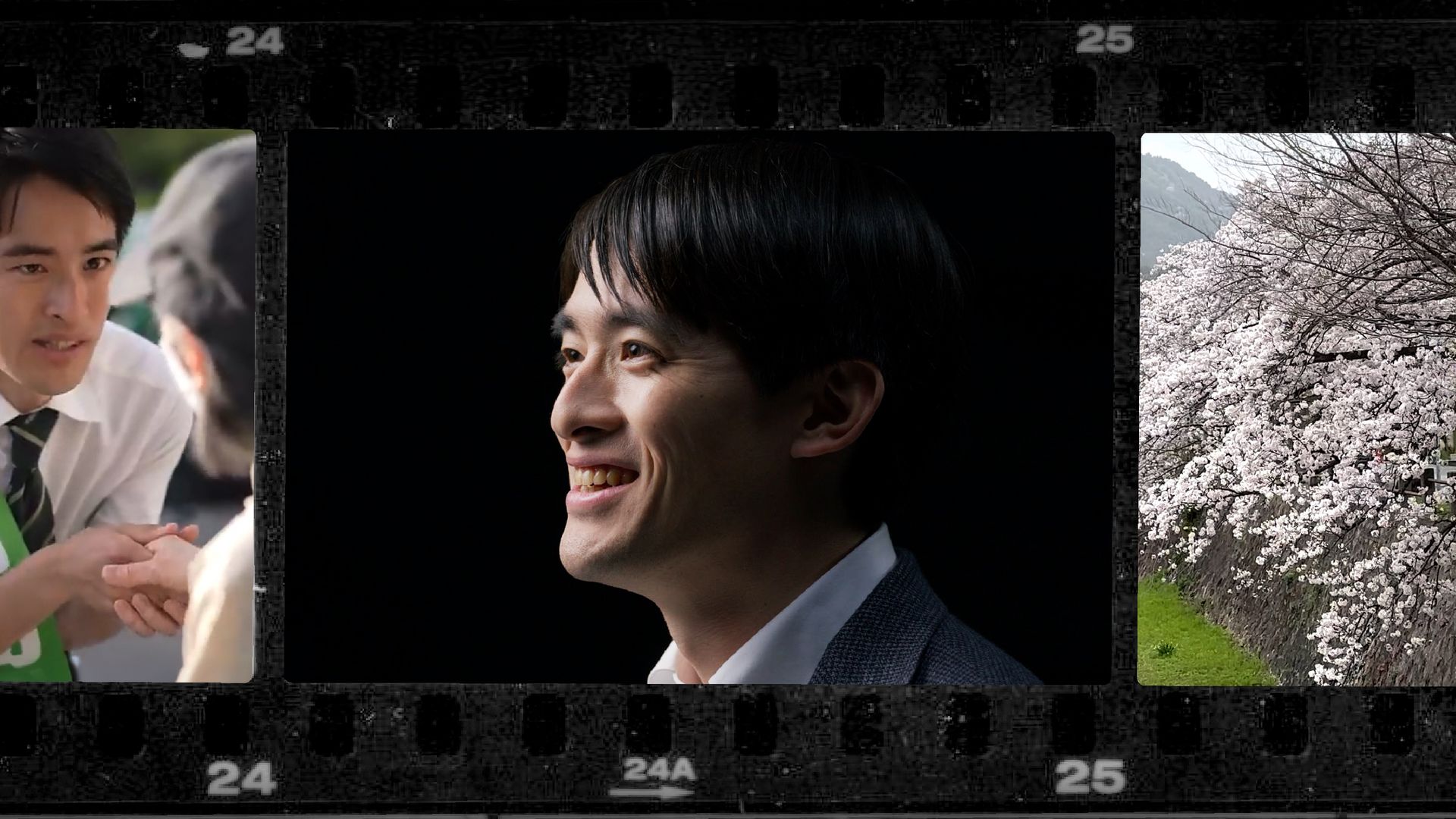
Meet the youngest-ever mayor in Japan's history | Ryosuke Takashima

TED Fellow Ryosuke Takashima is the youngest-ever mayor in Japan's history — but he doesn't consider himself a politician. His approach to leadership is simple: listen to as many voices as possible (from students to elders) in order to figure out what needs fixing. Hear why he thinks inviting citizens to participate in reforming their own communities is the best way to get things done.

Schendy Kernizan

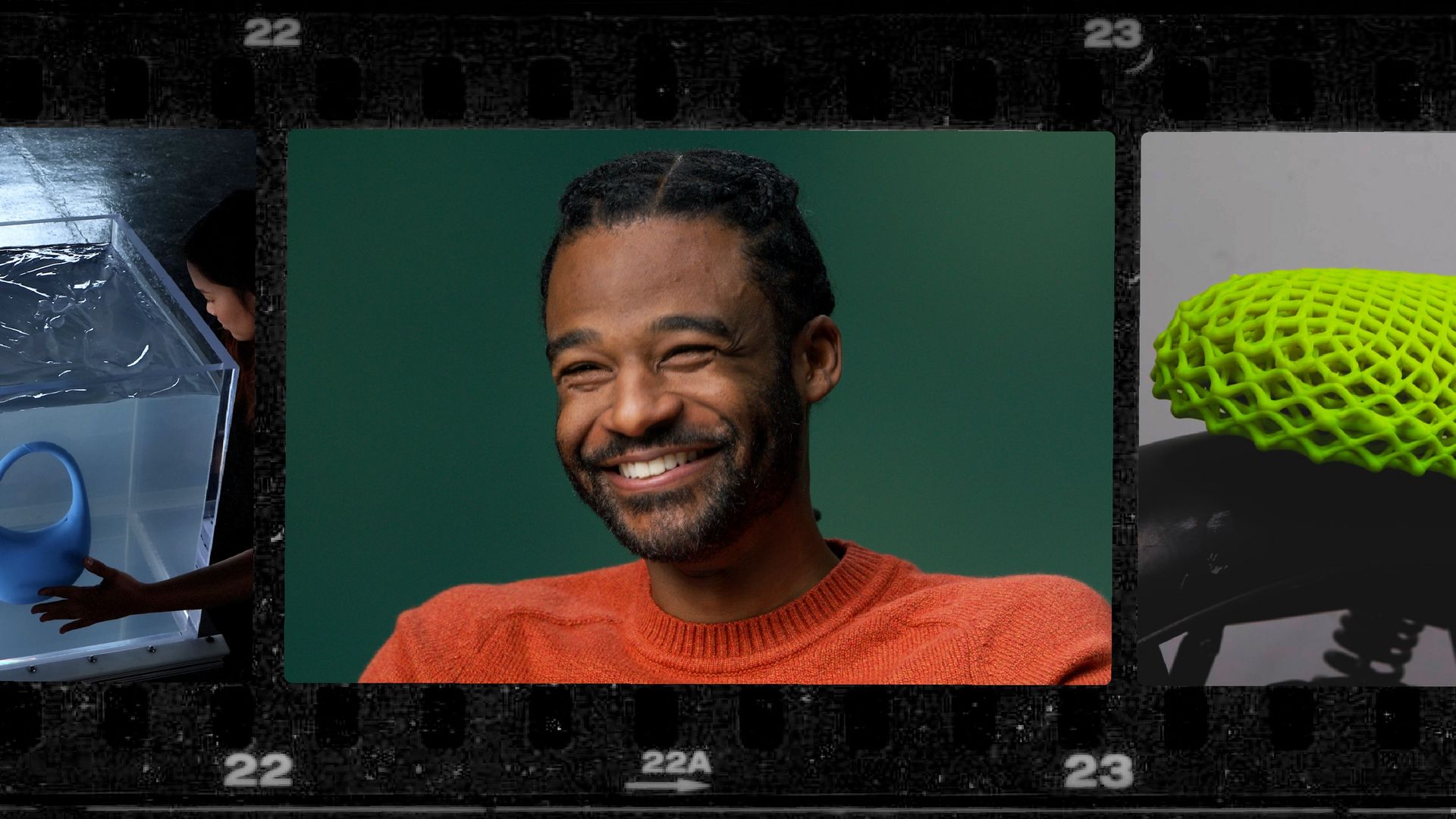
The gravity-defying future of manufacturing | Schendy Kernizan

3D printing promised to reinvent how we make things, but it's mostly stuck producing prototypes with a high level of waste. Designer and TED Fellow Schendy Kernizan found a different way — by printing objects directly into a tub of gel. He explains how this technique eliminates the constraints of gravity, pushing the limits of how we can manufacture objects across medicine, fashion, space travel and more.
Listen to all
Podcast episodes

TED Fellows Films

TED Talks meet documentaries in these short films that explore TED Fellows’ ideas. Dive into all three seasons to explore their mind-blowing innovations. 

05:39

FELLOWS FILM

Meet the youngest-ever mayor in Japan's history

TED Fellow Ryosuke Takashima is the youngest-ever mayor in Japan's history — but he doesn't consider himself a politician. His approach to leadership is simple: listen to as many voices as possible (from students to elders) in order to figure out what needs fixing. Hear why he thinks inviting citizens to participate in reforming their own communities is the best way to get things done.

2026

TED Fellows Film

Ryosuke Takashima
04:47

FELLOWS FILM

The gravity-defying future of manufacturing

3D printing promised to reinvent how we make things, but it's mostly stuck producing prototypes with a high level of waste. Designer and TED Fellow Schendy Kernizan found a different way — by printing objects directly into a tub of gel. He explains how this technique eliminates the constraints of gravity, pushing the limits of how we can manufacture objects across medicine, fashion, space travel and more.

2026

TED Fellows Film

Schendy Kernizan

Fellows Media Library
With 500+ TED Fellows and counting, we’ve got an entire world of media for you to explore. Dive into these talks, short films and podcasts showcasing Fellows turning ideas into action.

Clear
Sort
Thank you! Your submission has been received!
Oops! Something went wrong while submitting the form.

05:16

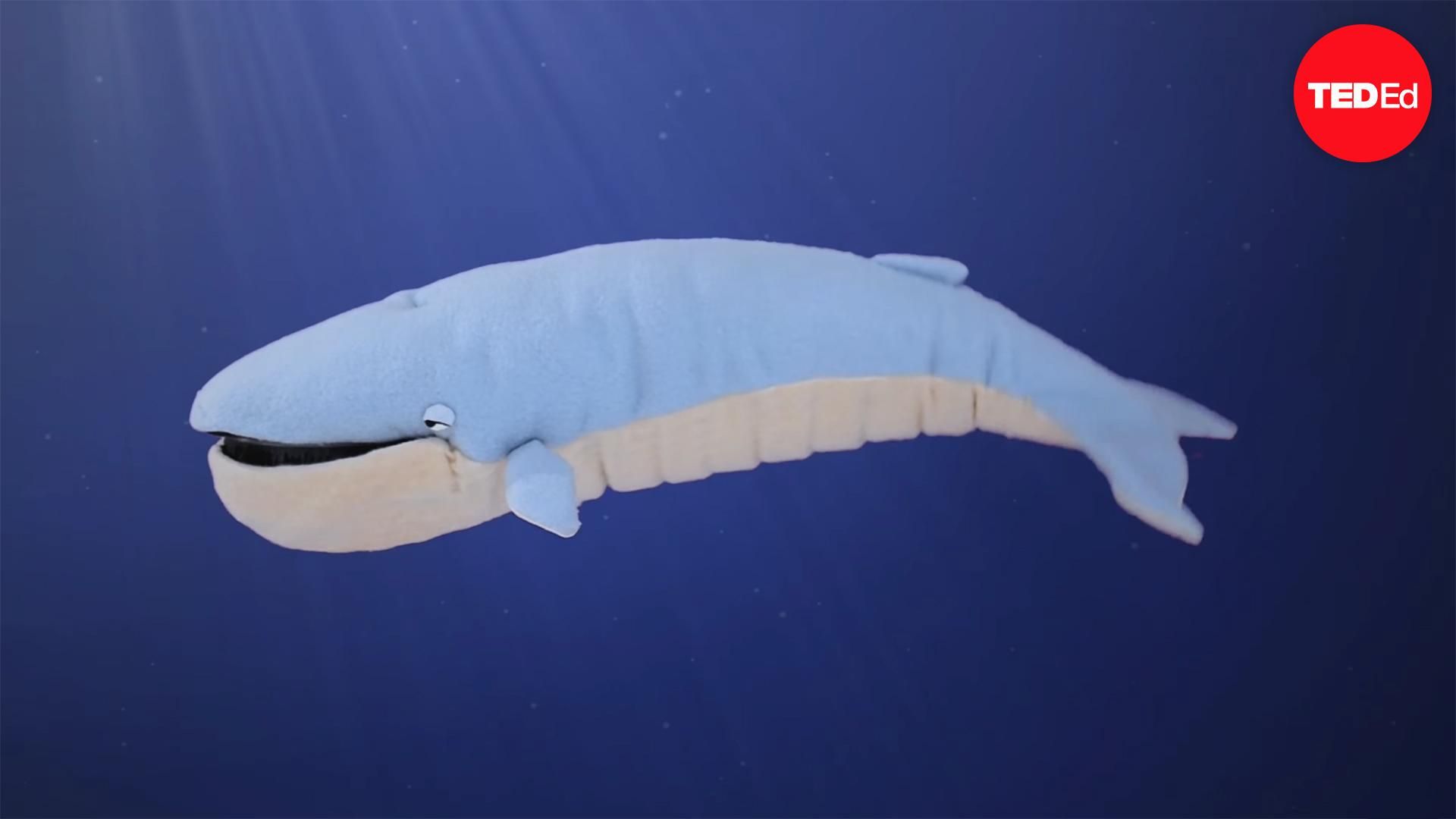
Why are blue whales so enormous?

Blue whales are the largest animals on the planet, but what helps them grow to the length of a basketball court? Asha de Vos explains why the size of krill make them the ideal food for the blue whale -- it's as if the blue whale was made to eat krill (and krill was made to be eaten by the blue whale). [Directed by Cognitive Media, narrated by Asha de Vos].

2022

Other

Sri Lanka
Dr. Asha de Vos is an internationally acclaimed Sri Lankan marine biologist, ocean educator, and pioneer of long-term blue whale research in the Northern Indian Ocean. She is known for her work in marine conservation and equity advocacy. Dr. de Vos holds degrees from prestigious universities and founded Oceanswell, Sri Lanka's first marine conservation research and education organization. Her achievements have been recognized globally, and she has been featured by prominent media outlets. Additionally, she has received numerous awards for her contributions to field biology and marine conservation. // Marine biologist. Ocean educator. Founder/Executive Director, Oceanswell. National Geographic Emerging Explorer. Pew Fellow in Marine conservation. TED senior fellow. World Economic Forum Young Global Leader. Adjunct Research Fellow, The Oceans Institute, The University of Western Australia. BBC 100 2018 (most inspirational and influential women in the world); LMD Sri Lankan of the Year 2018. // Channel 7 documentaryhttp://bitly.com/SMFUE7The New York Timeshttp://bit.ly/WRVELhCNN interview and opinion piecehttp://bit.ly/SiTVvO // Asha de Vos is a marine biologist and ocean educator with a strong focus on marine conservation. As the Founder and Executive Director of Oceanswell, she has made significant contributions to the field and has been recognized as a National Geographic Emerging Explorer and a Pew Fellow in Marine Conservation. With a TED senior fellowship and being a World Economic Forum Young Global Leader, Asha is actively involved in shaping conversations around ocean conservation and sustainability. Her work has been featured in various prestigious platforms such as BBC 100, The New York Times, CNN, and she was named LMD Sri Lankan of the Year in 2018. // Dr. Asha de Vos is a distinguished marine biologist and ocean educator renowned for her groundbreaking research on blue whales in the Northern Indian Ocean. As the Founder and Executive Director of Oceanswell, Sri Lanka's premier marine conservation organization, she has spearheaded efforts in marine conservation and equity advocacy. Dr. de Vos's work has garnered international acclaim, leading to her recognition as a National Geographic Emerging Explorer and a Pew Fellow in Marine Conservation. With a TED senior fellowship and a role as a World Economic Forum Young Global Leader, she actively shapes global dialogues on ocean conservation and sustainability. Her contributions have been featured in esteemed media outlets like BBC 100 and The New York Times, solidifying her position as a leading figure in the field of marine biology and conservation. // Blue whale scientist // I am a born, bred and proud Sri Lankan. I work to save a population of blue whales, that I call The Unorthodox Whales, in the waters of the northern Indian Ocean but I also try to inspire the next generation of ocean heroes. My work has been featured in The New York Times, CNN, BBC, Channel 7 Australia, National Geographic online and in many newspapers around the world. When I am not working on my research, I can usually be found longingly hovering around, on or in the water, eating, running or telling stories about my other super-power which involves attracting weirdos... // I am a marine biologist currently working with blue whales in the Northern Indian Ocean.I am trying to stop them getting hit and killed by large container ships.For this I do science, outreach and push for policy changes and also look for innovative tools that can help solve conservation problems of this nature. I am also an advocate of contextualising conservation, particularly in the marine realm. Making sure people know why we need to protect the oceans and how healthy oceans means healthy us. I work with the media and do public talks to create this awareness and because I believe, the more people know, the more they care and the more responsible they feel to do something. Check www.ashadevos.com to learn more about my work! // Whales have a surprising and important job, says marine biologist Asha de Vos: these massive creatures are ecosystem engineers, keeping the oceans healthy and stable by ... well, by pooping, for a start. Learn from de Vos, a TED Fellow, about the undervalued work that whales do to help maintain the stability and health of our seas -- and our planet. // Dr. Asha de Vos is a distinguished marine biologist and ocean educator renowned for her groundbreaking research on blue whales in the Northern Indian Ocean. As the Founder and Executive Director of Oceanswell, Sri Lanka's premier marine conservation organization, she has spearheaded efforts in marine conservation and equity advocacy. Dr. de Vos's work has garnered international acclaim, leading to her recognition as a National Geographic Emerging Explorer and a Pew Fellow in Marine Conservation. With a TED senior fellowship and a role as a World Economic Forum Young Global Leader, she actively shapes global dialogues on ocean conservation and sustainability. Her contributions have been featured in esteemed media outlets like BBC 100 and The New York Times, solidifying her position as a leading figure in the field of marine biology and conservation. // Blue whale scientist // marine megafauna, water, education, forest, blue whales, biodiversity, marine biology and oceanography, buildings, water quality, coastal, social equity, equity, geospatial analysis, research, fishing, corporate social responsibility, educator,, climate, environmental education, sustainable development , environmental policy and advocacy, marine biology, natural resources, policy, environmental management, whale photographer, resource management, aquatic, women, marine mammals, forestry, wildlife, oceans, ocean justice, positivity, building science, environmental consciousness, marine conservation, deep sea water, advocacy, natural resource management, environmental impact, conservation, nature, science, remote-sensing, oceanography, communication, deep sea exploration, justice, ecology, marine ecology, capacity building // Sri Lanka|Colombo|Western Province
Sri Lanka|Colombo|Western Province

Asha De Vos

No items found.
2022

04:53

For these women, reading is a daring act

In some parts of the world, half of the women lack basic reading and writing skills. The reasons vary, but in many cases, literacy isn't valued by fathers, husbands, even mothers. Photographer and TED Fellow Laura Boushnak traveled to countries including Yemen, Egypt and Tunisia to highlight brave women -- schoolgirls, political activists, 60-year-old moms -- who are fighting the statistics.

2015

TED Talk

Bosnia and Herzegovina
Photographer // A Kuwaiti-born Palestinian photographer whose work focuses on women, literacy and education reform in the Arab world. She is also the co-founder of the RAWIYA collective, a photography cooperative of female photographers from the Middle East. // Laura Boushnak is a Kuwaiti-born Palestinian photographer based in Sarajevo. Her work mainly focuses on the Arab world, looking at issues that she finds stem from her own personal experience of gender, education, and aftermath of war. After receiving a degree in Sociology from the Lebanese University in Beirut in 1999, Boushnak infused her interest in social issues with her passion for the visual arts and began her career as a photographer for the Associated Press in Lebanon. She then went on to work with the Agence France-Presse (AFP) at its Middle East hub in Cyprus and its headquarters in Paris. During this nine-year span, Boushnak’s experience included covering hard news in conflict zones such as the war in Iraq and the 2006 Israel-Hezbollah war. As of 2008, she has been working as an independent photographer, commissioned for editorial assignments by the New York Times and other publications, while also giving more of her time to her long-term personal projects in the Middle East. Boushnak’s main focus has been on her on-going projects, “I Read I Write” and “Survivor.” The former revolving around Arab women’s education and literacy, while the latter highlights the aftermath of war and its impact on individuals long after the fighting has ended. Both projects have received honorable awards and recognition including: the first Getty Images/ lean-in editorial grant, The Terry O’neil Photography Award in the UK, and two honorable mentions in the UNICEF Photo of the Year Award. Her work has been part of public and private collections, which include the British Museum, and has been exhibited in galleries and museums around the world, such as the Birmingham Museum in the UK, the Sharjah Art Museum in the UAE, and The Arp Museum Bahnhof Ralandseck in Germany. Boushnak is a TED fellow and has been invited to give talks in different parts of the world, including two separate TED talks in 2014 and 2016, where she shared the stories behind her “I Read I Write” and “Survivor” projects to a worldwide audience. She is the co-founder of RAWIYA, the first photo collective in the Middle East. // The destruction of war doesn't stop when the fighting is over. Photographer and TED Fellow Laura Boushnak shares a powerful photo essay about the survivors of cluster bombs, people who encountered these deadly submunitions years after the end of conflict. With her haunting photos, Boushnak asks those who still produce and condone the use of these weapons to abandon them. // In some parts of the world, half of the women lack basic reading and writing skills. The reasons vary, but in many cases, literacy isn't valued by fathers, husbands, even mothers. Photographer and TED Fellow Laura Boushnak traveled to countries including Yemen, Egypt and Tunisia to highlight brave women -- schoolgirls, political activists, 60-year-old moms -- who are fighting the statistics. // Laura Boushnak is a Kuwaiti-born Palestinian photographer based in Sarajevo. Her work mainly focuses on the Arab world, looking at issues that she finds stem from her own personal experience of gender, education, and aftermath of war. After receiving a degree in Sociology from the Lebanese University in Beirut in 1999, Boushnak infused her interest in social issues with her passion for the visual arts and began her career as a photographer for the Associated Press in Lebanon. She then went on to work with the Agence France-Presse (AFP) at its Middle East hub in Cyprus and its headquarters in Paris. During this nine-year span, Boushnak’s experience included covering hard news in conflict zones such as the war in Iraq and the 2006 Israel-Hezbollah war. As of 2008, she has been working as an independent photographer, commissioned for editorial assignments by the New York Times and other publications, while also giving more of her time to her long-term personal projects in the Middle East. Boushnak’s main focus has been on her on-going projects, “I Read I Write” and “Survivor.” The former revolving around Arab women’s education and literacy, while the latter highlights the aftermath of war and its impact on individuals long after the fighting has ended. Both projects have received honorable awards and recognition including: the first Getty Images/ lean-in editorial grant, The Terry O’neil Photography Award in the UK, and two honorable mentions in the UNICEF Photo of the Year Award. Her work has been part of public and private collections, which include the British Museum, and has been exhibited in galleries and museums around the world, such as the Birmingham Museum in the UK, the Sharjah Art Museum in the UAE, and The Arp Museum Bahnhof Ralandseck in Germany. Boushnak is a TED fellow and has been invited to give talks in different parts of the world, including two separate TED talks in 2014 and 2016, where she shared the stories behind her “I Read I Write” and “Survivor” projects to a worldwide audience. She is the co-founder of RAWIYA, the first photo collective in the Middle East. // Photographer // activism, photography, education, gender, journalism, war, women, art, stem // Federation of Bosnia and Herzegovina|Sarajevo|Bosnia and Herzegovina
Federation of Bosnia and Herzegovina|Sarajevo|Bosnia and Herzegovina

Laura Boushnak

No items found.
2015

The future of flying is electrifying | Cory Combs

If you’re a frequent flier, you’re also a major polluter. What if there was a way to travel the world with less impact on the environment? In this quick, exciting talk, aviation entrepreneur and TED Fellow Cory Combs lays out how electric aircraft could make flying cleaner, quieter and more affordable -- and shares his work on Electric EEL, the largest hybrid-electric plane ever to fly. Hosted on Acast. See acast.com/privacy for more information.

2023

Podcasts

United States
Sandia National Laboratories; Sias International University; Beijing Open University; GAE; Chaparral High School Temecula; Stanford University; Molding International & Engrg; Temeku Holdings; Ampaire; Beijing Language and Culture University; Northrop Grumman Corporation; Fuller School of Intercultural Studies
Ampaire is a pioneering company focused on advancing electric aviation technology. They are at the forefront of developing hybrid-electric aircraft to reduce emissions, noise, and operating costs in the aviation industry. Ampaire's innovative AmpDrive system has been successfully flown in multiple hybrid-electric aircraft, demonstrating significant fuel savings, maintenance reductions, and noise reduction. The company collaborates with notable institutions like NASA and ARPA-E to further develop and test their technology. Ampaire's vision includes revolutionizing air travel by providing cleaner, more affordable flights that are environmentally sustainable. // Sandia National Laboratories; Sias International University; Beijing Open University; GAE; Chaparral High School Temecula; Stanford University; Molding International & Engrg; Temeku Holdings; Ampaire; Beijing Language and Culture University; Northrop Grumman Corporation; Fuller School of Intercultural Studies // Electrifying aviation. Dramatically reducing the environmental impact of flying. // Cory Combs is a key figure at Ampaire, a leading company in the field of electric aviation technology. Ampaire is dedicated to advancing hybrid-electric aircraft to minimize emissions, noise pollution, and operational expenses within the aviation sector. Through the successful implementation of the innovative AmpDrive system in various hybrid-electric aircraft, significant improvements in fuel efficiency, maintenance costs, and noise levels have been achieved. Collaborating with prestigious institutions such as NASA and ARPA-E, Ampaire is actively engaged in further refining and testing their cutting-edge technology. Cory Combs plays a crucial role in the company's mission to transform air travel by offering cleaner, more cost-effective flights that prioritize environmental sustainability. // Electric aviation entrepreneur // Cory is an electric aviation entrepreneur and investor passionate about sustainable, practical innovation. He is Co-founder and Executive Tech Fellow at Ampaire, a startup that is leading the charge in electrifying aviation. Ampaire is the convergence of Cory's work designing X-planes, EVs, and clean technology. Cory was named a 2019 Emerson Collective Dial Fellow, 2021 ICAS Aerospace Innovation Prize Awardee, and has received global recognition for his pioneering work in electric aircraft. // If you're a frequent flier, you're also a major polluter. What if there was a way to travel the world with less impact on the environment? In this quick, exciting talk, aviation entrepreneur and TED Fellow Cory Combs lays out how electric aircraft could make flying cleaner, quieter and more affordable -- and shares his work on Electric EEL, the largest hybrid-electric plane ever to fly. // Cory Combs is a key figure at Ampaire, a leading company in the field of electric aviation technology. Ampaire is dedicated to advancing hybrid-electric aircraft to minimize emissions, noise pollution, and operational expenses within the aviation sector. Through the successful implementation of the innovative AmpDrive system in various hybrid-electric aircraft, significant improvements in fuel efficiency, maintenance costs, and noise levels have been achieved. Collaborating with prestigious institutions such as NASA and ARPA-E, Ampaire is actively engaged in further refining and testing their cutting-edge technology. Cory Combs plays a crucial role in the company's mission to transform air travel by offering cleaner, more cost-effective flights that prioritize environmental sustainability. // Electric aviation entrepreneur // technology, renewable, sustainability, propulsion, flight, cleantech, electric, design, emissions, electric aircraft, investment, energy, pollution, affordable, hybrid propulsion, green flight, environmental impact, air travel, evs, aviation, renewable energy, sustainable aviation, aviation industry, aircraft // California|Los Angeles|United States|USA
California|Los Angeles|United States|USA

Cory Combs

No items found.
2023

08:42

मस्तिष्क और मशीन के बीच के अंतर को पाटना

TED फेलो अर्णव कपूर ले आए हैं आल्टरईगो (AlterEgo): एक पहनने योग्य एआई डिवाइस जिससे आप शांति से बात करके एक कंप्यूटर सिस्टम से जानकारी ले सकते हैं, जैसे आपकी अंदरूनी आवाज़ से। जानिए कैसे यह डिवाइस काम करता है, और इस मानव-कंप्यूटर परस्पर क्रिया की व्यापक संभावनाओं के बारे में।

2020

TED Talk

United Kingdom
Technologist // Inventor creating wearable AI devices that augment human cognition and give voice to those who have lost their ability to speak. // Try talking to yourself without opening your mouth, by simply saying words internally. What if you could search the internet like that -- and get an answer back? In the first live public demo of his new technology, TED Fellow Arnav Kapur introduces AlterEgo: a wearable AI device with the potential to let you silently talk to and get information from a computer system, like a voice inside your head. Learn more about how the device works and the far-reaching implications of this new kind of human-computer interaction. // Inventor creating wearable AI devices that augment human cognition and give voice to those who have lost their ability to speak. // Technologist // technology, artificial intelligence

Arnav Kapur

No items found.
2020

04:57

How to plant a tiny forest near you

We've all reminisced about our vanishing meadows, the lush greenery replaced by concrete jungles. But Shubhendu Sharma, a Bengaluru-based industrial engineer and eco-entrepreneur, is not lamenting -- he is paving the way to planting tiny forests all around us. He shows us how to grow a lush forest in the space of six parked cars and at the price of an iPhone. Bringing back lost forests, he says, can improve our planet and our lives. (In Hindi with English subtitles)

2017

TED Talk

India
Afforestt is a service provider that specializes in creating natural, wild, and maintenance-free native forests. Their focus is on developing beautiful forests that are native and wild, with the intention of lasting indefinitely. They emphasize the benefits of their forests, such as faster growth, increased density, native biodiversity, and the use of mulch for a healthy forest floor. // Shubhendu Sharma is revolutionizing urban landscaping and afforestation by implementing innovative methods to increase green cover in cities. His approach involves converting empty urban spaces into natural forests using the Miyawaki method, which accelerates tree growth and creates self-sustaining forests within a few years. By leveraging free saplings and resources from government agencies, Shubhendu has successfully created over 17 natural forests in five cities in India. His work not only addresses the environmental challenges posed by urbanization but also influences local governments and corporations to prioritize sustainable urban development. Through his efforts, Shubhendu aims to make a significant impact on urban green spaces and promote a more environmentally conscious approach to urban planning. // I am working on brining back the lost ecosystems of the world, in form of forests. The true nature of any geography lies in the lost vegetation that nature would have grown on that place without human intervention. We bring that original vegetation back. I want to make sure that all the people of the world know what their natural ecosystem is, and also know how to restore it, if it's lost. // Shubhendu Sharma is a visionary in the field of urban afforestation and sustainable landscaping. Through his company, Afforestt, he specializes in creating natural, wild, and maintenance-free native forests using innovative techniques like the Miyawaki method. By transforming urban spaces into thriving forests, Shubhendu has successfully established over 17 natural forests in multiple Indian cities, promoting biodiversity and sustainable urban development. His work not only addresses environmental challenges posed by urbanization but also influences local governments and corporations to prioritize green spaces and eco-friendly practices. Shubhendu's mission to restore lost ecosystems and educate communities on ecosystem restoration showcases his commitment to promoting environmental consciousness and sustainable living practices worldwide. // Eco-entrepreneur // Indian industrial engineer restoring natural forests with his company, Afforestt, which offers a way to plant maintenance-free, wild and highly biodiverse forests using specialized afforestation methodology, research and cutting-edge technologies. // I make forests.Indian industrial engineer restoring natural forests with his company, Afforestt, which offers a way to plant maintenance-free, wild and highly biodiverse forests using specialized afforestation methodology, research and cutting-edge technologies. // Forests don't have to be far-flung nature reserves, isolated from human life. Instead, we can grow them right where we are -- even in cities. Eco-entrepreneur and TED Fellow Shubhendu Sharma grows ultra-dense, biodiverse mini-forests of native species in urban areas by engineering soil, microbes and biomass to kickstart natural growth processes. Follow along as he describes how to grow a 100-year-old forest in just 10 years, and learn how you can get in on this tiny jungle party. // A forest planted by humans, then left to nature's own devices, typically takes at least 100 years to mature. But what if we could make the process happen ten times faster? In this short talk, eco-entrepreneur (and TED Fellow) Shubhendu Sharma explains how to create a mini-forest ecosystem anywhere. // Shubhendu Sharma is a visionary in the field of urban afforestation and sustainable landscaping. Through his company, Afforestt, he specializes in creating natural, wild, and maintenance-free native forests using innovative techniques like the Miyawaki method. By transforming urban spaces into thriving forests, Shubhendu has successfully established over 17 natural forests in multiple Indian cities, promoting biodiversity and sustainable urban development. His work not only addresses environmental challenges posed by urbanization but also influences local governments and corporations to prioritize green spaces and eco-friendly practices. Shubhendu's mission to restore lost ecosystems and educate communities on ecosystem restoration showcases his commitment to promoting environmental consciousness and sustainable living practices worldwide. // Eco-entrepreneur // technology, urban forestry, forest, bioenergy, urban areas, biodiversity, cities, urban, research, urban development, environment & ecology, ecosystem, microbes, environmental policy and advocacy, policy, urban planning, species, forestry, native, pollution, urbanism, environmental health, technolgy integration, soil microbes, advocacy, biomass, forests and people, industrial engineering, native forest, trees, miyawaki, pollution prevention, landscaping, ecological restoration, nature, afforestation, restoration, pollution reduction, government, soil, sustainable urban, industrial, ecology, toyota production system // Netherlands|Los Angeles|Uttarakhand|USA|India|Singapore|Kashipur|Jaipur|Bangalore|Indonesia|California|Bali|Amsterdam|New Delhi
Netherlands|Los Angeles|Uttarakhand|USA|India|Singapore|Kashipur|Jaipur|Bangalore|Indonesia|California|Bali|Amsterdam|New Delhi

Shubhendu Sharma

No items found.
2017

05:08

The most powerful yet overlooked resource in schools

"When teachers and families work together, everyone wins," says education technology entrepreneur and TED Fellow Heejae Lim. She shines a light on an underutilized resource in US public education -- a family's love for their children -- and shows that, with the right tools and tech, schools can remove language barriers, foster meaningful connections and help every student thrive.

2022

TED Talk

United States
Education technology entrepreneur // Heejae is the founder and CEO of TalkingPoints, an education technology nonprofit with the mission to drive student success by unlocking the potential of families to fuel their children’s learning, especially in underserved communities. She founded TalkingPoints because of her own experience growing up as a Korean immigrant student and seeing her mother be able to make a difference in her education because she had the ‘voice’ to do so. TalkingPoints’ universal family engagement solution transforms something as simple as a cell phone into a tool that empowers millions of PK-12 families and educators to build strong partnerships in support of student success through two-way translated digital conversations, data analytics, and resources in 150+ languages. Previously, Heejae advised the Gates Foundation and Teach First UK at McKinsey & Company, and worked on education reform by serving as chief of staff to a special advisor to the Secretary of Education in the UK. She holds a B.A. from Oxford University, an M.A. from the London School of Economics both with distinctive honors, and an MBA from Stanford Graduate School of Business, where she was an Arjay Miller Scholar. Heejae has been recognized as a 2022 TED Fellow, Forbes 30 Under 30 for Education, Echoing Green Fellow, Stanford Social Innovation Fellow, Ashoka Changemaker, and Elevate Prize Winner, among others. // "When teachers and families work together, everyone wins," says education technology entrepreneur and TED Fellow Heejae Lim. She shines a light on an underutilized resource in US public education -- a family's love for their children -- and shows that, with the right tools and tech, schools can remove language barriers, foster meaningful connections and help every student thrive. // Heejae is the founder and CEO of TalkingPoints, an education technology nonprofit with the mission to drive student success by unlocking the potential of families to fuel their children’s learning, especially in underserved communities. She founded TalkingPoints because of her own experience growing up as a Korean immigrant student and seeing her mother be able to make a difference in her education because she had the ‘voice’ to do so. TalkingPoints’ universal family engagement solution transforms something as simple as a cell phone into a tool that empowers millions of PK-12 families and educators to build strong partnerships in support of student success through two-way translated digital conversations, data analytics, and resources in 150+ languages. Previously, Heejae advised the Gates Foundation and Teach First UK at McKinsey & Company, and worked on education reform by serving as chief of staff to a special advisor to the Secretary of Education in the UK. She holds a B.A. from Oxford University, an M.A. from the London School of Economics both with distinctive honors, and an MBA from Stanford Graduate School of Business, where she was an Arjay Miller Scholar. Heejae has been recognized as a 2022 TED Fellow, Forbes 30 Under 30 for Education, Echoing Green Fellow, Stanford Social Innovation Fellow, Ashoka Changemaker, and Elevate Prize Winner, among others. // Education technology entrepreneur // technology, children, underserved communities, families, family engagement, education technology, data and analytics, education, immigration, learning, underserved, edtech, data, artificial intelligence, teachers, schools, multilingual // California|United States|San Francisco|USA
California|United States|San Francisco|USA

Heejae Lim

No items found.
2022

05:14

The fight to end rare-animal trafficking in Brazil

Biologist Juliana Machado Ferreira, a TED Senior Fellow, talks about her work helping to save birds and other animals stolen from the wild in Brazil. Once these animals are seized from smugglers, she asks, then what?

2010

TED Talk

Brazil
FREELAND Brasil; The Global Initiative to End Wildlife Crime; National Geographic; SOS FAUNA; Colégio Santa Cruz; Universidade de São Paulo; WINGS WorldQuest; TED Conferences
Freeland Brasil is a Brazilian non-profit organization founded in 2012, dedicated to conserving biodiversity by combating illegal wildlife trade. They work towards a sustainable world free of wildlife trafficking through education, awareness, training for law enforcement agencies, and public policy initiatives. Freeland Brasil collaborates with international organizations and government institutions to raise awareness about the relevance of wildlife trafficking and to counter this crime effectively. Their mission is to protect vulnerable human communities and wildlife from organized crime and corruption. // .Counter wildlife trafficking .Conservation Genetics .Wildlife Forensics Freeland Brasil's mission is to conserve biodiversity by combating wildlife trafficking. We are based in Brazil but we work regionally in South America.  We work using a three-pillar approach, which are inter-related and interdependent: (1) Education and Awareness to reduce demand for wildlife and parts and products;  (2) Support to counter wildlife trafficking law enforcement agencies to strengthen the combat against the crime; (3) Public policy and international articulation to guarantee a long lasting impact of our work. South America houses five of the 17 megadiversity countries of the world, with 5,033 endangered species, and acts both as an important source of illegal wildlife, wildlife products and timber to the world, as well as a relevant and expanding consumer market. Not only regional religions and traditional medicine utilize wildlife and its products, but hunting wild animals for consumption and keeping wild pets are habits imbricated in the region's culture. Moreover, South America has become an important source of wildlife for the international illegal trade, generating unsustainable levels of wildlife exploitation and bringing several species to the brink of extinction. Nonetheless, the importance of wildlife trafficking in the region remains unseen by the international community. Only by increasing regional collaboration, sharing information, and enhancing national capacities this situation can be turned around. // A broad alliance of environmental, policy, legal, business and public health experts; created to address serious gaps in the existing international legal framework for combating wildlife crime and regulating wildlife trade // Freeland Brasil's mission is to conserve biodiversity by combating wildlife trafficking. Freeland Brasil is a branch of Freeland Foundation, whose mission is work for a world free of wildlife trafficking and human slavery. Freeland Brasil works in three comprehensive fronts: (1) Education and Awareness; (2) Support to counter wildlife trafficking law enforcement agencies; (3) Public policy and international articulation. // http://www.nationalgeographic.com/explorers/bios/juliana-machado-ferreira/https://www.youtube.com/watch?v=VoYHGO4GPls // Ph.D on Biology (Genetics). Under the supervision of Joao S. Morgante (PhD) and Mary Curtis (PhD). Population Genetics of Brazilian bird species exploited by the illegal wildlife trade. // http://www.ted.com/talks/juliana_machado_ferreira // // // // FREELAND Brasil; The Global Initiative to End Wildlife Crime; National Geographic; SOS FAUNA; Colégio Santa Cruz; Universidade de São Paulo; WINGS WorldQuest; TED Conferences // Juliana Ferreira is a dedicated professional specializing in counter wildlife trafficking, conservation genetics, and wildlife forensics. With a Ph.D. in Biology (Genetics), Juliana has conducted research on the population genetics of Brazilian bird species exploited by the illegal wildlife trade. She is actively involved in Freeland Brasil, an organization focused on combating wildlife trafficking to conserve biodiversity in South America. Juliana's work encompasses education and awareness initiatives, support for law enforcement agencies combating wildlife trafficking, and engagement in public policy and international collaborations. Her expertise and efforts play a crucial role in addressing the serious gaps in the international legal framework related to wildlife crime and trade regulation. // Counter wildlife trafficking in south America; train agents; create public policies; stregthen the national, regional and international CWT frameworks; increase detection, investigation and case adjudication of transnational wildlife trafficking; create transnational trust networks that exchange intelligence and collaborate; create a wildlife forensic geentics lab to support law enforcement, phase out the legal trade in wildlife // Juliana Ferreira is a dedicated professional with expertise in counter wildlife trafficking, conservation genetics, and wildlife forensics. With a Ph.D. in Biology (Genetics), Juliana's research focuses on the population genetics of Brazilian bird species affected by illegal wildlife trade. She plays a pivotal role in Freeland Brasil, a non-profit organization dedicated to combating wildlife trafficking in South America through education, law enforcement support, and public policy engagement. Juliana's work involves strengthening national and international frameworks for wildlife crime regulation, enhancing detection and investigation of transnational trafficking, and fostering collaboration through trust networks. Her efforts include establishing a wildlife forensic genetics lab to aid law enforcement and advocating for the phasing out of legal wildlife trade. // Forensic biologist // I am a biologist, passionate about fighting wildlife trafficking in Brazil and about wildlife forensics, the use of science to provide data concerning crimes involving wildlife, to be used in the legal process. I have been learning about wildlife forensics since 2005, volunteering and developing research in collaboration with the US Fish and Wildlife National Forensics Laboratory, having spent a total of 15 months there. I also have been developing an in-depth understanding of wildlife trafficking in Brazil volunteering for the NGO SOS Fauna (sosfauna.org) since 2006. My PhD project (to be finished in August 2012) involves the development of polymorphic loci and the inference of population genetic structure of bird species threated by the illegal trade, aiming at providing insights to the releasing efforts of the rehabilitated animals. I am currently in the process of establishing FREELAND Brasil, a not-for-profit and independent sister organization of FREELAND Foundation (freeland.org). FREELAND Brasil will work against wildlife trafficking in Brazil through direct actions in investigation, education and research. It will also incubate and help the development of an independent wildlife forensic genetics laboratory. Apart from saving the world (!!), I love to practice Yôga, which was introduced to me by the DeRose Method (www.derosemethod.us/) and I am an avid swimmer. I have just recently taken up running, so I am still learning and getting used to it. But I am definitely much better in the water. // Contributing to the great effort taken by many people, agencies and organizations to combat wildlife trafficking and prevent its harmful impacts is the reason why Brazilian-born biologist Juliana Machado Ferreira has devoted her life to this issue since 2005. She is currently the Executive Director of the non profit organization Freeland Brasil, whose mission is to conserve biodiversity by ending wildlife trafficking. Freeland Brasil works in partnership with Freeland Foundation, based in Bangkok, an internationally respected counter wildlife trafficking and counter human trafficking organization. As Freeland Brasil’s Executive Director, she coordinates projects which can be divided in three categories: (1) reduce demand for wild pets and wildlife parts and products through educational efforts and awareness actions; (2) support to law enforcement against wildlife trafficking, international articulation and facilitation for the development of a regional wildlife enforcement network; and (3) development of scientific research to produce tools for law enforcement use, such as DNA paternity exclusion tests as a way to control the activity of legalized wildlife commercial breeders. Dr Ferreira’s main life’s project is to set up an Independent Wildlife Forensics Laboratory in Brazil to develop dedicated research and perform high quality forensic analyzes on wildlife crime related evidence to all South American countries. Dr Ferreira’s background is in Science. As a white-lab-coat researcher, she completed her Ph.D in Genetics in 2012 with the dissertation: “Contribution of Population Genetics to the Investigation Efforts on Wildlife Trafficking in Brazil: Development of Microsatellites and Analysis of the Genetic Structure of Paroaria dominicana and Saltator simiis (Aves: Passeriformes: Thraupidae)”. Her main goal in this area is to produce high quality scientific data which can be used in issues involving wildlife trafficking, its prevention and mitigation of its impacts. Her greatest scientific passion is the use of Forensic Science in the prosecution of wildlife related cases, and this is why she has gone to the US Fish and Wildlife Service National Forensics Laboratory to learn about Wildlife Forensics, first as a volunteer and later as a visiting scientist, to develop research in collaboration between 2005 and 2013. Before creating Freeland Brasil, Dr Ferreira has volunteered (2007-2014) for the organization SOS Fauna, a beacon of the fight against wildlife trafficking in Brazil. With the organization, she joined the police in raids intended to seize illegally traded wild animals (http://www.youtube.com/watch?v=WvmOO-bR2cw), in which the team developed actions with the Police aiming at bringing down wildlife trafficking criminal organizations, as well as helped officers on the ground to identify the species of illegally owned or traded animals (for example, hybrids are allowed to be kept and bred, while wild species and threatened wild species have higher levels of protection). They also provided necessary care to the animals in the post-seizure period to decrease death rate and enhance their chances of being rehabilitated and even reintegrated to nature. With SOS Fauna Dr Ferreira also took part in the rehabilitation and responsible releases of rehabilitated animals back in the wild (http://www.youtube.com/watch?v=IHcrcgMkW8o). Lastly, because of the unique and pioneer character of her Ph.D research in Brazil, which united field work, on-the-ground work with the Police, and genetics laboratory work to analyze issues involved in wildlife trafficking, and due to her ideas on how to combat wildlife trafficking in different fronts in South America, Dr Ferreira was nominated a 2009 TED Fellow and 2010-2012 TED Senior Fellow and she gave a talk on the 2010 TED Conference which was posted on TED.com: http://www.ted.com/talks/juliana_machado_ferreira.html. She was also laureate a 2014 National Geographic Emerging Explorer: http://video.nationalgeographic.com/video/explorers-project/141227-explorers-ferreira and http://video.nationalgeographic.com/video/ng-live/ferreira-birds-lecture-nglive Her greatest passions are to spend time with her family, specially her husband and her two year-old daughter, to travel and see the world’s nature and biodiversity, to read, to swim and to practice Yôga. http://www.nationalgeographic.com/explorers/bios/juliana-machado-ferreira/ http://www.ted.com/profiles/113826/fellow www.freelandbrasil.org.br http://www.scienceinschool.org/2012/issue24/juliana http://www.popmatters.com/pm/feature/129455-why-the-caged-bird-sings/ http://www.oprah.com/blogs/One-Womans-Fight-to-Keep-Brazils-Wild-Birds-Aloft http://womeninbusiness.about.com/od/joe-hefferon-series/a/Profile-Of-Brazilian-Biologist-and-Angel-Juliana-Machado-Ferreira-Phd.htm http://www.laurelneme.com/index.php/the-wildlife-radio-show/264-brazil-illegal-bird-trade-juliana-machado-ferreira http://www.ozy.com/rising-stars/juliana-machado-ferreira-wildlife-trafficking-warrior/33115 // Biologist Juliana Machado Ferreira, a TED Senior Fellow, talks about her work helping to save birds and other animals stolen from the wild in Brazil. Once these animals are seized from smugglers, she asks, then what? // Juliana Ferreira is a dedicated professional with expertise in counter wildlife trafficking, conservation genetics, and wildlife forensics. With a Ph.D. in Biology (Genetics), Juliana's research focuses on the population genetics of Brazilian bird species affected by illegal wildlife trade. She plays a pivotal role in Freeland Brasil, a non-profit organization dedicated to combating wildlife trafficking in South America through education, law enforcement support, and public policy engagement. Juliana's work involves strengthening national and international frameworks for wildlife crime regulation, enhancing detection and investigation of transnational trafficking, and fostering collaboration through trust networks. Her efforts include establishing a wildlife forensic genetics lab to aid law enforcement and advocating for the phasing out of legal wildlife trade. // Forensic biologist // human trafficking, water, education, fish, biodiversity, public health, illegal wildlife trade, extinction, data, job skills training, research, counter wildlife trafficking guides and phone app, conservation genetics, wildlife forensic genetics, environmental policy and advocacy, volunteerism, policy, wildlife trafficking, advocacy campaigns, species, wildlife trafficking intelligence reports, mitigation, wildlife, public policy, training for governmental agents, advocacy, campaigns, fish and wildlife, wood, nature, birds, science, law, vulnerability, international wildlife trade, government, counter wildlife trafficking, ecology, endangered species // Sao Paulo|Brazil|São Paulo|State of São Paulo
Sao Paulo|Brazil|S√£o Paulo|State of S√£o Paulo

Juliana Machado Ferreira

No items found.
2010

05:26

The search for microscopic aliens

Astrophysicist and TED Fellow Sarah Rugheimer searches for aliens -- but not the cartoony green kind. She's looking for extraterrestrial microbes by studying how these single-celled organisms emit gases, which could reveal evidence of them throughout the cosmos. Wondering if we're really alone in the universe, Rugheimer identifies two big hurdles to confirming life on another world and offers insight into what finding it might mean for us.

2021

TED Talk

Canada
University of St. Andrews; Astrobiology Graduate Community; Kalispell School District 5; University of Calgary; Jesus College Oxford; York University; Cornell University; UH-IfA; Oxford University; Tufts University; Harvard University
Sarah Rugheimer is an astronomer and astrobiologist, serving as the Allan I. Carswell Chair for the Public Understanding of Astronomy at York University in Toronto. Her research focuses on modeling the atmosphere and climate of extrasolar planets, particularly Earth-like planets and early Earth conditions. She is passionate about engaging with the public on astrophysics and astrobiology, with a keen interest in the study of the origin of life on Earth and the search for life on other planets. Sarah is dedicated to teaching and mentoring, emphasizing the importance of scientific literacy and addressing gender and racial bias in STEM fields. She has received recognition for her work, including being a TED fellow and winning the Caroline Herschel Prize. Sarah is actively involved in public outreach, including creating educational resources and participating in podcasts and outreach programs. // The organization conducts research in the field of astrobiology, focusing on exoplanets, biosignatures, and habitability. Their work is theoretical and computational, with a particular interest in detecting life on other planets or moons in the Universe. They are actively involved in studying habitable planets orbiting other stars and are working towards detecting atmospheres of terrestrial extrasolar planets in the habitable zone using advanced telescopes and observatories. The organization's research aims to explore the origins of life and the potential distribution of life in the Universe, with a focus on developing techniques to remotely detect life in the atmospheres of extrasolar planets. They also investigate the influence of stellar activity on terrestrial planet atmospheres and the planet-star connection to understand how it affects habitability and biosignatures on these planets. // I developed curriculum and program details for Harvard's graduate certificate program in Astrobiology. I started the bi-weekly graduate astrobiology journal club in 2009. I've attended many summer schools and conferences in astrobiology to learn fields outside of my primary field of astronomy. These include AbGradCon 2009,2010,2011, Research Focus Group AbGradCon 2011, Nordic NASA Iceland Summer School, Nordic-NASA Hawaii Summer School, Santander Exoplanet School, IMPRS Heidelberg School. // I hold the Allan I. Carswell Chair for the Public Understanding of Astronomy at York University. I research how to detect, signs of life or biosignatures on planets orbiting other stars. // Research associate at the Carl Sagan Institute at Cornell University. // PhD in Astrophysics working with Lisa Kaltenegger and Dimitar Sasselov on modeling extrasolar planet atmospheres. // Teaching Fellow for Prof. Kirshner's class "The Energetic Universe." Received Harvard Bok Center Distinction in Teaching Award for this class. // Was a teaching assistant for the graduate course "Stellar and Planetary Astrophysics" under Prof. Dimitar Sasselov. // I taught a course of my own design through Tufts' ExCollege program called "Life on Earth and Beyond." The course covered the current understandings of the origin of life on Earth to how we can look for life on other planets in the Solar System and on extrasolar planets in our Galaxy. The course was offered as a full credit class and counted as a Natural Sciences Distribution credit for enrolled students. // I substitute taught Math and Science at Kalispell's two local high schools. // Studied terrestrial planetary habitability by modeling an Earth-like planet throughout the habitable zone of the star system HD 69830. // University of St. Andrews; Astrobiology Graduate Community; Kalispell School District 5; University of Calgary; Jesus College Oxford; York University; Cornell University; UH-IfA; Oxford University; Tufts University; Harvard University // Sarah Rugheimer is an accomplished astrophysicist specializing in the search for signs of life on planets orbiting other stars. With a background in astrophysics and a PhD focusing on modeling extrasolar planet atmospheres, Sarah has held positions at prestigious institutions such as the Carl Sagan Institute at Cornell University and York University's Allan I. Carswell Chair for the Public Understanding of Astronomy. Sarah's expertise extends to curriculum development, teaching, and public outreach, demonstrated through roles like developing curriculum for Harvard's graduate certificate program in Astrobiology and teaching courses on topics ranging from stellar and planetary astrophysics to the search for life beyond Earth. Sarah's research contributions and dedication to education highlight her commitment to advancing our understanding of astrobiology and planetary habitability. // I'm hoping to get a new space mission, the Large Interferometer for Exoplanets (LIFE) launched by 2040 so that we can find signs of life on other planets within our lifetimes. I am also hoping to develop a curriculum for scientific reasoning and critical thinking to decrease polarization from an apolitical astronomy viewpoint. // Sarah Rugheimer is an accomplished astronomer and astrobiologist known for her expertise in modeling the atmospheres and climates of extrasolar planets, particularly Earth-like planets and early Earth conditions. Currently holding the Allan I. Carswell Chair for the Public Understanding of Astronomy at York University, Sarah is deeply engaged in research on exoplanets, biosignatures, and habitability. Her work is focused on detecting life on other planets and understanding the origins of life in the Universe. Sarah is dedicated to scientific literacy, gender equality in STEM, and public outreach, as evidenced by her involvement in educational resources, podcasts, and outreach programs. Her contributions to astrophysics and astrobiology, along with her commitment to education, underscore her significant impact on advancing our understanding of planetary habitability and the search for life beyond Earth. // Astrophysicist // Astrophysicist // I am TED Fellow and professor in astrophysicist working on how to detect life on an exoplanet by looking for atmospheric biosignatures at York University. I am originally from Montana, and started at Flathead Valley Community College before eventually ending up at Harvard University for my Ph.D. I then went to St Andrews and Oxford for postdoctoral fellowships before starting as the Carswell Chair for the Public Understanding of Astronomy at York. I'm there co-Lead of the Project Office for LIFE, the Large Interferometer for Exoplanets, which I believe will be the best way to detect life on another planet in our lifetimes. I am passionate about science communication and outreach to promote scientific literacy. I have been on over 70 times on radio and TV including Global National, NPR, and BBC and was a presenter for the Discovery Channel's "Killers of the Cosmos" series. In 2020, I wrote and recorded a popular-level Audible Originals Course called "Searching for Extraterrestrial Life." I advocate for Women in STEM and co-host a podcast with another astronomer named Sarah Ballard called “Self-care with Drs. Sarah” for junior scientists navigating academia. // Astrophysicist and TED Fellow Sarah Rugheimer searches for aliens -- but not the cartoony green kind. She's looking for extraterrestrial microbes by studying how these single-celled organisms emit gases, which could reveal evidence of them throughout the cosmos. Wondering if we're really alone in the universe, Rugheimer identifies two big hurdles to confirming life on another world and offers insight into what finding it might mean for us. // Sarah Rugheimer is an accomplished astronomer and astrobiologist known for her expertise in modeling the atmospheres and climates of extrasolar planets, particularly Earth-like planets and early Earth conditions. Currently holding the Allan I. Carswell Chair for the Public Understanding of Astronomy at York University, Sarah is deeply engaged in research on exoplanets, biosignatures, and habitability. Her work is focused on detecting life on other planets and understanding the origins of life in the Universe. Sarah is dedicated to scientific literacy, gender equality in STEM, and public outreach, as evidenced by her involvement in educational resources, podcasts, and outreach programs. Her contributions to astrophysics and astrobiology, along with her commitment to education, underscore her significant impact on advancing our understanding of planetary habitability and the search for life beyond Earth. // Astrophysicist // writing, research, climate, design, microbes, race, biosignatures, women, stem, exoplanets, gender, alien life, astronomy, advocacy, astrophysics, solar, science communication, science, astrobiology, communication, atmospheres // Switzerland|Edinburgh|Zurich|Ontario|Toronto|Canada|UK
Switzerland|Edinburgh|Zurich|Ontario|Toronto|Canada|UK

Sarah Rugheimer

No items found.
2021

15:08

HIV -- how to fight an epidemic of bad laws

There is an epidemic of HIV, and with it an epidemic of bad laws -- laws that effectively criminalize being HIV positive. At the TEDxSummit in Doha, TED Fellow Shereen El Feki gives a forceful argument that these laws, based in stigma, are actually helping the disease spread.

2012

TED Talk

Egypt
Journalist + professor // Shereen El Feki is based in Cairo, where she works on issues related to health and social welfare in the Arab region. Half-Egyptian, half-Welsh, Shereen was brought up in Canada. She started her professional life in medical science, with a PhD in molecular immunology from the University of Cambridge, and later worked as Healthcare Correspondent at The Economist magazine. In recent years, however, Shereen has re-oriented her career towards the Arab world. While she has worked in regional media, as a presenter with the Al Jazeera Network, and continues to write on social issues in the Arab world, her passion lies in the many projects in which she is involved which aim to better understand, and surmount, the social challenges facing Arabs, particularly young people. // Shereen El Feki is based in Cairo, where she works on issues related to health and social welfare in the Arab region. Half-Egyptian, half-Welsh, Shereen was brought up in Canada. She started her professional life in medical science, with a PhD in molecular immunology from the University of Cambridge. She later worked as Healthcare Correspondent at The Economist magazine, writing on biomedical research, the pharmaceutical and biotechnology industries, international public health with a special focus on reproductive health and HIV/AIDS, biomedical ethics, intellectual property rights and development. In recent years, however, Shereen has re-oriented her career towards the Arab world. Before joining the American University in Cairo, she was a presenter/reporter with Al Jazeera (English). Shereen is a senior fellow of the 21st Century Trust-Salzburg Global Seminar, the International Science and Technology Practice and Policy Center at the University of Minnesota and the Royal Society for Arts and Manufactures (RSA). She is an advisor to Meedan, a Web initiative to promote dialogue between Arabic and non-Arabic speaking communities around the world. She is also a contributor to the Index of Islamic Innovation, a project which aims to map science and technology across member states of the OIC. Shereen holds a B.Sc. from the University of Toronto, as well as an M.Phil in biochemistry and a Ph.D in molecular immunology from the University of Cambridge. // “If you really want to know a people, start by looking inside their bedrooms," says Shereen El Feki, who traveled through the Middle East for five years, talking to people about sex. While those conversations reflected rigid norms and deep repression, El Feki also discovered that sexual conservatism in the Arab world is a relatively new thing. She wonders: could a re-emergence of public dialogue lead to more satisfying, and safer, sex lives? // There is an epidemic of HIV, and with it an epidemic of bad laws -- laws that effectively criminalize being HIV positive. At the TEDxSummit in Doha, TED Fellow Shereen El Feki gives a forceful argument that these laws, based in stigma, are actually helping the disease spread. // Shereen El Feki shows how some Arab cultures are borrowing trademarks of Western pop culture -- music videos, comics, even Barbie -- and adding a culturally appropriate twist. The hybridized media shows how two civilizations, rather than dividing, can dovetail. // Shereen El Feki is based in Cairo, where she works on issues related to health and social welfare in the Arab region. Half-Egyptian, half-Welsh, Shereen was brought up in Canada. She started her professional life in medical science, with a PhD in molecular immunology from the University of Cambridge. She later worked as Healthcare Correspondent at The Economist magazine, writing on biomedical research, the pharmaceutical and biotechnology industries, international public health with a special focus on reproductive health and HIV/AIDS, biomedical ethics, intellectual property rights and development. In recent years, however, Shereen has re-oriented her career towards the Arab world. Before joining the American University in Cairo, she was a presenter/reporter with Al Jazeera (English). Shereen is a senior fellow of the 21st Century Trust-Salzburg Global Seminar, the International Science and Technology Practice and Policy Center at the University of Minnesota and the Royal Society for Arts and Manufactures (RSA). She is an advisor to Meedan, a Web initiative to promote dialogue between Arabic and non-Arabic speaking communities around the world. She is also a contributor to the Index of Islamic Innovation, a project which aims to map science and technology across member states of the OIC. Shereen holds a B.Sc. from the University of Toronto, as well as an M.Phil in biochemistry and a Ph.D in molecular immunology from the University of Cambridge. // Journalist + professor // research, technology, global health, women's and children's issues, ethics, women, science, biotech, rights, policy, public health, science-policy linkages, middle east & north africa, communication, property rights, disease, science communication // Egypt|Cairo|Cairo Governorate
Egypt|Cairo|Cairo Governorate

Shereen El Feki

No items found.
2012

05:28

What does it mean to be a refugee?

About 60 million people around the globe have been forced to leave their homes to escape war, violence and persecution. The majority have become Internally Displaced Persons, meaning they fled their homes but are still in their own countries. Others, referred to as refugees, sought shelter outside their own country. But what does that term really mean? Benedetta Berti and Evelien Borgman explain. [Directed by Biljana Labovic, narrated by Susan Zimmerman, music by David Obuchowski and Peter Linder].

2022

Other

Belgium
College of Europe; The Fletcher School at Tufts University; Institute for European Studies, VUB; Foreign Policy Research Institute; Institute for National Security Studies; CAPISE, Center of Political Analysis and Social and Economic Research (Chiapas, Mexico); Eisenhower Fellowships; Foreign Policy Research Institute AND Institute for National Security Studies; Harvard Law School; The Jebsen Center for Counterterrorism Studies (The Fletcher School); Office of Congressman A.B Schiff; Tufts University - The Fletcher School of Law and Diplomacy; Università di Bologna; Alma Mater Studiorum – Università di Bologna; International Security and Humanitariant Consultant; TED Conferences; Tel Aviv University
I am a foreign policy and security researcher, analyst, consultant, author and lecturer. I focus on human security and internal wars, looking at ways to better understand the global shifts in the patterns and dynamics of political violence and assessing new, innovative ways to tackle conflict. Key research areas: human security, civil wars, non-state armed groups, protection of civilians, international security. // Conduct security, human security, humanitarian and foreign policy consulting projects for political risk consulting firms, NGOS, international organizations and governments. Work includes: Analytical reporting and policy recommendations; Capacity Building/Training; Curriculum/Program Design; Briefing (Oral and Written); Baseline studies; Content Strategy; Data Collection; Grant Writing; Monitoring & Evaluation; Political Risk Analysis; Policy Analysis and Strategy; Report Writing/Editing; Research; Research Design; Risk and Threat Assessments; Situational/Threat Analysis; Writing/Editing Focus: SSR, DDR, counter-terrorism & CVE, violence prevention and reduction, small arms control.Conflict Management, Complex Emergencies-assessment/planning, Human Security, PeacebuildingPost-conflict stabilization, CVE.Sample of past research focus: Egypt, Guatemala, Israel, Lebanon, Mexico, Palestine, Tunisia, UK, US. // -Research focus: political violence and internal conflict, post-conflict stabilization, democratization, human rights. -Regional focus: the Middle East (especially Palestinian, Syrian, Lebanese politics and the Israeli-Palestinian conflict).-Monitor and analyze key trends at the security, political, social and economic level related to human security in the Middle East and North Africa (MENA) region.-Develop policy assessments, risk evaluations, policy recommendations related to MENA human security, and specifically related to Lebanon, Syria, the Israeli-Palestinian conflict, Israel's foreign policy.-Conduct original policy and scholarly research on these topics. Plan and manage all phases of research (research-design, supervision of interns and staff, field-research, writing and publishing).-Consult and brief government agencies, foreign embassies, NGOs, international organizations on trends in the region’s human security, with a focus on the Israeli-Palestinian conflict. Brief senior level policy-makers at the domestic and international level.-Regularly publish policy briefs, memos, and policy assessments.-Regularly write and publish newspapers articles, scholarly articles, book chapters, and books.- Organize conferences and workshops.- Design outreach campaigns to communicate policy recommendations derived from the research.- Regularly appear on local and international media, both print and broadcast.- Supervise interns and mentor young researchers assisting them in carrying out their research agenda.- Research and obtain funds to develop research (fundraising).- Responsible for devising and implementing a 'human security research program. // -Co-Managed and coordinated team of ten graduate students for research project funded by US Department of Defense. Worked as content analyst and senior investigator.-Conducted research on national security, and counter terrorism.-Co-organized April 2007 conference “Islam in Democratic Societies.” // -Researched and analyzed legal issues related to public international law.-Coordinated research investigations related to militarization, conflict analysis, and human rights abuses, wrote and edited investigative reports, articles and publications.-Participated and coordinated educational projects on conflict resolution and field investigations in indigenous communities.-Monitored and reported on inter-communal conflicts within local indigenous communities // https://www.ted.com/participate/ted-fellows-program/meet-the-ted-fellows // -Research focus: political violence and internal conflict, post-conflict stabilization, democratization, human rights. -Regional focus: the Middle East (especially Palestinian, Syrian, Lebanese politics and the Israeli-Palestinian conflict).-Monitor and analyze key trends at the security, political, social and economic level related to human security in the Middle East and North Africa (MENA) region.-Develop policy assessments, risk evaluations, policy recommendations related to MENA human security, and specifically related to Lebanon, Syria, the Israeli-Palestinian conflict, Israel's foreign policy.-Conduct original policy and scholarly research on these topics. Plan and manage all phases of research (research-design, supervision of interns and staff, field-research, writing and publishing).-Consult and brief government agencies, foreign embassies, NGOs, international organizations on trends in the region’s human security, with a focus on the Israeli-Palestinian conflict. Brief senior level policy-makers at the domestic and international level.-Regularly publish policy briefs, memos, and policy assessments.-Regularly write and publish newspapers articles, scholarly articles, book chapters, and books.- Organize conferences and workshops.- Design outreach campaigns to communicate policy recommendations derived from the research.- Regularly appear on local and international media, both print and broadcast.- Supervise interns and mentor young researchers assisting them in carrying out their research agenda.- Research and obtain funds to develop research (fundraising).- Responsible for devising and implementing a 'human security research program. // Lecturer, BA and MA students (terrorism/political violence, strategic non-violence, civil society, Middle Eastern politics). // -Researcher for “Detention Policy Research Project” focusing on Combatant Status Review Tribunals // https://www.ted.com/participate/ted-fellows-program/meet-the-ted-fellows // -Worked on US policy in the Middle East, national security and conflict resolution // College of Europe; The Fletcher School at Tufts University; Institute for European Studies, VUB; Foreign Policy Research Institute; Institute for National Security Studies; CAPISE, Center of Political Analysis and Social and Economic Research (Chiapas, Mexico); Eisenhower Fellowships; Foreign Policy Research Institute AND Institute for National Security Studies; Harvard Law School; The Jebsen Center for Counterterrorism Studies (The Fletcher School); Office of Congressman A.B Schiff; Tufts University - The Fletcher School of Law and Diplomacy; Università di Bologna; Alma Mater Studiorum – Università di Bologna; International Security and Humanitariant Consultant; TED Conferences; Tel Aviv University // Benedetta Berti is a seasoned foreign policy and security researcher, analyst, consultant, author, and lecturer with a strong focus on human security and internal wars. Her expertise lies in understanding global shifts in political violence dynamics and devising innovative strategies to address conflicts. With a background in conducting consulting projects for political risk firms, NGOs, international organizations, and governments, Benedetta excels in analytical reporting, policy recommendations, and capacity building. She has a diverse skill set encompassing research design, risk assessments, and policy analysis, with a particular emphasis on areas like SSR, DDR, counter-terrorism, and violence prevention. Benedetta's research spans regions like the Middle East, with a keen interest in the Israeli-Palestinian conflict, post-conflict stabilization, and democratization. As a lecturer, she imparts knowledge on topics such as terrorism, political violence, civil society, and Middle Eastern politics to undergraduate and graduate students. // Benedetta Berti is a highly experienced foreign policy and security expert known for her extensive work in analyzing human security and internal conflicts. With a background in consulting for various organizations and governments, she excels in providing insightful analytical reports, policy recommendations, and capacity-building strategies. Her research focuses on global political violence dynamics, with a particular emphasis on areas like SSR, DDR, counter-terrorism, and violence prevention. Benedetta's expertise extends to regions such as the Middle East, where she delves into complex issues like the Israeli-Palestinian conflict, post-conflict stabilization, and democratization. As a lecturer, she shares her knowledge on terrorism, political violence, civil society, and Middle Eastern politics with both undergraduate and graduate students, contributing significantly to the field of security studies. // International policy analyst // A native of Italy, Benedetta Berti is currently a Kreitman post-doctoral fellow at Ben Gurion University and a fellow at the Institute for National Security Studies (INSS). She has lectured at Ben Gurion and Tel Aviv University. In the past, Dr. Berti worked in NGOs and research institutes in Latin America, the Middle East, and the US, focusing on human rights, internal conflict, and political violence. Her areas of expertise include human security, internal conflict, integration of armed groups, post-conflict stabilization and peace-building, as well as democratization and strategic nonviolence. Her current research is related to political violence and conflict in the Middle East, non-state armed groups, as well as well as Palestinian, Lebanese, and Syrian politics. Her work has appeared, among others, on Al-Arabiya, the Daily Beast, the Christian Science Monitor, Foreign Affairs, Foreign Policy, the National Interest, and Open Democracy as well as in academic journals like Studies in Conflict and Terrorism, the Middle East Journal, ORBIS and Mediterranean Politics. Recently, Dr. Berti also authored the book Armed Political Organizations. From Conflict to Integration (Johns Hopkins University Press, 2013). She is a frequent news commentator on international security, Middle Eastern politics, and the Arab-Israeli conflict. Her comments and interviews have been featured in a number of prominent news outlets, including The New York Times, Time Magazine, the Wall Street Journal, the Christian Science Monitor, Bloomberg, Reuters and al-Jazeera. She is also a frequent guest lecturer and public speaker. In addition, Benedetta works as a human security and foreign policy consultant for both political risk consulting firms, NGOS, international organizations as well as governments. She is a Member of the UN Alliance of Civilizations "Global Experts" program, the Young Atlanticist group of the Atlantic Council, the Körber Foundation’s Munich Young Leader group, and the ME 2.0 Israeli-Palestinian Young Business Leaders Forum. twitter: benedettabertiW // Dr Benedetta Berti is Head of Policy Planning in the Office of the Secretary General at NATO. She is also Associate Researcher at the Institute for European Studies at Vrije Universiteit Brussels and a Senior Fellow at the Foreign Policy Research Institute. An Eisenhower Global Fellow and a TED Senior Fellow, in the past decade Benedetta has held research and teaching positions at West Point, The Institute for National Security Studies and Tel Aviv University, among others. Throughout her career, her work has focused on human security and civil wars as well as on post-conflict stabilization and peace-building. She studies armed groups and internal conflicts, analyzing the impact of insecurity on civilians and working to build more peaceful communities. Dr. Berti is the author of four books, including "Armed Political Organizations. From Conflict to Integration" (Johns Hopkins University Press, 2013) and her work and research have appeared, among others in Conflict and Terrorism, Parameters, the Middle East Journal, ORBIS, Democratization, Civil Wars, Government & Opposition and Mediterranean Politics. Twitter handle: @benedettabertiw // About 60 million people around the globe have been forced to leave their homes to escape war, violence and persecution. The majority have become Internally Displaced Persons, meaning they fled their homes but are still in their own countries. Others, referred to as refugees, sought shelter outside their own country. But what does that term really mean? Benedetta Berti and Evelien Borgman explain. [Directed by Biljana Labovic, narrated by Susan Zimmerman, music by David Obuchowski and Peter Linder]. // If we want sustainable, long-term security to be the norm in the world, it's time to radically rethink how we can achieve it, says TED Fellow and conflict researcher Benedetta Berti. In an eye-opening talk, Berti explains how building a safer world has a lot less to do with crushing enemies on the battlefield and a lot more to do with protecting civilians -- no matter where they're from or where they live. // ISIS, Hezbollah, Hamas. These three very different groups are known for violence — but that’s only a portion of what they do, says policy analyst Benedetta Berti. They also attempt to win over populations with social work: setting up schools and hospitals, offering safety and security, and filling the gaps left by weak governments. Understanding the broader work of these groups suggests new strategies for ending the violence. // Benedetta Berti is a highly experienced foreign policy and security expert known for her extensive work in analyzing human security and internal conflicts. With a background in consulting for various organizations and governments, she excels in providing insightful analytical reports, policy recommendations, and capacity-building strategies. Her research focuses on global political violence dynamics, with a particular emphasis on areas like SSR, DDR, counter-terrorism, and violence prevention. Benedetta's expertise extends to regions such as the Middle East, where she delves into complex issues like the Israeli-Palestinian conflict, post-conflict stabilization, and democratization. As a lecturer, she shares her knowledge on terrorism, political violence, civil society, and Middle Eastern politics with both undergraduate and graduate students, contributing significantly to the field of security studies. // International policy analyst // violence, education, data collection, data, middle east, research, human rights, design, rights, policy, refugees, security, defense, monitoring, war, humanitarian, migration, public policy, politics, risk assessment, conflict resolution, campaigns, insecurity, policy research, science, national security, law, indigenous, communication, government, peacebuilding, foreign policy, capacity building // Brussels|Belgium
Brussels|Belgium

Benedetta Berti

No items found.
2022

06:51

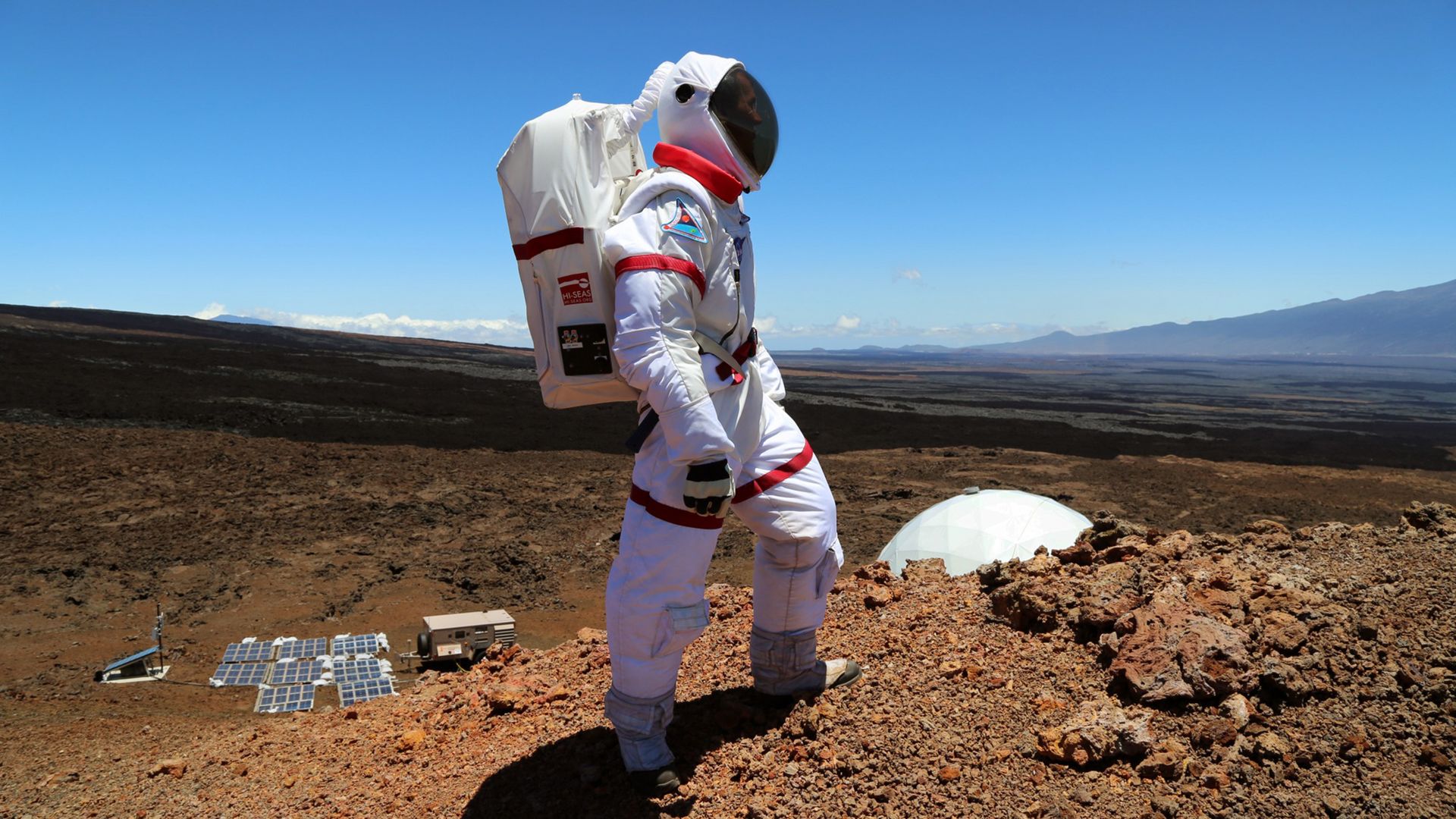
How to go to space, without having to go to space

"We will start inhabiting outer space," says Angelo Vermeulen, crew commander of a NASA-funded Mars simulation. "It might take 50 years or it might take 500 years, but it's going to happen." In this charming talk, the TED Senior Fellow describes some of his official work to make sure humans are prepared for life in deep space ... and shares a fascinating art project in which he challenged people worldwide to design homes we might live in there.

2015

TED Talk

Belgium
Artist // Angelo Vermeulen is an artist, biologist, space systems researcher, and community organizer. In his work he ties together technological, ecological, and social systems through group engagement and collaboration. Biomodd is one of his most well-known art projects and consists of a worldwide series of interactive art installations in which computers and ecosystems coexist. In 2009 he launched Space Ecologies Art and Design (SEAD), a platform for artistic research on architectures and ethics of space colonization. Seeker is one of the resulting projects involving co-created starship sculptures that evolve over time. Since 2011 he is member of the European Space Agency Topical Team Arts & Science (ETTAS), and in 2013 he was crew commander of the NASA-funded HI-SEAS Mars mission simulation in Hawai'i. His space-related work led him to start a new PhD at Delft University of Technology, developing paradigm-shifting concepts for evolvable starships. He co-authored the book 'Baudelaire in Cyberspace: Dialogues on Art, Science and Digital Culture' with philosopher Antoon Van den Braembussche, and gives talks about his work around the world. In 2012 he was a Michael Kalil Endowment for Smart Design Fellow at Parsons in New York. Currently, Vermeulen is a 2013-2014 TED Senior Fellow, and holds positions at LUCA School of Visual Arts in Ghent, Belgium, and Die Angewandte in Vienna, Austria. // Angelo Vermeulen is an artist, biologist, space systems researcher, and community organizer. In his work he ties together technological, ecological, and social systems through group engagement and collaboration. Biomodd is one of his most well-known art projects and consists of a worldwide series of interactive art installations in which computers and ecosystems coexist. In 2009 he launched Space Ecologies Art and Design (SEAD), a platform for artistic research on architectures and ethics of space colonization. Seeker is one of the resulting projects involving co-created starship sculptures that evolve over time. Since 2011 he is member of the European Space Agency Topical Team Arts & Science (ETTAS), and in 2013 he was crew commander of the NASA-funded HI-SEAS Mars mission simulation in Hawai'i. His space-related work led him to start a new PhD at Delft University of Technology, developing paradigm-shifting concepts for evolvable starships. He co-authored the book 'Baudelaire in Cyberspace: Dialogues on Art, Science and Digital Culture' with philosopher Antoon Van den Braembussche, and gives talks about his work around the world. In 2012 he was a Michael Kalil Endowment for Smart Design Fellow at Parsons in New York. Currently, Vermeulen is a TED Senior Fellow, and holds positions at LUCA School of Visual Arts in Ghent, Belgium, and Die Angewandte in Vienna, Austria. // "We will start inhabiting outer space," says Angelo Vermeulen, crew commander of a NASA-funded Mars simulation. "It might take 50 years or it might take 500 years, but it's going to happen." In this charming talk, the TED Senior Fellow describes some of his official work to make sure humans are prepared for life in deep space ... and shares a fascinating art project in which he challenged people worldwide to design homes we might live in there. // Angelo Vermeulen is an artist, biologist, space systems researcher, and community organizer. In his work he ties together technological, ecological, and social systems through group engagement and collaboration. Biomodd is one of his most well-known art projects and consists of a worldwide series of interactive art installations in which computers and ecosystems coexist. In 2009 he launched Space Ecologies Art and Design (SEAD), a platform for artistic research on architectures and ethics of space colonization. Seeker is one of the resulting projects involving co-created starship sculptures that evolve over time. Since 2011 he is member of the European Space Agency Topical Team Arts & Science (ETTAS), and in 2013 he was crew commander of the NASA-funded HI-SEAS Mars mission simulation in Hawai'i. His space-related work led him to start a new PhD at Delft University of Technology, developing paradigm-shifting concepts for evolvable starships. He co-authored the book 'Baudelaire in Cyberspace: Dialogues on Art, Science and Digital Culture' with philosopher Antoon Van den Braembussche, and gives talks about his work around the world. In 2012 he was a Michael Kalil Endowment for Smart Design Fellow at Parsons in New York. Currently, Vermeulen is a TED Senior Fellow, and holds positions at LUCA School of Visual Arts in Ghent, Belgium, and Die Angewandte in Vienna, Austria. // Artist // technology, research, lecturing, space exploration, community & public art, ecosystem, crosscultural commmunication, design, ethics, science, biology, leadership, photography, led, community organization, ecology, art // Sint-Niklaas|Belgium|Flanders|Sint Niklaas
Sint-Niklaas|Belgium|Flanders|Sint Niklaas

Angelo Vermeulen

No items found.
2015

12:05

Beware the power of prediction

What do the story of Oedipus and your insurance premiums have in common? They are both driven by self-fulfilling prophecies. Philosopher and TED Fellow Carissa Véliz traces the hidden power of prediction, from Roman emperors who banned prophets to the AI algorithms quietly making decisions about your life right now. We tend to associate predictions with knowledge, she says, but they're actually attempts to grab power. So the next time someone tells you a specific outcome is inevitable, remember: they aren't describing the future — they're selling it.

2026

TED Talk

United Kingdom

Carissa Véliz

No items found.
2026

07:14

A new way to "grow" islands and coastlines

What if we could harness the ocean's movement to protect coastal communities from rising sea levels? Designer and TED Fellow Skylar Tibbits shows how his lab is creating a dynamic, adaptable system of underwater structures that uses energy from ocean waves to accumulate sand and restore eroding shorelines -- working with the forces of nature to build rather than destroy.

2020

TED Talk

United States
Inventor // SKYLAR TIBBITS is a trained Architect, Designer and Computer Scientist whose research currently focuses on developing self-assembly technologies for large-scale structures in our physical environment. Skylar graduated from Philadelphia University with a 5 yr. Bachelor of Architecture degree and minor in experimental computation. Continuing his education at MIT, he received a Masters of Science in Design + Computation and a Masters of Science in Computer Science. Skylar is currently a lecturer in MIT's Department of Architecture, teaching graduate and undergraduate design studios and co-teaching How to Make (Almost) Anything, a seminar at MIT's Media Lab. Skylar was recently awarded a TED2012 Senior Fellowship, a TED2011 Fellowship and has been named a Revolutionary Mind in SEED Magazine's 2008 Design Issue. His previous work experience includes: Zaha Hadid Architects, Asymptote Architecture, SKIII Space Variations and Point b Design. Skylar has exhibited work at a number of venues around the world including: the Guggenheim Museum NY and the Beijing Biennale, lectured at MoMA and SEED Media Group's MIND08 Conference, Storefront for Art and Architecture, the Rhode Island School of Design, the Institute for Computational Design in Stuttgart and The Center for Architecture NY. He has been published in numerous articles and built large-scale installations around the world from Paris, Calgary, NY to Frankfurt and MIT. As a guest critic, Skylar has visited a range of schools from the University of Pennsylvania, Pratt Institute and Harvard's Graduate School of Design. Skylar has collaborated with a number of influential people over the years including: Neil Gershenfeld and The Center for Bits and Atoms, Erik and Marty Demaine at MIT, Adam Bly at SEED Media Group and Marc Fornes of THEVERYMANY. In 2007, Skylar Tibbits and Marc Fornes co-curated Scriptedbypurpose, the first exhibition focused exclusively on scripted processes within design. SJET LLC, founded by Skylar Tibbits in 2007, was initiated as platform for experimental computation + design and has grown into a multidisciplinary research based practice. SJET crosses disciplines from architecture + design, fabrication, computer science to robotics... SJET is a direct result of an endless search for more... // Skylar Tibbits is a designer and computer scientist whose research focuses on developing self-assembly and programmable materials within the built environment. Tibbits is the founder and co-director of the Self-Assembly Lab at MIT, and Associate Professor of Design Research in the Department of Architecture. Tibbits has a professional degree in architecture and a minor in experimental computation from Philadelphia University, and a masters in design computation and masters computer science from MIT. He has worked at a number of design offices including Zaha Hadid Architects, Asymptote Architecture and Point b Design. He has designed and built large-scale installations and exhibited in galleries around the world, including the Centre Pompidou, Philadelphia Museum of Art, Cooper Hewitt Smithsonian Design Museum, Victoria and Albert Museum and various others. He is the author of the book Self-Assembly Lab: Experiments in Programming Matter (Routledge, 2016), Active Matter (MIT Press, 2017), co-editor of Being Material (MIT Press 2019) and the Editor-In-Chief of the journal 3D Printing and Additive Manufacturing. Awards include LinkedIn's Next Wave Award for Top Professionals under 35 (2016), R&D Innovator of the Year (2015), National Geographic Emerging Explorer (2015), an Inaugural WIRED Fellowship (2014), the Architectural League Prize (2013), Ars Electronica Next Idea Award (2013), TED Senior Fellow (2012) and 2008 he was named a Revolutionary Mind by SEED magazine. // What if we could harness the ocean's movement to protect coastal communities from rising sea levels? Designer and TED Fellow Skylar Tibbits shows how his lab is creating a dynamic, adaptable system of underwater structures that uses energy from ocean waves to accumulate sand and restore eroding shorelines -- working with the forces of nature to build rather than destroy. // 3D printing has grown in sophistication since the late 1970s; TED Fellow Skylar Tibbits is shaping the next development, which he calls 4D printing, where the fourth dimension is time. This emerging technology will allow us to print objects that then reshape themselves or self-assemble over time. Think: a printed cube that folds before your eyes, or a printed pipe able to sense the need to expand or contract. // MIT researcher Skylar Tibbits works on self-assembly -- the idea that instead of building something (a chair, a skyscraper), we can create materials that build themselves, much the way a strand of DNA zips itself together. It's a big concept at early stages; Tibbits shows us three in-the-lab projects that hint at what a self-assembling future might look like. // Skylar Tibbits is a designer and computer scientist whose research focuses on developing self-assembly and programmable materials within the built environment. Tibbits is the founder and co-director of the Self-Assembly Lab at MIT, and Associate Professor of Design Research in the Department of Architecture. Tibbits has a professional degree in architecture and a minor in experimental computation from Philadelphia University, and a masters in design computation and masters computer science from MIT. He has worked at a number of design offices including Zaha Hadid Architects, Asymptote Architecture and Point b Design. He has designed and built large-scale installations and exhibited in galleries around the world, including the Centre Pompidou, Philadelphia Museum of Art, Cooper Hewitt Smithsonian Design Museum, Victoria and Albert Museum and various others. He is the author of the book Self-Assembly Lab: Experiments in Programming Matter (Routledge, 2016), Active Matter (MIT Press, 2017), co-editor of Being Material (MIT Press 2019) and the Editor-In-Chief of the journal 3D Printing and Additive Manufacturing. Awards include LinkedIn's Next Wave Award for Top Professionals under 35 (2016), R&D Innovator of the Year (2015), National Geographic Emerging Explorer (2015), an Inaugural WIRED Fellowship (2014), the Architectural League Prize (2013), Ars Electronica Next Idea Award (2013), TED Senior Fellow (2012) and 2008 he was named a Revolutionary Mind by SEED magazine. // Inventor // technology, sea level, education, architecture, buildings, coastal communities, coastal, research, design, 3d printing, emerging technology, oceans, built environment, natural shorelines, robotics, island, ocean waves, nature, additive manufacturing, science, sea level rise, manufacturing // Boston|Massachusetts|United States|USA
Boston|Massachusetts|United States|USA

Skylar Tibbits

No items found.
2020

12:25

How I use the drum to tell my story

In this talk-performance hybrid, drummer, percussionist and TED Fellow Kasiva Mutua shares how she's breaking the taboo against female drummers in Kenya -- and her mission to teach the significance and importance of the drum to young boys, women and girls. "Women can be custodians of culture, too," Mutua says.

2018

TED Talk

Kenya
Percussionist // In this talk-performance hybrid, drummer, percussionist and TED Fellow Kasiva Mutua shares how she's breaking the taboo against female drummers in Kenya -- and her mission to teach the significance and importance of the drum to young boys, women and girls. "Women can be custodians of culture, too," Mutua says. // Percussionist // girls, women

Kasiva Mutua

No items found.
2018

How peace can persevere (w/ Aziz Abu Sarah)

2024

Podcasts

Entrepreneur + educator // Aziz Abu Sarah is the co-founder of MEJDI Tours, an organization that aims to use tourism as a cultural bridge and a tool for peace. Aziz is also the Executive Director at the Center for World Religions, Diplomacy, and Conflict Resolution. He won the Intercultural Innovation award from the United Nations Alliance of Civilizations and was also named a National Geographic Explorer in 2011. He is a lecturer and has spoken in hundreds of churches, synagogues and mosques on the subjects of peace, reconciliation, and interfaith dialogue. He has lectured and facilitated meetings for countless international organizations and universities, including National Geographic, Harvard, Princeton, Yale, the European Parliament, and the United Nations. Aziz has published articles in The New York Times, Haaretz, the Jerusalem Post, Alarabiya, and others. He regularly provides analysis for television news programs such as Al Jazeera, CNN and Fox. He has been honored to receive the Goldberg Prize for Peace in the Middle East from the Institute of International Education, the Silver Rose Award from the European Parliament, the Eisenhower Medallion from People to People International, and the Eliav-Sartawi Award for Middle Eastern Journalism from Search for Common Ground. He was named one of the 500 Most Influential Muslims by the Royal Islamic Strategic Studies Centre in 2010, 2011, 2012, 2013, and 2014. United Nations Secretary-General Ban Ki-moon recognized Aziz Abu Sarah’s work during his speech at the 5th Global Forum of UNAOC. Aziz's Story: I grew up in Bethany, a town 3 miles east of Jerusalem. There was little for children to do other than play soccer in the streets. I was seven years old when I first saw on television young men throwing stones at Israeli soldiers. I didn’t know the motivation or purpose for such acts, but they were exciting. I was seven years old when I first decided to throw stones, and still seven years old when I was first shot at. My life changed when my 18-year-old brother Tayseer was arrested at our home and then beaten when he refused to confess to the charge that he threw stones at soldiers. Tayseer was in prison for almost a year and died soon after his release, which our family doctor said was a result of the beating. I was ten years old at the time, and watching my brother die left me bitter and full of rage. I felt it was my duty to avenge Tayseer’s death. Years of activism guided me in my mission. Writing and throwing stones became the norm of my life, and I convinced others to do the same to protest the Israelis’ occupation of the Palestinian territories and their treatment of Palestinians But the truth is that I never felt satisfied by my actions. Hatred and anger cannot heal a broken heart. And yet I continued on that path until I finished high school, when I decided to take Hebrew language courses to prepare for college and work in Jerusalem. Those classes introduced me to Jews and Israelis who weren’t in uniform. For 18 years, all my interactions with Israelis had been with soldiers and settlers. Although there was a Jewish high school 200 meters from my own, I never met any of those students. After I’d had a few encounters with Jewish students and learned new Hebrew words, I had an internal struggle in my heart and mind. There was the old me who was angry and bitter, alongside the new me who was curious to learn about the “enemy.” With every conversation and with every interaction, my hatred faded further. Eventually, I found a new mission for my life: bridging the gap between enemies. I started working with Israeli peace builders like Rami Elhanan, whose daughter was killed in a suicide bombing. In my work as a conflict resolution specialist, I have found that the majority of Israelis and Palestinians are indifferent and ineffective. Indifference is the greatest enemy to peace and justice. The antidote to that apathy is interaction. What Israelis and Palestinians need more than anything right now is to find ways of being with each other. We need to put cracks in the walls that separate people. Our division should never be between Israelis and Palestinians but rather between those who work tirelessly for peace and those who do not. But the interaction must sustainable. I co-founded MEJDI Tours with two Jewish partners to innovate an example of such potential. MEJDI is a tour company that hires Israeli and Palestinian tour guides to co-lead tours in Israel and Palestine side by side. They work together on daily basis. They are equal in every way. The same concept has since been applied in Northern Ireland, Egypt, Turkey, the Balkans, the UAE, and Oman, among other places. My experience, the loss of my brother, and the struggle against my own demons have led to dedicate my life to the cause of bridging the gap between enemies. In the last decade I have worked on a variety of projects all over the world including in Afghanistan, Syria, Jordan, Turkey, and Northern Ireland. // Aziz Abu Sarah is an author, peacemaker and an entrepreneur. In 2009, he co-founded MEJDI Tours, a social enterprise as a bridge between peacebuilding and business. Aziz was the Executive Director of the Center for World Religions, Diplomacy, and Conflict Resolution at George Mason University for 7 years. Aziz is a National Geographic Explorer and a 2014 TED fellow. He won the Intercultural Innovation award from the UNited Nations and the Alliance of Civilizations and BMW Group. His latest book Crossing Boundaries - A Traveler’s Guide to World Peace advocates that travel is an act of diplomacy. Aziz is a lecturer and has spoken at hundreds of Institutions, corporations, and public events on the subjects of travel, education and storytelling, the role of business in peacebuilding, international conflicts, reconciliation, and others. He is an expert on sustainable travel, conflict resolution practices, Middle East conflict dynamics and Islamic conflict resolution tools. He has lectured and facilitated workshops and trainings for countless international organizations and universities, including National Geographic,European Parliament, TED, and the United Nations. He was named one of the 500 Most Influential Muslims by the Royal Islamic Strategic Studies Centre. Former United Nations Secretary-General Ban Ki-moon recognized Aziz Abu Sarah work during his speech at the 5th Global Forum of the UN Alliance of Civilizations. // How can Israelis and Palestinians achieve peace? Palestinian peacemaker Aziz Abu Sarah and Israeli peacemaker Maoz Inon discuss the immeasurable tragedies they've experienced growing up in the region — and how they choose reconciliation over revenge, again and again. With a fierce belief in a better future, they talk about conflict, safety, finding shared values and how they're building a coalition of Israeli and Palestinian citizens who are intent on creating a path to hope and peace. // Aziz Abu Sarah is a Palestinian activist with an unusual approach to peace-keeping: Be a tourist. The TED Fellow shows how simple interactions with people in different cultures can erode decades of hate. He starts with Palestinians visiting Israelis and moves beyond ... // Aziz Abu Sarah is an author, peacemaker and an entrepreneur. In 2009, he co-founded MEJDI Tours, a social enterprise as a bridge between peacebuilding and business. Aziz was the Executive Director of the Center for World Religions, Diplomacy, and Conflict Resolution at George Mason University for 7 years. Aziz is a National Geographic Explorer and a 2014 TED fellow. He won the Intercultural Innovation award from the UNited Nations and the Alliance of Civilizations and BMW Group. His latest book Crossing Boundaries - A Traveler’s Guide to World Peace advocates that travel is an act of diplomacy. Aziz is a lecturer and has spoken at hundreds of Institutions, corporations, and public events on the subjects of travel, education and storytelling, the role of business in peacebuilding, international conflicts, reconciliation, and others. He is an expert on sustainable travel, conflict resolution practices, Middle East conflict dynamics and Islamic conflict resolution tools. He has lectured and facilitated workshops and trainings for countless international organizations and universities, including National Geographic,European Parliament, TED, and the United Nations. He was named one of the 500 Most Influential Muslims by the Royal Islamic Strategic Studies Centre. Former United Nations Secretary-General Ban Ki-moon recognized Aziz Abu Sarah work during his speech at the 5th Global Forum of the UN Alliance of Civilizations. // Entrepreneur + educator // education, led, tourism, activism, lecturing on multiple topics, culture and business, tourism & travel, innovation - ideas into action, conflict resolution and negotiations, culture & change, business consultancy, mc / host / speaker, conflict resolution, children, study abroad, journalism - narrative story telling, justice, peacebuilding

Aziz Abu Sarah

No items found.
2024